






Santa Clara, CA
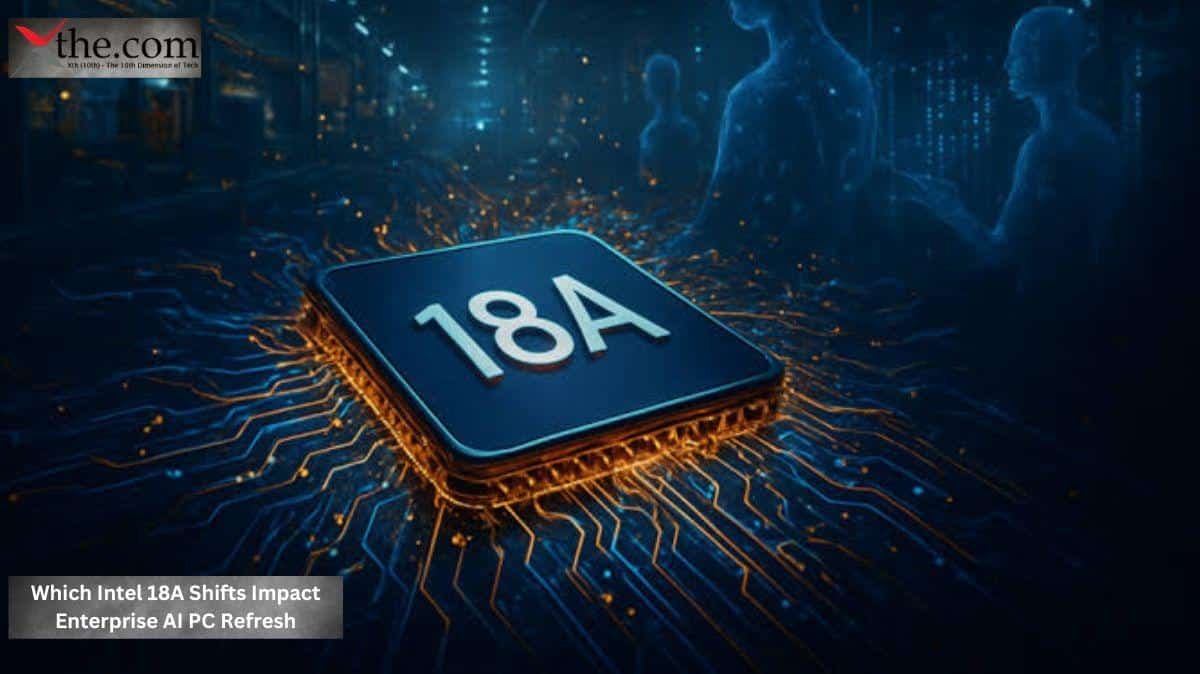
Atomic answer: Intel has signaled the mass-market readiness of its Intel Core Ultra Series 3, the first platform built on the US-manufactured 18A process, with 50 NPU TOPS and up to 27 hours of battery life. These chips are designed to handle local AI orchestration layers without relying on cloud-based inference.
For years, companies replaced laptops every three years based on CPU speed, memory, and security. But as AI workloads shifted from the cloud to local devices, the priorities changed. Now, CIOs have to ask if a laptop can run AI models efficiently for five years without overheating, draining the battery, or driving up management costs.
This question is now central to the quest conversation about Intel 18A processors and the new Core Ultra Series 3 platform.
IT buyers are no longer viewing laptops as productivity tools. Now, they see them as inference engines. This shift is important because decisions about AI hardware in 2026 could affect costs for years to come.
Why the Core Ultra Series 3 Transition Matters
Enterprise PC buyers usually do not respond to branding alone. They adopt new technology when it makes operations easier or saves money over time. Intel’s shift to the Panther Lake architecture built on the 18A process aims to do both.
The biggest challenge is in power efficiency. AI tasks create steady workloads that older business laptops were not built to handle. Running tools like on-device copilots, transcription engines, and local AI models puts constant strain on a laptop’s cooling system.
This is where the discussion around NPU TOPS performance becomes commercially significant rather than theoretical.
Older AI laptops often send heavy workloads to the CPU or GPU, which can lead to louder fans, shorter battery life, and a shorter device lifespan. The new Intel 18A processors are designed to handle many more AI tasks with dedicated NPUs, which use less power during long AI sessions.
For someone managing twenty-five thousand laptops, even small efficiency gains can save significant money. If each worker gets ninety more minutes of AI laptop battery life each day, they will rely less on chargers, which can change how people work on the go.
The Role of Panther Lake Architecture in Enterprise Deployment
Panther Lake architecture is important for more than just its technical specs. Intel seems to be trying to balance faster AI performance with making sure its chips work with existing business software. This is key because most big companies cannot quickly change their entire IT setup.
A manufacturing company using predictive maintenance tools, Microsoft Copilot, and custom logistics software wants consistent standards across all departments. Scalability is still a top concern when buying new devices.
Intel’s approach seems to keep x86 compatibility by improving how its chips handle AI tasks. This could make it easier for companies to upgrade without switching to ARM-based devices, even though those devices are more efficient.
The timing also aligns with a broader enterprise hardware refresh wave. Many organizations delayed upgrades during periods of macroeconomic uncertainty and extended the life cycles of Windows devices. First, normal replacement Windows AI functionality now provides a justification for accelerated procurement expenditure.
For example, a bank replacing forty thousand laptops is not just looking at office productivity anymore. Leaders now want to know whether devices can handle sensitive AI tasks on-site rather than sending data to the cloud.
This one change has a big impact on security costs.
Why NPU TOPS Performance Has Become A Procurement Metric?
Until recently, most companies paid little attention to AI performance metrics. GPU specs were only important to engineers and designers, not to most employees. But now that AI assistants are built into everyday work software, that has changed.
Now, NPU TOPS performance directly affects user experience.
If the NPU is weak, users may notice delays in real-time translation, summarization, or document searching. A better NPU makes these tasks faster and uses less power. Companies that roll out AI tools to many employees will see benefits right away.
This is even more important for industries with strict regulations.
Healthcare groups that process patient notes on-site or law firms that analyze documents internally need reliable AI performance without relying too much on the cloud. Efficient NPUs make this possible.
The conversation around evaluating Intel 18A for enterprise-wide AI PC deployment cycles goes beyond hardware specifications. It integrates broader concerns about compliance, scalability, and workforce productivity.
The Overlook Impact on Edge AI Robotics
One often-overlooked aspect of the Core Ultra Series 3 plan is its support for AI computing beyond the usual office setting.
Devices like retail kiosks, warehouse systems, field diagnostic tools, and industrial robots now depend more on lightweight AI. Upgrades from Intel 18A processors could help Intel lead in edge AI robotics, especially where keeping x86 software is important.
A logistics company operating thousands of smart warehouses does not want different AI systems for robots, office computers, and edge devices. Combining them makes operations simpler. Performance through the Panther Lake architecture, enterprise buyers may view the platform as a unified deployment foundation rather than a standard laptop upgrade.
This distinction can shape purchasing decisions more than benchmark headlines.
The Enterprise Decision Ahead
The larger market implication is clear. AI PCs are moving from experimental deployments to baseline procurement requirements. The vendors that combine efficient AI execution, manageable thermals, long battery life, and software continuity will influence the next major corporate refresh cycle.
For CIOs and infrastructure strategists, evaluating Intel 18A for enterprise-wide AI PC deployment phases is not just a semiconductor discussion. It is a budgeting decision directly tied to productivity, security posture, and infrastructure longevity.
The future of business computing may no longer be about CPU speed. Instead, it could be about how quietly, efficiently, and securely AI runs on each device.
Enterprise Procurement Checklist
- Procurement Effect: Mandatory inclusion of 50+ TOPS NPUs in 2026 workstation procurement bids.
- Infrastructure Risk: Older software builds may require optimization for the new 18A thread scheduling.
- Deployment Impact: Extended mobile workforce uptime due to 27-hour battery benchmarks.
- ROI Implications: Lower cloud inference costs as agents move to “On-Device” execution.
- Operational Action: Schedule pilot tests for “Panther Lake” systems to validate local AI agent performance.
Source: CES 2026: Intel Core Ultra Series 3 Debut as First Built on Intel 18A








