






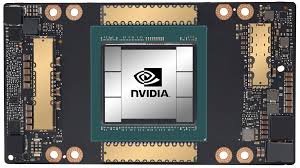
Santa Clara, Calif.: Enterprise data center managers are heavily investing in general-purpose processing, but often find these resources underused for multi-step reasoning models. This challenge is pushing the industry to focus on tensor core patents and task-specific silicon. As workloads become more complex, general-purpose graphics chips are less efficient. Legal and technical frameworks are defining the next stage of enterprise infrastructure. Moving from monolithic GPU processing to dedicated accelerator hardware is a major change in how companies buy technology.
Reassessing Hardware Strategy
New Tensor Core patents lay a legal and technical foundation that favors matrix operations over standard graphics processing. Major hardware developers are clearly planning to move away from traditional rasterization and geometry pipelines in data center hardware. For enterprise procurement teams, the main factor in evaluating large data center investments is now the difference between general-purpose processors and specialized accelerators.
Past periods of GPU scarcity forced data centers to evaluate alternative compute engines. During those supply constraints, engineers discovered that running a simple matrix-math path on large general-purpose processors was an inefficient use of electrical power. The threat of renewed GPU scarcity continues to drive corporate investments in alternative hardware, ensuring that data center operations do not depend on a single component class or a single vendor’s supply chain.
Processing Complex Workloads
Agentic AI needs real-time memory management and fast token generation. Unlike basic generative text models, these systems depend on ongoing feedback cycles and reinforcement learning. As more enterprise workloads adopt agentic AI, a scalable on-chip cache is essential to keep systems operating efficiently without incurring high costs.
The Role of Task-Specific Silicon in Computing
To meet these needs, the industry is quickly adopting task-specific silicon. Using this hardware helps large cloud providers reduce power consumption per token while maintaining model correctness. For example, specialized processing units could reduce operating costs compared to bigger Blackwell-class engines. The Nvidia B200 is the current standard for training large language models, but specialized nodes are often needed for fast inference tasks. Even though the Nvidia B200 is powerful, purpose-built accelerators are often more efficient for specific jobs. Other designs, such as the Google TPU v6, use specialized matrix math arrays to reduce data movement.
Advanced memory in the TPU v6 helps avoid the bandwidth bottlenecks that slow down traditional accelerators while handling complex tasks. Today’s hardware makers also use chiplet architecture to efficiently combine memory and processing parts. This solution helps them avoid the production limitations of monolithic dies while maintaining high communication speeds between components.
Controlling Cost and Heterogeneous Hardware
Enterprise infrastructure choices now weigh performance against energy use. Cooling and power needs often limit how much hardware can fit in a data center. If servers use more than 10 kilowatts per rack, the infrastructure may need costly upgrades. Purpose-built hardware helps ease these thermal issues, allowing more computing power in the same space.
Companies are shifting from using only monolithic data center processors to hybrid nodes. These systems combine general-purpose CPUs with specialized accelerator units. This setup lets older applications keep running while most of the processing is handled by specialized cores.
Financial Truths Of Infrastructure
The design of data center hardware directly affects the bottom line for cloud infrastructure providers. The fiscal impact of proprietary AI architectures on cloud service provider margins is substantial as data centers seek to cut operational costs. Purchasing specialized chips instead of general-purpose cards reduces cooling requirements and lowers the physical footprint inside the server rack, yielding sustained savings.
For financial analysts in 2026, it is vital to understand how proprietary AI architectures affect cloud provider margins. Companies using custom accelerators achieve higher profits from AI inference services than those relying solely on traditional high-power GPUs.
Recent Tensor Core patents show a clear move away from general-purpose processing. Hardware companies are securing their custom logic units to stay competitive. The shift to task-specific silicon is changing how enterprises spend on computing. More IT budgets will be allocated to purpose-built hardware rather than general-purpose systems.
Future Horizons for Data Center Computing
Modern hardware infrastructure is moving toward more variety. As software libraries become closely linked to specific hardware, the line between chip design and software will blur. Companies that start buying custom accelerators now will see better performance and lower energy use in the next decade.
Source: NVIDIA Sets Conference Call for First-Quarter Financial Results








