




San Diego, California
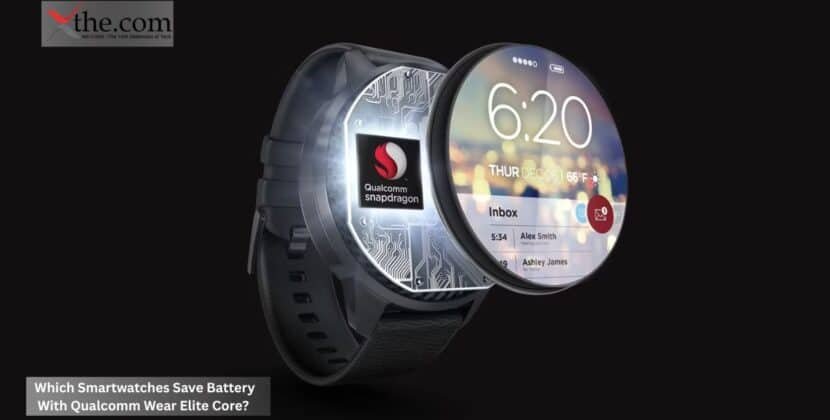
Most fitness trackers today work much like they did ten years ago. Sensors gather your data, the watch sends it to a cloud server, and an algorithm in a distant data center interprets your resting heart rate. While this process feels smooth for users, it raises privacy matters. With Qualcomm Wear Elite launching at MWC 2026 and coming to new smartwatches, how watches process information and who can access it is about to change in a big way.
How Qualcomm Wear Elite Makes Smartwatches Save Battery
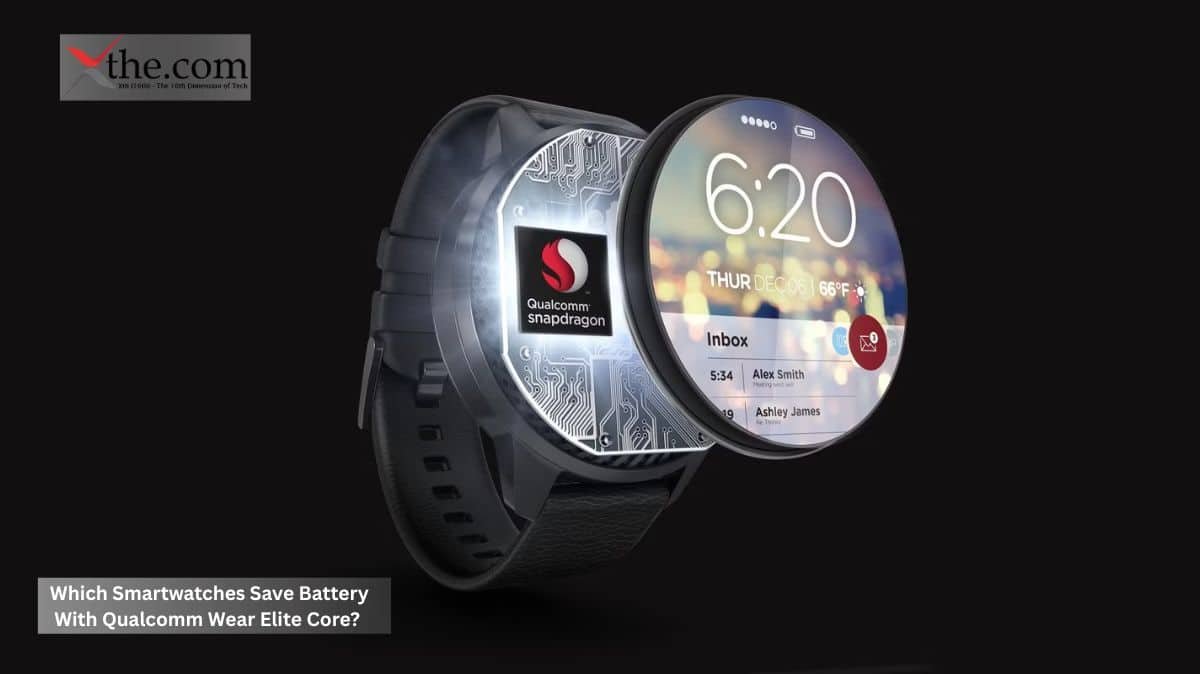
The Snapdragon Wear Elite processor uses a 3nm process, with significant improvement over earlier versions. It has 5 cores: one powerful 2.1GHz core and four efficient 1.95GHz cores. This smaller manufacturing process does more than boost performance. By shrinking the transistors, each one uses less energy, which is exactly what a 400 mAh battery in a smartwatch needs.
According to Qualcomm, the Snapdragon Wear Elite can deliver up to 30% longer battery life thanks to its improved design and new manufacturing process. Devices with batteries between 300 mAh and 600 mAh can also charge up to 50% in just 10 minutes. For anyone who has seen their Galaxy Watch run out of power before bedtime after a busy day, that extra 30% could mean the difference between tracking your sleep and missing out.
The Qualcomm Snapdragon Wear Elite watch battery life specs matter here in a very specific way. Previous wearable chips offloaded compute-intensive tasks like voice recognition, health analysis, and real-time coaching to your phone or a remote server because doing them on the watch used too much battery. The new Wear Elite chip changes that balance.
The NPU: The Reason for Local Health Tracking Finally Works at Scale.
The main new feature is a dedicated Qualcomm Hexagon NPU built into a wearable for the first time. The Snapdragon Wear Elite can handle models with up to two billion parameters right on the device, allowing much more advanced AI tasks than earlier wearables.
Two billion parameters are processed right on your wrist. For context, many popular chatbot models today use a similar amount. With this level of local health tracking, your watch can analyze sleep phases, spot unusual heart rate patterns, and give recovery advice without sending any data to an outside server. This is far more than a privacy promise. It is built into the system. There is no data being sent, no server database to hack, and no third-party rules about your biometric information.
The new NPU also enables low-power AI to use cases such as keyword recognition and noise cancellation at the chip level. This is what makes wrist neural processing viable on a device that needs to last all day. The Hexagon NPU performs specific inference tasks at a fraction of the power a general-purpose CPU would consume while running the same workload. Your watch can listen for a wake word and analyze a voice command without spinning up the full processor, which is why the battery needle barely moves.
Which Devices Will Carry The Chip First
Samsung confirmed at MWC 2026 that its upcoming Galaxy Watch lineup will run the Qualcomm Snapdragon Wear Elite platform, denoting a major shift given the company’s long-standing reliance on its own Exynos wearable chips. A July 2026 launch is expected for the Galaxy Watch 9 and the Galaxy Watch Ultra 2.
Qualcomm is also teaming up with Google and Motorola to bring Snapdragon Wear Elite devices to the market, with new wearables expected in the second half of 2026. Google’s involvement is important because it manages Wear OS, the main operating system for most Android smartwatches. When both the chipmaker and the OS provider commit to a new platform, adoption speeds up much more than with hardware deals alone.
The Qualcomm Wear Elite plan goes beyond just watches. Qualcomm sees this chip as the foundation for personal AI devices like pins, pendants, and other wearables that operate independently, not solely as smartphone accessories. Each device acts as a sensing node, processing and using sensor data without needing a central processor. For example, a pendant could track vocal stress during the day, a fitness ring could monitor glucose levels without using the cloud, and a clip-on could coach breathing techniques offline. All of this is possible with neural processing in the wrist at 2 billion parameters.
Private Data as a Design Principle, Not a Marketing Claim
For years, discussions about private data in wearables have focused on policies like privacy agreements, data retention notices, and opt-out switches hidden in settings. But these do not solve the main issue. Once your biometric data leaves your device, you lose control over it.
The Qualcomm Wear Elite architecture changes the premise entirely. When the autonomous control plane and the NPU running inference locally never need to export raw sensor readings for processing, the question of whether a company stores or sells that data becomes largely moot. The data does not travel. The insight does.
Here is a real example. A nurse working on a 12-hour shift uses a local health tracking watch to monitor her stress markers and alert her if cortisol exhaustion indicators indicate mental fatigue. Under a cloud-dependent model, her employer’s IT team, the cloud provider, and third-party analytics companies all have access to her data. With on-device processing, none of them do.
CISA Patch Compliance and the Wider Security Picture
When the Qualcomm Wear Elite was announced at MWC 2026, federal agencies were also rushing to fix old security flaws in their networks. This shows how failing to keep technology up to date can create bigger problems over time. Wearable health data is likely to be the next target for attackers, so now is the time to build privacy into these devices while the main platform is still being developed.
The Snapdragon Wear Elite is the first personal AI wearable platform to support Wear OS by Google, Android, and Linux. It includes an NPU for on-device AI and advanced low-power connectivity. Because it works across platforms, local health tracking could soon become standard, not just a special feature on top models.
The first Qualcomm Wear Elite device set to launch later in 2026 will not solve every privacy issue in the wearable industry. But for fitness fans and wellness-oriented professionals who want real advice from their watch without sending their sleep, heart, and recovery data to unknown companies, this new architecture is the biggest change since GPS became standard. The real question now is not if your watch can analyze you, but if that analysis stays on your wrist.
Source: Qualcomm Newsroom