






Seattle, Washington
A grandmother in Ohio, who had never used Photoshop, just created matching T-shirts for her family reunion. She wrote one sentence into her phone. Seconds later, she had a finished graphic of a golden retriever dressed as a 1970s astronaut, ready to order on a hoodie, tumbler, or sweatshirt, with Prime delivery on the way. She didn’t hire a designer or open a design platform. She simply used Alexa for Shopping.
On June 8, 2026, Amazon announced that customers can now design and order custom merchandise using AI through Alexa for Shopping. What used to require a design tool, a print-on-demand platform, and a fulfillment service can now be done with a single text prompt in the Amazon Shopping app. The real story is how this change removes the barriers that have kept everyday people from making the things they actually want.
How Alexa for Shopping Turned a Prompt Into a Product
The feature lets customers describe an idea in the Amazon Shopping app or on Amazon.com, and it instantly creates a design that can be applied to T-shirts, hoodies, tumblers, and other products available through Amazon Merch on Demand, Amazon’s print-on-demand service. The tool is free to use. Customers only pay for the physical products they order.
Consumers give the Alexa for Shopping assistant a prompt that creates custom designs “in seconds.” In announcing the feature, Amazon offered a sample prompt: “make a design of a golden retriever as a 90s corporate lawyer at a disco.” The AI generates the design, and users can then improve it by selecting suggested actions or typing additional changes.
This is not simply a chatbot that answers questions about shipping. It is a creative tool built on top of a system that already handles hundreds of millions of orders. By May 2026, Alexa for Shopping had become a way to complete transactions, not just provide information. The custom merch feature adds a creative layer onto this existing system.
The Audience Nobody Expected to Design Custom Merch
People in the design-on-demand industry used to think that most custom merchandise tools were meant for small business owners, content creators, and independent artists with at least some visual skills. Services like Redbubble, Bonfire, and Spring were made for users who could work with a virtual canvas, understand file exports, and handle a learning curve.
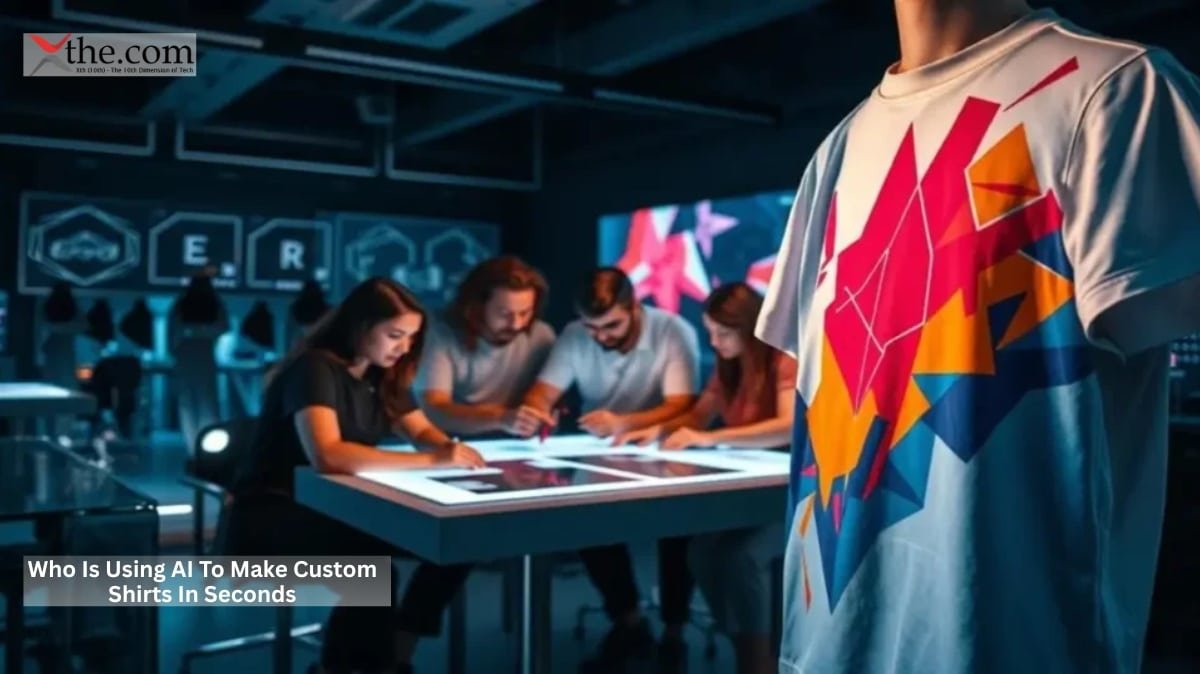
Amazon’s new capability can be used to create personalized gifts, matching shirts for family reunions, team outings, or friend trips, and custom gear for holidays, game day, and other occasions, according to Amazon’s release with no design skills required.
In other words, the target is not a creator. It is a regular consumer who has an idea but no way to make it happen. Now, that person has voice-activated AI fashion design tools at their fingertips inside the app they already use to buy paper towels.
A customer taps the Alexa icon at the bottom right of the Amazon app and describes an idea, such as matching shirts for a family reunion or a pet as a cartoon astronaut. They get an AI-generated design in seconds, can refine it with recommended changes or more text prompts, share it with friends or family through a link so others can order the same item, and check out just like any other Amazon purchase.
The sharing feature is more important than it seems. One person in a group chat creates the design, and everyone else gets a direct link to order the same item. This is not simply a design tool; it is a viral commerce loop built into a consumer’s product.
What Amazon Merch on Demand Makes Possible at Scale
Every order is backed by Amazon Merch on Demand, the print-on-demand system that manages production, fulfillment, and customer service. Designs can be put on T-shirts, hoodies, tumblers, and other products through this service, which organizations like the UFC also use. The infrastructure was already in place. What changed is who can use it and how easy it is now.
Amazon is not starting from scratch in the custom merch business. Its AI shopping system grew quickly over the past year, with Rufus helping more than 300 million customers in 2025 and generating almost $12 billion in additional annual sales, according to Amazon’s Q4 2025 results. The design custom merch feature is the creative, consumer-facing part of a logistics and AI system that Amazon has built over many years.
The Risk Hiding Inside the Opportunity
For platforms built around independent artists and creators, such as Redbubble, Spring, and Fourthwall, this development poses a major challenge. Amazon’s new feature creates even more competition for online merch platforms such as Redbubble, Bonfire, Spring, Fourthwall, and others.
These platforms still offer features that Amazon does not fully match, such as a creator economy, community discovery, and artist-owned storefronts. But such a casual buyer, such as someone who wants five custom shirts for a bachelorette party, may never visit those platforms again. Now, the buyer has Alexa for Shopping and a simple text box.
There is also the issue of intellectual property. Generative AI design tools used by many people sometimes create designs that resemble existing artwork, brand logos, or copyrighted characters. Amazon has not shared details about how it moderates or filters these designs. That is a significant gap.
A Different Kind of Design Democratization
The phrase “no design experience required” has been used in software marketing for thirty years. What’s different now is that it’s finally true. Voice-activated AI fashion design tools have removed the last barrier: needing to use any interface at all. You describe what you want, it builds it, and you order.
The custom merch feature stands out from most Amazon product launches. Usually, visibility inside the assistant is a key commercial factor, but here, designs are not listed as pre-existing products competing for placement. Instead, they are created on demand for each user’s request.
This on-demand, zero-catalog approach is the future of consumer product creation. For every retailer, platform, and independent designer watching from the sidelines, the real question is not whether to use Alexa for Shopping and Amazon Merch on Demand, but how quickly they can adapt before shoppers get used to having just one way to order. The grandmother in Ohio has already made her choice.
Source: What you need to know about Amazon today: June 10, 2026








