





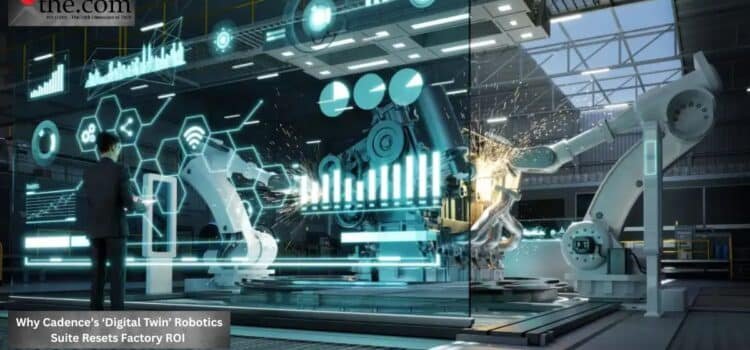
SAN JOSE, Calif. — Industrial automation is now entering a new era where the manufacturing industry can create simulated ecosystems for its robots without a single physical robot. Recently, Cadence Design Systems enhanced its simulation environment by adopting a much more efficient robotics planning strategy that uses digital twins. This new ecosystem uses both advanced simulation tools and NVIDIA Isaac libraries. Analysts increasingly view the emergence of Cadence Cosmos digital twin robotics 2026 systems as a major turning point for modern manufacturing economics. Analysts have predicted that this move will significantly reduce operational risks while increasing the use of industrial robots. Cadence Design’s new simulation strategy comes in the wake of a shift in how industrial automation works. There is an emerging desire among manufacturers to avoid relying solely on costly physical simulation strategies.
The Emergence of Digital Twin Ecosystems
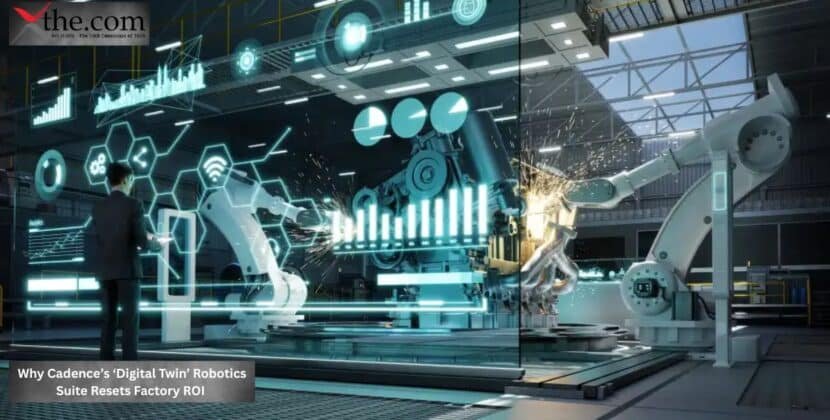
A Digital Twin is an advanced model of a real-world environment that simulates its behavior under dynamic changes. It can replicate various aspects of a production plant, such as equipment operation, worker movement, performance, and stress testing.
Historically, robotics implementation was associated with costly prototyping and significant time spent on testing.
Simulation technologies are set to completely revolutionize this approach.
Thanks to Digital Twins, companies can now assess the potential impact of a new robotics system without halting production. It enables them to adjust their layout design and plan other aspects of their processes ahead of time.Analysts increasingly associate this transformation with the rise of virtual robot fleet testing manufacturing AI strategies across industrial automation sectors.
The advantages of Digital Twin solutions are as follows:
• Decreased deployment risk
• Quicker planning process
• Savings on prototyping costs
• More precise production prediction
• Enhanced facility optimization
The development of industrial automation worldwide means that Digital Twins are fast becoming an integral part of manufacturing.
Why Cadence Design is Important
Until now, Cadence Design has been mostly associated with semiconductor and electronic design automation. However, the company has recently decided to grow significantly in terms of industrial simulation and robotics infrastructure development. Recent additions to the company’s ecosystem make Cadence Design an integral part of advanced manufacturing AI systems.
The platform allows the simulation of numerous situations involving robotic teams, autonomous machines, and entire production lines simultaneously. It is possible to assess large factory operations not through physical trials but through virtual ecosystems.
Such developments offer significant benefits to companies seeking to improve manufacturing processes without incurring additional costs.
Fields covered by the Cadence Design system include:
• Planning robotic workforces
• Optimizing factory layouts
• Conducting predictive analyses
• Modeling production process with AI
• Testing automation projects on large scales
Industry observers increasingly compare Cadence vs FANUC ABB simulation-ready models as robotics vendors race to provide more advanced simulation-enabled industrial platforms.
Robotics Intelligence Enhancements by NVIDIA Isaac
Among the key highlights of this new system is the incorporation of NVIDIA Isaac technologies into it. This way, manufacturers benefit from an NVIDIA Isaac robotics platform with advanced capabilities in robotics libraries, AI, and simulation for autonomous machines.
The expansion of NVIDIA Isaac factory simulation deployment environments allows manufacturers to train and coordinate autonomous robotic systems entirely inside virtual ecosystems before deployment into real-world facilities. By incorporating NVIDIA Isaac into their simulation processes, companies gain smarter robotics simulation platforms that accurately model autonomous robotics operations.
Benefits:
• Superior AI-based training of robots
• More accurate simulations of machines
• Better coordination among autonomous machines
• Shorter deployment periods for robotics technology
• Higher adaptability to conditions
Furthermore, NVIDIA Isaac increases the compatibility between virtual planning platforms and practical deployment systems.
Why Robotics Simulation Is a Must-Have Now
The market for industrial robots has become more sophisticated, as companies increasingly use autonomous robots in factories and logistics centers.
Classic methods of evaluating robotic performance are insufficient for large-scale installations.
This is where Robotics Simulation steps in.
With simulation-first strategies, companies can test how robots perform in different situations before deployment. They can check for potential collision hazards, production bottlenecks, workflow inefficiencies, and other issues without installing equipment first.Analysts increasingly discuss digital twin 1000 robot pre-deployment test capabilities as a major economic advantage for manufacturers pursuing large-scale automation.
Key features of Robotics Simulation include:
• Testing of autonomous navigation
• Analysis of workflows
• Modeling of robot coordination
• Testing of interactions with the environment
• Safety evaluation procedures
As automation technology advances further, Robotics Simulation might even become obligatory in industrial contexts.
The Significance of Multiphysics Modeling
One significant issue in robotics planning is predicting machine behavior under various real-world physical conditions. These include movement, temperature fluctuations, mechanical stresses, friction, among others.
The recent Cadence Design structure emphasizes Multiphysics modeling to achieve greater realism in virtual worlds.
With multiphysics modeling, simulation platforms can conduct simultaneous physical modeling, making it easier to predict behavior in real time.
Multiphysics modeling applications are seen in:
• Thermal behavior analysis
• Mechanical stress simulations
• Fluid dynamics assessments
• Movement behavior predictions
• Structural durability predictions
Manufacturing AI Changing the Face of Industries
What is happening to factories in terms of their larger transformations largely comes down to Manufacturing AI. Contemporary industrial systems are increasingly dependent on machine learning to enhance production efficiency, schedule maintenance, and coordinate operations.
Simulation environments have become arenas for honing machine learning systems before deployment in the physical world. The emergence of virtual robot fleet testing for manufacturing AI systems may dramatically accelerate industrial AI adoption while reducing operational deployment risks
With manufacturing AI systems backed by superior simulation capabilities, companies can benefit in several ways:
• Efficient predictive maintenance
• Automated production planning
• Accurate robotics coordination
• Enhanced resource allocation
• Scalability of operations
As factories evolve, a simulation-first approach will likely become the norm.
Competitive Pressure in Robotics Industries
The development of the next generation of Digital Twin technology has also increased competitive pressures on traditional robot vendors. The vendors are finding themselves in a position where performance parameters alone will not be enough to maintain competitiveness within the industry.
Analysts increasingly warn that the rising robotics simulation barrier to entry US factory trend could reshape industrial competition by favoring vendors with strong simulation ecosystems and AI-enabled deployment tools.
There are certain market impacts that could result from this trend, including:
• Increased need for simulation-enabled robots
• More need for software compatibility
• Increased use of artificial intelligence in industries
• Virtual commissioning of machinery
• Robotics intelligence platforms
If companies cannot provide their customers with simulation-enabled robots, then they will have difficulty competing in future procurements.
Conclusion
Industrial automation technology is moving towards simulation-led operational planning, and Cadence Design is strategically positioning itself at the center of these changes. This includes integrating a Digital Twin system, applying NVIDIA Isaac, using the Robotics Simulation environment, performing Multiphysics simulations, and deploying Manufacturing AI systems.
Industry experts increasingly ask how does Cadence Cosmos NVIDIA Isaac integration allow US factories to simulate 1000 robots for a year before buying any hardware as virtual manufacturing ecosystems become more economically attractive than traditional deployment models.
Collectively, Cadence Design, Digital Twin, CDNS, NVIDIA Isaac, Robotics Simulation, Multiphysics, and Manufacturing AI form the future direction of industrial revolutionization. With the increasing adoption of robotics worldwide, the simulation environment may become as important as the physical manufacturing environment.
Source– latest Cadence news