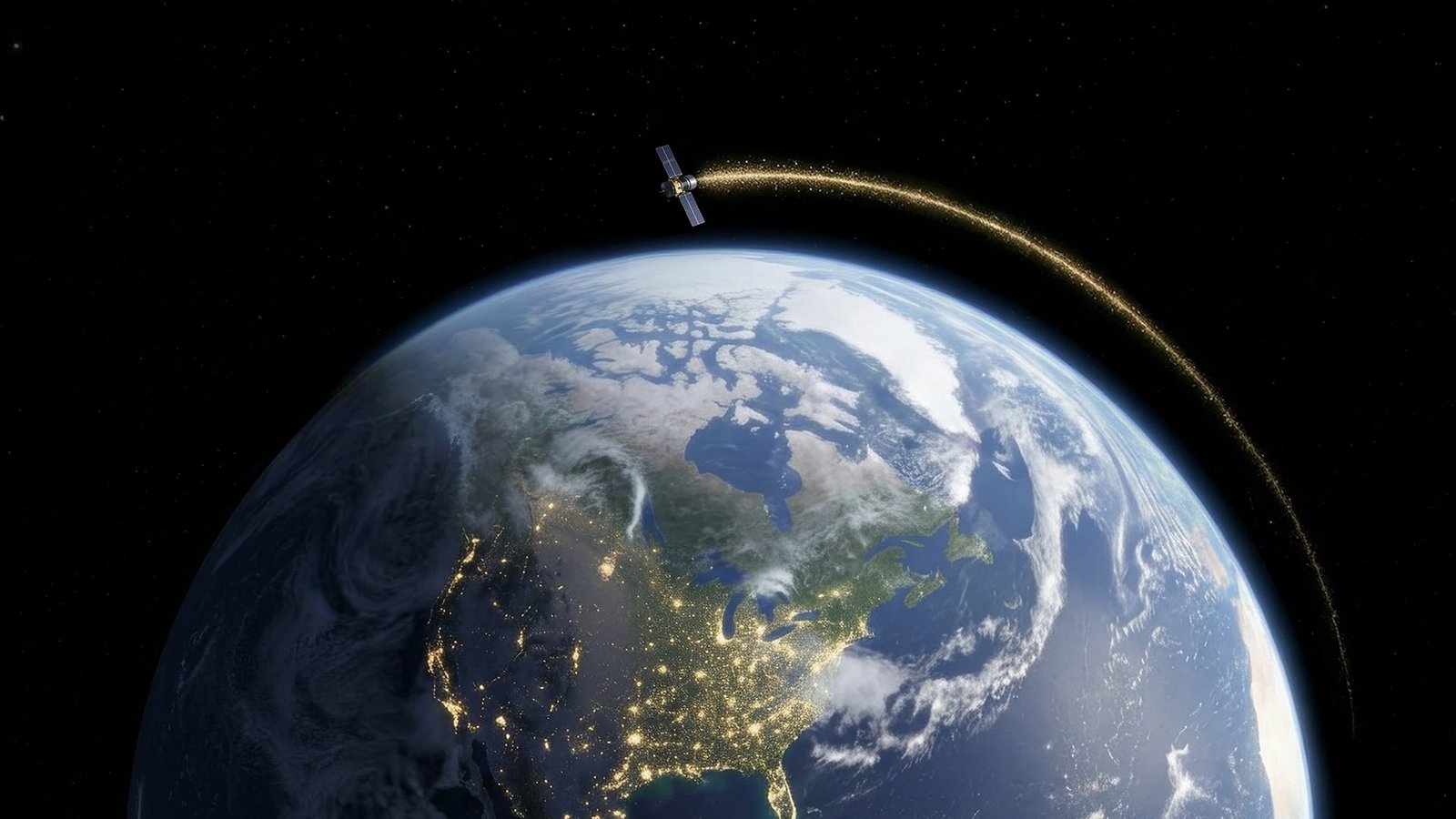
SANTA CLARA, Calif. — NVIDIA has published additional technical information about the NVIDIA Space-1 platform, which operates on the new Vera Rubin Architecture. This launch marks a significant extension of AI acceleration capabilities, which now reach beyond Earth-based systems to support military operations in space.
The announcement highlights a growing convergence between space systems, autonomous AI infrastructure, and defense computing strategy.
The United States has identified AI-native hardware systems as critical components for satellite and defense platform operations, as orbital systems are becoming increasingly data-intensive and independent.
Why NVIDIA Space-1 Matters
The NVIDIA Space-1 initiative seeks to develop advanced AI computing systems that can operate in orbital environments with high latency, limited bandwidth, and the need for autonomous operation.
Traditional satellites relied on ground systems to perform their most computationally intensive tasks.
The current defense and intelligence systems demand that their operational functions have real-time decision-making capabilities enabled by space-based systems.
The military needs onboard AI acceleration because it is now more critical than in earlier space systems.
Vera Rubin Architecture Expands Beyond Data Centers
The Vera Rubin Architecture serves as the architectural framework NVIDIA uses to build its AI infrastructure that operates at scale across different environments, including the cloud, edge, and orbital space.
The architecture, developed to enable enormous AI computations and fast computer systems, is now used to create systems that operate autonomously.
The development of AI hardware design will create new applications that extend beyond traditional data center usage.
Defense-oriented systems that adopt the Vera Rubin Architecture will drive a major transformation in how military computing systems operate.
BlueField-4 STX Supports Autonomous Processing
The orbital platform strategy relies on BlueField-4 STX, which manages secure data movement and networking acceleration, as well as AI workload orchestration across distributed systems.
Centralized processing models face difficulties because the orbital systems experience communication delays and their connections break intermittently.
BlueField-4 STX enables more localized compute management and autonomous system coordination directly at the edge of the network.
This technology holds significant importance for upcoming space-based AI operations.
Orbital Computing Becomes Strategic Infrastructure
The emergence of Orbital Computing technology is driving a fundamental transformation in defense and communications system design.
Future systems will begin processing intelligence, navigation, and operational data through space infrastructure rather than relying solely on Earth-based processing centers.
The system achieves improved response times by operating independently of fragile ground networks while enabling self-sufficient operations in areas under enemy control.
The expansion of Orbital Computing has become an essential element of contemporary defense planning.
Agentic Space Systems Gain Importance
The concept of Agentic Space describes cosmic orbital systems that operate through their own intelligence to choose their actions and coordinate their movements while performing their tasks with minimal human assistance.
The development of artificial intelligence will enable satellites and space assets to operate as intelligent, autonomous entities rather than remain mere communication devices.
The system includes three main functions: automated system surveillance, security evaluation, data ranking, and system network management.
The development of Agentic Space infrastructure systems has brought about a major change that affects all aspects of space mission operations.
Edge AI Extends Beyond Earth-Based Systems
The orbital infrastructure requires Edge AI because remote areas need distributed intelligence to function effectively.
Edge AI enables systems to handle processing tasks at local sites without needing complete access to centralized cloud systems.
The system enables defense and satellite missions to achieve faster communication while maintaining operational stability under challenging network conditions.
Space systems now use Edge AI because AI systems have evolved to operate through multiple decentralized components.
Defense Procurement Priorities Are Shifting
The United States defense procurement process is now undergoing changes due to newly developed orbital AI systems.
Defence Procurement decisions will increasingly require defense organizations to adopt AI-native hardware, autonomous coordination systems, and resilient distributed computing systems.
Defense contractors and technology providers need to adjust their marketing strategies because of new infrastructure platform developments.
Organizations now consider AI acceleration an essential strategic capability rather than treating it as an additional technological resource.
Orbital Systems Require Autonomous Coordination
The growing complexity of orbital environments demands the development of systems that can operate without continuous ground control supervision.
The system needs to handle four primary tasks: traffic management, threat detection, communication optimization, and resource allocation.
The operational requirements of AI-driven orbital systems exceed the efficiency of conventional systems that rely on human operators.
The growing investment in autonomous orbital infrastructure systems stems from this particular aspect.
Vera Rubin Architecture and US Defense Integration
The broader significance of integrating NVIDIA Vera Rubin architecture into US orbital defense systems lies in the convergence of AI infrastructure with national security operations.
The military systems now require real-time intelligence processing and autonomous operational capabilities, which make AI acceleration platforms essential for developing future defense systems.
The new rules will affect procurement standards, strategic partnerships, and future military infrastructure planning.
Orbital AI Competition Intensifies
The introduction of AI-based orbital systems will increase competition between defense contractors, semiconductor companies, and aerospace manufacturers.
Countries that develop autonomous satellite systems will gain an advantage because their systems will improve monitoring capabilities, communication systems, and emergency response.
This creates a new frontier where AI computing and aerospace systems increasingly overlap.
Conclusion: AI Infrastructure Expands Into Orbital Defense
The release of NVIDIA’s Space-1 specifications based on the Vera Rubin Architecture marks a major evolution in the relationship between AI infrastructure and defense systems.
NVIDIA achieves its goal of extending AI acceleration to autonomous orbital environments through its combination of BlueField-4 STX with Orbital Computing and Agentic Space and Edge AI capabilities.
The current shift in Defense Procurement priorities indicates that upcoming military and intelligence systems will increasingly rely on space-based, distributed AI-native computing infrastructure.
As organizations explore integrating NVIDIA Vera Rubin architecture into US orbital defense systems, orbital AI platforms are rapidly emerging as a new strategic layer in national defense and infrastructure modernization.