






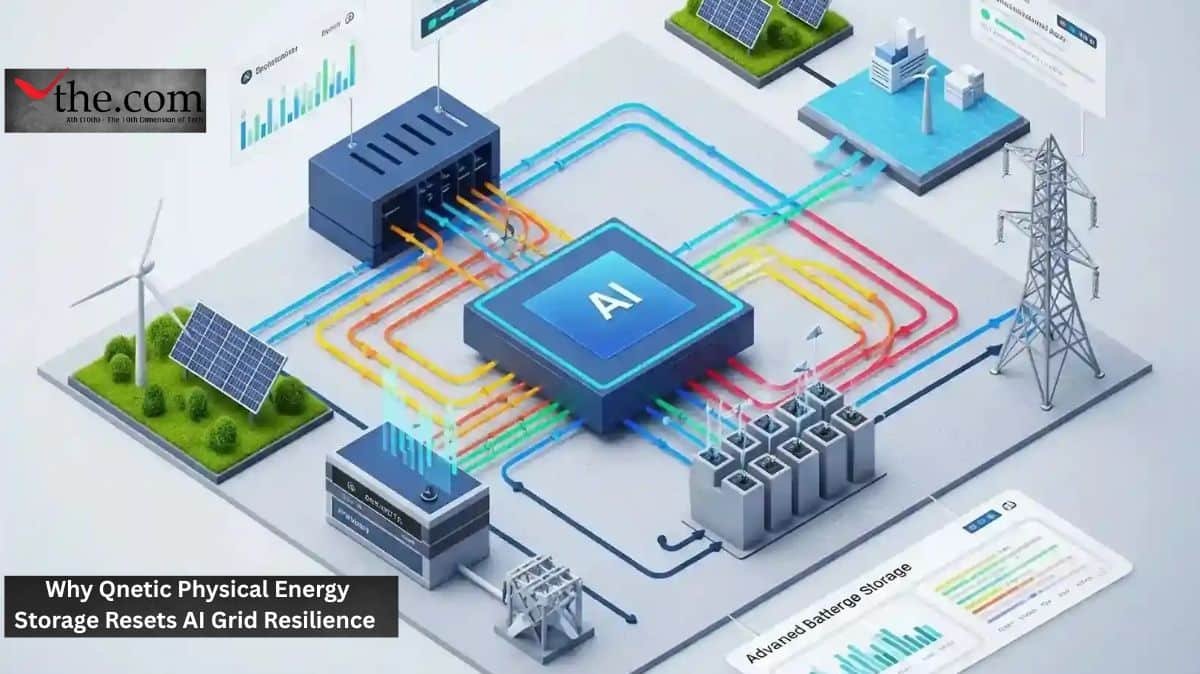
By 2026, the main challenge for artificial intelligence growth is not silicon or algorithms, but the physical limits of the electrical grid. One generative AI query consumes 10 times as much energy as a regular search, and global data center demand could soon match Japan’s total electricity use. When large training clusters cause sudden spikes, local grids can become unstable, risking the whole region’s infrastructure. Chemical batteries help in the short term, but they do not last in nonstop high-use settings. That is why physical energy storage is becoming essential for the AI grid, providing a mechanical answer to a digital power problem.
The Architecture Of Kinetic Stability: The Qnetic Breakthrough
Modern data centers struggle because their energy storage wears out over time. Lithium-ion batteries lose capacity with each use and eventually need to be disposed of safely. The Qunetic system takes a different approach, using an underground capsule about the size of a person. Inside, a carbon-fiber vacuum rotor floats on magnetic bearings, friction-free. This system stores electricity as kinetic energy, so it does not suffer from the chemical breakdown that affects traditional batteries.
The rotor spins at 12,000 revolutions per minute in a complete vacuum, eliminating air resistance and preventing heat buildup. When the AI grid needs extra power quickly, the system changes from motor to generator mode. It turns the spinning energy back into electricity almost instantly. This setup lets a facility use its storage many times a day without sacrificing performance, even after 30 years.
For infrastructure providers, choosing between Qnetic capsule energy storage versus chemical batteries for AI is now a financial necessity. Chemical batteries may cost less upfront, but over their lifetime, they end up costing twice as much as mechanical systems due to replacements and cooling needs. A mechanical battery made from steel magnets and carbon fiber lasts much longer than chemical options in the demanding, high-use world of 2026 computing.
Sustainability and the End of the Mineral Bottleneck
As regulators in places like Virginia and Ireland begin mandating that data centers provide their own on-site balancing power, the environmental impact of that storage is under intense scrutiny. The reliance on rare earth minerals, including lithium and cobalt, creates a fragile supply chain that is prone to political shocks. Sustainability in the energy sector is moving away from mineral extraction and toward long-duration mechanical solutions that use abundant recyclable materials.
Using physical energy storage at the edge of the grid creates a buffer between the variable demands of AI and sometimes limited utility supply. This buffer is key for integrating renewable sources such as wind and solar, which do not always produce steady power. By smoothing out highs and lows in energy production, these mechanical systems keep data center power steady even when the sun is not shining and the wind is calm.
Resetting The Resilience Standard For 2026
Now, an AI cluster’s reliability depends on how well it handles brief power outages on the grid. Even a brief dip in voltage can stop a training run, resulting in significant time and data losses. By maintaining a strong reserve of kinetic energy, operators can bridge the gap between a grid failure and the start-up of backup generators.
Since the vacuum rotor does not rely on chemical reactions, it avoids the risk of battery fires that have occurred in recent years. This makes it safe to install more units closer to server racks, thereby shortening the distance power travels and reducing energy loss. It is a stronger, smaller, and more reliable way to keep the digital economy running.
Going forward, the financial facts are clear. Companies that stick with unstable mineral-based energy will see rising costs and more rules to follow. Those who choose a mechanical approach based on motion rather than chemical reactions will have the strength to drive the next wave of intelligent technology.
Source: Tesla’s Physical AI: The Sovereign Architect of Robotics in 2026








