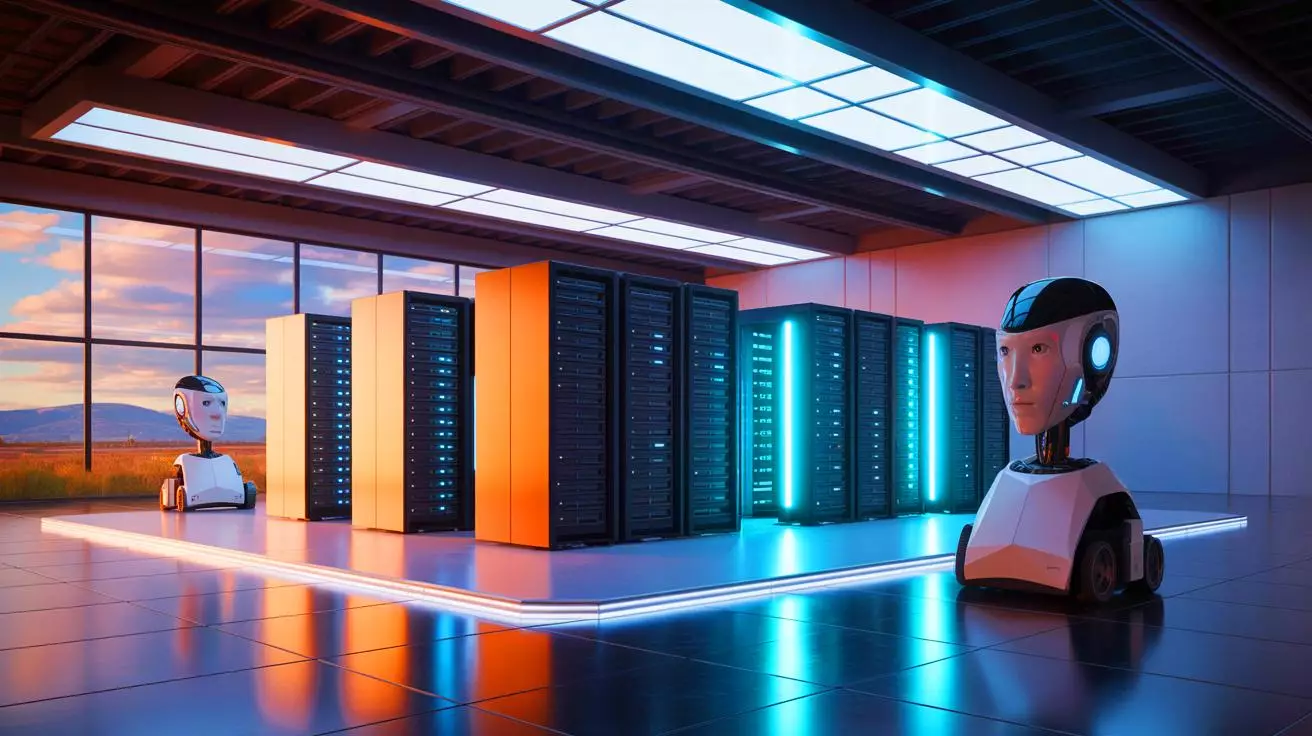
AUSTIN, Texas — Signs emerging from Tesla’s internal infrastructure, along with technical information shared during its recent Abundance Summit, indicate that the 250MW first phase of the Tesla Cortex 2.0 supercomputer is already up and running. It’s one of the most crucial events in the field of humanoid robotics as Tesla is pushing to train large-scale autonomous systems to build Optimus Gen 3 robots. This infrastructure expansion is about much more than boosting the capacity of AI computation systems. In reality, it showcases Tesla’s strategy of vertical integration of robotics, AI training, hardware production, and deployment pipelines. If successful, such a move could completely change the game in manufacturing humanoid robots.
The Rise of Tesla’s Humanoid Robotics Infrastructure Strategy
This infrastructure expansion shows just how fast humanoid robotics is moving from prototype testing and demonstrations to production-scale robotics.
Until now, most companies in this field have focused primarily on developing robot prototypes. Large-scale production, however, calls for much more than just robotics hardware.
What Tesla’s strategy is doing is integrating:
- AI supercomputing infrastructure
- Robotics systems
- Real-life training environment
- Large-scale manufacturing
- Autonomous model optimization
Significance of Optimus Gen 3
The creation of Optimus Gen 3 would be the next step for Tesla in developing humanoid robotics technology. It will reportedly offer advanced motion systems, greater dexterity, and a revamped 22 Degree-of-Freedom robotic hand.
The 22 DoF Hand design plays a vital role, as robotic hand dexterity remains one of the biggest hurdles in humanoid robotics.
Higher sophistication in robotic hands allows for:
- Better object manipulation
- Increased accuracy in industrial work
- Greater environmental interactions
- Extended warehouse automation
- Higher adaptability to the real world
Such upgrades could significantly boost the commercial prospects of humanoid robotics in manufacturing and logistics industries.
Function of Cortex 2.0 in AI Training
Tesla Cortex 2.0’s massive computing power is primarily built to train the “General World Model” that Tesla claims it needs for its humanoid systems.
The architecture provides various functional benefits:
- Quicker autonomous training processes
- Instant behavioral adjustments
- Massive simulation capabilities
- Constant learning in robots
- Better coordination between actions and reactions
Industry analysts believe compute scale could soon become one of the key competitive variables in the humanoid robotics market.The discussion surrounding how Tesla’s Cortex 2.0 supercomputer powers Optimus Gen 3 production highlights the increasing importance of infrastructure scale in autonomous robotics development.
Pressure on Competing Robotics Firms
Tesla’s approach to vertical integration may put significant pressure on competitors like Boston Dynamics and Figure AI.
While the rest of the robotics companies depend on third-party compute sources like Microsoft and Nvidia to facilitate their AI training, Tesla does not have that problem.
Some of the competitive pressures faced by competing companies could be:
- Loss of independence in training
- Higher dependency on infrastructure
- Slow iterations in the simulation process
- More computing coordination problems
- Inefficiency in manufacturing processes
Competitive analysts argue that Tesla has an edge in developing AI through a “compute-to-action” approach.
Relevance of Giga Texas and Mass Production
Giga Texas’s growth is equally crucial to Tesla’s robotic ambitions. The relevance of mass production is growing as humanoid robotics transitions from research labs to the real world.
Tesla’s current production setup gives it an edge in terms of:
- Capacity for mass production
- Supply chain management
- Faster ramp-up of robotics assembly line
- Efficient coordination of logistics
- Efficient deployment of resources
This system could enable Tesla to commercialize humanoids more quickly than most competitors currently anticipate.
AI5 Chip and Autonomous Robotics
Another key reason for Tesla’s robotics strategies is the upcoming AI5 Chip, which will enable autonomous processing systems in the coming era.
Robotic systems require high efficiency from their computers due to the constant need to compute their surroundings, motion, reasoning, and coordination simultaneously.
The AI5 chip can enhance:
- Robotics processing efficiency
- Decision-making speed
- Coordination ability
- Efficiency
- Edge compute scalability
As robotic systems become more autonomous, AI chips might prove just as strategic as the robots themselves.
Importance of Humanoid Scale Strategy
The importance of the Humanoid Scale in the grand scheme is the shift from demonstrating capability to industrialization.
Whereas the robotics industry had been largely interested in demonstrating its prowess through one-off prototypes, the path to long-term success in terms of market dominance lies in scalability, speed, training, and integration.
Tesla’s emphasis in this area involves:
- Scalability of AI infrastructure
- Manufacturing efficiency
- Learning
- Real-world deployment
- Vertically integrated ecosystems
There is an increasing belief that the humanoid robotics battle could well be shifting to the volume stage.
Market Implications for Robotics
The increasing focus on how Tesla’s Cortex 2.0 supercomputer powers Optimus Gen 3 generation showcases how swiftly the priorities of enterprise and industrial robotics are evolving.
Corporations are no longer judging robotics firms based only on their hardware designs. In contrast, compute infrastructure for training artificial intelligence models, compute power, manufacturing capabilities, and the ability to deploy such systems are now the most important competitive advantages.
Simultaneously, Tesla Cortex 2.0 might accelerate the development of humanoid robots in industry by enabling more efficient training and autonomous collaboration.
Conclusion
The activation of Tesla’s Cortex 2.0 supercomputer represents a groundbreaking moment in the development of humanoid robotics infrastructure. With its supercomputer computing capacity, vertical integration of manufacturing operations, artificial intelligence chipsets, and scalable robotics platforms, Tesla is playing an essential role in shaping the future of autonomous humanoid production. As robotics adoption increases, compute infrastructure, artificial intelligence orchestration, and manufacturing scalability may soon become critical necessities for market dominance. With the rise of robotics ecosystems, large-scale humanoid deployments might emerge as one of the most significant technological trends of the coming decade.
Source- CGB Informática