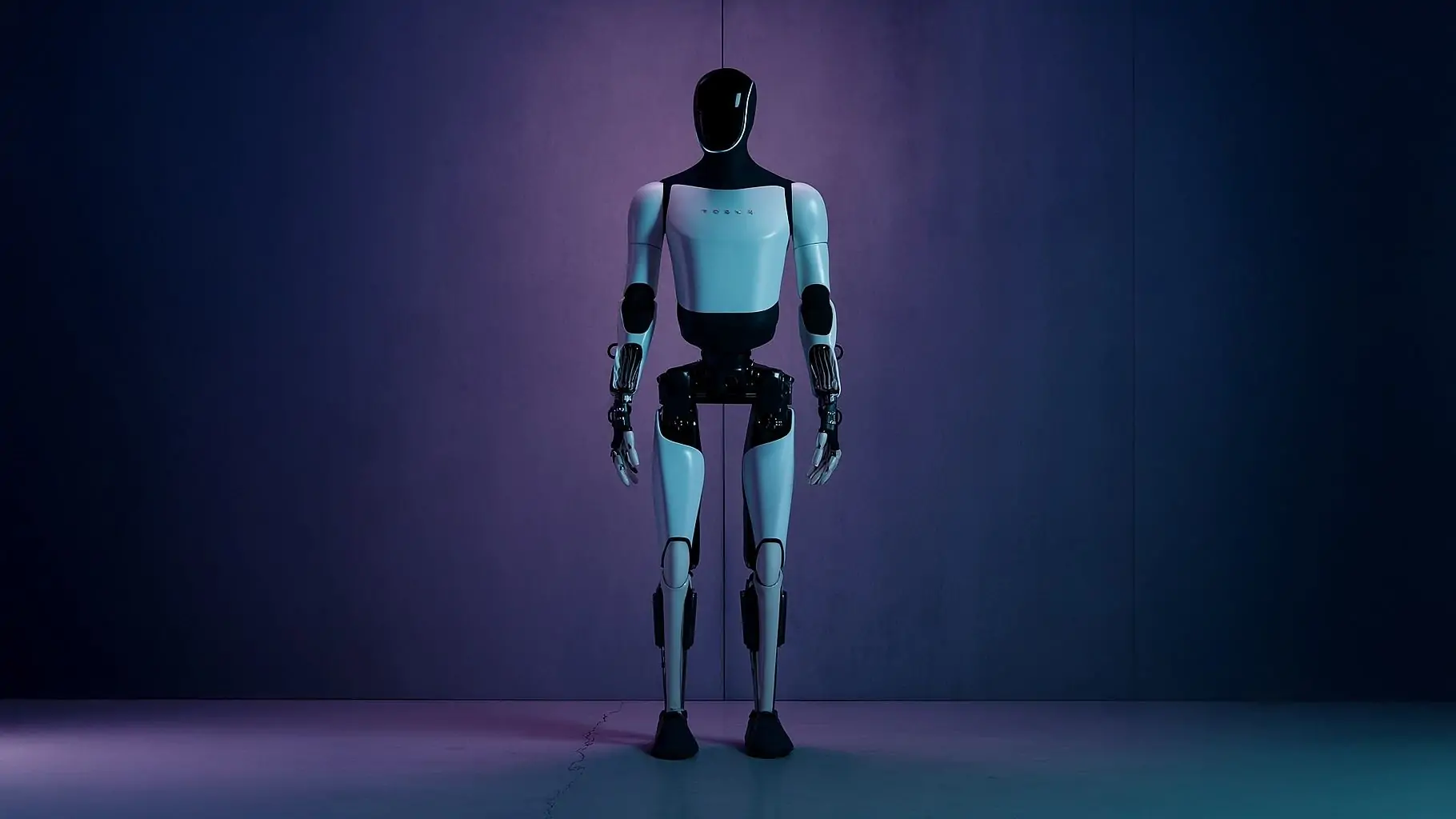
PALO ALTO, Calif. — The latest leaked Tesla humanoid robot specifications are now sparking further contention between the manufacturing and logistics sectors, as reports indicate that Optimus Gen 3 will deliver significant improvements in tactile detection and actuator performance.
According to leaked details, the new robotic architecture will enable a 400 percent increase in fine-touch responsiveness, allowing humanoid systems to complete tasks that current robots cannot handle, such as delicate electronics assembly and precise warehouse operations.
The development is accelerating industry discussions about Tactile Robotics and automation economics, as well as the future changes that will affect the U.S. labor market.
Why Tactile Robotics Matters
Traditional industrial robots operate best in manufacturing environments that require them to repeat the same tasks throughout their work period.
The system faces challenges when handling sensitive tasks that require specialized pressure control, object identification, and precise hand movement.
Tactile Robotics introduces new possibilities by enabling machines to understand physical feedback through enhanced sensory system accuracy.
The ability to handle fragile materials is crucial across all operations, including electronic component manufacturing, packaging, and warehouse management.
Optimus Gen 3 Expands Robotics Capabilities
The leaked Optimus Gen 3 specifications demonstrate significant progress in robot movement and navigation across different environments.
Robots will gain improved grip strength and control, object texture identification, and enhanced assembly task performance through the advanced tactile sensing system.
Humanoid robots will gain new operational capabilities as this technology expansion creates additional environments for their work.
The development of Optimus Gen 3 will drive all industrial fields to adopt robotics systems capable of performing multiple functions.
Tesla Bot Strategy Moves Beyond Demonstration
The present state of the Tesla Bot project shows that humanoid robots are moving from their testing phase toward their first commercial implementation.
Early humanoid systems faced three main challenges: their inability to handle objects precisely, their failure to navigate accurately, and their lack of operational effectiveness.
The development of advanced tactile systems and intelligent AI Actuators has created new possibilities to solve existing challenges.
The growing demand from investors and businesses for robotics solutions to expand workforce capacity has created a new trend in the industry.
AI Actuators Improve Real-World Adaptability
Research focuses on developing AI-powered actuators that generate machine motion by understanding and processing environmental conditions.
AI-based actuators enable continuous system evolution by continuously receiving input on operational challenges, environmental conditions, and their resistance to movement.
The technology enables humanoid robots to operate effectively in unstructured environments that require precise control of their movements.
AI Actuators are now fundamental components throughout the development of upcoming robotics technology.
Warehouse Automation Gains New Momentum
The implications for Warehouse Automation could be especially significant.
Current warehouse robotics systems perform specialized functions by handling repetitive tasks, including inventory movement and package sorting.
Humanoid robots equipped with advanced tactile capabilities can perform a range of operational tasks, including item picking, electronic handling, and adaptive packaging workflows.
The system expansion would create automated processes that operate beyond conventional fixed-function robotic systems.
Labor Market Concerns Intensify
The growth of humanoid robotics technologies has intensified discussions about how advanced automation systems will shape future Labor Market outcomes.
The manufacturing and logistics sectors employ millions of workers in repetitive operational roles that may eventually be partially automated.
The commercial deployment of Optimus Gen 3 systems will enable companies to reduce their reliance on human workers to handle specific tasks in warehouse and assembly environments.
The current situation has sparked intense debate over how economic changes will affect job displacement and workforce restructuring.
Robotics ROI Becomes More Attractive
The evolving financial aspects of humanoid automated systems have driven greater interest in Robotics ROI metrics.
The commercial deployment of humanoid systems faced historical limitations because their operational costs and technical capabilities were considered excessive at that time.
The development of more efficient batteries and tactile sensing technology, together with AI-powered coordination systems, will lead to substantial operational ROI improvements across multiple business periods.
Robotics ROI calculations show more favorable results for business adoption as their performance levels increase.
Amazon and Competitive Logistics Pressure
All logistics companies need to monitor developments in humanoid robotic technology, as these robots will determine how efficiently their warehouses operate, which, in turn, will affect their total costs.
If advanced humanoid systems reduce labor dependency while maintaining operational flexibility, competitors will accelerate their automation investments to remain cost-competitive.
The industry’s distribution and manufacturing networks will experience increased automation adoption as a result of this development.
Predictive Impact on Manufacturing Labor Costs
The broader predictive impact of humanoid robotics on U.S. manufacturing labor costs may become one of the defining economic questions of the next decade.
The widespread use of tactile-capable robotics systems will decrease operational costs for industries that rely on their workers to perform repetitive physical tasks.
The process of automation will change the need for workers, creating demand for professionals who maintain robots, operate artificial intelligence systems, and manage infrastructure systems.
The labor impact will result in both workforce disruption and transformation, as it will not lead to complete worker replacement.
Tactile Robotics and Industrial Flexibility
Tactile Robotics’ ability to operate across various industrial sectors is the main reason for its current popularity.
Humanoid robotic systems can handle different workflows because they do not need facility redesigns, unlike traditional industrial robots, which have fixed operational boundaries.
The various applications of this solution can help organizations in their warehouse, manufacturing, healthcare logistics, and retail fulfillment systems.
The Future of Humanoid Automation
Future industrial automation systems will use human-like robots that can function in spaces designed for human access.
The system allows organizations to save on facility redesign costs while expanding their operations through robotic workforces.
The speed of this transition will depend on progress made in AI actuators, mobility systems, and tactile feedback technology.
Conclusion: Robotics Enters a New Economic Phase
Humanoid robots are reaching a critical stage in their technological development, according to the leaked data about Optimus Gen 3 specifications.
Businesses see humanoid systems as suitable solutions for Warehouse Automation and manufacturing support because Tactile Robotics, AI Actuators, and adaptive movement systems enhance operational accuracy.
The growing focus on Robotics ROI and the long-term effects on the U.S. Labor Market indicate that automation is no longer limited to repetitive industrial machinery alone.
Tesla developments and Amazon’s business interests indicate that humanoid robotics will drive a major economic transformation in U.S. manufacturing labor costs over the next 10 years.
Source: Tesla Blog