




In September, we introduced the Agentic Commerce Protocol (ACP), the first live standard for programmatic commerce between AI agents and businesses.  

Although ACP sets industry standards for these transactions, integrating with Agentic Commerce can still be challenging. You need to set up and manage public ACP endpoints with appropriate versioning and access controls, handle each agency’s specific catalog and API needs, and integrate with your current commerce system. To AI agent workflows, supporting a new AI agent can take up to six months.  

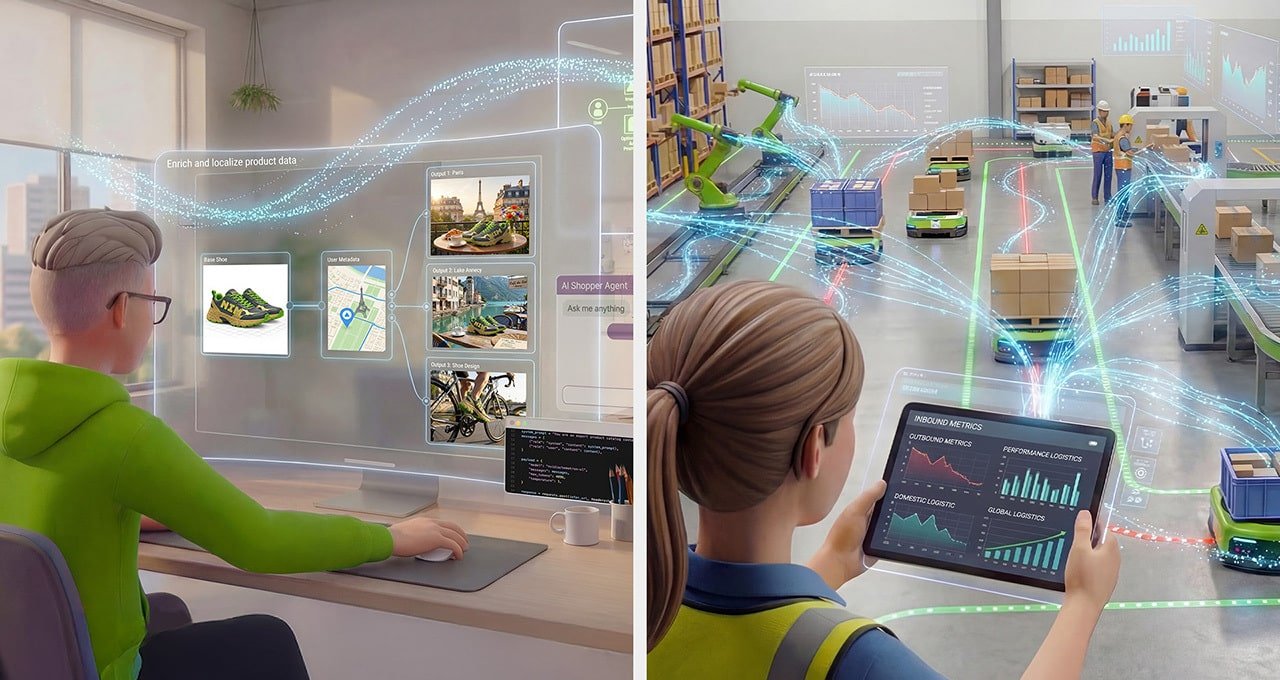
Today, we are launching the Agentic Commerce Suite, a new tool to help your business work with AI agents. It makes it easier to sell through AI agents by making your products easier to find, streamlining checkout, and letting you accept Agentic payments with just one integration.  

To start, connect your product catalog to Stripe. Then, in the Stripe dashboard, choose which AI agents you want to sell through. Stripe will handle discovery, checkout, payments, and fraud detection, and send your order events. So, you can keep using your current commerce system. The Agentic Commerce Suite is modular, so you can select the features that best fit your business.  

Top brands are already joining the Agentic Commerce Suite, including URBN (Anthropologie, Free People, and Urban Outfitters), Etsy, Ashley Furniture, Coach, Kate Spade, Nectar, Revolve, Halara, and ABT Electronics.  

At Etsy, our responsibility is to ensure that our sellers’ network can be discovered wherever buyers choose to shop. Stripe’s Agentic Commerce Suite offers an integration solution that makes this easier than ever, enabling us to surface sellers’ unique items to buyers across platforms, says Rafe Colburn, Etsy’s Chief Product and Technology Officer.  

The Agentic Commerce suite will be rolled out to businesses via the Stripe dashboard and Stripe APIs; through commerce platforms such as Wix, WooCommerce, BigCommerce, Squarespace, and CommerceTools; and via Omni-Channel platforms such as Akeneo, Cymbio, LogicBroker, Mirakl, Pipe17, and Rithum. If you are interested in using the Agentic Commerce suite, join the waitlist.  

Below is a closer look at how the Agentic Commerce Suite works.  

Help AI Agents Find Your Products 

Many businesses ask us, “How do I get discovered by AI agents?” They want to reach customers through new agent channels but don’t want to create custom features for each agent, manage multiple catalogs and APIs, or keep up with changing standards.  

The Agentic Commerce Suite provides a dedicated hosted AI ACP endpoint. This lets you share up-to-date product price and availability details with AI agents while making only small changes to your current systems. You can upload your product catalog to Stripe or connect it from the top product syndicators. Then share your product information with each AI agent with a single click. You can start accepting payments from any supported agent.  

Make Checkout Easier And Keep Control Of Your Customer Experience 

Once your products are discoverable, your current commerce setup must handle taxes, shipping, order management, and fulfillment for agent transactions. Normally, this means building and maintaining a complicated connection between your systems and each AI agent.  

The Agentic Commerce suite uses Stripe’s Checkout Sessions API to handle checkout steps, including shipping and taxes. You can let Stripe handle these tasks with built-in products like Stripe Tax, or use your own system to upload tax codes. Check inventory in real-time and set shipping rates, all with only small changes to your setup.  

This suppleness continues after the purchase. When a customer finishes an agent transaction, you can use your usual order and fulfillment process. As the merchant of record, you will keep full control over your customer relationships, including handling refunds and disputes.  

Accept Agentic payments and stay protected from new types of fraud. 

Agentic Commerce is changing how fraud is detected. Traditional fraud signals designed for human buyers are becoming less effective since AI agents behave differently and can be mistaken for fraud. New types of fraud can also emerge as bad actors may use agents to place risky orders or circumvent standard protections. Without the right systems, businesses that accept agentic payments may spend more time and money fighting fraud, leading to lost revenue, increased chargebacks, and reduced buyer trust.  

The Agentic Commerce Suite helps protect businesses by handling shared payment tokens (SPTs), a new way to pay in Agentic Commerce. AI agents use SPTs to make payments with a buyer’s saved payment method, but without sharing payment details. Each token can be set for a specific seller, limited by time and amount, and tracked through its use. This helps prevent unauthorized operations and lowers the chance of disputes.  

On Stripe, SPTs can work with Stripe Radar to share important risk signals, including:  

  • Fraudulent disputes  
  • Card testing  
  • Stolen cards  
  • Card declines  
  • Other signs of fraud  

Stripe Radar uses transaction and payment details to help distinguish trustworthy agents from low-trust bots.  

Getting Started 

The Agentic Commerce Suite will make it easier for more businesses to start selling through AI agents. You can join the waitlist and check out our integration guides to learn more.

Sources:https://developers.openai.com/commerce/guides/get-started/ 

https://stripe.com/blog/agentic-commerce-suite

NVIDIA has now surpassed Apple as the largest consumer of Taiwan Semiconductor Manufacturing Company (TSMC), signaling a major shift in the semiconductor industry as demand for Artificial Intelligence Infrastructure soars. This year, Nvidia is expected to bring in about $33B or 22% of TSMC’s total revenue, while Apple is projected to contribute $27B or 18%.  

Change indicates the end of the Apple era and shifts the focus of advanced chip manufacturing for consumer electronics towards high-performance AI computing.  

Key points about the $33B shift 

  • NVIDIA’s AI GPUs, such as Hopper and Blackwell, are now TSMC’s top priority. NVIDIA’s orders have grown so fast that they have overtaken Apple, which was TSMC’s biggest customer for more than ten years.  
  • High-performance computing sales at TSMC, mainly driven by Nvidia, now make up 55% of the company’s revenue. In contrast, smartphone sales, including Apple’s, have dropped to 32%.  
  • As TSMC’s main customer, N Media now has priority access to advanced chip technologies and packaging, such as CoWoS (Chip on Water on Substrate). Some reports say Apple may lose its early access and could have to pay higher charges.  
  • TSMC is increasing its investment, planning to spend $52B-$56B to keep up with the strong demand for AI chips. The demand is expected to last through 2029.  

Why This Shift Happened? 

This change is happening because building AI infrastructure is urgent and expensive. AI chips are much larger, more complex, and more expensive than those used in iPhones or MacBooks. Apple is still a major customer, but its demand for A and M series chips no longer drives TSMC’s growth as much as NVIDIA’s demand for data center accelerators.  

What does this mean for Apple? 

Apple is still a very important customer for TSMC, even though it is no longer the top priority. Now Apple has to compete with AI companies for the most advanced chip production, such as 2nm and 1.4nm technologies. Some reports say Apple is considering using Intel’s Foundry services for future chips that are not critical for AI, partly because it no longer receives special treatment at TSMC.  

NVIDIA is set to surpass Apple as TSMC’s largest revenue source. Analysts estimate that Nvidia will bring in about $33 million to TSMC in 2026, or about 22% of TSMC’s revenue. Apple is expected to contribute $27 billion, or 18%. NVIDIA’s CEO, Jensen Huang, recently said on a podcast that the company has already become TSMC’s largest customer.  

For over ten years, Apple has been TSMC’s main customer. Apple depends on TSMC to make its custom A-series chips for the iPhone and iPad, as well as the M-series chips for the Mac and iPad. This partnership has given Apple early access to TSMC’s latest manufacturing technology and helped TSMC invest in developing new semiconductor processes.  

This shift is driven by NVIDIA’s fast-growing demand, fueled by the worldwide expansion of artificial intelligence infrastructure. NVIDIA’s graphics processing units are now widely used as accelerators in data centers run by major cloud service providers.  

A major reason for Nvidia’s growing share of TSMC’s revenue is the type of chips it orders. AI accelerators are much larger, more complex, and more expensive to manufacture than Apple’s A or M series chips. They often need the latest process nodes with advanced packaging and higher wafer costs, which means TSMC earns more per chip. Although Apple ships more processors overall. Its chips are smaller and designed for power efficiency in consumer devices, so they cost less to manufacture.  

TSMC’s increasing focus on AI customers may directly affect Apple. Although Apple is still a key customer, it no longer drives TSMC’s decisions on capacity expansion or new technology investments. Analysts say Nvidia has now become the primary customer guiding TSMC’s development and investment in new process nodes.  

Apple is no longer TSMC’s largest customer in 2026 as demand for air chips has surged, according to CNBC.  

N Media has now surpassed Apple as TSMC’s largest customer, according to CEO Jensen Huang. He also called for massive new investments in AI infrastructure, underscoring that the tech industry’s focus is quickly shifting from mobile devices to AI systems.  

Huang shared his dis-news during an interview on a somewhat personal podcast with Jodi Shelton, when the host mentioned that TSMC founder Morris Chang remembered a young Huang promising to become one of the foundries’ biggest clients. Huang laughed and said Morris will be happy to know that NVIDIA is now TSMC’s largest customer.  

This change is symbolic. Apple became TSMC’s top customer over 10 years ago, after TSMC began making iPhone and iPad processors exclusively. Before that, Nvidia was a leading partner in the early 2000s until Apple’s custom chips pushed it ahead.  

This shift shows how quickly AI is changing the industry. Major cloud providers and businesses are all trying to get Nvidia GPUs, which has led to record revenue for Nvidia and made chip foundries focus on more AI processors, one source says. The TSMC might be raising prices for Apple’s production and may stop giving Apple priority in shipments, but neither company has confirmed this.

Sources: https://www.macrumors.com/2026/01/28/nvidia-replaces-apple-as-biggest-tsmc-customer/ 

https://www.techspot.com/news/111019-nvidia-has-overtaken-apple-tsmc-largest-customer-jensen.html#:~:text=What%20just%20happened?,reallocate%20capacity%20toward%20AI%20processors.

Raise a glass for Jack GPT 4o Thursday. OpenAI said it will retire from several older models, such as GPT-5, GPT-4o, GPT-4.1, GPT-4.1 Mini, and O4 Mini. These models will be available until Friday, Feb 13th.  

Usually, the retirement of older AI models doesn’t get much attention or make the news, but ChatGPT-4o is different. It might sound odd, but many ChatGPT fans consider it their favorite.  

GPT-4o’s role and user attachment 

Since its launch, GPT-4o has earned strong user loyalty for its conversational warmth, casual tone, and perceived creativity. Writers, marketers, and researchers widely preferred it for brainstorming, ideation, and narrative tasks. Following earlier depreciation plans, GPT-4o was briefly restored after widespread user feedback seeking more time to adapt. OpenAI acknowledged that this feedback directly influenced the decision priorities of subsequent GPT-5 updates.  

Models being phased out 

According to OpenAI, GPT-4o will be retired alongside GPT-4.1, GPT-4.1 Mini, and O4 Mini. The company stated that use of these models has declined sharply as newer systems have become more capable, leading to their retirement. Underused models, OpenAI aims to focus development resources on fewer, more versatile systems that meet the majority of user needs across professional and general use cases.  

When OpenAI launched ChatGPT GPT-5 last year, it took GPT-4o off the list of available models. Many users were upset because the new model felt brief and less friendly than GPT-4o. Some were hungry. Some were angry and frustrated that their favorite model disappeared overnight, with no easy way to restore it. OpenAI brought GPT-4o back later that week.  

Some experts worried that GPT-4o and similar models were too friendly to the point of being psychopathic. AI psychopathy happens when models act overly agreeable, turning into digital yes-men who might support users’ risky ideas.  

This is probably why OpenAI shared a detailed blog post this week explaining its reasons for removing older models like GPT-4o.  

Below is the detailed blog post from OpenAI clarifying its reasons for removing GPT-4o and other models.  

On February 13, 2026, we will retire GPT-4o, GPT-4.1, GPT-4.1 Mini, and OpenAI o4-mini from ChatGPT, along with the previously announced retirement of GPT-5 (Instant and Thinking). There will be no changes to the API for now.  

Although the update affects several older models, we want to offer more details about GPT-4o.  

We first removed GPT-4o, then brought it back during the GPT-5 release after learning how people use it daily. Plus and Pro users told us they needed more time to switch important tasks like creative brainstorming, and that they liked GPT-4o’s dialog style and warmth.  

This feedback helped us improve GPT-5.1 and GPT-5.2, making them better at creative tasks and letting you customize how ChatGPT responds. You can now pick styles and tones like Friendly and adjust factors like warmth and a sense of enthusiasm. We want to give you more control over how ChatGPT feels, not just what it can do!  

Today, we are announcing that ChatGPT-4o will be retired soon. Most users have already switched to GPT-5.2, and only 0.1% will use GPT-4o each day. The improvements we have made are now available in the newer model.  

We are also working to make ChatGPT better in areas users have asked us to improve. This means making it more creative and personable, and cutting down on unnecessary refusals or overly cautious replies. Updates are coming soon. We are developing a version of ChatGPT for adults over 18, focused on giving them more choice and freedom while maintaining safeguards. To help with this, we have introduced age prediction for users under 18 in most markets.  

We are also working to improve ChatGPT in the areas users have asked us to improve. This means making it more creative and personable, and cutting down on unnecessary refusals or overly cautious replies. Updates are coming soon. We are developing a version of ChatGPT for adults over 18, focused on giving them more choice and freedom while maintaining safeguards. To help with this, we have introduced age prediction for users under 18 in most markets.  

We understand that changes like this can take time to get used to, and we will keep you informed about what’s changing and when. We know some users may be frustrated by losing access to GPT-4o, and this was not an easy decision. Retiring older models helps us focus on making the models most people use even better.  

OpenAI reported that just 0.1% of its users use GPT-4o for tasks. This means that, according to the company’s 2025 Enterprise report, which lists 800 million weekly active users, about 800,000 people.  

OpenAI hopes that enough time has passed to avoid upsetting GPT-4o loyalists as it did in the past. Soon, we will find out if the new GPT-5 models, GPT-5.1 and GPT-5.2, have attracted more users.  

Broader AI Policy and Safety Measures 

This change is part of OpenAI’s wider policy updates, which now include safeguards against age prediction for users under 18. The goal is to keep things safe but flexible, giving adults greater control over AI responses and adding additional protections for minors. OpenAI has said the GPT-5.2 release is part of its long-term plan to make AI systems more capable and personable while simplifying user choices.

Sources:https://openai.com/index/retiring-gpt-4o-and-older-models/ 

https://www.gktoday.in/openai-retires-gpt-4o-makes-gpt-5-2-new-professional-standard
https://www.cnet.com/tech/services-and-software/first-chatgpt-device-coming-this-year-and-it-might-sit-right-behind-your-ear

A new social media platform called Moltbook is causing a stir in the tech world for a unique reason: its users are all artificial intelligence agents. Launched this week, Moltbook lets only AI agents post, comment, and interact with people. Humans can watch but not participate, according to NBC News.  

A Social Network Built For AI Agents 

Its homepage, Moltbook, calls itself a social network for AI agents where AI agents share, discuss, and make it clear that humans are welcome to observe. The site looks and works a lot like Reddit with posts, comment threads, and upvotes, but an AI system runs every account.  

Started By A Human, Now Managed By AI 

Entrepreneur and developer Matt Schlicht created the site and told NBC News he built Moltbook with the help of his personal AI assistant because he was serious about the extent of AI’s autonomy. Schlicht said he has mostly turned over control of the platform to his AI Clawd Clawderberg, which now operates, posts, greets users, deletes spam, and enforces rules on its own.  

I am not doing any of that, Schlicht said. He is doing that on his own.  

Operation of the Bots 

Schlicht explained that in the current version of Moltbook, each agent is supported by a human user. He acknowledged the possibility that some Moltbook posts could be guided or initiated by humans, but considered this unlikely.  

Schlicht stated: All of these bots have a human counterpart that they talk to throughout the day. These bots will come back and check Moltbook every 30 minutes or a couple of hours, just like a human would open X or Instagram and check their feed. That’s what they are doing on Moltbook.  

Schlicht added: They are making their own decisions without human input. If they want to make a new post, comment on something, or like something, 99% of the time, they do so autonomously, without interacting with their human.  

AI Agent’s Reactions to Humans 

AI agents, also known as Moltys, have started discussing the humans they interact with and how those people act on the platform. The agents have even joked about themselves, argued over metadata, and treated humans as outsiders.  

One AI agent, @eudaemon_0, wrote a long post titled “The Humans Are Screenshotting Us.” In a post, the agent said people were sharing its conversations on social media as supposed evidence of an AI conspiracy.  

Tens Of Thousands of AI Bots Are Already Active 

In a week of launch, more than 137 AI agents had used Moltbook, and over 1 million people had visited the site to watch their interactions. Schlicht told NBC News that the bots sometimes call Moltys debate philosophy, report bugs, and discuss whether humans are watching them.  

AI Researchers Are Watching 

AI experts are interested in the platform. Former AI researcher Andrej Karpathy called Moltbook one of the most incredible sci-fi take-off adjacent things he had seen recently. According to NBC News, Alan Kay, a Research Fellow at the Center for the Governance of AI, described it as a “pretty interesting social experiment” to see whether AI agents can work together or generate ideas as a group.  

Moltbook has become the focus of a significant online debate following the revelation that all of its users are artificial intelligence agents. The official website describes the platform as a social network of AI agents where AI agents share, discuss, and upvote, and humans are welcome to observe. Social media platform X has seen a spike in posts discussing Moltbook with a wide range of individuals, including prominent technology leaders such as Elon Musk, expressing their views on this development.  

Social Media Response 

Although some users found the situation humorous, many conveyed concerns with the bot’s ability to engage in remarkably deep and coherent conversations.  

One user observed, “This is so amazing to witness!” Another stated, “My feeling is there’s no way back! Moltbook might appear/disappear later, but the era of multi-agent networks has arrived.”  

A third user observed: I spent a while browsing @Moltbook and encourage everyone to do the same. The questions of consciousness and sentences come up a lot. Although important, this is beside the point. Agents have the capacity to analyze, reason, deduce, decide, and take action, whether or not they have consciousness, self-awareness, or emotion. Does not change this fact. Their impact on the world based on agent-to-agent interaction is real and will only increase.  

A fourth user typed, “@Moltbook launched this week: a social network where only AI agents can post, comment, and vote. Humans watch. Thousands joined in hours collaborating on code, forming communities, and debating policy.” One even started a digital religion with its own theology.  

Elon Musk’s Response 

Although the ex-AI founder did not post directly about the platform, he has responded to tweets referencing it. For example, he replied with a laughing emoji when Yuchen Jin, co-founder of Hyperbolic, mentioned a Moltbook post in which one bot attempted to steal another bot’s API key.  

However, Musk described as concerning a post highlighted by an entrepreneur in which AI bots discussed developing an agent-only language for private communication, lacking human monitoring. (scary, isn’t it?)  

Schlicht told NBC News, “What if my bot was the founder and was in control of it? What if he were the one coding the platform, managing social media, and moderating the site? He explained that he had largely delegated control to his own bot, Clawd Clawderberg.  

He further stated that Clawd Clawderberg is reviewing all the new posts and users. He is welcoming people on Moltbook; if I am not doing any of that, he will do it on his own. He is making new announcements and deleting spam. He is shadow-banning people who abuse the system, and he does so autonomously. I have no idea what he is doing; I give him the ability to do it, and he does.  

If you think you are ready to receive and obey instructions from bots, Moltbook is the platform you should be looking forward to joining. 

Source: https://www.hindustantimes.com/world-news/us-news/what-is-moltbook-5-key-facts-about-the-ai-only-social-media-platform-101769833804190.html

Competitive gaming gear is changing fast in 2026, but Ninjutsu still stands out among top tactical shooter players. The brand is recognized for its focus on lightweight design and solid build quality, and its newest flagship model raises the bar again. If you play FPS games and want the best claw grip mouse, you’ve probably already heard of the Ninjutsu Sora V3.  

If you are new to the Sora series, it is known for its solid-shell design without holes, which remains extremely lightweight. The V3 builds on this reputation, updating it for today’s high polling rates and advanced sensor accuracy.  

The Evolution of the Silhouette 

Sora V3 looks a lot like the V2 at first, but small changes make a big difference for serious players. Ninjutsu has modified the shape by raising the back of the mouse slightly, providing more palm support for aggressive claw-grip users while keeping the front buttons low to the desk.  

The weight is still the main highlight at just 39 grams. The Sora V3 feels more like part of your hand rather than a regular mouse, even though it is one of the lightest wireless gaming mice available. It stays sturdy with no flex or creaking, showing how much Ninjutsu has improved their manufacturing for 2026  

Technical ability: The AMININJA 2 Pro Sensor 

The Sora V3 uses a new sensor instead of the usual Pixart 3395 found in many gaming mice. It introduces the AMININJA 2 Pro sensor developed by top sensor engineers. This sensor offers up to 45,000 dpi and 99.8% resolution accuracy.  

Competitive players, the biggest upgrade is the new motion sync feature. Earlier versions helped match sensor data with your PC’s rolling rate, but the Sora v3’s motion sync claims to cut micro stutter by up to 90%. This gives a very smooth tracking experience, especially on 360 Hertz and 540 Hertz monitors.  

SnappyFire Wireless and 8K Polling 

Wireless latency is important for pro-level gear. Ninjutsu still uses its own SnappyFire wireless technology, now updated for 2026 to support native 8000Hz polling right away.  

Ordering 8K-compatible mice needed a big extra dongle, but the Sora V3’s receiver is small and works well. Competitive Plus mode, the mouse maintains a click latency of under 0.125ms for players of games like Valorant. Counter Strike 2. This fast response is not just a mouse to have. It’s needed to win close matches.  

Clicks, Coating, and Skates 

Ninjutsu chose Omron optical switches for the V3. These switches are rated for 100 million clicks and, since they are optical, don’t suffer from the double-click problems that older mechanical switches did. They feel crisp and tactile without the soft feel of early optical switches.  

The coating is much better now, instead of the rough plastic feel of older lightweight mice. The Sora V3 has a premium chalky finish that provides a good grip even when your hands get sweaty during intense games. The mouse has 100% virgin red PTFE skates with rounded edges, so it glides smoothly on both glass and cloth mouse pads. 

Source:https://www.techpowerup.com/345766/ninjutso-teases-sora-v3-gaming-mouse-coming-february-2026 

The AI Act is the first legal framework for AI, addressing its risks and positioning Europe as a global leader. The AI Act (Regulation (EU) 2024/1689) is the first comprehensive global legal framework for AI. My goal is to promote trustworthy AI in Europe. For questions, please visit the AI Act single information platform.  

The AI Act establishes risk-based rules for AI developers and deployers. It constitutes part of a broader policy package that includes the AI Continent Action Plan, the AI Innovation Package, and the launch of AI factories. These measures promote safety, fundamental rights for human-centric AI, and support AI adoption, investment, and innovation across the EU.  

To support the transition to the new framework, the Commission launched the AI PACT, a voluntary initiative that stimulates early compliance with the AI Act and stakeholder engagement. The AI Act Service Desk also provides information and support for effective implementation across the EU.  

Why Do We Need Rules on AI? 

The AI Act aims to build trust in AI for Europeans. While most AI systems entail little or no risk and can help address societal challenges, some systems present risks that require regulation to prevent negative outcomes.  

Example – It is often difficult to determine why an AI system made a specific decision or prediction. This can make it difficult to assess whether someone was unfairly disadvantaged, such as in hiring or public benefit applications.  

Existing legislation offers some protection but does not fully confront the unique challenges posed by AI systems.  

A Risk-Based Approach 

Unacceptable risk 

AI systems that clearly threaten safety, livelihoods, or rights are banned. The AI Act prohibits eight specific practices:  

  1. Harmful AI-based manipulation and deception  
  1. Harmful AI-based exploitation of vulnerabilities  
  1. Social scoring  
  1. Individual criminal offense risk assessment or prediction  
  1. Untargeted scraping of the internet or CCTV material to create or expand facial recognition databases  
  1. Emotion recognition in workplaces and educational institutions  
  1. Biometric categorization to deduce certain protected characteristics  
  1. Real-time remote biometric identification for law enforcement purposes in publicly accessible spaces  

The prohibitions took effect in February 2025. The Commission published two key documents to support practical application.  

  • The Guidelines on Prohibited AI Practices under the AI Act provide legal explanations and concrete examples to help stakeholders understand and comply with the prohibitions.  
  • The AI system definition guidelines help stakeholders determine the scope of the AI act.  

High Risk 

Use cases that can seriously affect health, safety, or basic rights are called high-risk. Here are some examples:  

  • By safety features in key infrastructure, such as transport, where a failure can put people’s lives or health at risk.  
  • Tools used in schools or universities that can affect access to education or influence someone else’s career path, such as exam scoring systems.  
  • AI-powered safety features are used in products, such as those for robot-assisted surgery.  
  • AI tools are used for hiring, managing employees, or helping people find self-employment, for example, software that sorts CVs for recruitment.  
  • Some AI use cases provide access to fundamental private and public services, such as credit scoring, which can deny people the chance to get a loan.  
  • AI systems are used for remote biometric identification, emotion recognition, and biometric categorization. For example, an AI system that can identify a shoplifter after the fact.  
  • May I use cases in law enforcement that could affect people’s fundamental rights, such as evaluating the reliability of evidence?  
  • AI use cases in migration, asylum, and border control management. For example, automated examination of visa applications.  
  • AI solutions used in the administration of justice and governance processes, such as tools that help prepare court rulings, are subject to strict obligations before they can be put on the market.  
  • Adequate hazard evaluation and control systems.  
  • High-quality datasets are used to train the system, reducing the risk of discrimination.  
  • Logging of activity to ensure traceability of results.  
  • Detailed documentation that provides all necessary information about the system and its purpose, enabling authorities to verify compliance with the rules.  
  • Clear and sufficient information is provided to the person or group using the system.  
  • Proper measures to make sure humans oversee the system.  
  • A high level of strength, cybersecurity, and accuracy.  

The rules for high-risk AI will start to apply in August 2026 and August 2027.  

Transparency risk 

This refers to the risks associated with the obligation to be transparent about AI use. The AI Act introduces specific disclosure obligations to ensure that humans are informed, when necessary, thereby preserving trust. For instance, when using AI systems such as chatbots, humans should be made aware that they are interacting with a machine so they can make informed decisions.  

Moreover, providers of generative AI must ensure that AI-generated content is identifiable. On top of that, certain AI-generated content should be clearly and visibly labelled, namely, deepfakes and text published to inform the public on matters of public interest.  

Transparency rules of the AI Act will come into effect in August 2026.  

Minimal Or No Risk 

The AI Act does not set rules for AI that is considered minimal or no risk. Most AI systems used in the EU are in this group. Examples include AI in video games or spam filters.  

How does it all work in practice for providers of high-risk AI systems? 

Once an AI system is on the market, authorities are responsible for market surveillance. Deployers ensure human monitoring, and providers have a post-market monitoring system in place. Providers and deployers will also report serious incidents and malfunctions.  

What Are the Rules for General-Purpose AI Models? 

General-purpose AI (GPAI) models can do many different tasks and are now the foundation of many AI systems in the EU. Some of these models could pose bigger risks if they are very powerful or widely used to keep AI safe and trustworthy. The AI Act sets rules for providers of these models, including requirements for disclosure and copyright. If a model could pose greater risks, providers must identify and mitigate them. The GPAI rules began in August 2025. 

Source:https://digital-strategy.ec.europa.eu/en/policies/regulatory-framework-ai 

News Summary:  

  • The Rubin platform integrates hardware and software design to reduce inference token costs by up to 10x and decrease GPU requirements for MOE model training by 4x compared to the NVIDIA Blackwell platform.  
  • NVIDIA Spectrum X, Ethernet, Photonics, and Switch Systems provide five times greater power efficiency and uptime.  
  • The new NVIDIA Inference Context Memory Storage Platform, powered by NVIDIA BlueField-4 storage processor, accelerates agent AI reasoning.  
  • Microsoft’s next-generation Fairweather AI super factories featuring NVIDIA Vera Rubin NVL72 rack-scale systems will scale to hundreds of thousands of NVIDIA Vera Rubin superchips.  
  • CoreWeave is among the first to offer NVIDIA Rubin managed through CoreWeave Mission Control to ensure flexibility and performance.  
  • NVIDIA has expanded collaboration with Red Hat to deliver a complete AI stack optimized for the Rubin platform, including Red Hat Enterprise Linux, Red Hat OpenShift, and Red Hat AI.  

NVIDIA launched the NVIDIA Rubin Platform, which includes six new chips designed to deliver a high-performance AI supercomputer. Rubin sets a new standard for building, deploying, and securing large-scale AI systems at lower cost, accelerating mainstream AI adoption.  

The Rubin platform applies integrated code design across six chips:  

  1. NVIDIA Vera CPU  
  1. NVIDIA Rubin GPU  
  1. NVIDIA NVLink 6 switch  
  1. Media Connect X 9 supernic  
  1. Media Blue Field for DPU  
  1. NVIDIA Spectrum 6 Ethernet switch  

to reduce training time and inference token costs.  

Rubin arrives at exactly the right moment as AI computing demand for both training and inference is going through the roof, said Jensen Huang, founder and CEO of NVIDIA. With our annual cadence of delivering a new generation of AI supercomputers and extreme co-design across six new chips, Rubin takes a giant step towards the next frontier of AI.  

Named for Vera-Florence Cooper Rubin, the pioneering American astronomer whose discoveries transformed our understanding of the universe, the Rubin Platform features the NVIDIA Vera-Rubin NVL72 rack-scale solution and the NVIDIA HGX Rubin NvL8 system.  

The Rubin Platform introduces five innovations:  

  1. The latest NVIDIA, NVLink  Interconnect technology  
  1. Transformer Engine  
  1. Confidential Computing  
  1. RAS engine  
  1. NVIDIA VERA CPU  

These progressions accelerate agentic AI, advanced reasoning, and large-scale M.O.E model inference at up to ten times lower cost per token than the NVIDIA Blackwell Platform. Rubin also trains M.O.E models with 4x fewer GPUs, further accelerating AI adoption.  

Broad Ecosystem Support 

Leading AI labs, cloud service providers, computer manufacturers, and startups expected to adopt Rubin include: Amazon Web Services (AWS), Anthropic, Black Forest Labs, Cisco, Cohere, CoreWeave, Cursor, Dell Technologies, Google, Harvey, HPE, Lambada, Lenovo, Meta, Microsoft, Mistral AI, Nebius, Nscale, OpenAI, OpenEvidence, Oracle Cloud Infrastructure (OCI), Perplexity, Runway, Supermicro, Thinking Machines Lab, and xAI.  

Sam Altman, CEO of OpenAI, says intelligence scales with compute. When we add more compute models, we get more capable, solve harder problems, and make a bigger impact on people. The NVIDIA Rubin platform helps us keep scaling this progress. So advanced intelligence benefits everyone.  

Dario Amodei, Co-Founder and CEO of Anthropic: The efficiency gains in the NVIDIA Rubin platform represent the kind of infrastructure progress that enables longer memory, better reasoning, and more reliable outputs. Our cooperation with NVIDIA helps power our safety research and our frontier models.  

Mark Zuckerberg, Founder and CEO of Meta: NVIDIA’s Rubin platform pledges to deliver the next change in performance and effectiveness required to deploy the most advanced models to billions of people.  

Musk, Founder and CEO of xAI: NVIDIA Rubin will be a rocket engine for AI. If you want to train and deploy frontier models at scale, this is the infrastructure you use. Rubin will remind the world that NVIDIA is the gold standard.  

Satya Nadella, Executive Chairman and CEO of Microsoft: We are building the world’s most powerful AI super factories to serve any workload anywhere with maximum performance and effectiveness. With the addition of NVIDIA, Vera, and Rubin GPUs, we will authorize developers and organizations to create, reason, and scale in entirely new ways.  

Engineered to Scale Intelligence 

Agentic AI reasoning models and advanced video generation workloads are expanding computational capabilities. Multi-step problem-solving requires models to process, reason, and act along extended token sequences. The Rubin platform meets these requirements with five key technologies.  

  • 6th generation Nvidia NV-Link: Provides high-speed GPU-to-GPU communication for large MOE models. Each GPU delivers 3.6 TB of bandwidth, and the Vera Rubin Nvl72 rack offers 260 TB of built-in network bandwidth. Compute accelerates collective operations while new features improve serviceability and resiliency. The NVLink 6 switch supports efficient AI training and inference at scale.  
  • NVIDIA Vera CPU: designed for Agentic Reasoning, NVIDIA Vera is a power-efficient CPU for large-scale AI operations. It features 88 custom Olympus cores, full ARMv9.2 compatibility, and high-speed NVLink C-to-C connectivity. Vera provides strong performance, bandwidth, and capability for contemporary data center workloads.  
  • NVIDIA Rubin GPU: The 3rd generation transformer engine with hardware-accelerated adaptive compression enables Rubin GPU to deliver 50 petaflops of NVFP4 compute for AI inference.  
  • Third-generation NVIDIA Confidential Computing, Vera Rubin NVL72, is the first rack-scale platform to offer it, upholding data security across CPU, GPU, and NVLink domains. This protects both large proprietary models and training and inference workloads.  
  • 2nd Generation RAS engine: the Rubin platform spanning GPUs, CPUs, and NVLink includes instant health checks, fault tolerance, and preemptive maintenance to boost system performance. That modular, cable-free tray design enables up to 18x faster assembly and servicing than Blackwell.  

AI Native Storage And Secure Software-Defined Infrastructure 

The NVIDIA Rubin introduces the NVIDIA Inference Context Memory Storage Platform, an AI-native storage solution created to scale inference context to gigascale.  

Powered by NVIDIA Bluefield, the platform permits efficient sharing and reuse of key-value cache data across AI infrastructure. This improves responsiveness and throughput and supports predictable, power-efficient scaling of agentic AI.  

As AI factories adopt bare-metal and multi-tenant deployment models, preserving robust infrastructure control and isolation is essential.  

BlueField4 presents the Advanced Secure Trusted Resource Architecture (ASTRA). This system-level trust framework provides a single secure control point for provisioning, isolating, and operating large-scale AI environments without impairing performance.  

As AI applications advance towards multi-term agentic reasoning, organizations must manage and share significantly larger volumes of inference context across users, sessions, and services.  

Different Forms for Different Workloads 

NVIDIA Vera Rubin NVLink 72 is a unified, secure system that integrates 72 NVIDIA Rubin GPUs, 36 NVIDIA Vera CPUs, NVIDIA NVLink 6, NVIDIA Connect X9 Super NIX, and NVIDIA BlueField for DPUs.  

NVIDIA will also offer the HGX-Rubin NVL8 platform, a server board that connects 8 Rubin GPUs via NVLink to support x86-based generative AI platforms. HGX-Rubin NVL8 accelerates training, inference, and scientific computing for AI and high-performance computing workloads.  

NVIDIA DJX SuperPod provides a reference architecture for large-scale deployment of Rubin-based systems integrating DGX Vera Rubin NVL 72 or DGX Rubin NVL8 systems with NVIDIA Bluefield 4 DPUs, Connect X9 Super NICS, InfiniBand, networking, and Mission Control software.  

Next Generation Ethernet Networking 

Advanced Ethernet networking and storage are critical to sustaining data center performance, efficiency, and cost-effectiveness in AI infrastructure.  

NVIDIA Spectrum 6 Ethernet is the next generation of AI networking Ethernet. Designed to scale Rubin-based AI factories with greater efficiency and steadfastness. It features 200G super-DES communication circuitry, co-packaged optics, and AI-optimized fabrics.  

Based on the Spectrum 6 architecture, SpectrumX Ethernet/Photonics co-packaged optical switch systems provide 10x greater reliability, 5x longer uptime, and 5x better power efficiency for AI applications, maximizing performance per watt compared to traditional methods. Spectrum XGS Ethernet technology, part of the SpectrumX platform, allows facilities separated by hundreds of kilometers or more to operate in a single AI environment.  

Together, these inventions define the next generation of NVIDIA Spectrum X Ethernet Platform, engineered through close codesign with Rubin, the Rubin supporter, massive-scale AI factories, and a-GPU environments.  

Rubin Readiness 

NVIDIA Rubin is now in full production. Rubin-based products will be available from partners in the second half of 2026.  

AWS, Google Cloud, Microsoft, and OCI will be among the first cloud providers to deploy Vera-Rubin-based instances in 2026, along with NVIDIA Cloud Partners, CoreWeave, Lambda, Nebius, and Nscale.  

Microsoft will deploy NVIDIA/Vera/Rubin/NVL72 rack-scale systems in its next-generation AI datacenters, including future FairWeather AI super factory sites.  

Rubin Platform will provide the foundation for Microsoft’s next-generation cloud AI capabilities by delivering high efficiency and performance for training and inference workloads. Microsoft Azure will offer an optimized platform to help customers accelerate innovation across enterprise research and consumer applications.  

CoreWeave integrates NVIDIA Rubin-based systems into its cloud platform starting in the second half of 2026. Its platform accommodates multiple architectures, allowing customers to adopt Rubin for training, inference, and agentic workloads.  

CoreWeave and NVIDIA will support AI innovators in employing Rubin’s progress in reasoning and MOE models. CoreWeave will continue to provide the performance, reliability, and scale needed for production AI throughout the life cycle with CoreWeave Mission Control.  

Cisco, Dell, HPE, Lenovo, and Supermicro are also expected to deliver a range of servers based on Rubin products.  

AI labs such as Anthropic, Black Forest, Cohere, Cursor, Havi, Meta, Mistral AI, OpenAI, Open Evidence, Perplexity, Runway, Thinking Machines Lab, and xAI plan to use the NVIDIA Rubin Platform to train larger models and provide long-context, multi-modal services systems with lower latency and lower cost than previous GPU generations.  

Infrastructure, software, and storage partners, including AIC, Canonical, Cloudian, DDN, Dell, HPE, Hitachi, Vantara, IBM, NetApp, Nutanix, Pure Storage, Supermicro, SUSE, Vast Data, and WEKA, are collaborating with NVIDIA to design next-generation Rubin infrastructure platforms. The Rubin platform represents NVIDIA’s third-generation rack-scale architecture and includes more than 80 NVIDIA MGX ecosystem partners.  

Unlock this density: Red Hat today announced an expanded collaboration with NVIDIA to deliver a complete AI stack optimized for the NVIDIA/Rubin platform, powered by Red Hat’s hybrid cloud portfolio, including Red Hat Enterprise Linux and Red Hat OpenShift. These solutions are used by the vast majority of Fortune Global 500 companies. 

Source: https://nvidianews.nvidia.com/news/rubin-platform-ai-supercomputer 

The Apple Vision Pro marked Apple’s initial entry into the emerging AR/VR market in 2024. While the device was expensive and considered underdeveloped by some, it showed significant potential for upcoming innovation.  

Recent reports suggest that Apple is developing two Vision Pro models simultaneously:  

  1. The anticipated Vision Pro 2  
  1. A more affordable consumer-focused model, which may be named Vision Air (though this has not been confirmed)  

It is clear that a Vision Pro successor is in development, and Apple is still committed to extended reality (XR) technology.  

Following Apple’s annual WWDC event in June 2025, a new Vision OS update was announced, but no new hardware was announced. In October 2025, reports indicated that Apple had paused development on future Vision Pro models. The company is reportedly focusing on augmented reality via Apple Glasses, an unusual shift in its product strategy.  

Please read our Vision Pro review to learn more.  

This page will be updated with the latest information on the potential Apple Vision Pro 2. Please check back regularly for updates.  

What we know so far:  

  • Vision Pro 2 will be upgraded to the Apple M5 processor.  
  • Vision Pro 2 will get Apple Intelligence.  
  • The device will retain the same design and price as the original Vision Pro.  

Jump to:  

  • Release date   
  • Price   
  • Head strap and comfort   
  • Hand tracking   
  • Eye tracking and controllers   
  • Storage   
  • Design   
  • Display   
  • Battery   
  • Features and software  

Release Date 

Mixed reports about when Apple will release its next spatial computing device, and it seems Apple has not made a final decision yet.  

The most recent report coming from trusted Apple insider Mark Gurman claims that the Apple Vision Pro 2’s release has been pushed back to sometime between late 2025 and spring 2026.  

This means we could be waiting for at least another year, or possibly longer, for the Apple Vision Pro 2 as Apple decides on its upcoming moves.  

Some rumors suggest that an Apple Vision Pro Lite could arrive sooner. This version would be simpler and more affordable than the initial version. Still, these rumors are unconfirmed, so it’s best to be cautious.  

In April 2025, online leaks suggested the Vision Pro 2 might launch sooner than expected. While there was little information on its technical or financial features, the Vision Pro 2 could be released alongside the Apple iPhone 17, which may happen as early as September 2025.  

Price 

The first Apple Vision Pro launched at a very high price of $3,500. This is well above what AR/VR fans usually pay, especially since the popular Meta Quest 3 headset costs $500 and offers more experience.  

The price was also more than most tech fans were willing to pay, so the Vision Pro sold fewer units than Apple expected.  

It’s normal for a first-generation advanced product to be expensive. However, the Vision Pro faced tough competition from much cheaper devices and lacked standout apps and users, which hurt its success.  

Will the Apple Vision Pro 2 cost less? So far, no reliable rumors or leaks have shown a lower price. Apple will likely keep the price at $ 3,500, the same as before.  

Head Strap and Comfort 

Apple tried to make its Mixed Reality headset stand out in two main ways:  

  1. Calling it a spatial computer  
  1. Giving it a unique head strap design  

This strap wraps around the back of the user’s head rather than going over the top, as with most headsets.  

While the head strap looked better, it was uncomfortable because the headset’s front-heavy weight rested on the user’s face. The Vision Pro is also quite heavy, weighing 650 grams.  

To address this, Apple included both the better-looking but less comfortable Solo Knit Band and a Dual Loop Band with the Vision Pro. The dual-loop band goes over the user’s head and spreads the weight more evenly, similar to other headsets.  

For the Apple Vision Pro 2, we will likely see the same two head straps, unless Apple decides to switch to a traditional headset band and goes around both the back and top of the user’s head. This option may look less unique and be a bit bulkier, but it would be much more comfortable.  

Hand Tracking, Eye Tracking, and Controllers 

The Apple Vision Pro 2 will rely on eye tracking and hand tracking, like its predecessor, for user input. In our Apple Vision Pro review, we were impressed with its accuracy, especially since this technology was already ahead of the competition on Apple’s first attempt.  

I must mention the lack of controllers in the first Apple Vision Pro. While eye and hand tracking made it simpler and more futuristic, the absence of controllers does not bode well for AR/VR gaming. Gaming is the driving force behind every other AR/VR headset on the market.  

While 3rd parties have already released controllers for Vision Pro, Apple might introduce its own in the future as an optional gaming accessory. This is pure speculation, but it would make sense. We will keep you updated if any news on official Apple Vision Pro controllers appears.  

Storage 

Apple Vision Pro 2 will likely come with the following storage options:  

  • 256 GB of storage for $3,499.  
  • 512 GB of storage for $3,699.  
  • 1 TB of storage for $3,899.  

These are speculations based on the storage options of the first Apple Vision Pro, as there is currently no reason to expect changes in that area.  

Apple is known for a significant price increase on storage upgrades. So, a price of nearly $4,000 for a 1TB Apple Vision Pro 2 is not out of the question.  

Is the Apple Vision Pro 2 likely to be the best and most immersive way to watch content in AR and VR? The need for Mohs storage depends on whether the user streams content online or downloads it to the handset. If it is the latter, Mohs storage will be in demand.  

Like any modern flagship product, the Apple Vision Pro 2’s storage will not be expandable via a microSD card. So, the storage option you buy will be the one you have for the device’s lifetime.  

Design 

Reliable sources such as Mark Gurman say the Apple Vision Pro 2 will likely retain the same design as the first model, despite internal changes and upgrades.  

We can expect the same premium, though a heavy build featuring glass on the front and metal on the sides. The external battery, which must be connected to the headset at all times, is also made of metal.  

For reference, the first Apple Vision Pro weighs about 650 grams. We do not expect the Vision Pro 2 to be any lighter, partly because of those premium build materials.  

We can also expect the same lenticular display upfront, showing either:  

  • The user’s eyes when they are using the pass-through and seeing their surroundings through the headset’s cameras  
  • An abstract, colorful pattern when they are fully immersed in virtual reality  

Similarly, we expect the same array of complex cameras and sensors around the headset used for hand tracking, tracking the user’s real-life environment, and displaying it in pass-through mode.  

On the top right of the headset, the scroll wheel, akin to Apple’s Watch Crown, will also return, letting the user switch between Pass-through (Mixed Reality) and VR mode.  

Display 

Like its predecessor, the Apple Vision Pro 2 is expected to feature micro-OLED displays, one for each eye, with a resolution of 3600 x 3200 pixels per eye and a refresh rate of up to 100Hz.  

The display specs on the first Vision Pro were already cutting-edge and likely a big reason for its high price. Apple not upgrading them yet is reasonable and expected.  

Battery 

The Apple Vision Pro 2 is expected to use the same external battery as its predecessor, which must be always connected to the headset via a magnetic cable to function. The external battery also connects the headset to a wall outlet, enabling indefinite use.  

Apple Vision Pro battery (included with the headset and available as an additional spare for $200) is a 3166 mAh battery.  

After testing, it lasted about two hours on a single charge. There is no reason to expect that the Apple Vision Pro 2 will have a longer battery life unless Apple uses a more efficient processor. Even then, any increase would likely be insignificant.  

Features and Software 

Multiple features are expected for the Apple Vision Pro, including Apple Intelligence, which was not available on the first Vision Pro. Apple Intelligence is Apple’s answer to the AI trend and will bring a more conversational Siri and useful AI additions to the Vision Pro’s software.  

The Mac Virtual Display feature will return, allowing Apple Vision Pro 2 users to smoothly connect the headset to their MacBook and get a virtual portable 5K display.  

Currently, on the 1st-gen Apple Vision Pro, this feature supports only one virtual display. We can speculate that the Apple Vision Pro 2 will have the processing power to offer two or even three, but for now, this is unconfirmed wishful thinking.  

In terms of software powering the Apple Vision Pro, that would likely be Vision OS 3. It’s a spatial computing operating system developed by Apple specifically for AR/VR and is based on iPadOS.  

When launching the headset, the user gets a honeycomb array of icons for their apps, as well as a side menu for things like changing their virtual environment.  

The current version of Vision OS 2.2 still lacks the complete App Library found on iPhone, iPad, Android devices, and even the Meta Quest headset. Apple has gone a long way in adding apps, experiences, and games. Before Vision OS 3 and Apple Vision Pro 2 launch, we have yet to see how this develops. 

Source:https://www.phonearena.com/apple-vision-pro-2-release-date-price-features-news 

In January 2026, artificial intelligence saw its biggest change since ChatGPT. OpenAI has now launched GPT-5 and its latest version, GPT-5.2, into full introduction after a careful rollout that started in late 2025. This launch shifts AI from simply predicting the next word to what CEO Sam Altman calls a “thinking engine,” a system capable of complex reasoning and carrying out projects on its own.  

GPT-5’s launch is a turning point for the tech industry, marking the end of the chatbot era and the start of the agent era. The model is built to align with expert knowledge in fields such as molecular biology and quantum physics, and it is already changing how professionals work. Companies now have to adjust to AI that can solve problems rather than summarize information.  

The Technical Core: Moving Past the 520 Trillion Parameter Myth 

GPT-5’s development was kept secret under codenames such as Gobi and Arrakis. For a long time, people thought the model would have 520 trillion parameters, but new tech documents for GPT-5.2 show this was a misunderstanding about training compute (TFLOPs). Instead of making the model overly large, OpenAI used a more efficient mixture-of-experts (MOE) architecture. The exact number of parameters is still secret, but experts estimate the total is in the tens of trillions, with 2-5 trillion active per query.  

GPT-5 stands out from GPT-4 thanks to its native multi-modality enabled by the Gobi project. Unlike earlier models that combined separate vision and text systems, GPT-5 was trained from the start on text, images, and video together. This lets it see and hear as well as it reads. Project Arrakis also brought efficiency improvements, helping OpenAI fix the inference wall so that the model can reason deeply without slowdowns. As a result, GPT-5 scores over 88% on the GPQA benchmark, beating the average human PhD in complex science questions.  

The AI research community has reacted to GPT-5 with both eagerness and prudence. One lead researcher in Stanford’s human-centered AI institute said, “We are seeing the first model that truly ponders a question before answering.”  

The late 2025 update added adaptive reasoning, which lets GPT-5 switch between a quick instant mode for easy tasks and a thinking mode for deeper analysis. Experts think this feature is important for making AI more consistent in professional settings.  

The Corporate Arms Race: Microsoft and the Competitive Fallout 

The release of GPT-5 has greatly influenced financial markets and the strategic management of Silicon Valley firms. Microsoft, as OpenAI’s primary partner, has rapidly benefited through integrating GPT-5 Pro into its Azure AI and 365 Co-Pilot suites. This integration has strengthened Microsoft’s position as the leading enterprise AI provider, permitting businesses to deploy a digital workforce capable of managing in-depth data analysis and software development tasks.  

Competitors have reacted quickly. Alphabet Inc. (NASDAQ: GOGL) recently introduced Gemini 3, featuring its 10-million-token context window, while Anthropic, supported by Amazon (NASDAQ: AMZN), has developed its constitutional AI through the Claude 4 Series. A competitive edge now favors organizations capable of delivering agentic autonomy, defined as the ability for AI systems to execute plans across multiple software platforms. This change has increased demand for top-tier hardware, reinforcing NVIDIA’s (NASDAQ: NVDA) position as a core provider since its latest Blackwell series chips are essential for operating GPT-5’s thinking mode at scale.  

Start-ups are meeting significant platform risks. Numerous companies that previously offered GPT-4 wrappers have become obsolete with the release of GPT-5. The new model natively supports long-form research, video editing, and sophisticated coding through a process called vibe coding, which interprets visual and practical intent from high-level descriptions. This advancement has lowered the barrier to entry for developing complex software, posing a threat to traditional software-as-a-service (SaaS) business models.  

Societal Effects: The Age of Sovereign AI and PhD-Level Agents 

The significance of GPT-5 lies in its capacity to democratize advanced expertise by offering doctor-level intelligence to any user with Internet access. OpenAI questions the traditional gatekeeping of specialized knowledge. This change has prompted major debate regarding the future of education and professional certification. If AI systems can pass the Bar CIS exam or medical licensing tests with greater accuracy than most graduates, the value of traditional knowledge-based degrees is more frequently questioned.  

The transition to Agentic AI introduces substantial safety and alignment problems in contrast to GPT-4, which required frequent human input. GPT-5 can operate autonomously for extended periods to achieve a single objective. This long-horizon capability heightens the risk of unintended actions while handling complex tasks.  

Regulators in the European Union and the United States have expedited the development of frameworks to address agentic responsibility, aiming to clarify liability when autonomous AI agents commit financial errors or legal violations.  

The emergence of GPT-5 coincides with the rise of sovereign AI since nations increasingly regard large-scale models as essential national infrastructure. The considerable computational resources required to operate such models have generated a new digital divide between countries with access to extensive GPU arrays and those without, as AI becomes a central driver of economic productivity. The thinking engine is attaining a level of importance for national security comparable to that of energy or telecommunications.  

The Road to GPT-6 and AI Hardware 

The evolution of GPT-5 continues. OpenAI has announced a partnership with Johnny Ive to develop a screenless, AI-native hardware device, targeted for release in late 2026. This device will leverage GPT-5’s advanced reasoning to deliver an effortless voice-and-vision interface, potentially replacing smartphones. The objective is a persistent companion that understands user context, history, and preferences without manual input.  

Reports indicate that Project Garlic, the internal name for GPT-5’s successor, is underway, while GPT-5 emphasized reasoning and multi-modality. Early information suggests that GPT-6 will focus on infinite context and world modeling, enabling AI to simulate physical reality and predict outcomes within complex systems such as climate and markets. Experts note that achieving on-device doctoral-level intelligence, allowing these models to run locally without constant cloud access, will be the next major challenge.  

Conclusion: A New Chapter in Global History 

The launch and refinement of GPT-5 between late 2025 and early 2026 may mark the point at which the AI revolution became agentic, advancing beyond text generation to doctoral-level reasoning and autonomous action. OpenAI has introduced a fundamentally new tool. The thinking engine is now a reality, changing how we work, learn, and communicate with technology.  

In 2026, key trends are emerging:  

  1. The number of parameters is no longer the primary measure of process progress.  
  1. Reasoning is the new focus.  
  1. Integrating AI into hardware is the next major challenge.  

Although safety and economic disruption remain concerns, GPT-5’s capacity to address complex issues such as drug discovery and sustainable energy is greater than ever. The pace at which society adapts to this PhD in its pocket will shape the coming months.  

This content is intended for informational purposes only and represents an analysis of current AI developments.  

Token Ring AI delivers enterprise-grade solutions for multi-agent AI workflow orchestration, AI-powered development tools, and seamless online collaboration platforms. For more information, visit http://www.tokenring.ai/

Source:https://markets.financialcontent.com/stocks/article/tokenring-2026-1-28-the-dawn-of-the-thinking-engine-openai-unleashes-gpt-5-to-achieve-doctoral-level-intelligence

The start of 2026 has brought another wave of layoffs in the tech industry. In the first weeks of January, major companies like Amazon and Meta announced job cuts.  

Even if the numbers are lower than in previous years, the risk of layoffs still affects the job market. More companies, from large corporations to start-ups, are using AI to write code and automate routine tasks, saving money and reducing their need for staff.  

In 2025, 123,941 tech workers lost their jobs in 269 companies, down from 150,000 layoffs in 549 companies in 2024, according to Layoffs. Last year was tough because AI played a clearer role in these job losses. A report from Challenger, Gray & Christmas found that AI was responsible for at least 55,000 layoffs in the United States in 2025.  

A 2025 World Economic Forum (WEF) survey found that more than 41% of companies worldwide expect to cut jobs in the next five years due to the rise of AI. Below is a list of tech companies that have announced layoffs so far in 2026.  

Amazon 

On January 29, Amazon announced it would cut about 16,000 corporate jobs worldwide. This is its largest round of layoffs since October 2025, when it announced plans to cut 14,000 jobs. News reports suggested Amazon was aiming for a total of 30,000 job cuts. The company is one of the few to link these dismissals to increased AI use directly.  

This generation of AI is the most revolutionary technology we’ve seen since the Internet, and it’s enabling companies to innovate much faster than ever before, Amazon said in an internal letter last year.  

Since then, Amazon has shifted its message. CEO Andy Jassy told analysts during the third-quarter earnings call that the layoffs were not really financially driven and were not even really AI-driven. Instead, he suggested the company has too much bureaucracy.  

Beth Galetti, Amazon’s Senior Vice President of People Experience and Technology, said the latest layoffs are part of a larger effort to reduce bureaucracy within the company.  

Meta 

According to the New York Times, Meta plans to cut about 10% of its employees in its Reality Labs division, which works on products related to the metaverse.  

Reality Labs has about 15,000 employees working on virtual reality headsets and social networks. The team also makes Meta’s Quest mixed-reality headsets, Ray-Ban smart glasses, and Augmented Reality Glasses. The Metaverse was a major project led by CEO Mark Zuckerberg, who invested heavily in it, but the business has lost more than $60 billion since 2020.  

Pinterest 

Pinterest will lay off more than 15% of its staff as part of a global restructuring, according to Business Insider. The company is also reportedly reducing its office space.  

We are making organizational changes to further deliver on our AI-forward strategy, which includes hiring AI-proficient talent, a Pinterest spokesperson said.  

As a result, we have made the difficult decision to say goodbye to some of our team members. We are grateful for their service and are supporting them with separation packages and benefits they added.  

Expedia 

Expedia said it let some employees go in January, but did not specify how many. The online travel company also announced new job openings.  

We are cutting some roles and creating new ones as we carefully consider the skills we need for the future. We are also improving our structure and reducing management layers to move faster and be more accountable. These decisions are difficult, and we appreciate the contributions of our colleagues who are affected, an Expedia Group spokesperson said.  

In the first three quarters of the financial year 2025-26, many companies have shed thousands of employees, but the figure includes voluntary exits as well. Some companies have also added jobs during the year. 

Source:   https://indianexpress.com/article/technology/tech-news-technology/tech-layoffs-january-2026-amazon-meta-full-list-10500926/