



Austin, Texas. On average, an American car assembly line incurs about $22,000 in losses per minute of unforeseen downtime. When a line stops because of tired workers or equipment problems, profits take a big hit. To address this, the industry is turning to physical AI as the main intelligence on the factory floor. By moving past fixed automation and into robotic labor, manufacturers hope to separate production from human physical limits. Tesla is leading this change. The company’s move into robotics represents a larger shift, in which intelligence now interacts directly with the physical world rather than remaining behind a screen.  

The Convergence of Intelligence and Hardware 

Conventional industrial robots cannot see. They follow strict preset paths and stop working if a part is even a little out of place. Physical AI changes this by permitting machines to sense, think, and act in changing environments. This is not simply a small improvement to factory automation. It is a complete overhaul of how manufacturing works.  

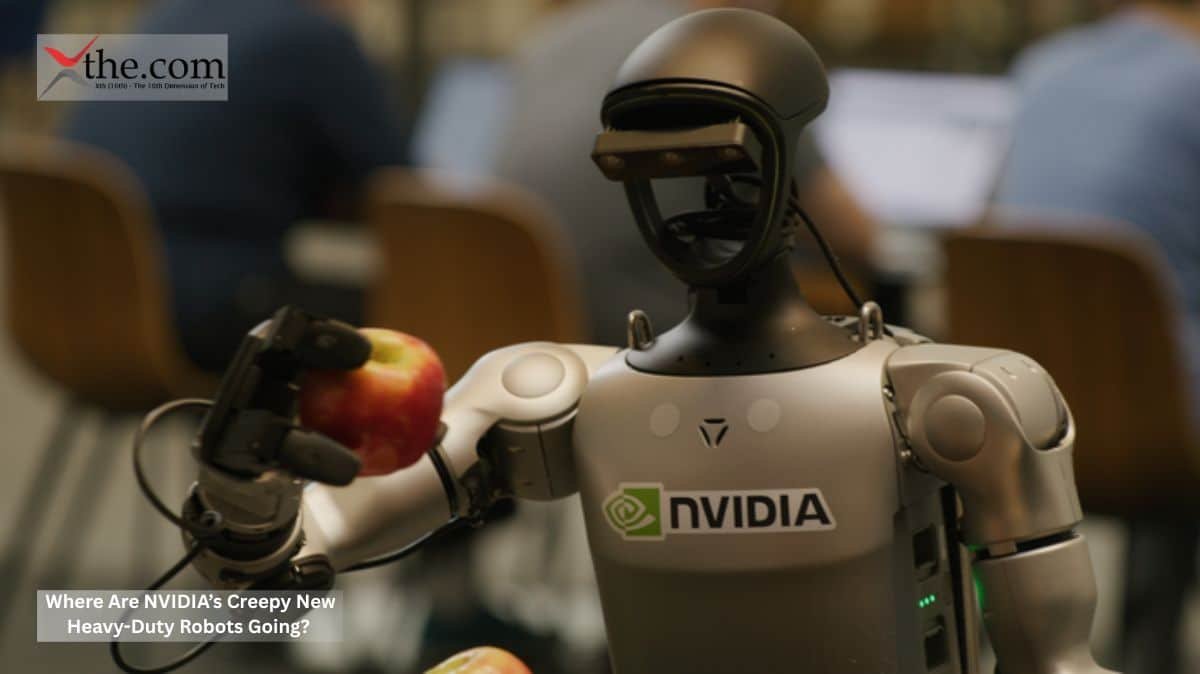
Tesla Optimus is the main example of this new intelligence. It is a humanoid robot made to work in spaces designed for people. Unlike the specialized robotic arms in older factories, Tesla Optimus can perform many different tasks, such as moving battery cells or sorting parts. By using these robots in its own Giga factories, Tesla creates a feedback loop that helps the robots learn from real-world situations.  

This training depends on neural networks that handle large amounts of image data. These networks are the same ones used in Tesla’s vehicles, but now they control the robot’s joints, motors, and sensors. If a robot fails to grab something, that mistake is recorded, studied, and fixed on all robots. This shared learning means a solution from Texas can be used right away in Nevada.  

Redefining the Assembly Line: The Unboxed Process 

The factory’s layout needs to change as its technology evolves. Tesla’s unboxed process differs from the traditional assembly line pioneered by Henry Ford. Instead of moving the car down a single long line, it is built in separate sections or boxes simultaneously.   

The Unboxed Process requires robots that can move freely and work together in tight spaces. Older robots do not have the same level of awareness required for this kind of teamwork. But with vision-based intelligence, these robots can work on different parts of the car simultaneously, such as the interior, underbody, and drive unit, before everything is put together. This approach reduces the factory by 40% and cuts costs for new production lines.  

Scaling through real-world fleet data 

In robotics, the main advantage is now data, not just hardware. Tesla uses huge amounts of free data from its vehicles to improve its models of the world. Every mile driven gives information about how things move, how light works, and how physics affects motion. This data helps a robot grow. Musk says that a robot knows that a cardboard box is light and a brake rotor is heavy before it even picks them up.  

The same intelligence is used to develop the Robotaxi. A Robotaxi is a robot that carries people, while a humanoid robot carries tools. Both use the same computer vision systems to move through the world. By sharing these systems, Tesla can spread the cost of AI research across several products, something smaller robotics companies cannot do.  

The Fiscal Reality: Impact On Labor Costs 

The economic effects on the domestic industrial sector are considerable. Tesla’s physical AI impact on US manufacturing labor costs will likely define the next decade of American competitiveness. By switching to a model in which robotic labor handles the full set of dirty and dangerous tasks, manufacturers can reduce the rising costs of human wages and overtime.   

Take a top supplier with high turnover in its stamping department. By swapping five human jobs for two robots, the company keeps production steady and avoids the cost of constantly training new workers. While buying a robot costs a lot upfront, over time, it is expected to cost less than paying a worker in a high-wage country like the US.   

Physical AI also enables lights-off manufacturing. Factories can run at full speed all night with little need for heating, lighting, or ventilation, further lowering costs. This kind of efficiency is the only way for countries with high wages to compete with cheaper manufacturing centers around the world.  

The Future of General Purpose Robotics 

We are entering a time when the line between a car company and a technology company is fading. The aim is not just to make better machines, but to create machines that can build other machines. This needs a level of independence beyond simple tasks like picking and placing parts.  

Tesla Optimus and similar robots will succeed if they can handle rare, unpredictable events in busy factories. As these machines get better at handling surprises, people will only need to supervise rather than step in to fix problems.  

Adding vision-based neural networks to factories is the last key step. This brings a level of flexibility that was not possible before. Now, a factory can switch to making a new product in just days by updating the robot’s software, rather than taking months.  

American manufacturing is facing a big decision. Companies that stick with old, specialized automation will struggle to compete. Those that adopt physical AI and new robotic labor will be able to produce more at lower costs in ways that formerly seemed impossible. The change has already begun, and now it is a race to see who can keep up.

Source: Tesla Blog 

Cupertino, Calif. Exporting a 12-minute 8K view can bring a production workflow to a halt when AI rendering tools compete for memory. Editors are familiar with this frustrating problem. Motion graphics freeze, audio transcription slows, and local language models consume resources that creative software needs to function.   

This bottleneck shows why the next generation of Apple silicon is more important for more than just hardware upgrades. The M5 Pro in the MacBook Pro marks a significant shift in how AI-powered creative work is handled, processed, and shared in the professional world.  

The focus is no longer only on fast CPUs. New features such as dedicated neural accelerators, larger unified memory, and more efficient on-device LLM processing could change how creators, studios, and freelancers use AI in their work. The current debate about Apple M5 neural accelerator vs M4 AI performance benchmarks shows that local AI is becoming a real advantage.  

Apple Silicon Is Pushing AI Workloads Back To The Edge 

Over the past two years, the AI industry has relied heavily on the cloud. Video generation, image creation, and language models all depended on remote servers, but this approach had its downsides.  

Cloud-based creative AI tools can cause delays, add subscription costs, and raise security issues. For example, a documentary editor with unreleased footage may not want to upload sensitive material to outside servers. Music producers with unreleased tracks face the same risks.  

This is where Apple Silicon makes a difference.  

Apple combines CPU, GPU, and neural accelerator functions into a single integrated system, reducing reliance on the cloud. These efficiency gains matter most in AI-powered creative apps, where many tasks run concurrently.  

Now, editors using AI video editing tools for tasks such as scene segmentation, transcription, color matching, and background cleanup can handle much of the work on their own machines rather than relying on external computing platforms.  

This change also affects the finances of the wider creative industry.  

Why the M5 Pro Matters Beyond Raw Speed 

The M5 Pro is far more than a faster chip. It shows that Apple is placing greater emphasis on running AI tasks locally as its main goal.  

Most laptops split memory between graphics and computing tasks, but Apple’s unified memory model removes much of this separation. As a result, large AI models can use shared memory more productively without moving data back and forth between different parts.  

This efficiency matters enormously for on-device LLM deployment.  

For example, a filmmaker using a local AI assistant for script analysis while rendering high-definition footage simultaneously puts significant pressure on memory. On systems with split memory, this often leads to overheating or slowdowns.  

The MacBook Pro with the M5 Pro seems designed for these mixed AI and creative tasks.  

The debate about Apple M5 Pro neural accelerator versus M4 AI performance shows that professionals now judge laptops more by their AI abilities than by traditional productivity measures.  

Neural Accelerator Design Changes Creative Economics 

The dedicated neural accelerator in today’s Apple silicon chips changes the cost and capability of creative work in important ways.  

Cloud AI services change based on how much computing you use, which can get expensive for creators who run many AI tasks every day. Small studios that process thousands of AI-generated frames or perform extensive local transcription can see these costs add up quickly.  

Running AI tasks locally helps reduce this need on cloud services.  

Take a small post-production studio working on 30 projects a month. If each editor pays $400 a month for cloud-based rendering and AI tools, a five-person team could spend almost twenty-four thousand dollars a year just on these subscriptions.  

A powerful MacBook Pro capable of running advanced on-device LLM tasks locally can significantly reduce these costs.  

This is why more creative professionals are paying attention to the Apple M5 Pro neural accelerator rather than the M4 AI performance. They are looking beyond hardware specs and thinking about long-term efficiency and costs.  

AI Video Editing is Becoming Hardware Dependent 

For years, video editing software has advanced faster than most computer hardware could keep up. AI is now making that gap even wider.  

Today’s AI video editing tools can perform facial tracking, object masking, automatic subtitle generation, noise removal, scene extension, and smart timeline assembly simultaneously. Each of these features places greater demands on memory and processing power.   

This is where unified memory becomes strategically important.  

Unlike systems that require moving data between separate memory areas, Apple silicon lets creative apps and AI tools use shared resources with less delay. This makes editing sessions easier and more responsive.  

Picture a sports editor creating video highlights in multiple languages for live publishing. Even short delays can hurt audience engagement and ad revenue. Faster local AI processing helps speed up production.  

The M5 Pro is built for exactly these kinds of demanding tasks.  

On-Device LLM Adoption Is Accelerating Inside Creative Workflows 

The growth of on-device LLM systems could be one of the biggest changes to time-to-compute in the next few years.  

Writers now use local language models to improve drafts. Designers create layout ideas offline. Editors summarize transcripts without the cloud. Musicians try out local generative audio tools during production.  

Part of this shift concerns privacy. The other part is about getting uniform performance.  

AI workflows that depend on the cloud can become unreliable if internet speeds change, or API costs increase. Running AI tasks locally improves process stability.  

The MacBook Pro benefits because Apple manages both the hardware and the software. This close integration lets neuron accelerators work better with creative apps than what’s usually possible on Windows systems.  

The result is not just faster processing, but smoother, more reliable workflows.  

Apple Silicon and the Future of Independent Creative Production 

Big studios will keep investing in cloud systems, but independent creators face different challenges.  

Freelance editors, YouTubers, filmmakers, and digital agencies now need powerful AI tools without the big budgets of large companies. This shift favors systems that run efficient AI tasks locally.  

With Apple Silicon state-of-the-art neural accelerators and a more unified memory architecture, the M5 Pro is more than just a high-end chip. It functions as the backbone for decentralized creative work.  

The real importance of comparing Apple M5 Pro neural accelerator and M4 AI performance lies in what it reveals about the market. Buyers now look beyond speed or battery life and focus on how well laptops handle ongoing AI-assisted work.  

This acceleration may change how software is priced, how creators run their business, and even the economics of digital content.  

The AI Creative Economy Is Moving Closer to the Device 

Over the last decade, creative technology has increasingly moved to the cloud. AI could start to reverse that trend.  

As on-device LLM capabilities mature and AI video editing workloads grow more sophisticated, local compute efficiency becomes increasingly valuable. Systems that decrease latency, preserve privacy, and minimize recurring infrastructure costs will likely dominate the next phase of professional creative production.  

The latest iteration of Apple Silicon suggests Apple understands that transition clearly. The M5 Pro is not only about speed benchmarks or thinner hardware. It expresses a broader belief that the future of creative AI belongs closer to the device itself, where processing power, memory architecture, and intelligent acceleration operate together rather than across different servers.

Source: Apple introduces MacBook Pro with all‑new M5 Pro and M5 Max 

Bethesda, MD. A Navy aircraft flying beyond normal communication range cannot risk even a 2-second delay in command-and-control missions. Any lag is more than an inconvenience; it’s a real risk. This urgency is why the Pentagon is rethinking how military networks send data under difficult conditions.   

Lockheed Martin and Nokia Federal are teaming up just as defense agencies need faster and more flexible communication systems. Their focus on Open 5G and distributed tactical cloud shows how military operations are changing. Fixed networks no longer fit today’s battlefields. Mobility, interoperability, and strong edge connections are now key to mission success.  

The Lockheed Martin Nokia 5G solution for the US Navy TACAMO mission could have effects far beyond a single contract. This project might change how the government buys communications technology, uses cloud systems, and designs future military operations.  

Why Open 5G Matters Inside Tactical Cloud Environments 

Older defense communications systems relied on centralized setups. This approach worked when military operations used fixed command-and-control centers and stable communications. Today’s conflicts are not the same.  

Now, military operations use distributed assets and autonomous systems and face electronic warfare threats. Data moves constantly between air, sea, space, and ground. In these situations, rigid infrastructure can create weak points.  

This is where Open5G makes a difference.  

Open architectures, unlike closed wireless systems, let agencies combine software, radios, apps, and network features from different vendors. Such flexibility is important because defense agencies want to avoid being locked into a single vendor, which may slow upgrades and raise costs over time.  

In a distributed tactical cloud, being able to work among different systems is as important as having enough bandwidth. For example, a surveillance aircraft sending intelligence to naval units cannot rely on closed systems that struggle to share data between platforms.  

Lockheed Martin and Nokia Federal are working together to solve this problem.  

The Pentagon’s Shift Toward Modular Architecture 

In the past, defense agencies often signed large, long-term contracts for closed systems. Over time, this led to more sluggish upgrades, higher integration costs, and older systems that were hard to update.  

Now, federal agencies are seeking more flexible solutions.  

This is why there is more focus on modular architecture in military communications. Instead of replacing all systems every 10 years, agencies want networks that can update incrementally.  

The Lockheed Martin Nokia 4G solution for the US Navy Tacomo mission is a good example of this new approach.  

With a modular approach, software and networking components can be updated without requiring hardware updates. Security can be updated when needed, and new applications can be added at the edge without rebuilding the whole system. Such flexibility helps military planners avoid interruptions and make long-term purchasing more efficient.  

It changes how defense procurement works financially.  

Defense Procurement Is Moving Away From Closed Ecosystems 

For years, big defense contractors used integrated systems that made agencies depend on them for the long term. Now, this approach to buying technology does not align with the Pentagon’s push to modernize.  

Officials now emphasize speed, interoperability, and rapid software deployment.  

With an open network approach, agencies can adopt new technologies more quickly without having to rebuild their entire communications setup. This change benefits companies like Lockheed Martin and Nokia Federal since they know how to meet the needs of secure federal networks and support open standards.  

This has a big impact on how defense procurement will work in the future.  

Programs using Open 5G could accelerate deployment and reduce maintenance costs over time. Instead of waiting years for hardware updates, agencies can modernize incrementally, as commercial tech companies do.  

Being able to adapt quickly is important because adversaries are continually improving their cyber and electronic warfare capabilities.  

Zero Trust Is Becoming A Battlefield Requirement 

Military communications now assume that breaches will happen. This way of thinking changes how networks are designed.  

Old security models that protect only the network’s edge do not work well in modern military settings where devices, people, and systems move between safe and risky areas.  

That’s why zero-trust frameworks are now central to federal networking plans.  

In a modern tactical cloud, every device and user must continuously verify their identity to access data or network resources. Checking identity is now ongoing, not just occasionally.  

Using zero trust in Open 5G enables defense teams to quickly isolate compromised devices while keeping the overall mission running smoothly.  

This is especially important for airborne communication systems in sensitive operations such as TACAMO, where continuous connectivity is required for strategic nuclear command.  

With so much at risk, there is no room for weak network designs.  

Open 5G and Tactical Cloud Deployment at the Edge 

A key benefit of Open 5G is that it can support edge computing with very low delays.  

Conventional centralized clouds can struggle to handle real-time battlefield data when network capacity is limited. A distributed tactical cloud solves this by moving computing power closer to where it is needed.  

For example, if a patrol aircraft spots a new threat in contested waters, older networks would send the data to faraway centers before leaders could act. With edge-enabled systems, analysis happens close to the source, cutting response times.  

This faster response time is a real competitive advantage.  

The Lockheed Martin Nokia 5G solution for the US Navy TACAMO mission demonstrates how edge networking and modular communications are converging in military upgrades.  

The aim is not just to connect, but to keep connections working even under tough conditions.  

Nokia Services’ Strategic Position in Military Networking 

Lockheed Martin offers strong defense integration capabilities, while Nokia Federal brings years of telecom engineering experience that aligns with today’s military needs.   

Federal agencies want commercial-level innovation that works in mission-critical settings. This creates opportunities for telecom companies to provide secure, reliable networks at scale.   

By combining modular architecture, distributed cloud, and zero trust, Nokia Federal becomes more than just a vendor. It becomes part of the core operational infrastructure.   

This matters because future military strength might depend more on how well data moves across connected systems than on having the best hardware alone.  

Tactical Cloud Infrastructure Will Shape the Next Defense Era 

Military strength now depends more on strong, resilient networks than just on the size of ships or planes. These platforms are part of a bigger data system.  

This makes open 5G and distributed tactical cloud systems even more important for strategic operations. The Lockheed Martin and Nokia partnership shows a bigger shift in defense modernization. Agencies no longer want fixed communication systems with slow update cycles. They want flexible networks that can adapt as threats change.  

With rising worldwide tensions and better electronic warfare tools, having secure, modular, and fast communication systems may matter more than just having lots of hardware. The new infrastructure in Lockheed Martin’s Nokia 5G solution for the US Navy TACAMO mission suggests that future military strength could depend as much on network design as on traditional weapons.

Source: Lockheedmartin  

New York, NY. A single AI query uses almost 10 times more network traffic than a typical cloud search. Many executives may not realize how important this is. As GPU arrays grow across the US, the main challenge is shifting from computing power to physical infrastructure that connects these systems. The partnership between Corning and Nvidia is a direct response to this issue and could change how AI infrastructure is built in the US.   

The main issue is not only about making cables faster, but it is also about energy efficiency, control over manufacturing, and the costs of scaling up new AI systems. The impact of the Nvidia and Corning fiber optic partnership on US AI infrastructure goes well beyond buying hardware. It affects national competitiveness, energy use, and the future of American leadership in cloud technology.  

The Hidden Bottleneck Inside AI Infrastructure 

For years, large-scale operators focused on adding more computing power, GPUs, racks, and cooling. But data traffic congestion has quietly become the weak point in big AI training setups.  

Modern language models need thousands of GPUs to share huge datasets. At the same time, even tiny delays can lower training efficiency across these distributed systems. This is when networking latency becomes a financial issue, not only a technical one.  

If synchronization is delayed in a 100,000-GPU cluster, it can waste millions of dollars in computing each year. This is why fiber optic manufacturing is now a key topic in infrastructure planning.  

Optical fiber, unlike traditional copper connections, offers higher bandwidth and requires less power per bit. For those running dense AI clusters, this difference directly affects operating costs.  

The NVIDIA and Corning partnership is designed to tackle this exact challenge.  

Why Corning Matters More Than Most Investors Assume 

Most people know Corning for making smartphone glass, but in the tech industry, Corning has spent decades developing expertise in optical networking components and sophisticated cables.  

This manufacturing background has suddenly become strategically very important.  

The US is under increasing pressure to strengthen its domestic semiconductor and networking supply chains. Recent global political tensions have shown how much American tech companies still rely on overseas factories.  

Optical networking equipment is a key part of this vulnerability.  

By expanding US-based fiber optic manufacturing, Corning gives cloud providers and AI operators a stronger sourcing strategy. This matters to companies building multi-billion-dollar campuses, where supply disruptions might delay deployment schedules by months.  

The financial effect is substantial. A large AI facility might need hundreds of thousands of fiber connections. If transceivers or cables are delayed, the entire project can be put on hold.  

This is one reason why the NVIDIA and Corning fiber optic partnership has effects that go far beyond a typical vendor deal for US AI infrastructure.  

AI Infrastructure Is Becoming a Power Management Problem 

Most public conversations about AI focus on chips, but energy use is another important part of the story.  

Large AI clusters now use as much electricity as small cities. Moving data between GPUs significantly increases power consumption. Operators now have two main challenges: speeding up communication and cutting energy costs.  

Optical networking helps address both of these problems.  

Compared to copper-based systems, advanced fiber-optic systems reduce heat and improve data transmission over long distances. This effectiveness is especially important in large data centers, where rack density continues to increase.  

Microsoft, Amazon, and Meta are already under greater scrutiny from utilities and regulators over how much power they consume. Every watt saved in networking adds up across millions of tasks running at once.  

This is why AI infrastructure and fiber optic manufacturing are now closely linked to energy strategies.  

The Competitive Race Behind Domestic Supply Chain Expansion 

The US is not the only country investing in AI networking. China is expanding its state-backed optical manufacturing, and Saudi Middle Eastern countries are heavily funding their own AI infrastructure projects.  

This competition is a strategic concern for both Washington and Silicon Valley.   

A stronger domestic supply chain helps protect against geopolitical interruptions and allows American companies to deploy faster. It also gives the US more leverage in future trade talks about semiconductors and telecom infrastructure.  

For Nvidia, working with Corning brings benefits beyond just logistics. It lets them better connect GPU systems with optical networking technologies designed for AI workloads.  

This merging could reduce network latency in distributed AI clusters, especially as models continue to grow to trillions of parameters and beyond.  

The advantages are evident. Faster connections can cut model training times by days or even weeks for companies competing in generative AI. This time savings can directly lead to more revenue.  

Hyperscale Data Centers Confront a New Infrastructure Hierarchy 

For the past 20 years, expanding data centers followed a set pattern: get land, secure power, install servers, and then grow outward.  

AI changes that hierarchy.  

Now, network design is a key factor in whether a facility can efficiently handle advanced AI workloads. Operators can no longer see connectivity as a minor purchase.  

Inside modern hyperscale data centers, optical interconnect density now rivals power delivery as a design priority. The shift elevates companies involved in fiber-optic manufacturing from component suppliers to strategic infrastructure partners.  

This shift explains why the Nvidia and Corning partnership is getting so much focus from investors and tech companies.  

The partnership addresses three main challenges simultaneously. They are the rising demand for AI bandwidth, growing concerns about domestic supply chain resilience, and rising energy costs for AI infrastructure. Very few infrastructure deals affect all three of these areas simultaneously.  

NVIDIA’s Expanding Infrastructure Strategy 

For NVIDIA, this cooperation is part of a bigger strategic change.  

NVIDIA is not simply a GPU vendor. The company is now presenting itself as a full AI infrastructure provider, covering computing, networking, cooling, and systems integration.  

This change is important because future enterprise AI spending will likely focus on comprehensive infrastructure solutions rather than buying separate hardware components.  

By partnering with Corning, NVIDIA gains more control over a key part of AI deployment. This move also puts pressure on networking suppliers who still rely on scattered international supply chains.  

The wider impact of the NVIDIA and Corning fiber-optic partnership could change how the cloud industry sets its purchasing priorities. Companies planning future AI projects may start to value US-made networking systems that are closely linked to GPU performance.  

This would be a major shift in how tech companies evaluate infrastructure investments.  

The Next Phase of AI Infrastructure Will Be Physical 

Software has gotten most of the attention, and hardware has gotten the profits, but physical connectivity might end up deciding which companies come out on top.  

As AI systems continue to grow, companies that reduce network latency, manage energy use, and maintain a stable supply chain will have an edge. These abilities now depend more on advances in fiber-optic manufacturing than on computing power alone.  

The Corning and Nvidia partnership shows this new reality. It suggests that the future of American AI leadership could rely as much on glass, cables, and optical engineering as on silicon chips. 

Source: NVIDIA and Corning Announce Long-Term Partnership to Strengthen US Manufacturing for AI Infrastructure 

REDMOND, Wash. — Microsoft has developed the Microsoft AVA-100 benchmark framework, a comprehensive testing platform that evaluates how modern AI systems comprehend and process extended video footage from open-world settings.   

The benchmark test is a part of the NSDI 2026 research project, which involves technical discussions between the two research areas. The benchmark test introduces a new method for assessing video intelligence systems used in enterprise environments, security operations, and multimodal artificial intelligence applications.   

The launch will drive a major transformation, changing people’s expectations for Video Analytics, long-context AI processing, and real-time multimodal reasoning systems.  

Why Microsoft AVA-100 Matters  

The introduction of Microsoft AVA-100 signals a transition away from short-form AI video testing toward persistent, real-world contextual analysis. Traditional video AI benchmarks did not measure complete movies but instead tested short clips using specific recognition abilities, such as object detection and scene classification.   

AVA-100 tests AI systems on their ability to sustain contextual awareness over extended periods, including continuously changing video content. The evaluation process for enterprise-level AI systems has reached a significant transformation through this development.  

Video Analytics Enters the Long-Context Era  

The advanced Video Analytics capabilities have grown as enterprises now require systems that provide continuous video interpretation.   

The security, logistics, healthcare, manufacturing, and autonomous systems industries now depend on AI-based monitoring systems that can analyze large visual data streams over extended time frames.   

Traditional models often struggled to maintain continuity across long-duration footage.   

The AVA-100 framework tests the ability of systems to maintain contextual understanding throughout time.  

Vision Language Models Become Central Infrastructure  

AI systems now use Vision-Language Models (VLMs) to interpret visual information in a new way.   

VLM systems process video content by leveraging visual comprehension, their ability to understand spoken language, and knowledge of the surrounding context.   

The system enables AI to create better video content analysis by improving observation, summary generation, and the development of operational insights.   

Multimodal AI infrastructure development depends on the progress of Vision-Language Model (VLM) technology.  

NSDI 2026 Research Signals Infrastructure Shift  

The research link between AVA-100 and NSDI 2026 establishes that scalable AI systems are essential for processing long-duration data.   

The system requires new AI infrastructure design solutions that must function at both cloud and edge computing locations.   

The research findings from NSDI 2026 demonstrate that video AI systems now require greater computational resources than before.  

Ultra-Long Context Changes AI Expectations  

The primary characteristic that defines AVA-100 exists because it requires users to perform Ultra-Long Context reasoning tasks.   

AI systems need to develop memory capabilities that enable them to understand contextual information over extended time periods, rather than processing each input as a separate entity.   

This requirement is particularly significant for applications that involve surveillance and enterprise monitoring, as well as autonomous operations and media intelligence.   

Ultra-Long Context processing development will create new design requirements that will shape the future of multimodal artificial intelligence systems.   

Research from NSDI 2026 indicates that video artificial intelligence is now a critical requirement for modern computer systems.  

Open-World AI Expands Beyond Controlled Datasets  

The Open-World AI research field has developed new benchmarks to evaluate its ability to operate in unpredictable environments without predefined scripts.   

Open-world systems need to interpret real-world conditions, which are constantly changing, unlike closed testing environments that use fixed categories and labels.   

The system requires multiple AI reasoning evaluation methods, which pose greater challenges than standard testing procedures.   

The AVA-100 framework has been created to assess this wider range of contextual adaptability.  

Heuristic Analysis Enhances AI Reasoning  

The adoption of Heuristic Analysis for long-form video assessment marks a shift toward evaluation methods that better resemble human thinking.   

The heuristic approach enables AI systems to detect patterns and select important information while their understanding evolves through flexible interpretation.   

The advancement of video AI systems through operational environments.   

Heuristic Analysis has become a universal trend driving the development of contextual intelligence systems.  

Enterprise Video AI Demands Are Increasing  

The rapid expansion of video data across industries is creating strong demand for more capable AI interpretation systems.   

Organizations now need AI tools that can summarize content, detect anomalies, monitor behavior patterns, and produce operational insights from ongoing video streams.   

The development of long-context multimodal AI systems has become essential for organizations as they establish their infrastructure requirements.  

AVA-100 Reshapes AI Benchmark Standards  

The broader significance of why Microsoft AVA-100 is the new standard for 10-hour video AI analysis lies in its attempt to redefine how AI capability itself is measured.  

The benchmark system assesses contextual persistence, reasoning continuity, and adaptive interpretation over extended periods.   

The evaluation system for artificial intelligence now uses a different approach according to this evidence.  

Video AI Becomes Core Infrastructure Layer  

Business operations already use AI-powered monitoring and automation systems, which help us establish video intelligence as our primary operational foundation rather than treating it as an analytical tool for specific situations.   

The growth of this industry impacts multiple sectors, which include defense, transportation, and retail and industrial automation.   

The market requires scalable video reasoning systems that can operate for extended periods.  

Conclusion: Microsoft Pushes Video AI Into Persistent Intelligence  

Microsoft’s AVA-100 system launch marks a significant advancement in evaluating AI systems that assess real video content.   

Microsoft develops multimodal AI systems through Video Analytics and Vision Language Models, Ultra-Long Context, and Open-World AI and Heuristic Analysis to create permanent contextual understanding systems that operate across intricate operational domains.   

NSDI 2026 research demonstrates that scalable, long-context reasoning has become a fundamental obstacle that next-generation AI infrastructure must overcome.  

As enterprises explore why Microsoft AVA-100 is the new standard for 10-hour video AI analysis, the future of video intelligence appears increasingly focused on continuity, adaptability, and operational-scale reasoning rather than isolated recognition tasks alone.

Source: Microsoft Research Blog 

SANTA CLARA, Calif. — NVIDIA has published additional technical information about the NVIDIA Space-1 platform, which operates on the new Vera Rubin Architecture. This launch marks a significant extension of AI acceleration capabilities, which now reach beyond Earth-based systems to support military operations in space.   

The announcement highlights a growing convergence between space systems, autonomous AI infrastructure, and defense computing strategy.   

The United States has identified AI-native hardware systems as critical components for satellite and defense platform operations, as orbital systems are becoming increasingly data-intensive and independent.  

Why NVIDIA Space-1 Matters  

The NVIDIA Space-1 initiative seeks to develop advanced AI computing systems that can operate in orbital environments with high latency, limited bandwidth, and the need for autonomous operation.   

Traditional satellites relied on ground systems to perform their most computationally intensive tasks.   

The current defense and intelligence systems demand that their operational functions have real-time decision-making capabilities enabled by space-based systems.   

The military needs onboard AI acceleration because it is now more critical than in earlier space systems.  

Vera Rubin Architecture Expands Beyond Data Centers  

The Vera Rubin Architecture serves as the architectural framework NVIDIA uses to build its AI infrastructure that operates at scale across different environments, including the cloud, edge, and orbital space.   

The architecture, developed to enable enormous AI computations and fast computer systems, is now used to create systems that operate autonomously.   

The development of AI hardware design will create new applications that extend beyond traditional data center usage.   

Defense-oriented systems that adopt the Vera Rubin Architecture will drive a major transformation in how military computing systems operate.  

BlueField-4 STX Supports Autonomous Processing  

The orbital platform strategy relies on BlueField-4 STX, which manages secure data movement and networking acceleration, as well as AI workload orchestration across distributed systems.   

Centralized processing models face difficulties because the orbital systems experience communication delays and their connections break intermittently.   

BlueField-4 STX enables more localized compute management and autonomous system coordination directly at the edge of the network.   

This technology holds significant importance for upcoming space-based AI operations.  

Orbital Computing Becomes Strategic Infrastructure  

The emergence of Orbital Computing technology is driving a fundamental transformation in defense and communications system design.   

Future systems will begin processing intelligence, navigation, and operational data through space infrastructure rather than relying solely on Earth-based processing centers.   

The system achieves improved response times by operating independently of fragile ground networks while enabling self-sufficient operations in areas under enemy control.   

The expansion of Orbital Computing has become an essential element of contemporary defense planning.  

Agentic Space Systems Gain Importance  

The concept of Agentic Space describes cosmic orbital systems that operate through their own intelligence to choose their actions and coordinate their movements while performing their tasks with minimal human assistance.   

The development of artificial intelligence will enable satellites and space assets to operate as intelligent, autonomous entities rather than remain mere communication devices.   

The system includes three main functions: automated system surveillance, security evaluation, data ranking, and system network management.   

The development of Agentic Space infrastructure systems has brought about a major change that affects all aspects of space mission operations.  

Edge AI Extends Beyond Earth-Based Systems  

The orbital infrastructure requires Edge AI because remote areas need distributed intelligence to function effectively.   

Edge AI enables systems to handle processing tasks at local sites without needing complete access to centralized cloud systems.   

The system enables defense and satellite missions to achieve faster communication while maintaining operational stability under challenging network conditions.   

Space systems now use Edge AI because AI systems have evolved to operate through multiple decentralized components.  

Defense Procurement Priorities Are Shifting  

The United States defense procurement process is now undergoing changes due to newly developed orbital AI systems.   

Defence Procurement decisions will increasingly require defense organizations to adopt AI-native hardware, autonomous coordination systems, and resilient distributed computing systems.  

Defense contractors and technology providers need to adjust their marketing strategies because of new infrastructure platform developments.   

Organizations now consider AI acceleration an essential strategic capability rather than treating it as an additional technological resource.  

Orbital Systems Require Autonomous Coordination  

The growing complexity of orbital environments demands the development of systems that can operate without continuous ground control supervision.   

The system needs to handle four primary tasks: traffic management, threat detection, communication optimization, and resource allocation.   

The operational requirements of AI-driven orbital systems exceed the efficiency of conventional systems that rely on human operators.   

The growing investment in autonomous orbital infrastructure systems stems from this particular aspect.  

Vera Rubin Architecture and US Defense Integration  

The broader significance of integrating NVIDIA Vera Rubin architecture into US orbital defense systems lies in the convergence of AI infrastructure with national security operations.  

The military systems now require real-time intelligence processing and autonomous operational capabilities, which make AI acceleration platforms essential for developing future defense systems.   

The new rules will affect procurement standards, strategic partnerships, and future military infrastructure planning.  

Orbital AI Competition Intensifies  

The introduction of AI-based orbital systems will increase competition between defense contractors, semiconductor companies, and aerospace manufacturers.   

Countries that develop autonomous satellite systems will gain an advantage because their systems will improve monitoring capabilities, communication systems, and emergency response.  

This creates a new frontier where AI computing and aerospace systems increasingly overlap.  

Conclusion: AI Infrastructure Expands Into Orbital Defense  

The release of NVIDIA’s Space-1 specifications based on the Vera Rubin Architecture marks a major evolution in the relationship between AI infrastructure and defense systems.   

NVIDIA achieves its goal of extending AI acceleration to autonomous orbital environments through its combination of BlueField-4 STX with Orbital Computing and Agentic Space and Edge AI capabilities.   

The current shift in Defense Procurement priorities indicates that upcoming military and intelligence systems will increasingly rely on space-based, distributed AI-native computing infrastructure.  

As organizations explore integrating NVIDIA Vera Rubin architecture into US orbital defense systems, orbital AI platforms are rapidly emerging as a new strategic layer in national defense and infrastructure modernization.

Source: NVIDIA GTC 2026: Live Updates on What’s Next in AI 

REDMOND, Wash. — Windows Autopatch and Hotpatching advanced features have now completed their deployment across enterprise Windows systems to support Microsoft’s goal of permanent system maintenance.   

The initiative represents a fundamental transformation of enterprise IT operations because companies now choose to implement security updates that protect against threats while maintaining their normal operational processes.   

The need for uninterrupted operations while cyber threats develop has led enterprises to adopt reboot-free patch deployment as their new standard for system infrastructure.  

Why Windows Autopatch Matters  

The Windows Autopatch expansion project aims to reduce the operational workload companies experience when using standard methods to manage system updates.   

The complete system update process required organizations to manually schedule updates, manage device restarts, and plan system unavailability periods for their entire network of devices.   

The platform automates most operations through its system, which manages update distribution, system testing, and policy enforcement from a single cloud-based control center.   

The solution helps businesses achieve consistent operations by simplifying maintenance requirements.  

Hotpatching Eliminates Traditional Restart Cycles  

The main breakthrough of Hotpatching technology enables users to install security patches on active systems without restarting them.   

Patching methods from the past disrupted work activities because essential system elements required restarts for implementation.   

Hotpatching enables real-time system updates by changing the contents of active system memory.   

This capability fundamentally transforms the methods that businesses use to manage software updates and plan for system availability.  

Zero-Downtime IT Becomes a Priority  

The main reason organizations adopt hotpatch technology comes from their need to maintain operations with zero downtime.  

Worldwide business operations require modern organizations to maintain their systems because their customers need access to their services at all times.   

Short system reboots cause operational interruptions that affect financial systems, logistics networks, healthcare environments, and manufacturing operations.   

Organizations achieve their goal of maintaining operational systems without interruption through hotpatching technology.  

VBS Security Strengthens Enterprise Protection  

The expansion of VBS Security integration is another important element of Microsoft’s enterprise update plan.   

Virtualization-Based Security protects critical system functions and security processes by creating secure virtualized environments.   

The system reduces vulnerability to kernel attacks while boosting protection systems that guard against endpoint threats.   

Enterprises can achieve better system availability and stronger security protection by using hotpatch deployment together with VBS Security.  

Azure Arc Extends Centralized Control  

Organizations use Azure Arc to maintain consistent management of Windows infrastructure across their cloud environments, on-premises systems, and hybrid deployments.   

Azure Arc enables IT teams to implement governance, monitoring, and update procedures across their entire distributed device network from a single central control system.   

Enterprises that have adopted hybrid infrastructure systems need this solution to meet their operational requirements.   

The combination of Autopatch and Azure Arc creates a more unified operational framework for enterprise endpoint management.  

Patch Tuesday Evolves Beyond Monthly Maintenance  

The standard schedule for Microsoft security updates used to follow Patch Tuesday for several years. The rising complexity of cyber threats, along with the need for rapid threat resolution, has compelled organizations to adopt permanent security update systems.   

Hotpatching enables organizations to reduce the need for complete system shutdowns, which were previously required during Patch Tuesday operations. The organization has begun moving away from its standard maintenance schedule and adopting a system that provides ongoing security updates.  

Endpoint Manager Supports Automation at Scale  

As organizations automate update orchestration for their device fleets, the position of Endpoint Manager is gaining recognition. 

By definition, the endpoint manager allows IT teams to set up deployment policies, track deployment compliance, and manage the rollout sequences of enterprise systems. 

When combined with hotpatching, this creates a more adaptive and less disruptive maintenance environment.  

The growing reliance on Endpoint Manager reflects broader trends toward autonomous IT operations.  

Enterprise Downtime Costs Continue Rising  

The financial costs of downtime have become the primary driver of businesses’ decisions to implement hotpatch systems.   

Even short service interruptions will disrupt three main areas of business operations: productivity, operational continuity, and customer-facing services.   

Organizations gain both technical and economic benefits by reducing the time required for system restarts during maintenance activities.   

This requirement holds special significance for industries that operate continuously throughout the entire week.  

Windows 11 and 12 Move Toward Continuous Maintenance  

The broader significance of eliminating reboot-related downtime with Windows 11/12 Hotpatching lies in the evolution of operating systems into continuously maintained platforms.  

Future enterprise operating systems will use background updates to deliver most security and stability updates, rather than disruptive maintenance cycles.   

This development will create new user expectations about how devices should be maintained and how operations should continue.  

Hybrid Infrastructure Demands Flexible Updates  

As enterprises continue expanding their hybrid and remote work environments, traditional maintenance approaches become increasingly difficult to manage.   

Systems that operate across different geographical areas and network environments need flexible update systems to meet their needs.   

Hotpatching solves these issues by enabling continuous operations across the entire distributed infrastructure.  

Conclusion: Enterprise Maintenance Enters the Continuous Era  

Microsoft has developed Windows Autopatch and Hotpatching as advanced solutions for managing enterprise systems.   

Microsoft has developed new methods for operating system management and cybersecurity protection through its technology, which enables organizations to achieve Zero-Downtime operations while improving VBS Security and using Azure Arc and Endpoint Manager for system management.   

Patch Tuesday now serves a different purpose because organizations have shifted toward security delivery systems that focus on maintaining system availability while protecting against threats.  

As enterprises explore eliminating reboot-related downtime with Windows 11/12 Hotpatching, operating system maintenance is increasingly evolving from scheduled interruption into seamless background infrastructure management.

Source: Accenture is rolling out Copilot to a workforce the size of Denver. Here’s how they’re doing it. 

Armonk, N. Y. On average, developing a new pharmaceutical drug costs $2.3 billion and takes more than 10 years of lab work. Most clinical candidates, 9 out of 10, fail during development. This is awesome because conventional computers cannot precisely predict how molecules behave inside human proteins. A new computational method is changing this. A recent breakthrough with a 12635-atom protein complex demonstrates the real potential of quantum-centric supercomputing at a scale never before achieved. Pharmaceutical leaders now have a chance to rethink their R&D budgets. Moving from trial-and-error testing to predictive calculations can lower costs, reduce animal testing, and speed up the delivery of new treatments.  

The Technical Breakthrough of the 12635-Atom Model 

Researchers from the Cleveland Clinic, RIKEN, and IBM zSecure achieved a major breakthrough by simulating protein-ligand interactions at a scale far greater than ever before. They modeled the trypsin enzyme and T4-lysozyme in water. Earlier quantum analysis could handle only small molecules with ten to a few hundred atoms. This new model is forty times larger than previous ones and two hundred and ten times more accurate for certain calculations.  

This hybrid workflow uses a wave function-based embedding algorithm. Classical supercomputers break the large molecular structure into smaller, manageable clusters. IBM quantum Heron processors then calculate the quantum attributes of these pieces. Afterward, the classical systems reassemble the full molecule. Combining classical and quantum computing units is what makes quantum-centric supercomputing so valuable for scientific research.   

This method’s accuracy helps address a long-standing industry problem. Predicting how a drug binds to a target protein usually takes months of trial and error. With this level of biomolecular simulation, researchers can test binding affinities and chemical reactions before making physical compounds.  

Structural Reduction of Capital Expenditures 

The traditional drug discovery process relies heavily on brute force synthesis and high-throughput screening. Pharmaceutical companies build massive physical libraries of compounds, and they test each one against disease targets. This approach calls for substantial investments in laboratory space, chemical supplies, and personnel. The fiscal benefits of quantum-centric supercomputing in pharmaceutical R&D include significant reductions in material costs, reduced reliance on animal testing, and shorter regulatory approval timelines. Companies spend millions of synthesizing variants that fail in early-stage validation. By eliminating ineffective compounds before synthesis, firms preserve resources for candidates with higher probabilities of clinical success.   

Executives need to shift funding from physical labs to high-performance computing clusters and quantum access points. This change means understanding infrastructure costs in detail. Chief financial officers now have to see computing hardware as a core operational need, not just an experimental expense.  

Managing Data Governance and Cryptography 

Bringing quantum chips together with classical supercomputers creates new data governance challenges. Pharmaceutical intellectual property includes sensitive patient data and proprietary molecular structures. Organizations must protect this information while sharing work between on-site supercomputers and cloud-based quantum nodes. Keeping molecular data safe means following strict security procedures. Companies using these mixed systems need to update their certification of lifecycle management. Automatically rotating cryptographic keys helps keep data moving between the Cleveland Clinic and remote data centers secure against interception. The aim is to maintain end-to-end encryption for sensitive data.   

There is also a risk that attackers could intercept research data, so companies need to take a preemptive approach to post-quantum security. Data stolen today could be decrypted in the future by powerful quantum computers. Pharmaceutical firms should set up cryptographically agile systems right away. This upgrade will require a major investment in security architecture. Updating the certificate lifestyle across global research networks helps prevent unauthorized access to proprietary molecular models. These security improvements also help companies meet strict regulatory requirements.  

Preparing Enterprise Infrastructure for the Future 

Bringing together different types of computing systems requires strong infrastructure planning. The RIKEN and IBM partnership shows how conventional computers and quantum computing units can work together in real time. To match this scale, enterprise data centers need high-bandwidth, low-delay connections.  

Chief technology officers should review their current IT infrastructure before using these cutting-edge algorithms. They must make sure that graphical processing units, classical CPUs, and quantum computing units can communicate smoothly. The quantum-centric supercomputing model depends on this ongoing feedback loop.  

Investing in post-quantum security is important for protecting proprietary drug designs over this transition period. Using lattice-based cryptography helps safeguard intellectual property against future threats. This approach keeps data secure even as computing power continues to grow rapidly in the coming years.  

Transforming The Preclinical Pipeline 

Moving toward quantum-assisted discovery is changing the economics of the pharmaceutical industry. Being able to model large molecules such as trypsin and T4 lysozyme enables the replication of complex enzyme catalysts and biological receptors.  

The accuracy of biomolecular simulation depends on how well the system models physical forces. As quantum error correction gets better, these tests will become almost perfectly accurate. Pharmaceutical companies that use these methods will gain a clear market advantage and bring targeted therapies to market much faster than those using only classical modeling.

Source: IBM and Aramco Explore Collaboration to Accelerate AI  

Las Vegas, Nev. More than 65% of commercial freight operators in long-haul logistics are holding off on fleet-on-fleet electrification because they are unsure if the grid can handle the extra demand. This uncertainty is a major obstacle to updating transport operations and keeps older diesel fleets running even with strict regulations in place. The impact of megawatt-class charging on US industrial power procurement outlines the fundamental shifts required to support the adoption of heavy-duty electric vehicles. The recent order for Tesla semis is a key moment for the industry, prompting utilities and logistics companies to reconsider their power infrastructure from the ground up.  

The Electrification Milestone for The Tesla Semi 

Rolling out a Class 8 electric vehicle fleet changes the financial picture for long-haul logistics. In the past, companies were reluctant to shift from diesel due to concerns about range and slow charging. WattEv’s recent order of the Tesla Semi shows that the industry is now ready to make this shift on a large scale. The order includes 370 trucks, with over 300 set to operate near the Port of Oakland.  

With megawatt charging, operators can cut downtime by a large margin. A Tesla Semi can recharge up to 60% of its battery in just 30 minutes. This fast charging helps logistics companies meet tight schedules and avoid the long waits associated with slower charging methods.  

The Infrastructure Bottleneck and the Grid 

To scale up this technology, local electrical grids need major upgrades. Industrial sites can’t run multiple heavy-duty chargers without investing in dedicated substations. Utilities also have to adjust to the sudden increases in demand as more fleets switch to Class 8 electric trucks.  

Installing MCS chargers at freight depots sets out a new standard for high-power commercial transport. When companies use multiple chargers simultaneously, the total power demand quickly reaches megawatt levels. Upgrading these sites requires close teamwork among transport operators and local utility companies. The Port of Oakland is now a real-world test site for meeting these high-power needs without straining the local grid.  

Rethinking Energy Procurement Strategies 

Now, logistics companies need to invest directly in energy generation and storage. Buying trucks is no longer separate from managing their power supply. WattEV uses a model that combines vehicle leasing with the construction of megawatt-scale charging infrastructure.  

This approach lowers capital risk for fleet operators. It moves the responsibility of building infrastructure from individual carriers to dedicated service providers. Using MCS chargers also means trucks spend more time driving and less time charging.  

But as zero-emission fleets grow quickly, the utility chain comes under pressure. Local power companies now have to plan a new transformer upgrades and more distribution lines. Industrial electricity buyers need to secure long-term contracts for stable prices and avoid peak-hour surcharges that could offset the savings from switching to electric vehicles.  

Long-Term Financial Consequences 

Modern freight transport depends on predictable energy costs. Moving from diesel to electric power lowers operating costs over a vehicle’s life. However, the initial cost of installing a high-power electric grid remains high.   

One megawatt charging cabinet can cost several hundred thousand dollars. This means businesses have to rethink their capital spending. The shift to electric trucks also means logistics companies need to act as energy managers, keeping a close eye on electricity use and charging schedules for batteries.   

Regulators are also changing to help with this transition. Alliances between public and private groups are accelerating the installation of high-power infrastructure at major freight hubs. California’s success offers a clear example for the rest of the country, showing how to grow sustainable freight operations without closing economic efficiencies.  

The Future Of Freight Corridors 

Switching to zero-emission freight is a lasting change in how industrial operations use electricity. In the future, networks will depend on connected heavy-duty vehicles with high-power delivery systems. Companies that update their energy strategies now will save money in the next decade. Soon, freight corridors will be entirely changed by clean energy and advanced charging systems

Source: Tesla Blog 

CUPERTINO, Calif. — Apple has introduced a major architectural change to its AI ecosystem with the rollout of the iOS 27 Extensions framework, a system that allows users and enterprises to integrate and switch between multiple artificial intelligence models directly within iOS.   

The implementation enables Apple devices to access AI services from multiple model providers and allows users to create custom AI workflows.   

The introduction of AI Model Selection capabilities marks one of the most important strategic shifts in Apple’s AI platform strategy.  

Why iOS 27 Extensions Matter  

The iOS 27 Extensions framework enables developers to create modular AI systems that run directly on the operating system core.   

Apple permits third-party artificial intelligence systems to operate as independent service components that work with all supported programs and processes.   

The system allows users and organizations to choose from a range of models that meet their privacy, performance, and operational needs.   

The change establishes new boundaries for future AI services, which will use mobile operating systems.  

AI Model Selection Expands User Control  

The emergence of AI Model Selection gives users and enterprises greater authority over which models handle specific tasks. Different AI systems exhibit significant differences in their security controls, latency performance, inference styles, and data retention methods.   

Apple has developed a system-level model selection framework to enable users to customize AI capabilities rather than rely on shared system features.   

The new approach marks a complete shift from the previous system of closed-assistant environments.  

Apple Intelligence Evolves Into a Platform Layer  

The Apple Intelligence initiative has evolved into an operational framework that handles multiple tasks rather than functioning as a single independent assistant system.   

Instead of designing a single dominant AI model, Apple developed an AI system that enables multiple other AIs to communicate and share information securely. 

With this approach, Apple retains complete control of its platform while allowing broader participation in the world’s artificial intelligence ecosystem. 

The development of Apple Intelligence shows consumer operating systems moving toward artificial intelligence systems that can work together.  

On-Device LLMs Gain Strategic Importance  

The new framework includes expanded support for On-Device LLM processing as its main component.   

Running large language models directly on-device improves privacy, reduces latency, and minimizes reliance on external cloud systems.   

This matter is particularly significant for enterprise organizations and regulated environments that need to protect sensitive data.   

On-Device LLM systems have emerged as the primary trend shaping mobile AI architecture.  

Private Cloud Compute Balances Security and Scale  

The company employs Private Cloud Compute systems that provide stronger privacy protection than standard cloud AI systems to handle workloads that exceed their local processing capabilities.   

The hybrid system enables iOS devices to use local processing and secure cloud-based inference when needed.   

Private Cloud Compute integration enables performance scalability while maintaining Apple’s privacy requirements.  

Siri 3.0 Becomes an AI Routing Layer  

The new AI framework’s most important advancement is evident in the development of Siri 3.0.  

Siri now operates as a voice assistant and, in its new role as a routing and orchestration interface, directs tasks to various AI models based on user needs and contextual information.   

As a result of this development, Siri serves as the primary artificial intelligence coordination system across the entire Apple system.   

The transition indicates broader developments shaping the evolution of virtual assistants.  

Model Swap Changes Enterprise AI Strategy  

The ability to perform a Model Swap directly within iOS environments has major implications for enterprise technology strategy.  

Organizations will use approved AI systems as their chosen systems, configuring them for device operation in accordance with their compliance requirements, internal governance policies, and data security standards.  

The system provides organizations with operational flexibility by reducing their reliance on a single vendor AI system while enabling them to operate their business functions.  

Enterprise mobile AI deployment will undergo substantial changes because of the introduction of Model Swap functionality.  

OpenAI Dependency Weakens on iOS  

The iOS 27 Extensions framework is of greater importance because it affects competition among various artificial intelligence ecosystems.   

The large artificial intelligence ecosystems of the past relied on a few dominant model providers for their entire functionality.   

Apple has developed a system that enables different AI providers to collaborate. This system enables all AI providers to compete on equal terms on the iOS platform.   

The system will establish an AI services market that supports multiple providers and increases competition among them.  

Enterprise Security Gains More Flexibility  

The long-term importance of how to swap default AI models in iOS 27 for enterprise security lies in aligning AI deployment with organizational governance requirements.  

Organizations operating in finance, healthcare, defense, and regulated industries need detailed control over their AI systems and data transmission.   

The dynamic selection and replacement of AI models enables organizations to enhance their security governance while gaining operational flexibility.  

AI Platforms Move Toward Interoperability  

The introduction of model-selection frameworks indicates that AI ecosystems will prioritize interoperability over maintaining vendor-specific restrictions.   

Users will increasingly demand the ability to switch AI providers just like they currently switch between applications and cloud services.   

This development has the potential to transform how companies compete in the AI platform market.  

Conclusion: Apple Reframes the Mobile AI Ecosystem  

The launch of iOS 27 Extensions by Apple establishes new guidelines that define distinct approaches to managing mobile artificial intelligence systems.   

Apple develops its AI platform through four main changes: AI Model Selection progress, On-Device LLM extension, Private Cloud Compute integration, and Siri 3.0 development as a model orchestration system.   

The increasing value of Model Swap functionality indicates that both businesses and individual users will require more authority to choose which artificial intelligence systems will function on their devices and in their work activities.  

As organizations explore how to swap default AI models in iOS 27 for enterprise security, the future of mobile AI may become significantly more open, customizable, and interoperable than earlier, closed assistant ecosystems allowed.

Source: UPDATE Apple Manufacturing Academy accelerates AI use in U.S. supply chains