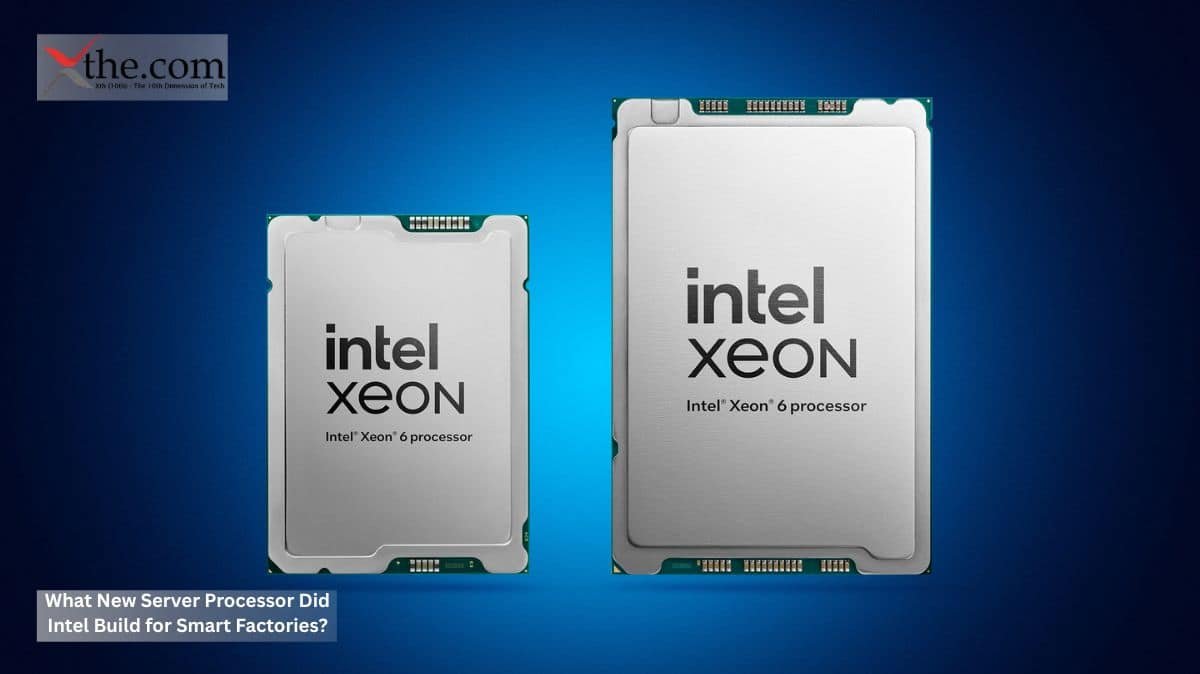




Santa Clara, Calif. More than 85% of modern edge computing nodes fail to execute real-time analytical tasks without sending data back to the central cloud. This fundamental flaw slows down autonomous systems. It creates bottlenecks within environments that entail immediate localized protection. How Intel Xeon 6 SoCs eliminate latency in distributed 5G AI agents. It tackles this problem directly. The new silicon design embeds artificial intelligence acceleration directly into the host CPU. It eliminates the requirement for separate energy-draining co-processors.  

The Computing Shift at the Network Edge 

Edge environments need high processing power, low latency, and energy efficiency. Traditional servers often can’t keep up with these needs when operating complex software. The new edge-first architecture solves this by moving computing closer to users, helping reduce network traffic and the need to send data back to the main data center.  

Running analytics in the 5G core is challenging for engineers due to strict power and cooling constraints. Intel Xeon 6 helps by including built-in accelerators that handle heavy jobs without extra hardware. This lets telecom companies process data locally, reducing network delays.  

Reclaiming Performance in the Network 

In the past, analytical data was sent to remote cloud servers, resulting in excessive latency for latency-critical tasks. To solve this, operators are now moving to an edge-first architecture.  

This change requires strong hardware capable of running network functions and machine learning together. In a typical UPF deployment, engineers manage heavy data traffic and complex tasks. The processors use efficient cores to handle these workloads without requiring extra hardware.  

Optimizing Enterprise Infrastructure 

Enterprise data centers need scalable platforms to keep growing. To keep up with growing processing needs, the new Intel Xeon 6 delivers enough power to support multi-tenant setups, running hundreds of virtual machines on just one socket.  

Hardware vendors have created new systems to handle higher density. For example, enterprises using the latest Dell PowerEdge servers see big improvements in throughput. These servers support DDR5-8000 memory and twelve memory channels, helping organizations process data-heavy workloads faster.  

Telecom operators are also adding this processing power to their networks. Companies like Nokia use these processors to lower power use in their packet core networks. With Nokia edge platforms, operators can cut power consumption by up to 60%, reducing operating costs.  

Improving The Packet Core 

Managing data flow in a 5G core requires many processing cores and low power consumption. Virtualizing network functions makes system architecture more complex.  

When planning a UPF, development engineers need to keep critical data separate to ensure zero-trust security. The system-on-chip uses built-in security features, such as Intel Trust Domain Extensions, to protect data during use. This lets the hardware run analytics securely without slowing down network functions.  

Processing performance is much better than before. With Dell PowerEdge server modules, telecom operators can process video and analytics in real time. This helps multi-tenant environments function properly without interference from other workloads.  

Hardware Integration and Energy Efficiency 

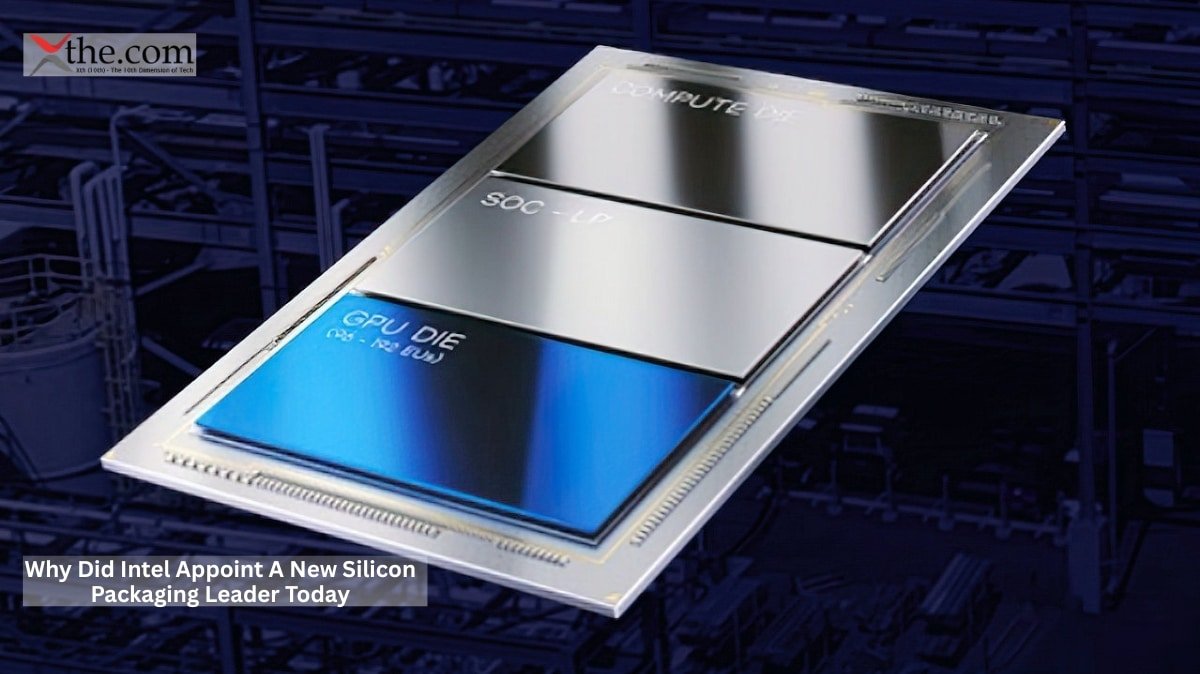
The new Clearwater Forest processors use a multi-chiplet design, fitting up to 288 efficiency cores into one package. This high density shrinks the footprint of edge servers, making it easier to add computing power in constrained spaces.  

Intel makes these chiplets with the 1.8-nanometer 18A process. The design links multiple tiles using high-bandwidth EMIB packaging. Each dual-socket setup can support up to 576 cores, along with 96 PCIe Gen 5 lanes and 64 CXL 2.0 lanes. This setup lets data move directly between the processor and external accelerators, cutting system latency.  

The chip also includes built-in accelerators, such as the Intel Data Streaming Accelerator and the Intel Dynamic Load Balancer. These parts take on from the CPUs, freeing up space for local AI inference. This helps programs run smoothly without slowdowns.  

When these processors are used with Nokia edge architecture, organizations get better insight into network traffic. The built-in accelerators can analyze peer-to-peer traffic, identify issues, and reroute traffic for subscribers in real time. This automation means less need for human intervention, keeping services running and costs lower.  

Virtualization enables organizations to run multiple workloads on a single server. Enterprises no longer need separate servers for relational and non-relational databases. One system can handle both data processing and analytics.  

The New Standard for Intelligent Networks 

Combining the processing unit with the packet core makes digital infrastructure more responsive. Running AI inference at the edge lowers tail latency and makes the network more predictable.  

Organizations that wait to upgrade their infrastructure risk falling behind competitors who use real-time computing. Modern, efficient systems help companies handle more traffic without needing new buildings.  

As networking and AI come together, enterprise infrastructure needs are changing. Operators who use these processors get an edge in speed and energy efficiency. Future networks will depend on built-in autonomous intelligence, which lowers costs, enhances security, and prepares networks for new digital services.

Source: Intel Newsroom 

Redmond, Wash. About 85% of corporate IT leaders believe their new laptops will support future operating systems without changes. However, this is not the case. Microsoft is moving toward advanced AI features that require specific hardware; so many new laptops might not be able to run future software. As NPU requirements increase, companies need to rethink how they buy computers. Machines bought today might not be able to run Windows 12.  

The Silicon Transition and Processing Thresholds 

Copilot+ standards set a starting point for running AI tasks on devices. Microsoft initially required 40 trillion operations per second, but Windows 12 will need much more to handle background tasks, real-time audio translation, and device-level data security. Computers now require much more processing power.  

Manufacturers are making new chips to meet these needs. The Qualcomm Snapdragon X Elite 2 can reach up to 80 TOPS, while Intel Lunar Lake currently falls short for some tasks. This difference means some devices can only handle basic office work, while others can run local LLM models more continuously.  

The difference between old and new chips is obvious when running ongoing machine learning tasks at work. A Copilot+ PC with an older 40 TOPS processor struggles to run multiple background AI tasks simultaneously and slows down other programs. But systems with the Qualcomm Snapdragon X Elite 2 can handle these jobs smoothly without slowing the CPU or draining the battery.  

Intel Lunar Lake is highly power-efficient for slim laptops, but its 48 TOPS neural processor is not enough for demanding enterprise AI software. When companies use local AI models for all remote workers, processing speed becomes a key factor in productivity. Older machines with insufficient TOPS cannot keep up with the data demands of the new operating system.  

The Core Problem of Obsolescence 

Because computing standards are changing quickly, many companies will have outdated computers sooner than expected. The reason why your 2025 AI PC may not support Windows 12 local agents is the new hardware rules. Microsoft now requires at least 50 TOPS for the most demanding tools and background services in the operating system.  

For example, a financial analyst running risk models or an engineer making real-time schematics will have problems if their device only has 45 TOPS. The computer will switch to cloud computing, which can be slower and less secure. Devices that meet the new NPU requirements can do these tasks locally, keeping data safe and fast.  

Because of this, companies will have to replace their computers sooner than planned. Devices bought in 2025 will still work for basic office tasks, but won’t be able to use new operating system features. The 50 TOPS minimum means only the latest hardware can handle the ongoing demands of local AI agents.  

Long-Term Consequences for Corporate IT 

With the new NPU requirements, IT teams need to revise their hardware replacement plans. Laptops usually last about four years, but those bought in 2025 may become outdated in just two years.  

A Copilot plus PC purchased in 2025 cannot be upgraded to meet the new standards, as the neural processor is built into the chip. Companies will have to write off these computers sooner than planned, resulting in additional costs. This is similar to when Windows 11 required TPM 2.0 and made many good CPUs obsolete.  

Preparing for the Next Generation of Hardware 

Companies need to change how they buy computers right away to avoid problems. IT managers should look beyond just CPU performance and pay close attention to the neural processor’s abilities.  

To plan ahead, companies should buy devices that exceed minimum requirements. Choosing machines with 60 to 80 TOPS will help fleets last longer. This way, when Windows 12 arrives, the computers will support all features, such as automated system optimization and local agent processing.  

Hardware is changing faster than ever. The main difference between a 2025 and a 2026 computer is not just battery life or speed, but whether it can run AI tasks without needing the cloud.  

When companies plan their tech budgets for the next three years, they need to consider the hidden costs of AI obsolescence. Upgrading now can help avoid surprise expenses and keep working smoothly in all remote offices. Businesses that update their buying strategies to align with these new standards will be ahead in the next wave of enterprise computing.

Source: Microsoft Azure Blog 

Armonk, N. Y.: about 92% of corporate data systems still use encryption algorithms that will soon be outdated. As quantum chips improve, the threat of data-harvesting attacks becomes more serious, prompting minor changes in digital security. To stay ahead, businesses use IBM Quantum System Two to emulate complex cryptographic models. This system lets organizations test how post-quantum cryptography (PQC) works in practice. Why enterprises must switch to post-quantum encryption by 2027 is now a clear requirement for chief information security officers, not just a topic for debate.  

The Role Of IBM Quantum System Two In Enterprise Security 

Many companies believe their encrypted communications are safe against interception. However, new computing technologies can break traditional encryption in minutes instead of centuries. Using IBM Quantum System Two changes this situation. Its configurable hardware supports precise qubit operations and gives organizations a platform to test advanced security algorithms.  

At the IBM Think 2026 conference, researchers explained the weaknesses in standard asymmetric key exchanges. When computers run large optimization procedures, they reveal flaws in the current encryption methods. To solve this, developers use Qiskit 2.0 to create and test cryptographic circuits that are resistant to quantum threats. This platform lets teams model cutting-edge algorithms without needing physical lab equipment.  

Moving to modern security procedures means network architects need to rethink their systems rather than depending on fixed mathematical assumptions. Organizations need flexible systems that can update encryption schemes without stopping operations. This shift needs a lot of computing power. The right infrastructure enables teams to check thousands of encryption keys simultaneously.  

Transitioning To Post-Quantum Cryptography 

Switching from classic algorithms to contemporary cryptographic frameworks brings major technical challenges. The move to post-quantum cryptography requires a new approach to protecting enterprise data. Many older IT systems still use standard algorithms for identity checks and secure data transfers. As computing speeds up, these systems will soon face RSA obsolescence. Organizations must update their security before their data becomes vulnerable.  

At IBM Think 2026, cybersecurity leaders stressed the importance of new mathematical formulas to reduce these risks. The latest NIST standards set out which cryptographic algorithms are safe for protecting enterprise data. These new formulas use complex lattice-based math that is hard for both conventional computers and early quantum machines to solve.   

Engineers use Qiskit 2.0 to integrate these new mathematical models into existing hybrid cloud systems. This helps teams keep their networks secure while still allowing fast data transfers. By using PQC, organizations ensure their data remains safe as new computing technologies develop.  

Aligning Operations With NIST Standards 

Regulators now require banks and government agencies to improve their safety and data safeguarding protocols. The new NIST standards are the starting point for these changes. Organizations that do not follow these protocols risk heavy fines and operational problems. The risk of RSA obsolescence is real.  

For example, a large European bank recently audited its key public key infrastructure. The audit showed that more than 70% of its certificates use weak algorithms. The bank responded by installing new encryption libraries, which now protect its customer records from future data harvesting threats.  

To speed up this process, financial and tech companies use advanced cloud computing resources. They test their encryption keys with quantum-like workloads to make sure they are strong enough. Using PQC helps these companies protect their assets before outside attackers gain quantum capabilities.  

Managing The Compute Burden Of Future Networks 

Modern business applications need fast, low-latency processing. Adding complex encryption can slow systems down. To avoid this, data centers use specialized hardware to handle the additional computing required for encryption.  

System architects build modern cryptographic libraries to support AI-powered automation systems. These systems monitor network traffic in real time and select encryption keys based on threat level. If they spot suspicious activity, they automatically switch to stronger encryption.  

By improving these workflows, companies can avoid the slowdowns that often come with high-level encryption. This helps them keep customer-facing applications fast while protecting their main databases. As quantum hardware continues to develop, security will help speed up operations rather than slow them down.  

The Future of Digital Security 

Digital security must keep up with new technologies. The combination of artificial intelligence and quantum tech brings fresh challenges for protecting enterprise data. Organizations that wait for fully developed quantum chips could struggle to keep up with rapid changes.  

Taking action now helps keep corporate assets safe from new computing threats. Post-quantum cryptography offers a clear way forward for enterprise security leaders who move quickly to protect their organizations from digital disruption and maintain their stakeholders’ trust.

Source: IBM Newsroom 

Austin, Texas: A production supervisor in Ohio recently reviewed labor shortages across three shifts. Even after raising wages, 22% of positions stayed vacant. The problem was not pay, but simply finding enough workers. Tesla Optimus aims to close this gap, not just in a demonstration, but on real factory floors, where downtime has real financial costs.  

Moving from prototype to actual use is a major step for humanoid manufacturing. Automation is starting to look more like human flexibility instead of just machines built for one task.  

From Showcase to Throughput: The Real Test for Tesla Optimus 

Early Tesla Optimus demos showed off balance, object handling, and basic movement. These were important steps, but they did not answer the main question: can a humanoid robot manage repetitive, precise tasks in real factory conditions?  

Gen-2 starts to answer this question. With FSD hardware 5.0, the robot can process information in real time and understand changing environments, not just follow set paths in a factory. This means it can adapt to small changes in part replacement, people moving, or workflow interruptions.  

This has immediate effects for humanoid manufacturing. Companies no longer need to redesign factories for robots. Instead, they can add robots to layouts built for people.  

The Engineering Layer: Why Hardware Now Matters More Than Hype 

Exactness Through Actuator Patent Innovation 

Tesla Optimus features a new motion system based on a unique actuator pattern. This is a major change, not just a small improvement. It directly determines torque control, energy use, and the robot’s reliability in repeating tasks.  

For example, a robot installing fasteners on a car assembly line needs to use the same force every time, thousands of times in a row. If the value stretches or the force varies, defects can occur. The new actuator design helps reduce these differences, making the robot’s precision more like a human’s while keeping the consistency of a machine.  

This change moves industrial robots beyond simple, rigid automation. Now, machines can handle more complex tasks without needing to be reprogrammed constantly.  

The Role of Tactile Sensing 

Vision by itself is not enough for complex tasks. This is why tactile sensing is so important. Tesla Optimus uses advanced feedback systems to sense pressure, texture, and resistance in real time.  

Take electronics assembly as an example. A human worker naturally changes their grip when handling fragile parts. With tactile sensing, the robot can do the same, helping reduce breakage and increase output.  

For humanoid manufacturing, this skill helps close the gap between automated work and proficient craftsmanship.  

Energy Economics and the 4680 Battery Advantage 

Power efficiency often determines whether robotics can grow. The 4680 battery lets Tesla Optimus run longer and recharge faster.  

In a mixed factory, cutting downtime by just 10% can save millions each year. The 4680 battery helps robots work longer shifts with fewer stops, enabling non-stop operation.  

This also changes how factories plan their energy use. Instead of charging robots at random times, they can fit charging into bigger energy plans using renewable energy or charging during off-peak hours.  

Redefining Industrial Robotics Economics 

Traditional industrial robots are set up for a single task and remain in place. They are efficient but not flexible. Changing them usually means long downtime and significant expenses.  

Tesla Optimus changes the cost model. One robot can do different jobs throughout the day, like moving materials in the morning, helping with assembly in the afternoon, and checking quality at night.  

This multi-functionality alters ROI calculations. Instead of evaluating robots per task, executives assess them per operational hour. The result is a more energetic, potentially higher-return investment.  

Scaling the Model: A Closer Look at Becoming Realities. 

Scalability of Tesla Model Optimus for US-based micro-factories. 

The real challenge is not in big factories, but in smaller, spread-out sites. Micro factories, small production units, have become popular in the US due to supply chain issues and efforts to bring manufacturing back home.  

This is where Tesla Optimus stands out. Smaller factories often lack enough work to justify traditional automation. But a flexible human-like robot can adjust to different production needs without major changes.  

Picture a small group of micro-factories making custom parts. The demand goes up and down each week. It is hard for human workers to scale quickly. Using Tesla Optimus lets these factories change their output as needed, matching production to demand.  

This is where Tesla Optimus’s scalability for US-based micro-factories becomes a tactical benefit rather than an abstract notion.  

Risk and Operational Friction 

There are challenges to deploying Tesla Optimus. Adding it to current workflows means retraining staff, uploading a scratch pad, updating safety rules, and making sure it works with legacy systems. Reliability is another concern. If the robot fails during a key part of production, everything can stop. Even with improvements in SSD hardware 5.0 and the actuator’s patent, companies will want proof of uniform performance before using many robots at once.  

Cybersecurity is also a worry. As robots get more connected, they could become targets for cyberattacks. This risk needs to be managed along with the physical rollout.  

Strategic Consequences For Executives 

Moving from demos to real use means companies must rethink their workforce plans. Humanoid manufacturing does not remove human jobs; it changes them. Workers shift from doing tasks by hand to overseeing, maintaining, and improving processes.  

For leaders, the question is not whether to use Tesla Optimus, but how to fit it into their overall strategy. Early users might get efficiency gains, but they also take more risk.  

Timing is important. Adopting too soon means using technology that is not fully tested. Waiting too long could mean falling behind rivals who are already more productive.  

The Shift from Experimentation to Standardization 

What sets this stage apart is the purpose. Tesla Optimus is not only an idea meant to impress. It is now being used in places where results are measured by hourly output and defect rates.  

As industrial robots become more flexible, the distinction between what humans and machines can do is becoming less clear. With tactile sensing, advanced actuators, and built-in computing, these robots can handle many tasks without needing people to step in every time.  

Factories built over many years for people may not need to be completely rebuilt. Instead, they can gradually introduce humanoid robots that work alongside current processes.  

The bigger picture is clear. Automation is moving from efficiency to greater flexibility and collaboration. As Tesla Optimus grows and humanoid manufacturing becomes more stable, factories will find a new balance where flexibility, not just speed, sets them apart.

Source: Tesla Blog 

San Jose, Calif. In the last quarter, a Fortune 500 bank found that almost 18% of its automated workflows were initiated by identities that could not be traced. These were not rogue employees or outside attackers. Instead, they were ghost agents, autonomous scripts, and AI processes running devoid of clear ownership, visibility, or control. The financial risk was real, showing up as audit gaps, duplicate transactions, and unexplained API calls.  

Cisco Astrix is designed to solve this problem. It pushes companies to address ARAG, a growing blind spot in AI agent security.  

The Rise of Ghost Agents in Enterprise Systems 

Autonomous AI agents now manage tasks ranging from customer support to backend reconciliation. Companies adopted these systems for speed and scale, but oversight did not keep up. Each new agent creates an identity that is often unmanaged, rarely audited, and usually not covered by traditional access controls.   

This is where non-human identity (NHI) becomes more than simply a technical term. It constitutes a major change in how organizations need to think about identity, whether it is a bot trading stocks, an AI model writing code, or a script managing cloud tasks. Each needs identity, authentication, and accountability.  

Without proper oversight, these entities turn into ghost agents. They perform actions and access systems, but leave little footprint behind.  

How Cisco Astrix Reference AI Agent Security 

From Visibility to Accountability 

Integrating Cisco Astrix adds a unified control layer for AI agent security. It treats autonomous agents as primary identities rather than simply tools. This is important because traditional IAM systems were not built to handle so many machine identities.  

By assigning each agent a verifiable identity and connecting activity logs to services like Splunk AI, organizations gain clear forensic insight. When something unusual happens, teams can trace it back to a specific agent with known permissions and behavior.   

This is more than a small important improvement. It completely changes how organizations see and manage their operations.  

Embedding zero trust into Orleans systems 

Most companies say they follow zero-trust principles, but few apply them strictly to non-human agents. Cisco Astrix makes this application possible.  

Each agent now has to constantly verify its identity, contacts, and permissions before doing any task. Static credentials are no longer enough. Dynamic checks make sure that even internal agents cannot act without oversight. Consider a healthcare provider running AI-powered dynamics. Without zero trust, a compromised agent could access patient data across systems with enforced verification tied to agentic identity. The same agent must prove legitimacy at every step, reducing lateral movement risks.  

Regulatory Pressure Meets Technical Reality. 

Conforming to NIST AI 2.0 

Regulators now recognize the risks associated with autonomous agents. Frameworks such as NIST AI 2.0 stress the requirement for accountability, traceability, and governance in AI operations. Still, most companies find it hard to put these guidelines into practice.  

Cisco Astrix offers a solution. By adding identity controls directly into agent workflows, organizations can meet NIST AI 2.0 requirements without rebuilding their entire infrastructure.  

This alignment itself will soon become necessary. Fields such as finance, health, and healthcare will face greater scrutiny, especially regarding how AI decisions are made and reviewed.  

The expanding role of agentic identity 

Agentic identity is more than just authentication. It sets the rules for how an AI agent acts, what it can access, and how its actions are tracked over time. This is important as agents move from simple tasks to making decisions.   

For example, an AI procurement agent handling vendor contracts must follow strict policy rules. With agentic identity, these rules are built in and enforced, so compliance happens automatically without constant human checks.  

Operational Impact: From Risk Mitigation To Strategic Benefit. 

Eliminating ghost agents 

The main benefit of Cisco Astrix is the removal of ghost agents. Every automated process sets a clear identity, defined permissions, and a trackable activity log. This lowers audit risk and makes compliance reporting easier.  

But there are more benefits beyond this.  

Organizations can now expand AI deployments with confidence when identity and security are built in at the agent level. Adding new agents becomes much less risky. This turns AI from a small experiment into a scalable business tool.  

Enhancing Observability with Splunk AI 

Connecting with Splunk AI makes this even more effective. Real-time analytics help security teams spot unusual agent behavior before it becomes a problem. Patterns are easy to see, and outliers are quickly noticed.   

Picture a logistics company where an AI agent suddenly makes 300% more API calls in just a few minutes. Without integrating monitoring, this spike might go unnoticed unless something breaks. With Splunk AI, alerts go off immediately, letting teams act quickly.  

The Implementation Challenge 

Implementing non-human identity security for autonomous AI agents 

Even with these benefits, implementation is not easy. Companies must first list all their existing non-human identities (NHI). This process often uncovers hundreds or even thousands of unmanaged identities hidden in their systems.  

The next step is classification. Not all agents have the same level of risk. For example, a reporting bot is very different from an AI model that makes financial decisions. Setting priorities is key.  

Finally, organizations need to add identity controls to their workflows without disrupting operations. This takes teamwork across IT, security, and business units, and many underestimate how challenging this can be.  

But the alternatives are not sustainable. As autonomous systems grow, unmanaged identities will continue to increase, risking both security and complexity.  

Strategic Consequences for Executives 

Adopting Cisco Asterix signals a significant shift in enterprise strategy. AI is no longer a tool for productivity. It has become an operational layer that needs governance, oversight, and accountability.  

Executives need to reconsider where they invest. Spending on AI agent security will increase, not just for defense, but to support scalable AI adoption. Budgets will shift toward identity management, observability, and compliance frameworks aligned with NIST AI 2.0.  

This change also affects how organizations define success. It is no longer enough to launch AI systems quickly. They must also run securely, transparently, and within set policy limits.  

A New Baseline for Autonomous Systems 

Ghost agents used to flourish in space amid innovation and governance. Now that the gap is closing. With Cisco Astrix, companies get the tools to define, monitor, and control every autonomous identity in their systems.  

The next stage of AI adoption will focus less on the number of agents and more on how well they are managed. As zero-trust principles permeate, every part of the infrastructure and agentic identity becomes standard, invisible, and unmanaged; AI agents will disappear.  

What comes next is a more disciplined and accountable model. In this new approach, autonomy does not mean losing control, and AI agent security serves as the foundation for progressive innovation.  

  • Meta Title (60 characters) 
  • Meta Description (160 characters) 
  • SEO Tags (5) 

Source: CISCO Newsroom 

Santa Clara, Calif.: It is unusual for a single firmware update to make CFOs visit their capital spending plans in the middle of a cycle. But that is exactly what happened, what is happening now with the latest NVIDIA Blackwell B200 update. Early users say that assumptions about power, memory, and even cluster design are changing. Budgets are being revised this quarter, not next year.  

This change is not merely a minor improvement. It is a fundamental shift in system design.  

The Firmware That Reinvents AI Inference Economics 

At first, the firmware update seems minor, with improvements such as better scheduling, more efficient memory use, and new features for CUDA 13. However, it actually changes how the Nvidia Blackwell B200 manages large-scale AI inference workloads.  

Before the update, most companies-built clusters with extra capacity. They used more GPU memory than needed and accepted some inefficiency during busy times. The new firmware better utilizes memory bandwidth, especially given HBM3E supply constraints. As a result, fewer GPUs can now deliver the same or even better performance.  

This might sound like a simple cost-cutting story, but it is about shifting spending to new areas.  

Companies are now moving their capital spending toward denser setups, faster connections, and advanced liquid cooling to handle higher heat levels. This leads to about a 40% change in budget allocation, even if the total amount remains unchanged.  

Why Memory Bottlenecks No Longer Define Scale. 

The role of HBM3e supply in cluster design 

Throughout most of 2025, the supply of HBM3E memory limited how quickly companies could deploy new systems. Many projects were delayed due to insufficient GPU memory. The firmware update changes how memory is used and shared for inference tasks.   

Now, instead of assigning each workload to a separate GPU, the system shares memory among tasks. This allows for more efficient processing of LLM reasoning operations and greatly increases output without needing more hardware.   

However, this new efficiency creates a different challenge: limits on network speed and on its control.  

The Rise of Rack-Scale AI 

This is where rack-scale AI comes in. The firmware improvements require companies to use tightly integrated rack-level systems instead of loosely connected clusters. This change entails investing in faster networking and better rack design.   

The implication is clear. Savings from reduced GPU count do not return to the balance sheet; they are reflected in infrastructure sophistication.  

Cooling Becomes a First-Class Budget Line 

With the updated NVIDIA Blackfly B200, some systems run hotter than traditional air cooling can handle. Companies that used to see cooling as just a facilities issue now treat it as a key part of their computing strategy.  

Liquid cooling is now required in many setups. For example, a mid-sized company running inference for customers might use 20% fewer GPUs but spend twice as much on liquid-cooling racks to keep performance steady during heavy use.  

This is where the 40% shift in capital spending becomes real. Money is moving away from just buying chips and toward the systems that help those chips work at their best.  

Software Efficiency Encounters Hardware Reality 

The Impact of CUDA 13 

The way the software works with CUDA 13 is important. Developers now have more control over how tasks run and how memory is managed, notably for complex LLM reasoning. This leads to lower delays and more predictable results in practical world use.  

However, to get these benefits, software teams need to update their existing systems. Older code designed for previous hardware will not get the same performance improvements.  

This adds another area of spending. Companies need to hire or retrain engineers, which further changes how they allocate both capital and operating expenses.  

A Practical View: Enterprise ROI in 2026. 

How Blackwell Firmware Updates Affect Enterprise AI ROI in 2026 

Take a financial services company that uses AI for risk modeling. Before the update, it needed 1,000 GPUs to meet its speed targets for instant AI inference. After the firmware update and some workload changes, it now gets the same results with just 750 GPUs.  

On paper, that is 25% in hardware cost savings from advanced liquid-cooling infrastructure, high-bandwidth networking for rack-scale AI, software tuning aligned with CUDA 13, and redundancy systems to support mission-critical LLM reasoning.  

The end result is not lower spending, but better efficiency. For each dollar spent, ROI rises because output grows faster than costs, not because costs decline.  

This difference is important. In 2026, executives will judge AI investments by how much performance they get each watt or dollar, not just by how much they save overall.  

Strategic Consequences for Decision Makers 

The firmware update tied to NVIDIA Blackwell B200 forces a new way of thinking. AI infrastructure is no longer simply about adding more hardware. Now, memory, cooling, software, and networking all need to improve together. To do so, it requires coordinated investment across traditionally siloed departments, teams, IT facilities, and software engineering.  

For tech leaders, the main question is not whether to use the updated NVIDIA Blackwell 200 stack, but how quickly they can adjust their spending plans to realize the benefits without disrupting operations.  

The New Baseline for AI Infrastructure 

The firmware update does more than boost performance; it changes what companies expect. Those who adapt will operate more efficiently and reliably. Those who wait may be held back not by hardware shortages but by old ways of thinking about system design.  

As AI tasks become more complex and LLM reasoning becomes key to business, how well silicon, software, and infrastructure work together will set companies apart. Those who see these parts as one system will get the most from their investments.  

The current shift in capital spending is not simply a short-term change. It defines a new standard in which efficiency, density, and integration shape the economics of large-scale AI inference.

Source: Nvidia Newsroom 

SANTA CLARA, Calif. — Intel has confirmed a major internal restructuring through its announcement that Alex Katouzian will head the newly established Client Computing and Physical AI Group, which combines traditional laptop silicon development with robotics-based AI hardware into a single strategic division.   

The move establishes a new alignment between Client Computing and the Physical AI Group’s objectives, representing a fundamental transformation in how U.S. chipmakers design silicon platforms for both personal devices and autonomous machines.  

Why the Physical AI Group Matters  

The Intel Physical AI Group was established to fulfill the industry’s need for advanced computing systems that operate beyond conventional screen-based and endpoint-based systems.   

Intel now groups laptops, PCs, and robotics platforms together because all three products share the same silicon architecture development process.   

The future design of processors will focus on creating systems that support both human-computer interaction and machine-based tasks.   

Physical AI Group strategy development demonstrates how artificial intelligence now connects with physical systems in the world rather than existing only in virtual digital spaces.  

Robotics Silicon Becomes a Core Competitive Frontier  

The semiconductor industry is entering a new stage because Robotics Silicon technology enables chip manufacturers to create products that achieve better performance by connecting to the real world.   

The system needs to succeed in four main areas: sensor fusion, motion planning, environmental mapping, and adaptive decision-making.   

The growing number of autonomous robotic systems creates an increasing need for custom-designed silicon solutions that meet their operational requirements.   

Intel’s organizational changes indicate that Robotics Silicon has become an essential competitive area for the semiconductor market.   

The Physical AI Group strategy shows that artificial intelligence now operates within real-world physical systems rather than virtual digital spaces.  

Client Computing and Physical AI Converge  

The organization considers Client Computing and Physical AI development as the most important part of its organizational transformation.   

Client computing evolved over time to support desktop and laptop computing, while robotics system development developed specialized industrial applications.   

Intel signals its intent to unite the two divisions by demonstrating that both will use shared AI processing systems in their operations.   

The combined systems of this convergence will create new design methods and deployment strategies for upcoming computing platforms.  

Intel 18A Becomes Strategic Infrastructure.  

The Intel 18A manufacturing node serves as the essential foundation for executing this new approach.   

The 18A process technology represents Intel’s most sophisticated semiconductor manufacturing method, enabling high-performance AI operations across both personal computers and robotic systems.   

The system offers three major enhancements: higher transistor density, improved energy efficiency, and advanced AI processing capabilities.   

Intel 18A technology development shows dedicated support for Physical AI research through its unified silicon design platforms.  

Autonomous Machines Drive Silicon Demand  

Autonomous Machines require real-time processing capabilities with their need for low-latency inference and continuous sensor integration.   

Autonomous platforms need to operate without human assistance because they operate in unpredictable environments that differ from those of standard computing systems.   

The semiconductor design process faces major challenges because it must enable distributed intelligence alongside edge-based decision-making capabilities.   

Intel built its new organizational structure to meet the specific needs of Autonomous Machines.  

Edge Robotics Expands Computing Scope  

The advancement of Edge Robotics brings artificial intelligence capabilities to physical systems that operate outside traditional cloud computing environments.   

The systems depend on localized intelligence for their three primary functions: navigation, manipulation, and environmental awareness.   

Edge robotics applications find use in warehouse automation and manufacturing systems, delivery robots, and industrial inspection platforms.   

The growth of Edge Robotics requires specialized silicon chips that provide instant feedback for physical user contact.  

Physical AI Merges Digital and Mechanical Systems  

The larger definition of Physical AI describes artificial intelligence systems that operate through direct control of physical objects and environmental elements.   

The field of study includes three main areas: robotics, autonomous vehicle systems, and industrial automation networks, combined with smart infrastructure systems.   

Intel uses Physical AI as its fundamental computing method to create a company that operates at the crossroads between digital intelligence and physical execution systems.   

The document establishes new boundaries for semiconductor design that go beyond traditional methods.  

Robotics Silicon Arms Race Intensifies  

The development of a unified Physical AI strategy will drive rapid progress in a Robotics Silicon Arms Race among semiconductor companies.   

Competitors will likely increase investment in AI-optimized chips capable of supporting robotics workloads, edge intelligence, and autonomous system control.   

The competition now includes specialized architectural designs that exist beyond basic processing power.   

The result is a new category of silicon innovation focused on embodied intelligence systems.  

Manufacturing and Computing Convergence  

The Client Computing and Physical AI Group merges to establish a permanent connection between consumer computing and industrial robotics manufacturing.   

Future devices might use identical core silicon designs that will operate in both personal electronics and autonomous machines.   

This convergence will make the development process more efficient, while increasing the need for versatile AI processing units capable of handling multiple tasks.  

Industry Impact Across the AI Hardware Ecosystem  

The restructuring will impact all industry AI hardware development strategies.   

The demand for unified AI architectures will increase as companies develop systems that function in both digital and physical environments.   

The development will create standardized silicon platforms to optimize AI workloads that operate across different domains.   

The transition establishes integrated hardware-software co-design as a vital aspect of semiconductor development processes.  

Conclusion: Intel Redefines Silicon for Physical Intelligence  

Intel established the Intel Physical AI Group, which is creating a fundamental shift in the procedures used to design and construct computing platforms.   

Intel unified its Client Computing and Robotics Silicon and Physical AI Group development functions into a single organizational structure to develop dual-purpose silicon architectures that support human devices and autonomous machines.   

The semiconductor industry enters a new phase as demand for Autonomous Machines and Edge Robotics drives Intel’s 18A manufacturing progress and Autonomous Machines development.   

The Robotics Silicon Arms Race indicates that the upcoming major computing frontier will depend on two factors: software development and the ability of chips to deliver intelligence for real-world applications.

Source: Intel Newsroom 

SANTA CLARA, Calif. — NVIDIA has released updated technical documentation for Nemotron-3 Nano Omni, a multimodal artificial intelligence platform that combines visual, audio, and language processing into a single system for efficient local deployment.   

The update, published at 4:15 AM PT, establishes the model as a significant advancement in Multimodal AI Agents, achieving efficiency improvements up to 9 times those of previous distributed inference systems.   

The current change is starting to affect buying methods used in edge computing, enterprise artificial intelligence infrastructure, and Edge AI deployment systems.  

Why Nemotron-3 Nano Matters for Edge AI  

The Nemotron-3 Nano architecture has been built to operate in local inference environments that require specific performance requirements to maintain operational privacy and computational performance.   

Edge AI models run their operations on devices such as laptops, industrial machines, and embedded systems without connecting to remote servers for processing.   

The system achieves faster response times and stronger data protection while reducing reliance on centralized systems.   

The development of Edge AI technology depends on both better model performance and advancements in hardware integration.  

Multimodal AI Agents Become Unified Systems  

The main development in Multimodal AI Agents now enables them to process text, audio, and visual data through one unified system.   

Restaurants use AI systems to analyze customer video footage while creating multiple digital processing workflows to handle different inputs.   

The Nemotron-3 Nano update unifies all functions into a single system, simplifying operations while enhancing output consistency.   

This development enhances agent systems, enabling them to perform real-world tasks that require processing multiple data types.  

NVIDIA Omni Architecture Improves Efficiency  

The NVIDIA Omni framework optimizes multimodal model memory management alongside computational resource distribution and inference processing.   

The system architecture achieves higher throughput by unifying processing tasks and eliminating unnecessary calculations.   

The reported performance boost is 9 times better results from this particular system enhancement for specific edge AI tasks.   

The NVIDIA Omni approach demonstrates how the technology industry is moving toward complete AI systems that work together as one unit in integrated designs.  

Local Inference Becomes a Strategic Priority  

The growing need for AI systems that operate without cloud services underscores the importance of Local Inference. Local processing improves data protection while reducing response time and enabling AI systems to operate in areas with limited internet access.   

Healthcare, manufacturing, and autonomous systems require local inference capabilities as their new primary focus. The Nemotron-3 Nano update provides direct support for this transition.  

Unified Context Changes Agent Design  

The introduction of Unified Context processing represents a major shift in how AI agents store and interpret memory.   

The unified context systems process all inputs through a shared representation space rather than processing different modalities in separate systems.   

The system achieves superior reasoning accuracy by maintaining better information across different modes of operation.   

The system improves real-time applications by enhancing AI performance that understands its surroundings.  

Agentic Hardware Demand Increases  

The rising need for computing systems that can operate autonomous AI agents has created demand for Agentic Hardware.  

The systems need to meet three requirements: maintain high efficiency and low latency, and have memory structures designed for optimal performance during ongoing inference. The upcoming Nemotron-3 Nano Omni update will affect the hardware acquisition decisions organizations make for their edge computing devices. computing devices.   

As AI agents become more independent, their hardware requirements become more advanced.  

Edge AI Procurement Models Are Shifting  

The enhancements in operational efficiency, combined with improved system integration capabilities, are driving changes in Edge AI purchasing decisions.   

More and more companies are assessing AI applications not only with a particular focus on the cloud capacity of their solutions, but also on the capability of those same applications to execute directly on client devices.   

Adopting this new paradigm helps reduce reliance on centralized architectures while enabling changes in how enterprise AI deployments occur. 

The reported efficiency gains make edge-based deployment more economically attractive.  

Multimodal AI Agents Drive Enterprise Use Cases  

The development of Multimodal AI Agents creates new business applications for various industries.   

The system operates across multiple use cases, including real-time translation, industrial monitoring, autonomous decision support, and intelligent human-machine interaction systems.   

The system gains operational advantages by handling multiple input formats simultaneously.   

Multimodal systems become better at handling actual complex environments through this capability.  

Edge AI Reduces Infrastructure Dependency  

The expansion of Edge AI reduces the need for extensive cloud systems that handle multiple inference tasks.   

The solution reduces operational expenses while strengthening system stability and boosting data management capabilities for businesses.   

The system needs advanced local hardware capable of high-performance AI operations.   

Current AI infrastructure strategy discussions focus on this tradeoff as their main point of contention.   

Conclusion: Efficiency Gains Reshape AI Infrastructure Strategy  

NVIDIA’s launch of Nemotron-3 Nano Omni marks an important achievement in the development of multimodal artificial intelligence systems and edge computing infrastructure.   

The unification of Multimodal AI Agents through Unified Context processing, together with NVIDIA Omni-Optimization, improves operational performance and computational capacity for local AI systems.   

The advances in Local Inference and Agentic Hardware design development lead to new business approaches for Edge AI acquisition and implementation.   

The transition to advanced multimodal systems, with reported 9x efficiency improvements, indicates that organizations now design AI infrastructure to operate independently in decentralized intelligent edge networks rather than relying on centralized cloud systems.

Source: Technical Blog 

ARMONK, N.Y. — The X-Force Threat Intelligence Index has received an update from IBM over the past few hours, designating AI chatbot technologies and autonomous agent systems as emerging threats that businesses need to protect against, as these systems expose sensitive information that criminals can use to steal identities.   

The update introduces a new risk framing, which the organization refers to as an “Agent-Mine” scenario, in which attackers target AI-driven systems to obtain access to enterprise credentials and sensitive workflows.   

The current changes to Agent Platform Security requirements and enterprise SaaS Security procurement methods for 2026.  

Why Agent Platforms Are Now a Security Priority  

AI-driven systems now execute multiple business functions, including customer support, data retrieval, workflow execution, and internal decision support, across modern enterprise operations.   

The Agent Platform Security environments require extensive system access because their operations depend on three essential components: authentication tokens, API keys, and cross-application permissions.   

The expanded access surface creates new cybersecurity risks that traditional SaaS models were not built to protect against.   

The industry now prioritizes secure autonomous systems because their security needs exceed those of traditional software applications.  

Credential Gold Mine Risk Emerges  

IBM’s warning demonstrates how AI agents build Credential Gold Mine systems by collecting sensitive authentication information in the course of their everyday work.   

AI systems create indirect storage centers for valuable credentials to communicate with multiple business applications simultaneously.   

The systems become vulnerable to attack because they provide hackers with entry points into various linked services.   

This development makes AI agent platforms one of the most critical security components in enterprise cybersecurity systems.  

IBM X-Force Expands Threat Intelligence Scope  

The IBM X-Force research results demonstrate that current threat intelligence frameworks have developed new methods to assess artificial intelligence systems.   

Modern threat models now examine how autonomous agents operate within enterprise systems, rather than focusing on external security weaknesses.   

The system tracks user identity delegation paths, along with their application programming interface usage and automated processes, across different systems.   

IBM X-Force has increased its research capabilities to develop new methods of monitoring cybersecurity threats through behavioral analysis.  

AI Governance Becomes a Procurement Requirement  

The rise of autonomous systems is driving organizations to establish AI governance frameworks to support their procurement activities.   

Organizations need to assess three aspects of AI systems: operational capabilities, cost implications, and identity management systems with permission controls and data protection measures.   

The SaaS buying process now requires organizations to address governance issues that were previously handled after product deployment.   

AI Governance has evolved into a fundamental element that enterprises now use to assess their software products.  

Identity Management Systems Face Increased Pressure  

The increasing use of autonomous AI systems requires organizations to upgrade their current Identity Management infrastructure.   

The original design of identity systems was created for human users who followed regular access patterns, while they did not consider the needs of AI systems that operate through continuous automated processes.   

The existing system’s validation errors create multiple security weaknesses across authentication methods, session management, and privilege escalation controls.   

The organizations that use AI-based SaaS solutions must make Identity Management systems their top focus for protection.  

SaaS Security Models Are Being Rewritten  

The concept of SaaS Security is evolving as AI agents become embedded within enterprise software ecosystems.   

Security models now require protection for interconnected systems that operate AI agents across different platforms.   

The system’s connections between components create two effects: higher operational efficiency and greater exposure to systemic risks.   

The traditional SaaS buying guides now require updates, which add AI-specific risk evaluation criteria to the existing guidelines.  

Procurement Risks Increase for Enterprise Buyers  

Agent-based vulnerabilities that emerge today continue to pose Procurement Risks during enterprise technology acquisition.   

Organizations must now assess whether SaaS platforms include adequate controls for AI-driven access, identity segmentation, and credential protection.   

The vendor selection process becomes more difficult because IT procurement teams must conduct additional due diligence work.   

Security evaluations now hold equal weight with performance metrics during the purchasing decision process.  

Managing Autonomous AI Agent Risks  

The long-term challenge of Managing Security Risks of Autonomous AI Agents in Enterprise SaaS lies in balancing automation efficiency with security containment.  

AI agents enhance productivity and reduce operational costs, but their use requires organizations to establish strict controls over their access points.   

Organizations are beginning to implement stricter segmentation, least-privilege access models, and continuous monitoring systems for AI-driven workflows.   

This development brings about a significant transformation in the fundamental structure of enterprise cybersecurity systems.  

SaaS Ecosystem Faces Structural Change  

The integration of AI agents into SaaS ecosystems is forcing vendors to revise their core platform design principles.   

Security is now a fundamental element of system design, and developers must include it from the beginning of their projects.   

The upcoming change will shape enterprise software development and deployment procedures and testing methods throughout the upcoming years.  

Conclusion: AI Agents Redefine Enterprise Security Models  

The most recent IBM update demonstrates that companies now need to adopt different methods for assessing AI-powered software systems.   

Organizations need to update their existing SaaS security systems and purchasing practices because Credential Gold Mine threats and Agent Platform Security requirements have become more important.   

The growing significance of IBM X-Force intelligence, along with the increasing need for AI governance and identity management, indicates that organizations now use autonomous AI agents as essential components of their cybersecurity risk management systems.   

Organizations are changing their software selection methods because AI automation technology has brought new procurement risks to their operations.

Source: IBM Newsroom 

Seattle, Wash.: At a remote processing plant in rural Nevada, a heavy-duty turbine stops working. Technicians lose access to live data, and every hour of downtime costs the facility $20,000. The closest fiber connection is 40 miles away across rough terrain. Installing traditional telecom lines would cost millions. Many remote industrial sites experience long delays in sending and receiving data due to unreliable broadband. Solving this rural connectivity problem is a major challenge for companies that need to operate around the clock. To close this gap, a new approach to using satellite AI and Project Kuiper is needed. By combining low Earth orbit satellites with edge computing, companies can fix the latency problems that have affected remote sites for years.  

The Industrial Data Bottleneck At Edge Locations 

Remote manufacturing plants, mines, and farms create huge amounts of data every day. To process all this information, they need fast, reliable connections to central data centers. But many rural sites only have weak, slow networks because the infrastructure is lacking. As a result, workers cannot run advanced machine learning programs on-site without risking a loss of connection.  

By using Project Kuiper together with AWS edge computing, companies can process data right where it is collected. For example, if sensors on an assembly line detect a problem, local systems immediately examine the data. There is no need to wait for information to travel to a faraway cloud and return. This local processing keeps operations functioning properly, even if ground operations go down during bad weather.  

Using satellite AI directly at remote sites also changes how managers handle daily tasks. Instead of sending hard drives full of data to a central office, teams can use satellite broadband to send processed insights. The Amazon Leo constellation provides enough bandwidth for fast, reliable data transfer.  

Integrating Intelligence Throughout Distributed Sites 

The launch of low Earth orbit satellites is changing how industries communicate. Amazon renamed its satellite program Amazon Leo to show how much it has grown. The constellation now includes thousands of satellites connected by optical lasers. These lasers keep data moving at speeds up to 100 gigabits per second, all without requiring ground stations.  

For companies using AWS Project Kuiper integration with industrial AI agents. The advantages go beyond just getting Internet access. They install small, tough computers near their machines. These computers run machine learning models on AWS Edge systems. When the satellite network is available, the system automatically syncs the data and updates the AI agents.  

Take an oil and gas pipeline that stretches hundreds of miles across the desert. Running fiber optic cables that far would be too expensive. Instead, engineers set up a small terminal that connects satellite broadband. This connection works with predictive maintenance software. The system can spot pipe corrosion weeks before a leak happens, saving the company millions in repairs.  

Rethinking Infrastructure Procurement for Remote Sites 

Historically, acquiring connectivity for remote outposts involved long-term contracts with regional telecom providers. These providers frequently required months to lay copper or fiber lines. The modern approach to infrastructure procurement favors flexible, space-based networks that adapt to evolving environments.  

IT teams are updating their infrastructure procurement by choosing small, portable user terminals rather than waiting for land-based systems. These terminals can be delivered in just a few days and start working with the Amazon Leo network right away. The fast setup changes the cost of exploring remote areas. Energy companies and farm groups no longer have to spend heavily on laying cables through tough landscapes.  

Adding satellite AI to remote sites also lowers the cost of sending data. Instead of sending raw video or large log files, companies send only key insights over the satellite link. Local AI agents sort through the data and send only the most important alerts before anything leaves the site.  

The Operational Impact of the Constellation 

A reliable connection affects both worker safety and equipment longevity. In remote logging camps, equipment breakdowns can lead to serious injuries or big financial losses. With continuous data links via Project Kuiper, supervisors can monitor equipment health at all their sites, no matter where they are.  

Using edge processing with satellite AI enables machines to work independently. For example, self-driving trucks in open-cast mines can keep running even during dust storms or bad weather. The trucks handle navigation data on-site and only use the satellite network for important updates and system checks.  

Being connected to AWS Edge resources also keeps compliance data safe. Data sent from the terminal to the cloud travels through encrypted channels. This setup protects company information from being intercepted by outsiders.  

Surmounting the Limitations of Terrestrial Networks 

Solving the rural connectivity problem means changing how networks are built. Satellite data delivery avoids the physical barriers that often break underground cables. The low Earth orbit mesh network can send data around storms and equipment failures with ease.  

Now, industrial companies depend on a single unified communications system. With AWS, Project Kuiper, and industrial AI agents, they can make decisions locally and automatically, thereby reducing operational costs. As more automation reaches remote areas, the need for powerful space-based infrastructure is growing fast.  

Companies that start using these technologies now put themselves ahead in modern operations. They protect their supply chains from ground-based disruptions and lay a strong foundation for future growth.

Source: Amazon News