



By 2026, on-premise data centers will have become specialized hubs for private intelligence. As companies move beyond pilot projects, demand for top-tier AI infrastructure such as Dell APEX and HPE GreenLake has grown, driven by the need for data sovereignty and reliable performance. Public clouds still offer scale, but local-first strategies deliver the low latency and security needed to train large, large AI models on proprietary data. Today’s decision-makers are choosing flexible consumption-based systems that combine the agility of the cloud with the control of private hardware.  

Architectural Philosophies: Integrated Factories vs Managed Clouds 

The main difference between Dell and HPE is how they apply artificial intelligence. Dell promotes its AI factory idea, offering complete, tightly integrated systems built for high performance. By pairing PowerEdge XE9712 servers with NVIDIA Blackwell technology, Dell provides organizations with a proven platform for powerful computing. This setup works well for companies that want to quickly build large, unified clusters with little hassle. Dell’s approach treats the infrastructure as a fast, efficient engine made for deep learning and large-scale AI tasks.  

HPE GreenLake takes a different approach, focusing on creating a managed private cloud AI experience. Rather than just offering powerful hardware, HPE provides a ready-to-use environment that connects the edge and the large data center. Their cloud-based management system brings disparate workloads together, making it easier to manage distributed AI systems for companies with complex, varied setups. This focus on orchestration gives them more flexibility. It lets teams use local hardware as a flexible service instead of a fixed block of computing power.  

Scaling and Density in the Era of Blackwell. 

By 2026, compute density will be a key factor in infrastructure ROI. Dell’s newest PowerEdge clusters can hold up to 72 GPUs per rack using NVLink and liquid cooling to achieve exascale performance. This scale-up design keeps data pipelines full, so GPU resources are always used efficiently for research-focused companies and global businesses. Choosing between Dell APEX and HPE GreenLake often comes down to which offers the highest throughput per square foot. Dell’s approach to linear scaling makes it a strong choice for large, centralized model training.  

HPE takes a different approach by offering set system sizes from developer to large, each designed for a specific stage of the AI lifecycle. This setup lets organizations scale, compute, and store separately, helping them avoid over-provisioning. While Dell focuses on packing the most power into a single space, HPE supports modular growth through a managed subscription. This makes it simple for companies to start small with Retrieval-Augmented Generation (RAG) and grow as their AI workflows develop. As a result, organizations get more precise control over how they use resources.  

Financial Models and the Shift to OpEx. 

New consumption models have removed many financial barriers to high-end hardware. Dell Apex’s flex on demand lets companies pay only for the computing cycles they use. This is especially helpful for startups and mid-sized businesses that want access to top NVIDIA hardware without high upfront costs. By moving digital expenses (CapEx) to operational expenses (OpEx), Dell helps companies align infrastructure spending with their development progress. This clear pricing also helps teams stick to their budgets during periods of rapid growth.  

HPE GreenLake’s financial model is built on its strong-as-a-service background. It offers extra on-site capacity that companies only pay for when they use it. This gives organizations an instant burst option to handle sudden increases in training demand without waiting for new hardware. The GreenLake console also has strong FinOps tools that send real-time alerts for unusual costs, which is important for managing expensive GPU resources. When comparing Dell APEX and HPE GreenLake, HPE often stands out for its predictable costs and long-term asset management.  

Cooling, Power, and Sustainability 

Modern GPU racks can use almost two megawatts of power, so managing heat is essential. Dell’s 2026 cooling systems can remove up to 1.75 MW of heat using advanced liquid-to-liquid heat exchangers. Direct liquid cooling is necessary to keep high-density Blackwell chips running at top speed. By reducing the energy need for fans and air conditioning, Dell helps organizations lower their total cost of ownership and meet ESG requirements.  

HPE has built sustainability into the GreenLake management platform, providing a real-time dashboard to track carbon footprints. The sustainable AI approach uses energy-efficient ProLiant nodes designed for the heavy inference workloads expected in 2026. While Dell focuses on cooling the supercluster, HPE examines the environmental impact of the entire hybrid cloud. For many companies in Europe and the US, these sustainability features are now required for purchasing decisions. Both companies have made progress, but Dell focuses more on cooling performance, while HPE emphasizes overall environmental management.  

Selecting Your Path To Private Intelligence 

In the end, choosing between these platforms depends on your organization’s needs and your AI plans. If you want to build a high-density, high-performance training center with strong integration, Dell APEX offers the most powerful AI factory available. It is designed for speed, large-scale data movement, and top-level performance. For teams looking for a clear path to ROI with less management effort, Dell’s focus on hardware is a strong advantage in 2026.  

On the other hand, if your company needs a flexible, well-managed cloud solution, HPE GreenLake is the better choice. It can handle complex multi-site deployments from one dashboard, making it ideal for sovereign AI projects. HPE GreenLake combines the flexibility of public cloud with the security of on-premises systems better than other platforms in its category. By choosing the private AI infrastructure, Dell APEX or HPE GreenLake, that aligns with your way of working, you ensure your investment lasts and grows as your needs evolve. 

Source: Do More. Save More. 

Robots are getting better at sensing the world around them as their sense and touch improve. In 2026, Tactile AI explained how robots sense and handle objects, pointing out a major shift: machines are beginning to feel their way through complex tasks rather than just moving objects. Thanks to high-resolution sensors and fast neural processing, today’s robots can detect subtle changes in friction, weight, and texture the moment they touch an object. This new skill is making a difference in areas like delicate surgery and the careful assembly of electronics.  

How Digital Touch Works? 

Tactile AI relies on advanced sensors that work much like human skin. In 2026, many top robots use electromechanical sensors like those from Gel Sight, which feature internal cameras to monitor how a soft-gel surface changes shape. When a robot touches something, the gel blends, and the AI turns these small changes into a detailed 3D map on the surface. This lets robots see with their fingertips, picking up tiny flaws or movements that regular cameras might miss. This detailed information is key for tasks that need careful control and accuracy.  

In addition to optical tactile systems, robots now use piezoresistive and capacitive sensors in their skin to get different types of feedback. These sensors track changes in electrical resistance, pressure, and vibrations across the robot’s body. This setup lets a robot detect if it bumps into something or if an object slips from its grip. By quickly processing these signals with special edge computing modules, the robot can respond in just milliseconds. This fast feedback is what lets the same robot handle both a fragile egg and a heavy steel pipe.  

Tactile AI Explained: How Robots Sense and Handle Objects in Industrial Settings. 

In logistics and manufacturing, there is now a strong focus on helping robots handle everyday objects more skillfully. Tactile AI enables robots to sense shifting weights within a package or the resistance when threading a bolt into a socket. If a robot notices an unexpected increase in torque, the AI can pause or move the part slightly to find the correct alignment, just as a human technician might. This approach helps reduce mechanical wear and avoids the sudden failures that often happen with older vision-only automation systems.  

Today’s warehouse robots use touch feedback to adjust their grip in real time. For example, when picking up a soft plastic bottle, the robot’s tactile AI determines the minimum force needed to hold it without causing damage. This process, called dynamic grasping, relies on reinforcement learning models trained on millions of real-world interactions. As robots encounter new materials, such as bioplastics or textured fabrics, they update their overall touch model to improve over time. This ongoing learning helps robots become more efficient with every item they handle.  

The Role Of Neuromorphic Processing 

The next big step for tactile AI is neuromorphic computing, which copies the way the human nervous system works. Instead of always processing data, neuromorphic chips only respond when they sense a change in pressure or contact. This event-driven method reduces power consumption and delays, making robotic limbs more responsive. In 2026, this technology is especially important for advanced prosthetics, where users need instant feedback to feel connected to their artificial hand. By turning sensor data into signals the body can use, the AI helps users regain a sense of control.  

These neural systems also support multimodal fusion, combining touch data with visual and auditory information. For example, if a robot notices a wet surface, its tactile AI anticipates reduced friction and adjusts its grip in advance. This kind of forward-thinking is a sign of advanced machine intelligence, helping robots work smoothly even as conditions change. As a result, these machines do more than just follow instructions. They actively sense and adapt to their environment. This awareness is key for the next generation of collaborative robots, or cobots.  

Enhancing Human Robot Collaboration 

As robots become part of our homes and workplaces, safety is more important than ever. New collaborative robots use haptic reflexes to sense a gentle touch from a human coworker. For example, if someone touches a robot’s arm, the robot can immediately relax or change its path to prevent an accident. This common motion allows people and robots to work side by side without the need for safety barriers. By 2026, the value of tactile AI will be demonstrated through a safer, more flexible workforce.  

The Future of Tactile Intelligence 

By the end of the decade, we will likely see inter-agent tactile standards that let different robots share information about touch, much as people describe textures. For instance, a robot in a pharmacy could get the grip profile for a new medicine bottle from a central database, helping it pick up the bottle correctly on the first try. Sharing this knowledge will accelerate the adoption of autonomous systems worldwide. These steps are already laying the groundwork for better teamwork between humans and machines.  

Final Thoughts on Physical Intelligence 

Tactile AI marks a shift in robotics, moving from simply watching to actively and sensitively interacting with the world, as shown in Tactile AI Explained: How Robots Sense and Handle Objects. The future of automation is about how well machines interact with their environment, not just about speed or size. This crystalline intelligence means that businesses can rely on technology that responds with a human-like touch. By investing in tactile sensing, companies are preparing for a future in which machines stand out for their ability to feel and adapt. 

Source: Advanced capabilities for everyday use 

By 2026, the logistics industry will have shifted from traditional stationary automation to using flexible, bipedal humanoid robots. In the United States, fulfillment centers and warehouses are testing these robots to address ongoing issues such as high employee turnover and the handling of complex SKUs. Many startups are now competing in this field, but for most enterprise leaders, the main hardware question is whether to choose the Unitree G1 or the Atlas as the best humanoid robot for logistics. This decision comes down to picking a cost-effective, high-frequency fleet and a heavy-duty, industrial-grade robot built for tough environments.  

How Physical Logistics Is Changing In 2026. 

Logistics has changed dramatically, and now any new automation must be designed with people in mind. Rather than redesigning warehouses for robots, companies are choosing robots that can move through spaces built for humans. This approach, called brownfield automation, allows businesses to upgrade their existing facilities without incurring high costs for a complete overhaul. The main benefit is that these robots can handle physically demanding tasks, such as repetitive lifting and picking items from low levels, which are common causes of workplace injuries.  

The use of large language models (LLMs) in robotic control systems has made these robots easier to use. Now, supervisors can give spoken instructions to entire fleets, reducing the time needed for retraining and deployment. This natural interface means that frontline workers can work with robots without needing technical skills. As the software improves, the main difference between top hardware options will be their physical features, which will guide companies in choosing a long-term logistics partner.  

Unitary G1 Versus Atlas: Best Humanoid Robot For Logistics Tasks 

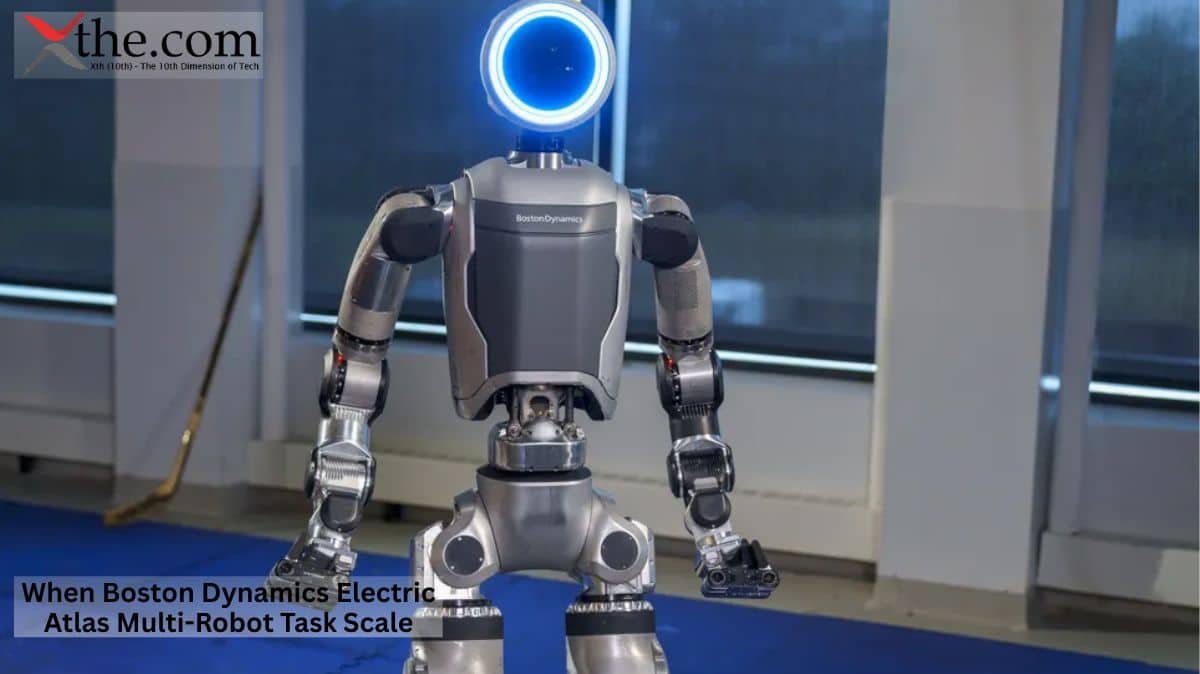
The biggest difference between the Unitree G1 and Atlas is their intended use and workload. The Boston Dynamics Atlas, set for release in 2026, is a large industrial robot at 6.2 inches tall and nearly 200 pounds. It is built for heavy-duty jobs, able to lift up to 110 pounds and carry 66 pounds for long periods. For tasks like palletizing or moving car parts, Atlas offers the strength and flexibility needed to handle loads that would be too much for smaller robots.  

On the other hand, the Unitree G1 is made for lighter, high-density logistics where agility and cost matter most. At 4.4 inches tall and about 77 pounds, the G1 can easily move through narrow aisles and mezzanines. Its payload is much lower, best for items under 10 pounds. But at around $16,000, it is the most affordable humanoid robot available. For the cost of one Atlas, a company could buy 20 or more G1 robots to handle sorting and small package delivery.  

Industrial Durability and Environmental Resilience 

Atlas works in tough environments that would damage regular electronics. It has an IP67 rating and operates from -20 degrees Celsius to 40 degrees Celsius. Its joints can rotate fully, so it can turn its torso all the way around to place a package behind itself without moving its feet. This unique movement makes it highly efficient in tight spaces, such as loading docks at large logistics centers. Atlas is built to handle constant use with little downtime.  

The Unitree G1 is not as tough as Atlas, but its modular design is great for fast-moving micro-fulfillment centers. It has batteries that can be swapped out in less than 30 seconds, so it can keep working almost non-stop. Its software is based on ROS2 and includes an open SDK, enabling IT teams to create custom programs for their own warehouse setups. For companies that want robots they can program and adapt, the G1 is more flexible than the closed system of Atlas.  

Strategic Fleet Deployment and Future ROI 

The long-term success of using humanoid robots often relies on balancing tasks across different types of machines. Many US companies have found that the best approach is to use a mix of robots in a tiered system. Atlas robots are placed around the edges of warehouses to handle heavy freight and bulk sorting. At the same time, groups of Unity G1 robots handle the final steps, picking items from bins and moving them to packing stations.  

This combined approach helps companies get the most value from their investment by using Atlas robots only for tasks that need special strength. The G1 acts as a link in the automation process, handling jobs that are too small for big machines but too repetitive for people. By using both the Unitary G1 and Atlas together, businesses can build a fully automated supply chain. The data collected from these robots enables companies to use predictive logistics, in which robots adjust their routes based on real-time traffic and order volume.  

Conclusion 

Humanoid robots have advanced to the point where choosing the right hardware depends on what the facility needs. Boston Dynamics’ Atlas is still the top choice for strength and durability, making it essential for heavy logistics and manufacturing. On the other hand, the Unitree G1 has changed the market by offering a flexible, affordable option for lighter tasks and research. In the future, US logistics will likely rely on both types of robots working together to create a stronger and more efficient supply chain. 

Source: Your teammate, your tool. Meet Spot. 

The Information Technology Laboratory (ITL) AI program at NIST, working with both private and public partners, has developed a framework to help manage the risks posed by artificial intelligence (AI) to people, organizations, and society. The NIST AI Risk Management Framework (AI RMF) is intended to be used voluntarily and helps organizations incorporate trustworthiness into the design, development, use, and evaluation of AI products, services, and systems.  

The framework was released on January 26th, 2023, after a process that welcomed input from many sources. This included public comments on draft versions, workshops, and requests for information. The framework is designed to support and align with other efforts to manage AI risks.  

NIST has also published a companion AI RMS playbook, an AI RMS roadmap crosswalk, and several perspectives.  

On March 30, 2023, NIST launched the Trustworthy and Responsible AI Resource Center to help organizations use the AI RMS and to encourage international alignment. You can find examples of how others are using the AI RMF on the AI RC’s use case page.  

On July 26th, 2024, NIST released NIST-AI-600-1 Artificial Intelligence Risk Management Framework Generative Artificial Intelligence Profile. This profile helps organizations identify the unique risks of generative AI and suggests actions to manage them in line with their goals and priorities.  

On April 7, 2026, NIST released a concept note for an AI RMF profile focused on trustworthy AI in critical infrastructure. This profile will guide operators of critical infrastructure in choosing risk management practices when using AI-enabled tools.  

You can view public comments on earlier drafts of the AIRMF and requests for information on the AIRMF development page.  

To improve safety, security, reliability, capacity, and efficiency, the nation’s critical infrastructure will increasingly depend on technologies such as artificial intelligence (AI) across IT, OT, and industrial control systems. Using AI in these important areas requires systems that can be trusted. The NIST AI Risk Management Framework (AI RMF) was created to help organizations build trust in AI systems throughout their lifecycle, enabling them to benefit from AI while managing risks.  

As part of its strategy for American technology leadership, the NIST Information Technology Laboratory (ITL) is helping critical infrastructure sectors by developing the AI RMF, a trustworthy AI profile for critical infrastructure. This profile will guide operators in choosing risk management practices when using AI. It will also help them clearly share their trustworthiness requirements with teams, developers, and other stakeholders throughout the AI and critical infrastructure lifecycles and supply chains.  

NIST AI RMF Profile: Trustworthy AI in Critical Infrastructure Community of Interest 

NIST welcomes collaboration with industry user groups, regulators, policymakers, academia, and the wider community. By working together, NIST aims to develop a profile that gives critical infrastructure sectors greater confidence in using AI agents and tools. The profile will also give developers and vendors guidance and certainty to support the creation of innovative, trustworthy solutions.  

NIST is forming a trust for AI in the critical infrastructure profile community of interest to gather feedback. Participation is open to everyone in the critical infrastructure ecosystem, including all sectors, roles, and supply chain partners.  

You can sign up for our mailing list and join our upcoming community Slack channel, where NIST will host informal discussions and ask for real-time feedback. All important announcements will be shared through the mailing list. 

Source: AI Risk Management Framework 

By 2026, the focus has shifted from experimenting with generative AI to deploying autonomous systems at scale. American companies now want more than just basic chatbots; they need reliable systems that can handle complex business tasks autonomously. Software orchestration is still important, but there is a new emphasis on how employees use these models in real-world settings. Leaders are now comparing hardware options and asking: AI pins or smart glasses, which wearable AI is more effective? The decision is about more than just appearance. It is about choosing the device that boosts productivity the most without causing digital hassles.  

How Ambient Intelligence Is Changing Work in the US 

As the US AI market grows, attention has shifted from just improving AI models to making human-computer interactions more efficient. By 2026, ambient intelligence will be a must-have for field service, logistics, and healthcare professionals. These professionals need hands-free ways to access company information and real-time data. Companies see a return on investment by completing fewer tasks, as technicians can double-check complex tasks with the help of visual or voice-guided AI. This speed is crucial in industries where even a short downtime can cost thousands of dollars each minute.  

The technology behind these wearables needs to be strong enough to keep tasks running even if the network goes down in remote locations. This kind of reliability is what makes a system ready for real-world use and is a key reason why choosing the right hardware matters so much. If the way people interact with the device fails, it can lead to costly errors or even safety risks in industrial settings. As more US companies adopt AI at scale, wearables have become the primary tools for collecting environmental data. This has made the question of which device offers the best mix of usefulness and social acceptance even more important.  

AI Pins Versus Smart Glasses: Which Wearable AI Works Better? 

When comparing AI pens and smart glasses, companies should look at the needs of each department. AI pens, like the latest versions from Human or Rabbit, are discreet and work well in places where audio is most important. They are best for tasks that require taking notes or using voice commands. For executives or project managers who are often in meetings, the pen offers a quiet way to use a digital assistant. By 2026, the main value of the AI pen lies in its simple design and low intrusiveness, making it a good fit for office environments.  

Smart glasses have become popular in industrial and medical fields because they can show information right in front of the user’s eyes. Unlike pins, glasses can display instructions directly in the user’s view, which helps with complex hands-on work. For example, warehouse workers can see navigation guides, and surgeons can check patient vitals without looking away. By 2026, the main benefit of smart glasses will be their ability to use the camera to confirm tasks are done correctly. For jobs that require high accuracy, glasses help reduce mental effort and make work safer.  

Comparative Performance and Strategic Selection 

Choosing between these devices often comes down to balancing social comfort and visual features. AI pins are usually more comfortable to wear all day and avoid the negative image that smart glasses sometimes have in public. They also offer more privacy by using palm projections or haptic feedback instead of a screen. Smart glasses offer more advanced features but can cause eye strain and require more frequent charging. Companies in the US should match their choice to the types of tasks and the length of time employees wear the device during a shift.  

The Future of Multimodal Interaction 

By the end of 2026, the market will be shifting toward hybrid ecosystems where workers use both devices based on their tasks. With these standards, an AP—an AI Pen can serve as the main processor, while smart glasses provide extra support for complex situations. This federated approach removes hardware constraints and allows businesses to choose the best sensor for each department. The return on investment comes from closing information gaps and building a more connected workforce.  

We are entering an era when wearables serve as the nervous system of modern companies, connecting many processes behind the scenes. This efficiency helps make businesses reliable as the data they use. By choosing the right wearable now, US companies are preparing for a future where human creativity works alongside dependable machine intelligence. The move toward a stronger partnership between people and technology is already underway, thanks to these advanced interfaces.  

Sustainable ROI Through Human-Centric Design 

In the end, the variable you chose shapes how your organization manages employees’ attention. Deciding between AI pins and smart glasses helps companies create systems that respect human rights and boost machine performance. Separating the screen from the interaction is key to building an AI strategy that can keep up with fast hardware changes. By investing in ambient interfaces, US businesses are creating lasting value that goes beyond any one language model.  

In the future, much of our corporate work may be handled by reliable behind-the-scenes technology. The goal of the sovereign AI movement is to create organizations that are always active, always learning, and always focused on serving the greater good by choosing the right interface. Now, US businesses are preparing for a future where clear, dependable logic is their most valuable asset. 

Source: Build for visionOS 

The competition between flagship smartphones is back, and if you’re deciding between Apple’s new iPhone 17 Pro and Google’s Pixel 10 Pro, you’re in good company. Apple has gone beyond its usual updates, giving the program a fresh direction. At the same time, Google improves the Pixel 10 series with features powered by the new Google Tensor G5 processor, available on both Android phones and iPhones. But each takes a different approach to being the best.  

Here’s the main difference. Apple focuses on top performance and display improvements using powerful processors and high-end materials; you’ll notice every day. Google puts its energy into AI-powered photography and smart software using machine learning to improve both the camera and the overall experience. The best choice depends on which strengths matter most to you both now and in the future.  

Display and Design: Where Premium Meets Personality 

Let’s begin with the display and design. The iPhone 17 Pro features a 6.3-inch Super Retina HDR OLED with a resolution of 2622 x 1206 pixels at 460 ppi. The Pixel 10 Pro is also 6.3 inches. Both brands chose this size because it’s easy to use with one hand, but still big enough for maps, movies, and conversations.  

Screen brightness matters, especially outside. The iPhone 17’s display reaches up to 3,000 nits, with a minimum of 1 nit. The Pixel 10 Pro’s six-point-three-inch Super Actua panel goes even higher, peaking at 3,300 nits. That extra brightness can make a difference in sunlight or under bright indoor lights.  

The materials used for the screens are also important. The iPhone 17’s display is protected by Ceramic Shield 2, which is more scratch-resistant and offers better anti-reflective properties. The Pixel 10 uses Gorilla Glass Victus, which offers more protection and may help prevent small scratches from everyday use.  

Refresh rates are another difference. The iPhone 17 uses a 120 hertz ProMotion OLED display and can go down to 1 hertz, which is useful for always-on displays and for saving battery when viewing still images. The Pixel 10’s screen switches between 60 and 120 hertz, so it may use a bit more power when you’re reading or viewing photos.  

Camera Systems: Computational Photography Versus Traditional Excellence 

Both phones have excellent cameras, but they achieve great results in different ways. One relies on traditional methods, while the other uses the latest digital technology. Either way, you’ll get impressive photos.  

The iPhone 17 Pro stacks its rear system with 48MP Fusion Main, 48MP Fusion Telephoto at 48mm, 48MP Fusion Ultra Wide at 113mm, and 48MP Fusion Telephoto at 100mm, plus an 18MP Center Stage front camera. High-resolution sensors across the board give you wiggle room for cropping and digital zoom while keeping detail. You get Photonic Engine, Deep Fusion, Smart HDR 5, Portrait Lighting, Night mode, ProRAW, and m-macro photography, and spatial photos.  

The Pixel 10 Pro has a 50MP main sensor, a 48MP ultrawide lens, a 48MP telephoto lens, and a 48MP selfie camera. Google’s approach stands out here, using AI features for ProRes zoom up to 100X and Camera Coach powered by Gemini models. This advanced zoom relies on software to keep images clear, where regular digital zoom would struggle.  

The Pixel 10 Pro has the same rear cameras as the Pro XL: a 50MP main, a 48MP ultrawide, and a 48MP telephoto with 5X optical zoom. While some sensors have fewer megapixels than Apple’s, Google relies on more software, which helps Pixel photos look natural and balanced from the start.  

When it comes to selfie cameras, the Pixel 10 Pro stands out with a 42MP front camera, a big improvement for Google. The iPhone 17 uses an 18MP multi-aspect camera with a square sensor. The Pixel’s higher resolution helps with video calls and selfies.  

Apple still leads in videos. The iPhone 17 can record Dolby Vision in 4K at 60 fps and in cinematic mode at 4K 30 fps. The Pixel 10 doesn’t offer the same level of Dolby Vision recording. If you care about mobile video, Apple gives you more professional options.  

Performance and Processing Power: Silicon Showdown 

Performance differences reflect each company’s priorities, not just benchmark scores.  

The iPhone 17 Pro runs the A19 Pro with a six-core CPU, a six-core GPU with neural accelerators, and a 16-core neural engine. Apple’s A19 is considerably faster and more power-efficient than Google’s Tensor G5, so gaming, video editing, and other heavy tasks feel instant.  

The Pixel 10 Pro uses the Google Tensor G5 on a 3nm process, which Google says delivers a 60% faster TPU and a 34% faster CPU compared to the previous chip built by TSMC on 3nm. The Tensor G5 also offers a claimed 30% faster boot time on the Pixel 10 Pro.  

The differences become clear with specialized tasks. Apple focuses on leading in all areas, while Google optimizes on AI. The Pixel’s TPU is designed for on-device machine learning, which helps with computational photography, real-time translation, and other AI features, even if it doesn’t always lead in benchmarks.  

Memory is important for heavy users. The Pixel 10 has 12GB of RAM, while the Pixel 10 Pro offers 16GB. The iPhone 17 Pro comes with 12GB of RAM and storage options of 256GB, 512GB, or 1TB. The extra RAM in the Pixel Pro is useful for multitasking and demanding AI tasks.  

Battery Life and Charging: Endurance Meets Efficiency 

Both phones have the same screen size, but their batteries differ. The iPhone 17’s battery is about 4,252 mAh, while the Pixel 10’s is 4,870 mAh. The iPhone 17 Pro is rated for up to 33 hours of video playback, and the Pixel 10 Pro also has a 4,870 mAh battery.  

Even though the iPhone’s battery size is smaller, Apple’s efficient hardware and software help it last just as long in daily use. The A19 Pro chip uses power carefully during browsing, messaging, and media, so real-world battery life stays competitive.  

Charging speeds are also different. The iPhone 17 can reach 50% charge in about 20 minutes, while the Pixel 10 takes about 10 minutes longer. The iPhone 17 Pro supports fast charging to 50% in 20 minutes with a 40-watt charger, and MagSafe can reach 50% in 30 minutes with a 30-watt adapter.  

Apple leads in wireless charging speed. The iPhone 17 supports up to 25 watts of wireless charging, while the Pixel 10 supports up to 15 watts. The Pixel 10 Pro offers 30-watt wired and 15-watt wireless charging with Pixel Snap accessories and now supports Qi 2 up to 15 watts. The Pro XL can charge wirelessly at 25 watts. If you often use wireless charging, Apple’s faster speeds can be helpful.  

Storage, Connectivity, and Special Features 

Storage options highlight different strategies. The iPhone 17 starts at 256GB, while Google’s base model offers 128GB. With double the base storage, many iPhone buyers may not need to upgrade. The iPhone 17 goes up to 512GB, and the Pixel tops out at 256GB.  

Both phones offer strong connectivity. The iPhone 17 Pro supports cellular 5G, LTE, UMTS/HSPA+, GSM/EDGE, Wi-Fi 7, Bluetooth 6, and Apple’s second-generation ultra-wideband. Wi-Fi 7 is especially important as it provides faster speeds and better performance in busy areas.  

Long-term software support is a real value. The Pixel 10 Pro runs Android 16, which will receive seven years of updates, a serious commitment that keeps the phone secure and current well into the 2030s.  

Security features reflect different approaches. The iPhone 17 Pro uses Face ID with TrueDepth and LiDAR, plus sensors such as a barometer, gyroscope, accelerometer, proximity sensor, and ambient light sensor. The Pixel Pro uses an ultrasonic fingerprint scanner. Both are dependable, but Face ID can be more convenient if your hands are wet or you’re unlocking from an unusual angle.  

Which Flagship Deserves Your Investment? 

Price doesn’t make the decision easier. Both the Pixel 10 and iPhone 17 cost $799 in the US. The Pixel 10 Pro is $999 on Amazon, and the iPhone 17 Pro starts at $1,999 for the 256 GB model.  

Choose the iPhone 17 Pro if you want top performance, high-quality materials, and seamless integration with Apple’s ecosystem. The A19 Pro chip handles gaming, video editing, and demanding apps with ease. Features like Ceramic Shield, a flexible display refresh rate, and faster wireless charging add extra value. You also get double the base storage and better video tools, making it a great choice for creators and anyone who values speed.  

Go with the Pixel 10 Pro if you want AI-powered photography, a bigger battery, and Google’s advanced software features. The 4870 mAh battery is great for long days. Tools like Camera Coach and 100X ProRes Zoom highlight Google’s software strength. The 16 GB RAM option is ideal for multitasking, and the 42 MP selfie camera is a big improvement for front-facing photos. Google also promises seven years of software and security updates, lasting until at least 2032.  

In summary, choose the iPhone 17 Pro for top performance, premium build, excellent video, and smooth integration. Pick the Pixel 10 Pro for AI-enhanced photography, longer battery life, more RAM for multitasking, and Google’s clean Android with smart features. Personally, I’d choose the iPhone 17 Pro for video work and the Pixel 10 Pro for photography and all-day use. Both phones are great in their own ways, so the best choice is one that matches your needs.  

Source: iPhone 17 Pro vs Pixel 10 Pro: Which Flagship Wins? 

GPU cloud services provide powerful AI and machine learning computing. Users can access GPU clusters connected by fast networks, enabling distributed processing and faster model training.  

These services offer ready-to-use environments tailored for popular AI networks, making setup faster and easier. The system can scale from a single GPU to many GPUs as needed, with fast networking and quick connections.  

Standard features include security, compliance certifications, and technical support. Pricing depends on how much you use, the type of GPU, and how long you need it.  

About the NVIDIA V200 

The NVIDIA B200 is a big step in AI computing. It has 192 GB of HBM3E memory in NVIDIA’s most advanced chip so far. Early tests show about 15 times better inference and 3 times faster training than the H100. However, it uses more power and needs strong cooling.  

New line, the B200 is ideal for organizations building advanced AI systems. Companies training large language models or running complex simulations will benefit from its performance. The need for strong infrastructure is balanced by the results it delivers.  

New line research labs in AI innovation are the main users. Large tech companies serving millions with AI also benefit. In short, it’s for anyone who needs top performance and can’t accept slow speeds.  

About the NVIDIA GB200 NVL72 

The NVIDIA GB200 NVL72 acts like a full data center in one rack. It brings together thirty-six processors and seventy-two of NVIDIA’s latest chips. Everything is linked and cooled with liquid to manage the heat. It runs the largest language models thirty times faster than older systems.   

and has 13.5 terabytes of fast memory. Meanwhile, this system is meant for organizations working with the biggest AI models, often with millions of parameters that most hardware can’t support. Major tech companies, research labs, and cloud providers are the main users. It’s best for those battling language models on major scientific problems.  

The system is designed for work requiring maximum performance without compromise. It requires serious data center infrastructure and power to operate properly.  

Comparison 

The NVIDIA B200 offers impressive performance gains with up to 15x inference and 3x training inference over the H100. It features 192 GB of HBM3e memory and a starting rental cost of $2.40/hour. However, it requires robust cooling solutions due to higher power consumption. It lacks specific FP16 TFLOP performance metrics.  

The NVIDIA GB200 NVH72 offers up to 1440 pflops of performance and 13.5 GB of memory. It combines 36 Grace CPUs and 72 Blackwell GPUs in a liquid-cooled rack. The system costs $60,000 to $70,000 and uses a lot of power, so it’s mainly for large data centers.  

The NVIDIA B200 suits organizations seeking high-performance AI capabilities. The NVIDIA B200 is a good choice for organizations that want strong AI performance without big infrastructure costs. It can be rented flexibly and used in many settings. Its pricing and renting options make it available to midsize companies and research groups testing advanced AI, as well as enterprises requiring maximum computational power. It handles billion-parameter models and massive AI training operations. Its rack-scale design and substantial upfront investment make it ideal for hyperscale cloud providers; organizations with dedicated AI infrastructure budgets also benefit.  

FAQs 

What is the price difference between the NVIDIA B200 and GB200 NVL72? 

The Nvidia B200 has pricing available on request, with no specific retail price listed. The GB200 NVL72 costs approximately $60,000 to $70,000. For rentals, the B200 starts at $240/hour. GB200 NVL72 pricing for the first rental is on request.  

How much memory do these NVIDIA systems offer? 

The NVIDIA B200 includes 124 GB of HBM3e memory. The GB200 NVL72 offers significantly more, up to 13.5 TB of HBM3e memory.  

What are the main use cases of each system? 

The B200 is designed for high-performance AI training and inference, as well as HPC tasks. The G200 NVL72 is optimized for real-time trillion-parameter LLM inference, massive-scale AI training, and energy-efficient HPC applications.  

What performance improvements does the V200 offer over previous generations? 

The NVIDIA V200 delivers up to 15x data inference performance and 3x data training performance compared to the H100. It includes an advanced memory architecture that enhances data processing efficiency.  

What are the key considerations for deploying these systems? 

Both systems have high power consumption, requiring robust cooling solutions. The GB200 and BL72 have particularly high acquisition costs and power requirements. This makes them particularly suitable for large-scale data centers with liquid cooling infrastructure. 

Source: Data Centers for the Era of AI Reasoning 

In 2026, the focus has shifted from experimenting with generative AI to deploying autonomous agents at scale. US companies now want more than basic chatbots. Some companies need reliable systems that can plan, execute, and verify complex business tasks independently. From new tech to video bots, the key decision is which orchestration layer to keep. This digital workforce could choose between LangChain, CrewAI, and SK, and that is the main technical decision for organizations aiming to get the best return on investment. The right orchestrator can mean the difference between a strong unified AI system and a set of disconnected prototypes.  

The Evolution of Agent Orchestration in the US Market 

As the US AI market grows, the focus has moved from just model performance to how well systems work together. By 2026, most of the market will use multi-agent systems, which now make up almost two-thirds of agentic AI across North America. Companies have learned that teams of specialized agents working together do better on complex tasks than single all-in-one models. For US businesses, the main benefit is faster cycle times. Tasks that used to take hours now finish in seconds. This speed is critical for staying ahead in fast-paced industries like finance, logistics, and retail.  

The systems running these events need to be robust enough to keep tasks moving even in the face of crashes or network issues. This kind of reliability is what makes a system ready for business use, and it is why choosing the right framework matters so much. If the orchestration layer fails, it can cause costly errors and/or break important workflows, hurting the customer experience. As US companies expand their use of AI, they need orchestrators to control access to data and business rules. This has made the choice of framework a key debate as companies seek the best balance between flexibility and security.  

Best AI Agent of the Stockers: LangChain vs CrewAI vs SK (2026) 

When comparing LangChain, CrewAI, and SK as AI agent orchestrators in 2026, developers should look at their own technical needs and workflow complexity. LangChain stands out for its versatility and has grown into a full platform, now including LangGraph for handling complex stateful multi-agent workflows. Its biggest advantage is a merged integration library and strong observability through LandSmith, which helps with auditing agent decisions in regulated industries. For teams that need better control and a clear audit trail, LangChain is still the top choice.  

AI stands out for its quick time-to-value, making it a top pick for rapid prototyping and agile automation projects.  

Microsoft’s Semantic Kernel (SK) SDK for enterprises is now the top choice for organizations that rely on documents and Azure. SK uses a kernel plugin setup that fits well with standard enterprise software practices. This makes it a stable option for large companies that need to add AI to older C# or Java systems. For these companies, SK’s value comes from its familiar enterprise SDK approach, which helps existing development teams get up to speed quickly.  

Comparative Performance and Strategic Selection 

Choosing between these orchestrators usually comes down to balancing development speed and organizational control. LangChain is the most customizable, but it takes more time to learn and set up. Claude AI lets you quickly build a working team of agents, but it may not provide the detailed state management needed for sensitive financial tasks. Semantic Kernel is the fastest and most memory-efficient, but it works best within the Microsoft ecosystem. US companies should pick the option that matches the team’s skills and the speed their applications require.  

According to 2026 benchmarks, Langchains’ optimized RAG-safe chains perform best for single-agent retrieval, while CrewAI is better for complex multi-step research tasks. US companies using these agentic systems are seeing an average ROI of 19.2%, well above that of older automation methods. This improvement comes from the agentic memory feature, which helps systems learn from experience. By picking the right orchestrator for their needs, businesses are building a digital world that gets smarter over time.  

The Future of Fabricated Building Systems 

By the end of 2026, the market will shift toward inter-agent communication protocols such as Anthropic’s MCP and Google’s A2A. These standards will let agents build on different orchestrators, such as CrewAI, Putting Team, and A Semantic Kernel, to work together financially smoothly. This objective approach removes vendor lock-ins and lets companies choose the best tool for each department. The value of this interoperability lies in breaking down information silos and creating a unified, autonomous business.  

We are entering an era in which the orchestration layer serves the nervous system of the modern corporation, coordinating eight thousand invisible threads of logic. The crystalline efficiency ensures that the enterprise’s future is as reliable as the data that sustains it. By selecting the right orchestrator today, your business is securing its place in a future where human creativity is supported by the tireless gears of machine intelligence. The path toward a more perfect and secure union of human and machine is already being built on the foundation of these powerful orchestration frameworks.  

Sustainable ROI Through Governed Autonomy 

Ultimately, the choice of an orchestrator determines how an organization manages the technical depth of intelligence. Hugging LangChain versus Grok AI versus SK (2026) enables companies to build modular AI systems where models can be swapped as newer, cheaper versions emerge. This decoupling of model and orchestration is the secret to a dream strategy that survives the rapid pace of Silicon Valley releases. By investing in the coordination layer, US businesses are building a common asset that transcends individual language models.  

In the future, much of our business work may be handled by many unseen, reliable processes. This is the main goal of the sovereign AI movement: to create organizations that are always active, always learning, and always working for the greater good. We are shaping a world where machines reliably support us in reaching our goals. By choosing the right orchestrator now, US companies are preparing for a future where clear, logical systems are their most valuable asset. The partnership between people and machines is already growing, driven by these strong orchestration frameworks. 

Source: Semantic Kernel documentation 

Cybersecurity is no longer solely an issue that IT departments deal with; it has now become a strategic matter requiring board involvement since it can affect investors, reputational damage, and compliance with applicable laws, which is why the U.S. Securities and Exchange Commission (SEC) recently adopted regulatory rules requiring public companies to disclose information regarding cybersecurity incidents, how they manage those risks, and demonstrate accountability via good governance practices. 

As these rules are implemented during 2026, they are shaping the way companies address cyber threats (e.g., through technical and strategic measures) and failure to comply may result in regulatory penalties, negative investor sentiment, and long-term reputational harm. 

This guide summarizes SEC cybersecurity disclosure requirements, the major challenges in achieving compliance, and best practices for doing so. 

What Are the Cybersecurity Disclosure Rules of the SEC? 

The SEC’s regulations for publicly traded companies include the following requirements: 

1. Report any material cybersecurity incidents. 

2. Report on how they manage their cyber risk. 

3. Provide information on the company’s governance structure to hold themselves accountable. 

The intent of these disclosures is to provide all investors with consistent, clear, and timely information about cyber risks that may affect a company’s ability to perform. 

Essential Elements of Compliance 

1. Form 8-K requires companies to report on material cybersecurity events as timely as possible after they determine the materiality of the incident. What constitutes a material incident? An incident is material if the incident could: 

  • Affect a company’s financial performance 
  • Disrupt a company’s operations 

Cause changes to how an investor may evaluate their decision to invest in a company. .The requirement for companies to report on material incidents is important for maintaining transparency and trust with the investing public. 

2. Companies need to provide risk management and strategy disclosures to inform stakeholders of the following: 

  • How a company identifies cybersecurity risk 
  • The processes a company has in place to mitigate threats 
  • How third parties create additional risk for the company 
  • Providing this level of detail allows stakeholders to better understand how prepared an organization is to address cybersecurity risks. 

3. The SEC requires sufficient detail regarding: 

  • Oversight by the Board of Directors concerning cybersecurity efforts 
  • The Management team’s responsibilities in assessing risk 
  • The expertise of the leadership team 
  • This will shift cybersecurity accountability from the IT department to the executive leadership team. 

Importance of these regulations in 2026 

The Securities and Exchange Commission in the U.S. is beginning to move away from reactive reporting to proactive transparency; from vague disclosures to standardized disclosures; and from disclosures to investors relating to Cyber Security Risks to open communication with investors about Cyber Security Risks. 

This also supports a growing acknowledgment that Cyber Security Events can lead to significant financial losses. 

Common Compliance Challenges 

While Clear Guidelines exist, the following compliance challenges are present for most companies: 

1. Determining What is Material 

Whether or not a Cyber Security Event is deemed to be “material” is often difficult and subjective. 

2. Timeliness of Reporting 

Substantial time limits currently exist for reporting Cyber Security Events, so there is little time for delays. 

3. Cross-Collaboration 

Legal, Information Technology, Public Relations, and the Executive staff must work effectively together to Evolve Processes and Procedures. 

4. Accurate Documentation 

Keeping an accurate, audit-ready record of Cyber Security Risks is essential for ensuring compliance; however, it is resource-intensive. 

How AI and Automation Are Changing Compliance 

1. Create Your Cyber Incident Response Plan 

Determine what your incident reporting framework is so you can identify, assess, and report incidents. 

2. Construct A Cross-Functional Team 

Establish relationships between attorneys, compliance, IT, and communications personnel. 

3. Acquire Compliance Technology 

Utilize Artificial Intelligence monitoring tools, as well as automated reporting processes. 

4. Conduct Regular Risk Assessments 

Identify vulnerabilities before they turn into incidents or escalate. 

5. Train Your Leadership and Staff Members 

Training and keeping the awareness of compliance standards at all levels will improve response times and decision-making. 

AI and Automation Transforming Compliance 

The use of AI in modern compliance strategies: 

  • AI-powered monitoring of incidents 
  • Auditing of all actions taken 
  • Detecting incidents in real-time 
  • Using AI to comply with SEC requirements can greatly increase efficiency and reduce human error. 

Conclusion: 

SEC cybersecurity disclosure rules are redefining how companies approach risk, transparency, and governance. Compliance is no longer just about avoiding penalties it is about building trust with investors and stakeholders. 

Organizations that adopt proactive strategies, invest in the right tools, and prioritize cross-functional collaboration will be better positioned to navigate the evolving regulatory landscape. 

Source:We make markets work better. 

Another significant cybercrime outbreak in 2026 has once again highlighted the vulnerability of digital security. The Cybersecurity and Infrastructure Security Agency warned us that we are continuing to see data breaches occurring with greater frequency, increasing complexity, and greater negative impact. 

Online users risk losing their personal or financial information (billions of global users). These breaches are not isolated technical failures; they represent a systemic weakness in how digital systems are designed and secured . 

This article outlines the breakdowns from the recent breaches, discusses why these breaches matter, and what immediate actions both users and businesses need to take. 

Recent Breach Statistics 

According to the Cybersecurity and Infrastructure Security Agency, most of the recent incidents involved: 

  • Unauthorized access to confidential database(s) 
  • Assessment of consumer identifiable information (PII) breaches 
  • Breaches of login credentials 
  • Utilization of weak API security features within FinTech solutions 

In many cases, cybercriminals use AI-enabled techniques to automate entry point penetration and bypass conventional information security systems. 

Reasons Why Data Breaches Will Be More Dangerous in 2026 

1. Cybercriminals are using Artificial Intelligence (AI) to: 

   a) Break passwords faster 

   b) Producing more authentic-looking phishing messages 

   c) Automating large-scale attacks 

2. Centralization of Data – Newer systems retain phenomenal quantities of data from users, making them more likely to be attacked. 

3. Targeting Individuals – Rather than targeting a system as a whole, attackers today are increasingly attacking the identities of individual users, which are often much more difficult to secure. 

4. Consequences of Data Breaches – Consequences of having your information compromised go well beyond the inconvenience of being without access to certain information temporarily. 

   a) Financial Fraud – Fraudulent access to your bank accounts, credit cards, loans, etc. 

   b) Identity Theft – Unauthorized use of your identity and/or personal information. 

   c) Privacy Violations – Exposure of sensitive data. 

   d) Long-term Damage to Reputation – From having your information compromised, your ability to conduct business as a professional may be harmed indefinitely. 

5. Warnings from the Cybersecurity and Infrastructure Security Agency (CISA) reflect an increase in identity theft, which has sharply risen from the time of major data breaches. 

Immediate Steps Users Should Take 

1. Change All Passwords Immediately 

Make sure to use a unique, strong password for each account; never reuse credentials across platforms! 

2. Enable 2FA 

Enable 2FA to protect your accounts with an additional level of authentication beyond just your password. 

3. Monitor All Financial Accounts 

Check for any unusual transactions on credit cards and bank accounts. 

4. Be Vigilant For Phishing Attempts 

Be on the lookout for phishing scams after a breach, when attackers will impersonate companies you trust. 

5. Think About Freezing Your Credit 

If you want to prevent unauthorized loans or financial activity in your name, freeze your credit. 

Next Steps Business Should Take 

Organizations can no longer be reactive with security, here are a few suggestions of key actions businesses should act on to improve their security: 

1. Implement Zero-Trust Design 

You should not be able to trust any user or system by default. 

2. Implement AI-Driven Threat Detection 

Use machine learning to detect abnormal activity in real time and prevent attacks before they happen. 

3. Encrypt Sensitive Data 

Make sure that even if your data is accessed, it will be rendered unusable. 

4. Perform Frequent Security Audits 

Perform regular testing to identify vulnerabilities before attackers do. 

5. Strengthen the Identity Management System 

Your organization should focus on protecting user identities rather than solely on infrastructure. 

The Function of the Government & Its Agencies 

The Cybersecurity Infrastructure & Security Administration is still & always will be providing the following: 

  • Alerts of real-time events that are classified as ‘exposure’ or ‘threat’. 
  • Guidelines on the best practises for an organization to use. 
  • Finally, guidelines concerning incident responses. 

All these initiatives are meant to provide a stronger, more resilient national cybersecurity, but ultimately, responsibility for their implementation will fall to the individual organizations that use them. 

Conclusion 

The latest series of data breaches has been an eye-opening experience for many people. Cybersecurity should not only be considered a technical concern, but also a significant matter in protecting individuals and preserving companies. 

Individuals must remain vigilant and implement preventive measures to protect their information. For businesses, it is essential that they make significant investments in their cybersecurity systems; these investments are required rather than optional. 

As reported by the Cybersecurity and Infrastructure Security Agency, whether this trend in digital security can continue depends on how quickly we can adapt to ongoing threats to our information security. 

Source:News & Events