






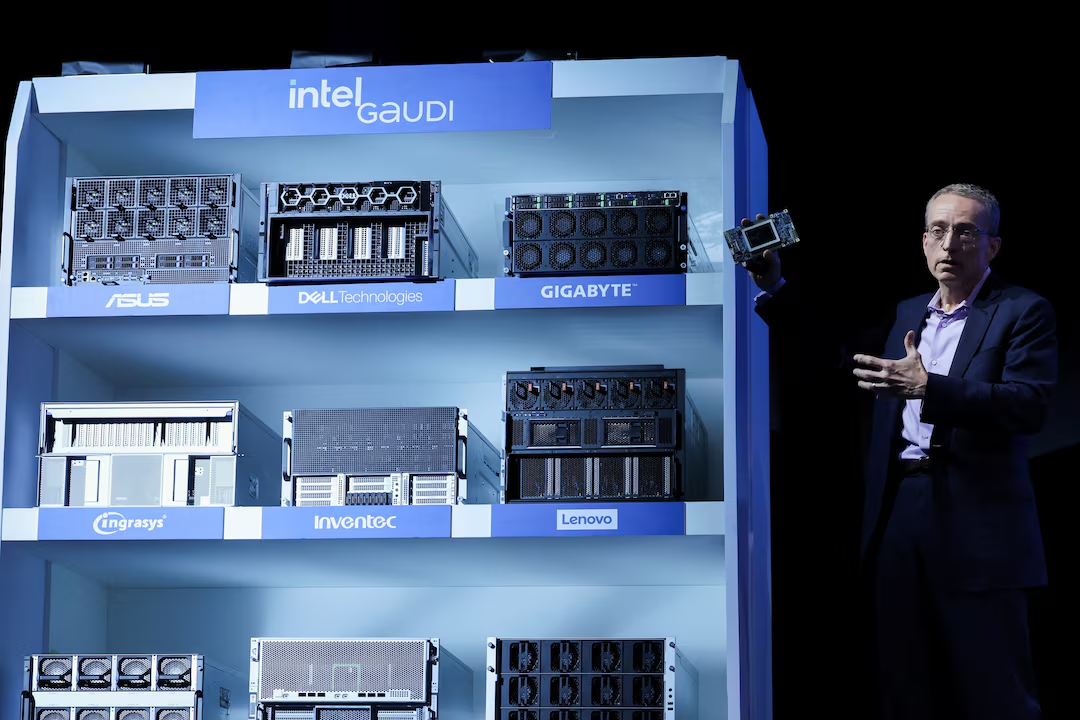
At Computex 2024, Intel CEO Pat Gelsinger introduced technologies focused on performance and energy efficiency for data centers, accelerators, and AI PCs. Intel’s aims include making AI affordable, supporting open ecosystems, and boosting user empowerment by increasing processing power and lowering costs. The company positions itself as a leader, advancing an eco-friendly, scalable future.
During the June 4-7 event in Taipei, Taiwan, Gelsinger gave a keynote introducing the Intel Xeon 6 processors with efficient cores (E-cores), announced pricing for the Intel Gaudi 2 and Gaudi 3 AI accelerator kits, and unveiled the new Lunar Lake client processor architecture, which expands the AI PC category.
Lunar Lake
Intel announced the upcoming Lunar Lake client processor, redesigned for improved x86 power efficiency and leading performance in core processing, graphics, and advanced AI.
The new performance cores (P-cores) and efficient cores (E-cores) deliver strong performance while using up to 40% less system-on-chip power than the previous-generation Intel Core Ultra processors. The updated neural processing unit is up to four times faster than the previous generation, improving performance on generative AI tasks. The new Xe2 graphics cores boost gaming and graphics performance by 1.5x compared to the previous generation Intel graphics cores.
Starting in the third quarter of 2024, Lunar Lake will be used in over 80 new AI PC designs from more than 20 partners.
At Computex 2024, Intel shared key architectural details of Lunar Lake, positioning it as the flagship processor for next-generation AI PCs. Lunar Lake targets major improvements in graphics and AI processing, emphasizing energy-efficient performance for thin-and-light devices.
Intel Xeon 6
Intel launched the Intel Xeon 6 family of processors, integrating both E-core and P-core options to address diverse demand from AI to scalable cloud-native solutions.
The first processor in the family to debut at Computex 2024 is the Intel Xeon 6 with efficient cores known as Sierra Forest. Its high core density and strong performance per watt enable rack-level consolidation of three to one, with up to four times better rack-level performance and up to two times better performance per watt compared to second-generation Intel Xeon processors running on media transport workloads.
Intel Xeon 6 processors with P-cores are expected to launch in the third quarter of 2024. They will offer higher performance for intensive workloads such as AI, high-performance computing, image processing, and data analytics.
Intel Gaudi
The Intel Gaudi architecture is designed to optimize generative AI performance, offering customers more choice, rapid deployment, and lower operating costs.
At Computex, Intel announced that it had a standard AI kit with eight Gaudi 2 accelerators and a universal baseboard (UBB), which will soon be available to system providers for sixty-five thousand dollars, which is about one-third the price of similar computing platforms. A kit with eight Gaudi 3 accelerators and a UBB will cost $125,000, or about two-thirds the price of comparable platforms.
Intel also announced that six new system providers will offer Gaudi3 systems. Asus, Foxconn, Gigabyte, Inventec, Quanta, and Wistron will join Dell, Hewlett Packard Enterprise, Lenovo, and Supermicro in bringing Gaudi3 systems to market.
Intel Tech Tour
A few days before Computex, Intel held its third annual technology tour in Taiwan. Global media and analysts had the opportunity to see the Lunar Lake architecture up close and attend sessions on the Xeon 6 and Gaudi accelerators. The two-day event included technical deep dives and keynotes from Intel’s business and technical leaders working on next-generation technologies.
Source: Helpful Resources








