




Financial technology (fintech) is being transformed by artificial intelligence (AI), which currently enables us to detect fraud, generate risk scores for borrowers, and execute trades. However, as know-your-customer (KYC) and anti-money laundering (AML) requirements become more prevalent, there is growing international regulatory scrutiny of the fintech industry. 

As of January 1, 2026, compliance with the use of AI has become not only a legal requirement but also a positive quality of ethics and trustworthiness in the public eye. In particular, U.S. regulatory bodies, especially the U.S. Securities and Exchange Commission, are placing greater emphasis on evaluating how financial companies use AI; they require companies to demonstrate and be accountable for the fairness, transparency, and accountability of their AI use. 

Ultimately, the question all fintech companies will need to answer in 2026 is: how can I innovate at scale with AI while remaining compliant with evolving regulatory standards? The answer will depend on whether AI compliance tools or tools that monitor, explain, and govern AI systems are used on an ongoing basis. 

The purpose of this buyer’s guide is to outline the current best available AI compliance tools, including their feature sets, to reduce regulatory and audit compliance risk. 

The Importance of AI Compliance within Fintech 

Fintech is among the most highly regulated sectors. AI systems create lending, payment, and trade products that affect consumers and financial markets; thus, they are subject to greater regulatory scrutiny. 

Some of the most significant areas of concern related to FINTECH AI-compliance are: 

  • Unintended algorithmic biases within securities lending decisions; 
  • Increased lack of transparency associated with automated processes. 
  • Potential violations of data privacy when dealing with sensitive personal and financial information; 
  • Lack of an adequate audit trail to allow for regulatory examination of an organization’s AI compliance. 

Regulatory bodies like the U.S. Securities and Exchange Commission now expect firms to demonstrate how their AI systems function—not just what outcomes they produce. 

Criteria for Evaluating a Suitable Tool 

When looking for an AI compliance tool, several factors should be considered. 

AI Governance Guidelines 

It’s important for tools to help you create a formalized framework that governs your use of AI and ensures compliance with industry regulations. 

Explainability (Also Known as Explainable AI) 

Hopefully, the tool will allow you to see how the AI arrived at its decisions clearly. This will be especially important for high-stakes applications like credit analysis. 

Data Protection & Data Governance 

AI compliance tools should allow you to effectively manage who can collect, store, and use your data, and to create a digital trail to demonstrate compliance with future regulations. 

Continuous Monitoring 

You will want to ensure real-time tracking of AI performance and risk and have a plan to monitor and address these types of incidents before they become a significant issue. 

Compliance Report Ready 

Using an AI compliance tool should simplify the generation of reports/documentation required by regulatory bodies and create a standardized audit trail for future audits. 

Your Top Choices for AI Compliance Tools in 2026 

1. AI Governance Platforms 

Credo AI and Holistic AI (among others) lead the industry in AI governance platforms and contain several key features to facilitate compliance. 

Some key features include centralized compliance dashboards, policy enforcement tools, and risk classifications. 

These platforms are geared toward large fintech companies that have multiple AI systems to manage and operate. In addition, they comply with frameworks developed by the U.S. Securities and Exchange Commission, among others. 

2. Explainability & Model Monitoring Tools 

Fiddler AI and Arthur AI specialize in transparency. 

Key Benefits: 

  • Bias detection and mitigation 
  • Model performance tracking 
  • Explainable decision outputs 

Best For: Lending platforms and insurance firms 

These tools are essential when firms must justify decisions to regulators or customers. 

3. Data Privacy & Compliance Platforms 

OneTrust and BigID dominate this segment. 

Key Benefits: 

  • Data mapping and classification 
  • Consent and preference management 
  • Privacy risk assessments 

Best For: Companies handling large volumes of personal financial data 

Category Example Tools Core Strength Ideal Use Case 
Governance Credo AI, Holistic AI Policy & compliance mapping Large fintech firms 
Explainability Fiddler AI, Arthur AI Bias detection Lending/insurance 
Data Privacy OneTrust, BigID Data governance Data-heavy platforms 
Monitoring Darktrace, Securiti AI Real-time risk detection Enterprise security 

Risk Assessment and Security Tooling 

Darktrace and Securiti AI can provide you with ongoing risk analysis. Main Advantages of these Solutions Include: 

  • AI-powered anomaly detection 
  • Ongoing compliance scoring 
  • Integration of threat intelligence 

Common Errors to Consider in Your Own Fintech Company 

  • Consider compliance as a one-time effort. 
  • Do not have an understanding of the “explainability” provisions; 
  • Are you utilizing separate/unconnected tools vs. a unified system? 
  • Do not have a clear understanding of how complicated regulatory reporting will be; 

How to Select the Best Tool for Your Needs 

The first step is selecting the appropriate governance tools as a fintech’s AI use grows. 

  1. Select explainability tools for systems used for making high-risk decisions. 
  1. Start investing in data compliance platforms now. 
  1. Ensure that the solutions you select integrate with your overall technology stack. 
  1. Upcoming Developments in AI Complying with Regulations 
  1. Enhanced Emphasis on Real-time Monitoring of Compliance with Regulations 
  1. Increased Frequency of Regulatory Compliance Enforcement 
  1. Emergence of Platforms that Provide AI Audit as a Service 
  1. Integration of Compliance as Part of the AI Development Lifecycle 

Conclusion 

Companies that offer AI-oriented compliance solutions are no longer just a means of achieving compliance; they are now essential to the success of Fintech organizations in 2026. As the regulatory climate becomes increasingly restrictive and consumers become more knowledgeable, companies must place greater emphasis on accountability, transparency, and risk management in their operations. 

Fintech firms can avoid potential fines by combining the right governance, monitoring, and explainability tools; they can also build long-term trust and credibility with their customers. 

Source: We make markets work better. 

The regulations surrounding artificial intelligence have now been established by various international bodies. Governments try to catch up with the fastest-growing sector of technology, but only two leading frameworks have been created: the United States, with flexible sector-based approaches, and the European Union, with rule-based approaches. 

Companies in the United States, such as Fintech, Healthcare, and Technology, have no choice but to understand the difference between these two approaches. These approaches will significantly shape how AI systems are built, deployed, and scaled worldwide. In addition, policies established by organizations such as the White House Office of Science and Technology Policy focus on promoting responsible technologies, while the EU will enact strict laws under the AI Act. 

This article will outline the major differences and what they mean for companies in the United States that operate globally. 

The Philosophical Divide: Innovation or Regulation 

The difference between the United States and the European Union stems from a philosophical divide. 

The United States Approach. 

Developed from the recommendations of the White House Office of Science and Technology Policy: 

  • Develop first and be innovative when developing a product 
  • Create regulations based on the sector. (i.e., Financial Sector, Healthcare Sector, etc.) 
  • Look for creative ways to mitigate risk while continuing to foster growth. 

The European Union Approach. 

  • Consumer protection and safety are of primary concern. 
  • Centralized government legislation and regulations, including the AI Act 
  • Similar regulations are in place across all industries. 

This philosophical difference in approach affects everything, including compliance and the way you design your product. 

Key Differences Between US and EU AI Regulations 

1. Regulatory Structure 

Factor United States European Union 
Framework Decentralized Centralized 
Enforcement Agency-led Unified legal system 
Flexibility High Moderate 

2. Systems of Risk Classification 

The EU has a very clear risk classification system with four levels: 

1. Minimum Risk – no obligation 

2. Limited Risk – transparency obligations 

3. High Risk – compliance rules that must be followed strictly 

4. Unacceptable Risk – systems that are prohibited 

In contrast, the US uses a contextual approach that evaluates AI based on use cases rather than fixed categories, drawing on guidance from the White House Office of Science and Technology Policy. 

3. Types of Compliance Requirements 

European Union: 

  • Required documentation 
  • Conformity assessments before deployment 
  • Continuing obligations to monitor compliance 

United States: 

  • Less rigid documentation requirements 
  • Increased reliance on corporate accountability 
  • Compliance requirements that differ by industry (e.g., financial technology, health care) 

Enforcement and Penalties 

European Union = significant penalties (up to billions of euros for violations) 

United States = penalties vary by agency and severity of case 

Due to the EU’s significant penalties, global companies are required to comply. 

U.S. Businesses Implications: 

1. There is a need to develop an International Compliance Strategy. 

If you have any business presence in Europe, you are required by law to comply with the EU Compliance Rules (often called the GDPR), regardless of where your company’s headquarters are located. 

2. Products should be designed with Compliance in mind 

AI Systems must be designed with “Compliance By Design” principles in mind to satisfy the more stringent EU Regulations from day one. 

3. Increased Costs of Doing Business in the EU 

Complying with EU regulations will incur additional costs, including: 

More documentation, increasing the number of employees in compliance roles, and installing more sophisticated versions of compliance systems for your products. 

Recommendations for a Strategic Approach 

  1. First, Design a product meeting the requirements of the European Union (The World’s toughest consumers). 
  1. Create Modular AI Systems that meet the requirements of multiple Regulatory Bodies. 
  1. Invest in Compliance Tools and Governance Frameworks for AI Systems. 
  1. Be aware of changing U.S. policy through the White House Office of Science and Technology Policy. 

Conclusion 

There are two different approaches to how AI is governed by the United States and the European Union: the U.S. government focuses on flexibility, while the E.U. government has very strict rules. If your company is located in the U.S. and wants to conduct business internationally with AI, you must be able to navigate both of these very different paths. 

Companies that proactively align with regulations will reduce their regulatory risk and gain a competitive advantage in the global marketplace. 

Source:Office of Science and Technology Policy 

AI-powered laptops are quickly changing the way we use technology by increasing energy efficiency through Processor eXecution Units (PXUs). PXUs enable AI operations with lower power consumption than traditional processors. Companies like Qualcomm, Intel, AMD, and Apple have integrated them as essential components into their new laptops so as to provide advanced AI functionality while enabling longer battery life. 

Standardizing common AI tasks, such as identifying text from audio transcription, enhancing images, and providing predictive assistance, has made PXU efficiency a key factor in determining device performance and, ultimately, the user experience. 

What Is an NPU and Why Does It Matter  

An NPU is a specialized processor that excels at machine learning tasks, including matrix multiplication and neural network operations. The design of NPUs differs from that of CPUs and GPUs because they exist as dedicated systems that handle artificial intelligence tasks.  

NPUs can perform AI operations more efficiently because their dedicated design requires less energy and lower HVAC needs. Laptops benefit from this technology because it improves battery performance and ensures consistent operation.  

Next-generation computing systems for mobile and portable devices require manufacturers to make NPUs a fundamental element, according to companies such as Qualcomm.  

Reducing Power Consumption for AI Tasks  

AI workloads can be executed by conventional processors, but their performance remains suboptimal for these tasks. The operation of machine learning models on CPU or GPU systems consumes excessive energy, leading to rapid battery depletion.  

NPUs tackle this problem by executing AI functions with power-efficient, specialized designs. This technology enables devices to perform sophisticated tasks while preserving battery lifespan.  

Recent processor models from Intel and AMD now include NPUs, enhancing laptops’ AI processing capabilities.  

Offloading Work from CPU and GPU  

The fundamental advantage of NPUs exists because they enable the complete transfer of artificial intelligence operations from central processing units and graphics processing units. The system distributes tasks among its components to maintain peak performance for each component.  

The NPU handles artificial intelligence tasks, allowing the CPU and GPU to focus on distinct tasks, thereby reducing overall system load and power consumption. The system achieves better performance together with extended battery life through its balanced operational method.  

Apple demonstrates efficient processing through a unified architecture, which enables multiple processing units to work together as a single system.  

Enabling Always-On AI Features  

NPUs enable the continuous operation of AI functions while maintaining battery power. The system performs various functions, which include voice assistant capabilities, background noise cancellation, and real-time language translation.  

The energy efficiency of NPUs enables background operations to run without causing significant increases in power consumption through their existing features.  

Qualcomm has demonstrated how always-on AI technology creates more responsive and intelligent devices through its essential role in device development.  

Improving Thermal Efficiency  

Energy efficiency depends on the amount of heat generated by systems. The thermal management system becomes more effective because processors generate less heat when operating at lower power.  

NPUs help maintain lower device temperatures, reducing the need for powerful cooling solutions and enabling lighter, slimmer laptop designs.  

AMD and Intel use this benefit to create devices that consume less power while maintaining a portable design.  

Battery Life Gains in Real-World Use  

The impact of NPUs on battery life is most evident in real-world scenarios. Video conferencing and document editing, along with multimedia processing, leverage AI functions that leverage NPU performance to enhance their capabilities.  

NPUs enable users to work longer by enabling high-efficiency task performance. This feature is important for professionals who need to use their laptops throughout the day without access to power outlets.  

Apple shows how built-in AI processing helps its devices achieve extended battery life through its product demonstrations.  

Supporting On-Device AI and Reducing Cloud Dependency  

NPUs enable increased AI processing at local sites, reducing reliance on cloud computing services. The system achieves performance improvements together with enhanced privacy protection while consuming less power during data transmission.  

Laptops achieve better power efficiency through on-device computing, which helps to extend their battery duration. Qualcomm and other manufacturers are promoting this approach as part of a broader shift toward on-device AI.  

Challenges in NPU Adoption  

NPUs encounter adoption challenges despite their advantages. Software optimization is a critical requirement because applications need to be developed to leverage NPU capabilities.  

The current optimization of AI workloads for NPUs remains incomplete, limiting their performance in certain situations. Developers need to learn new software frameworks and tools to fully utilize these chips.  

Intel and AMD are developing software solutions that will expand their software support while enhancing system compatibility.  

The Future of Energy-Efficient AI Computing  

NPUs encounter adoption challenges despite their advantages. Software optimization is a critical requirement because applications need to be developed to leverage NPU capabilities.  

The current optimization of AI workloads for NPUs remains incomplete, limiting their performance in certain situations. Developers need to learn new software frameworks and tools to fully utilize these chips.  

Intel and AMD are developing software solutions that will expand their software support while enhancing system compatibility.  

Conclusion: A New Standard for Laptop Efficiency  

The power management and performance capabilities of laptops are being transformed by NPUs, which enable devices to run AI tasks while extending battery life. The chips make artificial intelligence features usable in daily life by transferring work from standard processors and decreasing power consumption.  

NPUs will become essential components of upcoming laptops as Qualcomm, Intel, AMD, and Apple continue to develop groundbreaking technologies for their products.

Source: Qualcomm Recommends Stockholders Reject Mini-Tender Offer by Tutanota LLC 

Apple is exploring the next phase of wearable computing through a newly surfaced patent that signals a move toward AI-powered smart glasses. The filing describes systems that combine augmented reality with environmental sensing and artificial intelligence to create a portable wearable device, which Apple is developing as technology for future products beyond its current spatial computing hardware.  

The patent points to a future in which smart glasses function as always-on AI assistants that can understand their environment, provide relevant information, and control other devices. Apple is preparing to expand its product ecosystem by developing lightweight AI-powered eyewear, which will become popular as the wearable technology market continues to grow.  

From Headsets to Everyday Wearables  

Apple develops its spatial computing technologies through its work on the Apple Vision Pro. The design of headsets works best in environments where users need to use them for long periods.  

Smart glasses offer a better way to use AR and AI by providing a portable design that users can wear throughout their daily activities. The patent suggests that Apple is exploring how to transition from high-end headsets to lightweight wearables that can be used continuously throughout the day.  

The industry is now moving toward developing advanced technologies that users can use in their daily lives without noticing.  

AI as the Core Interaction Layer  

The patent’s main component establishes AI as the primary interface for operators to control smart glasses. Users could interact with the device via voice, gestures, and contextual cues, without needing to use touch or traditional controls.  

The system would use AI to interpret user intent, analyze surroundings, and provide relevant information in real time. The glasses could identify objects, display navigation directions, and make contextual suggestions based on user activity.  

Apple aims to create more natural user interactions, reducing the need for users to issue explicit commands or perform manual tasks.  

Environmental Awareness and Contextual Computing  

The patent describes how sensors and cameras function to create systems that detect environmental conditions. The device uses these components to identify its environment by detecting objects, locations, and user activities.  

The system needs this capability to enable contextual computing, which delivers information based on the environment’s actual conditions. The glasses provide walking directions that display points of interest and help users with shopping and navigation tasks.  

Apple uses real-time processing to maintain responsive, relevant user interactions.  

Integration with Apple’s Ecosystem  

Smart glasses are expected to function as part of a broader ecosystem, connecting with devices such as iPhones, Macs, and wearables. This integration would enable users to receive notifications and access applications and data across different platforms.  

Apple’s ecosystem strategy enables new devices to leverage existing system resources, resulting in an uninterrupted user experience. Users can begin tasks on one device and finish them using their smart glasses according to this feature.  

The interconnected system improves user experience by supporting common work patterns that users already know.  

Challenges in Design and Adoption  

Developing smart glasses that are both functional and comfortable presents significant challenges. The device must balance performance with size, weight, and battery life, ensuring that it can be worn for extended periods. 

There are also considerations related to user acceptance, as wearable devices must align with personal preferences and social norms. 

Apple will need to address these factors to create a product that appeals to a broad audience. 

Privacy and Data Security Concerns  

Smart glasses, powered by camera and sensor technology, raise significant privacy concerns that must be addressed. People who use the technology and those nearby will fear that their information will be collected through surveillance.  

Trust will depend on two factors: organizations must establish transparent practices while implementing effective privacy safeguards. Apple has maintained its commitment to privacy since its founding, which requires the company to apply these principles to its smart glasses. The company’s approach to data handling and security will likely play a key role in adoption.  

From Patent to Product Reality  

The patent documents show which research areas Apple prioritizes, but they do not guarantee that the described inventions will result in marketable products. Smart glasses development shows that companies plan to build future wearable AI devices that users can operate without looking at standard display screens. Apple continues to invest in this field, indicating that it will develop these products for its upcoming product line.  

Conclusion: Toward an AI-Driven Wearable Future  

Apple’s patent for AI-based smart glasses technology points to a new direction for creating wearable devices that offer better interactive experiences and simpler use. Apple tests a new computing method that combines artificial intelligence and augmented reality with real-world environmental knowledge into a small device.  

The upcoming technological advances will change user interaction with devices by creating systems that understand their environment and use natural language, enabling seamless operation during everyday activities.

Source: New to Intellectual Property? 

People who work with artificial intelligence technology now compare tools to determine which platform best achieves optimal outcomes. The three systems ChatGPT, Google, Gemini, and Perplexity AI offer different methods to assist users, which they designed to handle specific tasks such as content creation, research, and real-time information retrieval.  

The three platforms use advanced large language models, yet their strengths differ across four aspects: accuracy, usability, integration, and overall productivity impact. Understanding the specific differences between AI tools is essential knowledge for professionals, students, and businesses seeking to extract maximum value from them in 2026.  

The Evolution of AI Productivity Tools  

AI assistants have evolved from basic chat systems into advanced platforms capable of handling complex tasks. The tools now support writing and coding, research activities, data analysis, and decision-making.  

ChatGPT, Google Gemini, and Perplexity AI demonstrate this development by offering capabilities beyond standard text generation. The competitive relationship between these platforms drives technological progress, resulting in more focused, effective solution systems.  

Users now prioritize productivity improvements instead of exploring new features as more people begin to use this technology.  

ChatGPT: Versatility and Depth  

ChatGPT is known for its versatility, excelling across many domains. It is quite good with content generation, assisting with coding, and having great conversations. It really stands out in the response they are really informative and context-aware, meaning they are excellent support when solving difficult problems collaboratively or producing long-form writing.  

Overall, the platform also integrates advanced features that can enhance the user experience, whether for individuals or enterprises.  

Google Gemini: Ecosystem Integration  

The design of Google Gemini enables users to work with its AI features through their regular applications.  

Gemini functions best by integrating generative AI with live data sources to deliver real-time information and smooth operational processes. The system works best because it uses real-time information for tasks that require cooperation among multiple people.  

The system provides operational benefits by integrating closely with popular software programs that workers use for their daily tasks in Google-based work environments.  

Perplexity AI: Research and Real-Time Answers  

Perplexity AI provides research support through its accurate, source-based responses, making it suitable for academic work. The system functions as a modern chatbot because it provides users with clear information about its sources through citation and reference systems.  

The method proves valuable to users who require trustworthy information because it delivers it in a quick, concise format that benefits journalists, researchers, and students.  

The platform demonstrates strong factual accuracy and real-time information retrieval capabilities, which differentiate it from other platforms that offer creative functions.  

Comparing Accuracy and Reliability  

The assessment of AI tools requires measuring their accuracy, as this is a vital element in their evaluation. ChatGPT delivers excellent contextual understanding alongside complete answers, yet it produces false information because it operates as a generative model.  

Google Gemini improves its response accuracy and response speed through its connection to Google data resources.  

Perplexity AI establishes its unique identity by committing to delivering answers from verified sources, thereby enhancing user trust in the information it presents.  

The choice depends on whether users prefer deep information, current data, or verified sources.  

Productivity and Workflow Integration  

The various platforms provide distinct productivity benefits to users. ChatGPT enables users to perform multiple tasks, including writing and programming.  

Google Gemini delivers optimal performance through its integrated systems, enabling users to complete their work directly within Google applications.  

Perplexity AI enhances productivity by simplifying research tasks and reducing the time researchers spend collecting and authenticating data.  

The users need to evaluate each tool based on its compatibility with their current work methods.  

Cost and Accessibility  

Pricing models across platforms offer different tiers with varying features. ChatGPT offers free and premium services that meet the needs of different user groups.  

Google Gemini comes packaged with Google services, which makes it available to users who already use that system.  

Perplexity AI provides users with access to both complimentary services and premium features that deliver superior functionality.  

The cost of each tool needs to be weighed against the benefits it delivers.  

Challenges and Limitations  

All three platforms possess operational abilities yet face specific constraints that limit their performance. The system has three main drawbacks: potential inaccuracies, dependence on training data, and varying degrees of compatibility with external systems.  

Users must assess data protection measures to understand how each platform manages their personal information.  

The three platforms ChatGPT, Google, Gemini, and Perplexity AI work to solve their existing problems through their continuous development process, which includes both updates and system enhancements.  

The Future of AI Assistants  

The competition between these platforms is driving rapid innovation, leading to the development of more advanced features and better system performance. Future developments may include deeper personalization, better reasoning capabilities, and more seamless integration across devices.  

The growing use of AI in digital workflows is leading platforms to develop more extensive functional capabilities, making it harder for them to differentiate from one another.  

Conclusion: Choosing the Right AI Tool  

The comparison between ChatGPT, Google Gemini, and Perplexity AI demonstrates the AI tools available in 2026. While ChatGPT offers flexible and comprehensive features, Gemini provides better system integration, and Perplexity AI proves most effective for research purposes, delivering precise results.  

The process of choosing an appropriate tool requires users to evaluate their specific requirements, work processes, and most important goals. People must make wise decisions about artificial intelligence because it continues to advance, achieving the highest levels of productivity and operational performance. 

Source: OpenAi News 

Professionals in the United States now use AI-powered laptops as standard equipment because their work requires processing information, automating tasks, and accessing intelligent assistance. People who use devices with dedicated neural processing units and AI-optimized hardware now have a new standard for what portable computers should deliver. The transition to on-device AI processing hardware is being led by Apple, Microsoft, Intel, and AMD through their development of specialized equipment.  

AI laptops measure their performance using three main criteria: operational efficiency, system responsiveness, and the ability to execute machine learning applications without cloud dependency. Professionals can now complete work tasks faster while using fewer cloud resources, thanks to greater control over their private information.  

What Defines an AI Laptop in 2026  

AI laptops use NPUs as dedicated processors that run machine learning operations while other components in the system execute multiple tasks. The system components enable devices to run AI models locally, supporting functions such as instant transcription, image enhancement, text prediction, and automated workflow management.  

Intel and AMD have developed processors with AI acceleration, while Apple enhances its unified architecture with built-in neural engines. New technologies enable users to perform AI operations without draining their batteries or slowing down their systems.  

The system enables professionals to execute tasks faster and provides a better user experience across applications.  

Apple MacBook Series: Efficiency and Integration  

The MacBook range from Apple stands as a leading option for artificial intelligence laptops because its custom-built silicon chips combine the processing unit, graphics unit, and neural processing unit into a single unified design.  

The system enables AI tasks to run with maximum efficiency, resulting in quicker video editing, content creation, and data processing while consuming less power. The system achieves seamless AI operation in macOS applications through its design, which connects hardware components with software elements.  

Apple devices offer long battery life during artificial intelligence tasks, making this a key benefit. The features make these devices ideal for professionals who need both portable equipment and dependable performance.  

Microsoft Surface: AI-First Windows Experience  

Microsoft uses its Surface product line as a standard reference model for personal computers that prioritize artificial intelligence. Microsoft’s Surface devices use Windows-based artificial intelligence, including system-wide virtual assistants and productivity applications.  

NPUs in Surface devices provide instant AI capabilities that support users in document summarization, meeting transcription, and workflow automation. The system eliminates unnecessary work through its integration, enabling users to complete their daily responsibilities.  

Surface laptops provide an excellent solution for Windows-based professionals, offering both hardware and software optimization.  

Intel-Powered AI PCs: Broad Ecosystem Support  

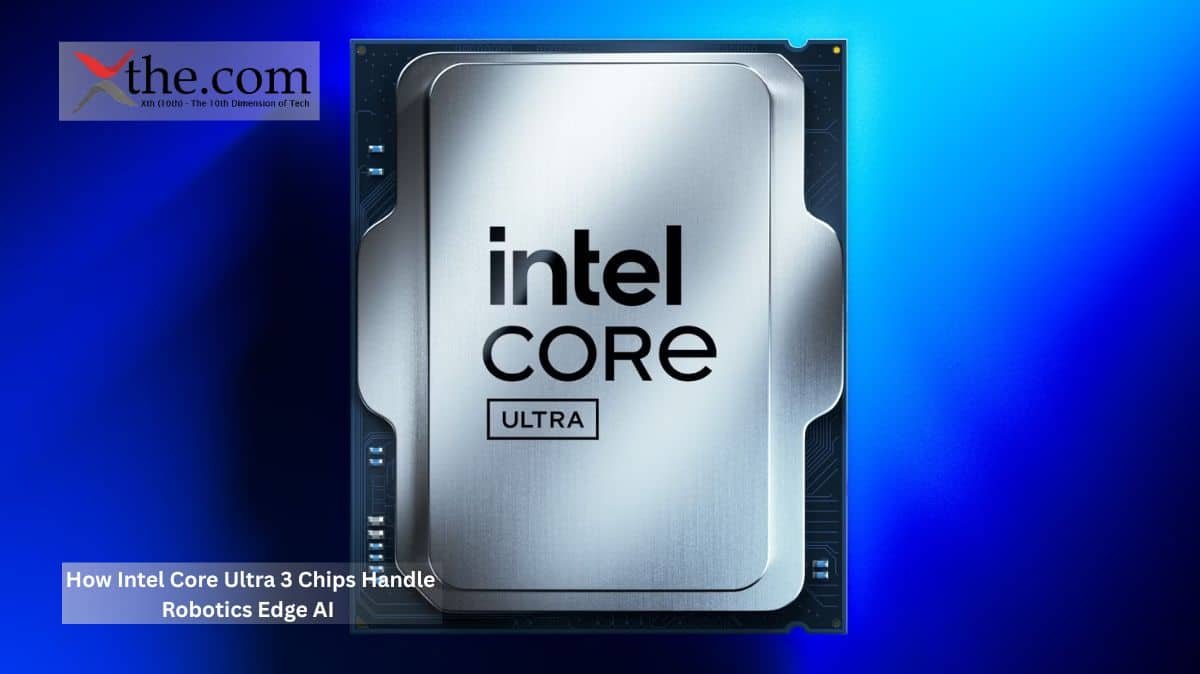
The Intel Core Ultra processor range supports artificial intelligence workloads across various platforms. The chips feature dedicated artificial intelligence engines that process data efficiently on devices.  

Intel maintains its market power through its extensive ecosystem, which includes multiple manufacturers producing AI laptops powered by its processors. This enables professionals to select from various design options while choosing performance levels and cost-effective solutions.  

Enterprise applications and creative workflows can both leverage Intel-powered systems due to their flexible design.  

AMD Ryzen AI: Performance and Efficiency Balance  

In addition to their CPU performance, AMD Ryzen AI processors deliver built-in AI processing. The chips execute standard computing operations together with AI processing tasks.  

AMD designs its products to achieve maximum performance while consuming minimal energy, enabling users to run demanding applications such as simulation, data analysis, and content creation on their laptops.  

AMD-based systems present an attractive solution for professionals who need to balance processing strength with power-saving features.  

Key Features to Look For  

AI laptops should be assessed by professionals using criteria that will inform their selection. One important feature is the NPU that powers the laptop, enabling real AI operations. Higher TOPS ratings indicate better performance for AI, measured as the total number of operations completed per second (TOPS). 

Memory and storage requirements become essential for systems that operate large models and process high-complexity datasets. The system requires a minimum of 16GB of RAM, but additional RAM will enhance system performance.  

The two main battery-life functions are essential because AI tasks demand substantial power. Efficient hardware design enables devices to maintain their operational capabilities throughout extended periods without needing power recharging.  

Productivity Gains from On-Device AI  

The primary benefit of AI laptops lies in their capacity to boost user efficiency. Users can now perform tasks that require either manual work or cloud computing using local, real-time processing.  

AI tools enable professionals to conduct writing tasks, analyze data, and create visual content, all without needing internet access. This method speeds up the process and reduces the need for external resources.  

Microsoft and Apple have developed their systems to include these features, establishing AI as an essential component of user computing across their platforms.  

Battery Efficiency and Thermal Management  

The combination of power-saving technologies built into AI mobile computers enables extended use and the full utilization of the machine’s advanced features. NPUs that handle AI workloads are more efficient than traditional CPUs, allowing devices to run longer than if they had used only CPU-based processing power for AI applications. 

The latest design solutions deliver better thermal control, enabling devices to maintain low temperatures during high-performance use. The system offers advantages that enhance user comfort and extend device lifespan.  

Apple and AMD use efficiency as their main competitive advantage for developing their hardware products.  

Challenges and Considerations  

While AI-enabled laptops offer many benefits over traditional models, they also have drawbacks, such as higher costs than traditional machines. 

Another challenge is software development, as not every application has yet been designed to leverage the benefits of newer AI features. 

When selecting a device, a user must first identify their usage needs, as different models may be better or worse suited to certain tasks. 

The Future of AI Laptops  

The development process for AI-enabled laptops will accelerate as upcoming models feature advanced NPUs, improved power efficiency, and tighter software integration.  

The gap between traditional laptops and AI laptops will decrease because AI technology becomes standard in computing. All devices will need to meet AI capabilities as their basic requirement.  

Companies like Intel, AMD, Apple, and Microsoft will continue to drive innovation in this space.  

Conclusion: Choosing the Right AI Laptop  

Finding the right AI-powered laptop comes down to individual needs and preferences, from performance and ecosystem features to budget constraints. Apple offers outstanding total system integration, resulting in excellent operational efficiency for users. Microsoft creates a powerful AI-based operating system to support all Windows PCs. Intel/AMD offer many options within their product families. 

The right hardware investment allows businesses to achieve better productivity results because artificial intelligence changes how people use computers.

Source: Apple accelerates environmental progress with highest‑ever recycled material in its products 

Tensor Processing Units (TPUs) are Google’s solution for AI processing. They are built for fast, low-precision calculations, which are common in deep learning. TPUs are only available through Google Cloud Platform, supporting high-performance computing and deep learning.  

Graphics processing units (GPUs) are flexible and can handle a wide range of tasks. Many developers are already familiar with using them.  

This article covers the differences and similarities between TPUs and GPUs. It includes sections on performance, application suitability, cost, accessibility, and ecosystem support.  

Introduction to AI Infrastructure 

AI infrastructure refers to the hardware and software components supporting an AI application or project.  

Powerful processors and storage systems are at the heart of AI infrastructure. They provide the computing power needed to train and run complex neural networks, manage large datasets, and perform machine learning tasks efficiently.  

Understanding TPUs Versus GPUs 

Each type of processor plays a different role in computing.  

Google developed TPUs to meet the specific needs of AI workloads. They are designed to speed up neural network computations.  

GPUs were originally designed for graphics rendering, but they are now powerful tools for parallel computing across many areas.  

Both GPUs and TPUs have special features that make them useful in different situations.  

What Is A GPU? 

GPUs are designed to handle many tasks simultaneously. Over time, they have become capable of running complex math calculations. Their ability to handle multiple tasks simultaneously makes them well-suited for deep learning and big data analysis.  

GPUs were originally designed for graphics, but their ability to handle many operations simultaneously makes them highly valuable for AI.  

Today, GPUs are commonly used for machine learning. They are flexible and work well with many different AI frameworks and libraries.  

What Is A TPU? 

TPUs are designed to enable AI tasks to run more efficiently. Google TPUs are especially good at speeding up deep learning models.  

TPUs were created to run TensorFlow applications efficiently and deliver a significant performance boost for the power they consume.  

TPUs are designed for specific tasks, such as tensor computations. This focus makes them very effective for large-scale AI projects.  

TPU Architecture And Benefits 

TPUs are application-specific integrated circuits (ASICs) designed for machine learning and deep learning. The design is optimized for matrix operations, which are the foundation of neural networks.  

A main advantage of TPUs is their ability to deliver high-performance computing.  

TPUs can handle the intensive computations required to train complex neural networks, making them ideal for deep learning. They are also built to use less power, which is important for large AI projects. This energy efficiency helps lower costs and reduce environmental impact.  

Another big advantage of TPUs is scalability. They can be scaled up or down to match changing workloads, so AI applications can grow and adapt as needed. This flexibility makes TPUs valuable to organizations that want to deploy AI at scale.  

Performance Comparison 

Performance is a key factor when comparing GPUs and TPUs. Each one has its own strengths depending on the task.  

  • GPUs are very versatile, so they work well for many different applications. Using multiple GPUs in a cluster boosts deep learning and big data analysis performance. Their design supports many types of tasks, which makes them popular.  
  • TPUs are built to be as efficient as possible for certain AI tasks. This focus leads to strong performance in those specific areas.  

Knowing what each processor does best helps you choose the right one for your AI needs.  

Speed, Efficiency, and Parallel Processing 

The main differences between GPUs and TPUs show up in their speed and efficiency.  

  • TPUs are very fast at deep learning tasks because of how they are built. They are made to quickly handle tensor operations, which helps speed up AI workloads.  
  • GPUs boast a robust design that supports multitasking. Although perhaps not as quick as TPUs in specific AI tasks, their ability to run multiple operations simultaneously makes them suitable for many tasks. Because of this versatility, GPUs are effective for many types of computing tasks.  

Precision And Flexibility 

  • Trade some precision for speed. They work best with low-precision tasks, which boosts performance for certain AI models. This makes them a good fit for jobs where small approximations do not affect results.  
  • GPUs are best for tasks that need high precision, such as scientific simulations. Their accuracy and flexibility make them useful for many different machine learning models. This is why developers often rely on GPUs for a wide range of AI projects.  

Compute Nodes And Scalability 

A compute node is a physical or virtual machine with a GPU or TPU. These nodes provide the computing power needed for AI tasks, from training models to running inferences. This is a key feature of compute nodes. They can be scaled up by adding more GPUs or TPUs to a single node or scaled out by adding more nodes to a cluster. This flexibility allows organizations to adjust their AI infrastructure to meet changing demands.  

  • In a GPU cluster, several GPUs work together to process large datasets and run complex neural networks. This team is important for handling the heavy computational requirements of modern AI.  
  • TPU clusters help speed up deep learning tasks by providing powerful computing that can be scaled up for any AI project  

By using scalable compute nodes, organizations can build strong AI systems that support advanced applications. Whether you use GPUs or TPUs, these nodes are the foundation for efficient and powerful AI solutions.  

Application Suitability 

The choice between TPUs and GPUs depends on what your application needs.  

  • TPUs work best for neural network tasks. Their special design makes them ideal for some AI applications.  
  • GPUs are very adaptable. Their versatility means they can handle many types of computing tasks, not just AI.  

Remember these differences when deciding which processor to use.  

AI, Deep Learning, and Machine Learning Workloads 

TPUs deliver excellent performance for training large neural networks. Their design delivers top performance for deep learning models, greatly reducing training time.  

GPUs provide substantial flexibility. They support a variety of machine learning frameworks. This allows developers to experiment freely, especially with complex models. This opens the door to extensive AI development.  

Other Applications 

GPUs are also great for gaming and virtual reality because of their graphics performance. TPUs, on the other hand, are made just for AI, so they are less useful for other tasks.  

Cost And Accessibility 

The cost of using TPUs and GPUs can vary a lot.  

  • TPUs often give you more performance for the money, especially in large AI projects.  
  • GPUs cost less upfront, which makes them a good choice for smaller projects or startups with tight budgets.  

To choose the right option, you need to consider both the starting cost and the ongoing expenses.  

Initial Investments And Costs 

Initial investment: an important factor when deciding between TPUs and GPUs, as TPUs are more affordable upfront. This makes them accessible for individual researchers and small enterprises.  

TPUs are often available through cloud services, so their costs depend on how much you use them. Even though they may cost more at first, TPUs can save money over time because they use less energy.  

Looking at these factors will help you make a better decision.  

Availability for Consumers and Businesses 

  • GPUs are common in both home and professional settings. They can be easily added to personal computers and servers.  
  • TPUs are mostly available through the cloud. This means they are not as easy to access directly, but they offer good scalability for businesses.  

Ecosystem and Community Support 

The support and community around GPUs and TPUs are important to their widespread adoption.  

  • GPUs have a large community and lots of documentation. There are many forums and guides that make it easier to solve problems.  
  • TPUs are mainly supported by Google. They have strong support but fewer users than GPUs.  

Choosing a platform with good community support can make development and troubleshooting much easier.  

Software And Framework Compatibility 

Flexibility lets developers easily switch between different tools in the AI ecosystem.  

  • GPUs work with many different software frameworks. They are supported by popular machine learning libraries such as TensorFlow, PyTorch, and Caffe.  
  • TPUs are designed to work best with TensorFlow, Google’s machine learning framework. This close connection improves performance but can limit flexibility.  

Knowing which software works with your hardware is important for running AI projects smoothly.  

Developer Experience and Learning Curve 

If you are used to working with GPUs, switching to TPUs can be tough. The programming models are different, so you may need to learn new ways of working. This can slow down development at first.  

Once you get used to TPUs, you can achieve high performance. Picking the right hardware means considering these factors and your project’s needs.  

Future Outlook and Advancements 

AI hardware is improving quickly with new innovations all the time. Both TPUs and GPUs are getting faster and using less energy. Future improvements will likely make AI tasks even quicker and more efficient. The differences between the two may become less clear over time.  

New technologies could change how AI hardware operates. Specialized chips may take over some tasks from traditional processors. TPUs and GPUs will keep adding more AI-focused features to boost speed and scalability. This will help AI projects achieve more or even more.  

As AI hardware improves, other industries will benefit from faster processing and lower costs. For businesses, keeping up with hardware trends is important. Staying competitive means using the most efficient technology available. 

Source: What is TPU vs GPU? 

In 2026, American businesses are moving beyond early challenges of adopting AI and are now focusing on long-term profitability. While public cloud APIs were useful for early experiments, their ongoing costs have started to weigh heavily on company budgets. Many organizations are seeing that private infrastructure can reduce long-term AI costs with proper planning. By moving from a pay-as-you-go approach to owning their own systems, companies can get better performance and stronger AI security. This is more than just a technical upgrade. It is a new way for businesses to think about their digital resources.  

The Shift Toward Localized Intelligence 

Public cloud services are easy to use, but their costs can rise quickly for businesses with large workloads. For US companies processing millions of AI tasks each day, this so-called cloud tax can eat into the benefits of automation. As a result, more businesses are investing in private data centers designed for demanding computing needs. By owning their own hardware, companies make the most of their power and memory, keeping everything running as efficiently as possible for their specific needs.  

Protecting data and intellectual property is another big reason companies are choosing private systems. Storing sensitive information on public servers poses risks that many business leaders are unwilling to accept. Bringing these operations in-house or using private dedicated spaces creates a physical perimeter that public clouds can’t match. This approach is about more than just stopping hackers. It’s about maintaining full control over company data and ensuring the business’s unique processes remain private.  

Private Infrastructure Can Reduce Long-Term AI Costs With Proper Planning. 

To save money in the long run, companies need to plan ahead rather than buy hardware only when needed. This means thinking about which AI models they’ll use over the next few years. Private infrastructure can reduce long-term AI costs through proper planning by enabling businesses to buy specialized chips rather than general-purpose ones. For example, if a company primarily handles language tasks, it can choose hardware designed for those needs. This way, they avoid paying for features they don’t use on standard cloud systems.  

Operational expenses, particularly power and cooling, must be central to the planning. When planning private infrastructure, companies need to closely monitor ongoing costs, such as power and cooling. High-powered AI equipment produces a lot of heat, so advanced liquid-cooling systems are often needed and are more efficient than regular air cooling. By using these systems in their own facilities, businesses can cut cooling costs by up to thirty percent. These passive savings add up over time and can help cover the initial cost of the hardware. Focusing on these details is what makes AI and AI strategy truly profitable.  

Optimizing the ROI of Sovereign Compute 

The return on investment for private systems also lies in eliminating egress fees and unpredictable API price hikes. Public cloud providers frequently change their pricing models or charge significant fees for moving data between different regions. A private cloud network enables the fluid movement of information without incurring a transfer penalty each time a packet crosses a virtual boundary. This predictability allows financial officers to forecast their technology spend with a level of accuracy that was previously impossible. It turns the IT department from a source of variable risk to a stable utility.  

Using local hardware also speeds up product development and helps companies get to market faster. Developers don’t have to wait for shared public resources, so they can improve their models more quickly. This velocity dividend may be harder to measure than server costs, but it’s crucial for staying ahead in the US market. If a business can launch a new tool in two weeks instead of two months, it gains a real edge. This kind of speed drives long-term growth in today’s competitive digital world.  

Balancing Hybrid Workloads For Maximum Flexibility 

Even though many companies are moving to private systems, the most successful ones in 2026 use a hybrid orchestration model. They run steady heavy workloads on private hardware and use the public cloud to handle sudden spikes in demand. This burst capacity keeps things running smoothly for users even during busy times. It also protects private systems from being overloaded. Stacking this balance is a sign of a strong and flexible digital strategy.  

Managing a hybrid setup requires a single orchestration layer that can easily move these tasks between private and public systems. This software makes sure AI agents always use the most cost-effective hardware at any given time. It sends sensitive high-volume work to private clusters and uses the public cloud for testing less important jobs. By automating these choices, companies can keep costs low and efficiency high, creating a system that helps protect profits.  

The Crystalline Path To Perpetual Growth 

Enterprise technology is evolving toward what some call fluid integrity, where data and processes move smoothly through an optimized network. The companies that will thrive are those that understand private infrastructure can reduce long-term AI costs with proper planning. We are also seeing the rise of more empathetic infrastructure that can adjust to business needs in real time. This reliable foundation supports a future of steady service and clear, consistent logic.  

We might one day wake up to find that the heavy lifting of our corporate reality is now being supported by reliable, well-designed systems. These systems will value both our goals and our results, helping us move forward with confidence. As technology becomes more integrated into our daily work, it will help create a clean and efficient environment for businesses. We are shaping a world where technology works alongside us as a steady partner in reaching our goals.

Source: Turn AI Ambition into Reality 

Cybercriminals often target healthcare data. Find out how MDR services help fight the advanced AI-driven cybersecurity threats facing the healthcare industry today.  

Most cybercriminals are now using generative AI tools to attack healthcare systems and steal sensitive patient data. These tools can create fake medical records, send convincing phishing emails, make malware, and even change results from X-rays and MRIs.  

Phishing, ransomware, and deepfakes are just a few tactics used against patients and healthcare workers. In early 2023, healthcare faced over 1,000 cyberattacks each week, a 22% increase from the year before. These numbers are concerning, but MDR services offer proactive ways to defend against the growing cybersecurity threats in healthcare.  

The Rise Of More Targeted Phishing Attacks 

Traditional phishing attacks tried to look like messages from trusted places such as banks or medical offices.  

The aim was always to steal sensitive data using fake links and attachments, but these attacks still needed people to send emails, texts, or social media messages.  

AI-powered phishing attacks use algorithms and natural language processing to create more advanced, large-scale scams that require little human input. These scams can also analyze patterns in large datasets and adjust their tactics as people and organizations get better at spotting threats. The AI behind these attacks also improves.  

MDR Services Countering Advanced Bot Attacks 

Older bot attacks focused on tasks like scraping websites, sending spam, or launching DDoS attacks. They followed simple scripts and could not adapt, making them easier to spot and stop.  

Now, AI-powered bots can adapt and get around new security measures.  

Even more worrying, AI enables bots to learn patterns and identify previously unknown weaknesses in networks. AI can also automate these attacks, making it easier to launch large targeted cyberattacks. Bots can cause serious problems for healthcare, including data breaches, service outages, hacking medical devices, and spreading false information.  

Fake bot activity on healthcare platforms, such as false insurance claims, fake prescriptions, and bogus appointments, is also a big problem. AI-driven fraud wastes resources, creates financial and legal risks, and damages trust in healthcare.  

AI-Assisted Malware: A New Threat Vector 

AI-assisted malware is more advanced and flexible than older types of malware. It is also harder to detect and can get around security systems more easily. While traditional malware was easier to predict, AI has made malware much tougher to stop.  

Besides data breaches and ransomware, healthcare organizations are also at risk from supply chain problems and compliance issues. Many rely on external vendors for medical services, devices, software, and cloud services. Attacks on these vendors can introduce malware, create backdoors, and exploit network weaknesses. This can put patient data and important systems at risk.  

New technologies such as cloud computing, telemedicine, and IoT devices bring extra security challenges for healthcare. Without strong protections like MDR services, cyber attackers could get to sensitive data and disrupt care.  

Deepfakes and Data Manipulation in Healthcare 

Deepfake technology also uses AI and deep learning to make fake audio, video, and images that look and sound very real.  

Deepfake technology is a serious threat to healthcare and can lead to:  

  • Altering medical records   
  • Creating fake documents for identity theft and fraud  
  • Create advanced phishing attacks via fake video and audio files.  
  • Misdiagnosis and treatment disruption  
  • Financial losses  
  • Privacy breaches  

To protect against deepfakes and data tampering, healthcare organizations need strong cybersecurity tools, such as MDR services.  

Compromising Anonymity: AI and Patient Data Patterns 

Algorithms can analyze large datasets and find patterns in random data. Even when names and Social Security numbers are removed, AI can sometimes still find and gather sensitive data about individuals from seemingly random sources, such as behavioral traits, health preferences, or socioeconomic status. Along with the potential for identity fraud, this also increases the potential for discrimination and privacy issues.  

When privacy is breached or data is leaked, people lose trust in healthcare organizations and doubt that their patient data is safe.  

As AI-powered cybersecurity threats become more sophisticated and as AI-driven cyber threats grow more advanced and dangerous, CyberMax’s Managed Detection and Response services blend technology with human expertise to provide proactive protection before problems happen. Healthcare institutions can’t afford to wait for nefarious AI cyber threats to strike before taking action.

Source: 5 AI-Assisted Cybersecurity Threats Facing the Healthcare Industry and the Role of MDR Services 

In 2026, software development is shifting toward agentic workflows in which AI tools do more than just suggest code. They manage entire pull requests. For US businesses, picking the right platform is now a key decision that balances developer speed with long-term maintenance costs. The main debate for engineering leaders is whether OpenAI or Claude is the better AI coding tool for US developers. OpenAI stands out for its large user database and strong reasoning abilities, while Claude has become popular for its focus on code-based context and clear collaborative workflows. The right choice depends on whether your team needs an AI that can work independently or one that supports close collaboration.  

OpenAI: The Power of Autonomous Reasoning 

OpenAI’s tools, including the O series models and the updated Codex Agent, are still the top choice for handling tasks without constant oversight. In 2026, OpenAI’s main strength for US developers is its ability to operate in secure cloud-based environments and to resolve complex bugs on its own. Developers can assign a Jira ticket to the AI, which then figures out the logic, runs tests safely, and submits a finished pull request. For large US companies with big backlogs, this independence helps clear technical debt and speed up releases.  

OpenAI’s strong integration with Microsoft Azure gives Fortune 500 companies top-level security and scalability. Developers using the OpenAI API get structured outputs, so the code matches strict JSON schemas or company standards. This accuracy reduces the time spent reviewing AI-generated code, since the model can closely follow internal style guides. For organizations seeking high output and a hands-off workflow, OpenAI remains the leading choice.  

Claude: The Context King for Local Development 

Anthropic has taken a different approach with Claude, especially through the Claude Code CLI and Sonnet-4X series, which focuses on understanding local code bases. Many US teams now pick Claude because its context window can handle up to 500,000 tokens in a chat. This means developers can load entire repositories into the model’s memory, so its suggestions reflect across file connections and old code quirks. Claude doesn’t just write code. It understands the unique details of each project, making it better for complex refactoring.  

Claude is built to keep developers focused, working right in the terminal and IDE to avoid switching between tools. Anthropic’s constitutional AI also means Claude is more likely to flag when it’s unsure, making collaboration more open and trustworthy for US developers who want a smart partner rather than a distant assistant. Claude’s transparency boosts productivity. This focus on clear explanations is especially useful in fields like finance and healthcare, where knowing the reason for a code change matters as much as the change itself.  

OpenAI Versus Claude: Which AI Coding Tool Is Better for US Devs? 

The decision of OpenAI versus Claude: Which AI coding tool is better for US devs? Often, it hinges on a specific demographic and technical profile of the engineering team. According to 2026, choosing between OpenAI and Claude depends on the team’s background and technical needs. In 2026, Claude holds 42% of the specialized coding market, especially among senior developers who value thoughtful reasoning. OpenAI, on the other hand, leads in large enterprise settings where AI is used across many areas, such as data science and marketing. The best tool for your team depends on your main challenge: do you need to save time on routine work, or help manage complex codebases? However, for established enterprises with complex CI/CD pipelines, OpenAI’s mature API and robust function-calling capabilities provide a more stable foundation for long-term automation. Developers in 2026 are increasingly moving toward a hybrid model, utilizing OpenAI for repetitive automation and Claude for deep architectural planning. This strategic duality allows firms to capitalize on the unique silicon logic of both providers without being locked into a single point of failure.  

The Future of the US Developer Experience 

As the decade progresses, the line between coding and system orchestration blurs, and AI systems and platforms become the primary tools for software engineering. The winner in the OpenAI versus Claude debate will likely be the one that offers the best agentic security or the safest way to run AI agents without risking live systems. As US developers get used to handing off more complex tasks, the focus will move from how fast code is written to how reliable the final product is. The platforms with the strongest verification processes will shape the future of American software.  

We are entering a time when system errors are becoming rare, thanks to self-healing code and automated checks. This new level of efficiency means US software development will be as clear and reliable as the data behind it. By picking the tool that fits their workflow, whether it’s OpenAI’s Autonomy or Claude’s Deep Context, developers are preparing for a future where human creativity matters most. The journey toward a stronger partnership between people and machines has already begun, and the choices we make now will shape what comes next.

Source: OpenAi News