





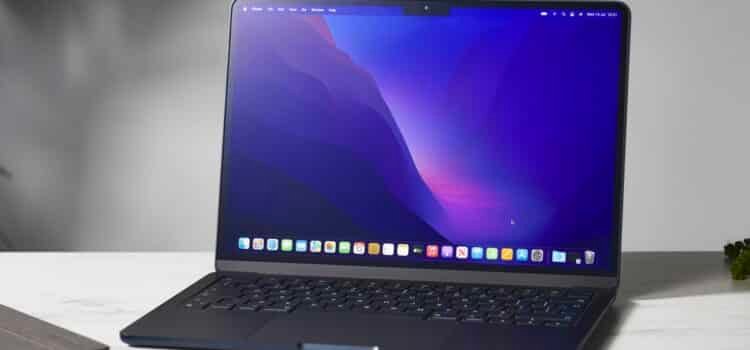
A modular Apple MacBook platform can separate the display from the base, therefore creating greater flexibility in how the system can be used & also creating a potential transformation to how laptops are used in terms of their form factor. Due to the fact that the processing unit and display are different parts/units, they have the ability to operate independently (by themselves) or together, depending upon user needs.
The new patent characterizes the display as not only an output device but also as an active component of the laptop. The display would perform certain AI functions, thus producing a huge change in how a traditional laptop is designed, creating virtually limitless configurations and hardware types, as well as a multitude of uses the laptop can fulfill.
Rethinking the Laptop Form Factor
The traditional design of a laptop includes the processing hardware, battery, and screen as a single unit. Though this design concept has remained relatively unchanged for many years, changing user needs and technological advances are driving new approaches to creating laptops.
Apple is proposing a modular concept that separates the compute gear from the display, allowing people to remove the monitor from the laptop and use it as an independent unit. This will allow users to use the monitor as a separate device for media consumption, project collaboration, or lightweight computing.
By separating these components, Apple is investigating new, flexible form factors that can adapt to multiple use cases without requiring separate devices.
The Role of an AI-Enabled Display
An important aspect of the patent is that it provides AI functions to reside in the display unit rather than being processed solely by the central processor of a typical display.
Using AI-enabled display unit processor components, the display unit would be capable of performing AI-related functions, e.g., voice and gesture recognition, and analyzing user behavior without relying solely on the central processor. For example, a user could use their AI assistant to interact with the display unit and receive smart notifications, as well as receive customized content based on their preferences or interests.
This is consistent with Apple’s efforts to establish a trend of distributing computing capabilities across multiple processors rather than relying on a single central processor to handle all computing requirements.
Separation of Compute and Interface
By separating the computing power from the user interface through a modular design, you create an obvious separation of the two components in an easy-to-understand way. One could connect the main computing unit for more resource-intensive activities, such as software development, video editing, or data processing, while the display runs independently for less resource-intensive tasks.
Separating these components helps you allocate resources more effectively. Users can extend the display but still have access to the full computing power when needed, at all times.
Therefore, based on Apple’s patent, it is highly likely that future devices will prioritize both adaptability and efficiency over traditional all-in-one products.
Potential Use Cases and Flexibility
The modular MacBook concept offers a wide range of uses. Professionals could use the detachable display as a thin, secondary monitor or to present information. Students might consider it a lightweight tablet for taking notes, reading, and more.
In multi-user collaborative settings, many people can use an independent, interactive, detailed system on their own workstations while the main computer processes the work on the backend. The flexibility of this design can greatly increase productivity and help create new workflows that traditional laptops cannot.
Apple is exploring how a single modular device can serve many purposes across contexts. Modularity could expand the full potential of every device you own.
Integration with Apple’s Ecosystem
The ecosystem, comprising Apple’s products, e.g., iPhone, iPad, and Mac, was intended to integrate seamlessly. If a modular MacBook could fit between two distinct device categories, it would provide even more opportunities for integration between the two groups than currently exists.
As a modular device, the MacBook’s detachable display could share data with other Apple devices. It could also extend Apple’s ecosystem, possibly acting as a wireless display for an iPhone or integrating with cloud services for synchronized app access.
Apple appears to expect that integration of modular hardware will be an important factor in the company’s future product development strategy.
Challenges in Modular Hardware Design
Although modular hardware offers many opportunities to develop innovative technologies, it also presents multiple challenges. Maintaining full connectivity between modules is paramount; otherwise, the user may experience performance delays, instability, or both.
Another area of concern will be durability. This is especially true for detachable areas, which can suffer from excessive use and handling. The design of the modules also needs to balance performance, battery life, and portability without sacrificing any of them.
Apple will need to find solutions to these problems to take the next step from patent status to producing an actual product.
Apple’s patent reflects a broader shift toward integrating AI deeply into device architecture.
From Patent to Product: What Comes Next
It should be understood that only some patents lead to products ready for commercial use. However, patents can provide information on a company’s R&D direction; thus, not all patents give rise to R&D for commercial products.
This patent suggests that Apple continues to investigate ways to increase flexibility and efficiency, and to improve how users interact with their computing products by developing a Windows-based modular MacBook system. Regardless of how this prototype is marketed or sold as a product, Apple’s patented modular concept will likely influence future product iterations.
Conclusion: A New Vision for Laptops
Apple has patents for a detachable AI-enabled display that can be connected to a new type of MacBook, rethinking laptop design. By creating two distinct pieces—the compute power and the display Apple is establishing a platform for how a laptop could operate in the future when combined with AI capabilities.
With the ever-changing landscape of computing, this type of invention will provide users with a whole new set of ways to work, learn, and create like never before.
Source: Google PATENT


