



Santa Clara, California
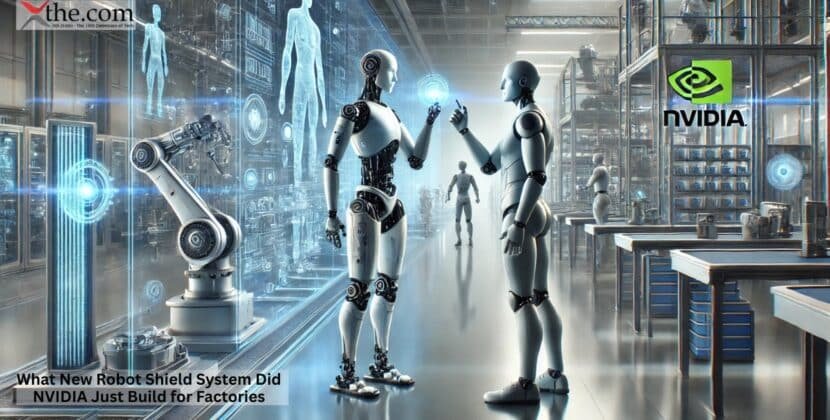
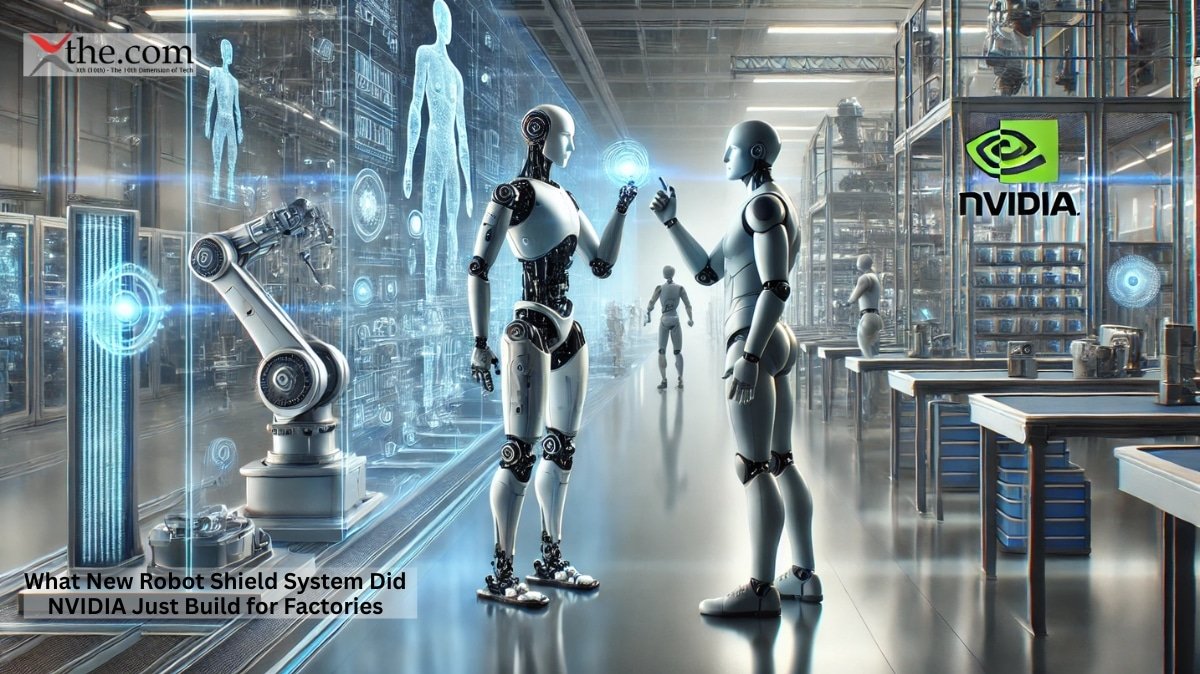
Each week, about 1.7 million warehouse workers in the United States work alongside more and more autonomous machines. On Sunday, the way we think about scaling that partnership safely changed in a big way. NVIDIA Halos for Robotics, announced on June 22, 2026, is the first open, full-stack safety system designed specifically for physical AI in factory settings. Its impact will reach far beyond Santa Clara.
NVIDIA Halos for Robotics: The Architecture That Changes the Safety Equation
The main challenge with using autonomous humanoid robots in busy fulfillment centers isn’t ambition—it’s the lack of a standard safety baseline. Manufacturers, logistics managers, and safety teams have all developed their own solutions, such as physical later-added stops and external safety controllers. This patchwork approach slows down certification and creates accountability gaps that are hard to manage.
NVIDIA Halos for Robotics is the only full-stack safety system in the industry for robotics and physical AI. It gives machines that sense, decide, and act in the real world a single, unified safety architecture with safety built into every layer.
It’s worth explaining what ‘every layer’ really means.
Three Layers, One Coherent Shield
Hardware: IGX Thor and Holoscan Sensor Bridge
NVIDIA IGX Thor is an industrial-grade AI compute module that combines advanced AI perception with built-in safety hardware on a single platform. It delivers up to 2,070 FP4 TFLOPs of AI performance, 14 Neoverse ARM CPU cores, and 128 GB of memory at 273 GB/s bandwidth. This means it can handle demanding real-time robotics tasks and safety monitoring simultaneously, without slowing down.
What sets IGX apart from general-purpose compute platforms is its built-in hardware safety. It has a dedicated Functional Safety Island (FSI), physically separated from the main computing area, capable of meeting IEC 61508 SIL 3 standards, with its own I/O, power, and clocks. More than 22,000 safety mechanisms deliver diagnostic coverage throughout the chip.
The Holoscan Sensor Bridge supports this by managing sensor connections. It gathers data from cameras, LiDAR, and other devices, then feeds it into the safety decision process in real time. This is the industrial edge hardware backbone that lets a six-foot humanoid robot react to an approaching forklift operator in milliseconds rather than seconds.
Software: Halos OS and the Outside-In Safety Blueprint
NVIDIA Halos OS is the software stack for robotics safety. It includes Halos Core, which supports safety-related functions, as well as safety applications built with the NVIDIA Halos Outside-In Safety Blueprint. This program uses external cameras and AI agents to extend robot perception and dynamically control robot behavior in factory environments.
Think about what ‘outside-in’ means in practice. A robot’s own sensors have blind spots, but external cameras placed around a facility don’t have the same limitations. Halos combines these two layers of perception into a single safety system, giving the robot awareness it couldn’t achieve on its own. For example, if a worker steps around a shelving unit from an unexpected direction, the facility’s overhead cameras can spot them before the robot’s sensors do.
Certification: The Halos AI Systems Inspection Lab
The NVIDIA Halos AI Systems Inspection Lab is the first program accredited by the ANSI National Accreditation Board that focuses on both utilitarian safety and intelligent robotic systems. It helps companies prepare their products for certification by organizations such as TÜV Rheinland, TÜV SÜD, UL Solutions, exida, SGS, and CertX.
This is important for anyone who has seen a promising-looking robotics project get stuck for months or even years waiting for regulatory approval. Getting a pre-certification assessment from an accredited internal lab can speed up the process and provide procurement teams and safety coordinators with a reliable paper trail before any humanoid robot begins work.
Why Agility Robotics Is the Right First Partner
Agility Robotics, which previously earned a major OSHA-recognized approval for its bipedal robot Digit, is the first company to use the Halos platform. The partnership makes sense. Agility’s Digit robots are already working in real production logistics for companies like Amazon, GXO, Schaeffler, and Toyota Motor Manufacturing Canada. These aren’t just pilot programs—they’re real operations where worker safety is the top priority.
In the past, Agility kept Digit humanoid robots behind physical safety barriers, called workcells, to reduce motion and stability risks. The next generation of Digit is designed for ‘cooperative safety,’ meaning it can work in the same space as humans without needing a fence.
This move from fenced-off workcells to an open factory floor is precisely the deployment scenario in which NVIDIA Halos for Robotics’ physical AI safety architecture proves its worth. Agility and NVIDIA will use the Halos AI Systems Inspection Lab to ensure Digit’s safety software, AI components, and cybersecurity protections meet strict standards such as IEC 61508, ISO 13849, and ISO/IEC TR 5469 before obtaining certification from external organizations.
The Foundation Beneath the Launch
NVIDIA drew on more than 18,600 years of engineering experience in developing autonomous vehicle safety systems to build Halos. This isn’t a brand-new effort. The safety frameworks, software processes, and hardware methods that make self-driving vehicles certifiable are now being extended to robotics, rather than being rebuilt from scratch. This matters because proven processes carry more weight in safety certification than new, untested systems.
The larger Halos ecosystem brings together partners in software, embedded systems, sensors, silicon, industrial applications, and certification. Software partners include Acontis, Amazon FreeRTOS, and QNX. Sensor and silicon partners include Infineon, NXP, SICK, STMicroelectronics, and Texas Instruments. More than 40 companies, including manufacturers, certification bodies, and safety vendors, are working to bring safe physical AI systems from design to actual use.
What Logistics Directors and Safety Coordinators Should Do Now
NVIDIA Halos for Robotics doesn’t remove the challenges of integration. Manufacturing engineers still need to match their facility sensor setup to the Holoscan Sensor Bridge. Safety coordinators must check that their local rules fit with IEC 61508 or ISO 13849. Logistics directors will still have to work out deployment schedules with robotics vendors who are at different stages of Halo’s integration.
What’s different now is the starting point. Instead of building a custom safety system from scratch, which used to take years and cost millions, operations teams can now base their deployment on a standardized, internationally accredited framework for physical AI mechanics and build from there.
NVIDIA is presenting Halos as the next ‘Intel Inside’ for AI safety as more robots enter everyday environments. It’s a platform and certification that vendors and distributors can add to a robot’s chassis to show that the software and wiring have been checked.
The comparison fits. When ‘Intel Inside’ was at its peak, it didn’t mean a computer was flawless. It meant buyers had a trusted baseline to judge everything else. NVIDIA Halos for Robotics is making a similar bet for factory environments: that a shared, certified, and accessible safety baseline is the quickest way to bring autonomous machines and human workers together safely.
In the next decade, factories won’t just be known for which robots can lift the most or move through the narrowest aisles. They’ll be known for which robots have earned the right to work there, and whether their safety systems are built to last.
Source: NVIDIA Announces Halos for Robotics, the Industry’s First Full-Stack Safety System for Physical AI