





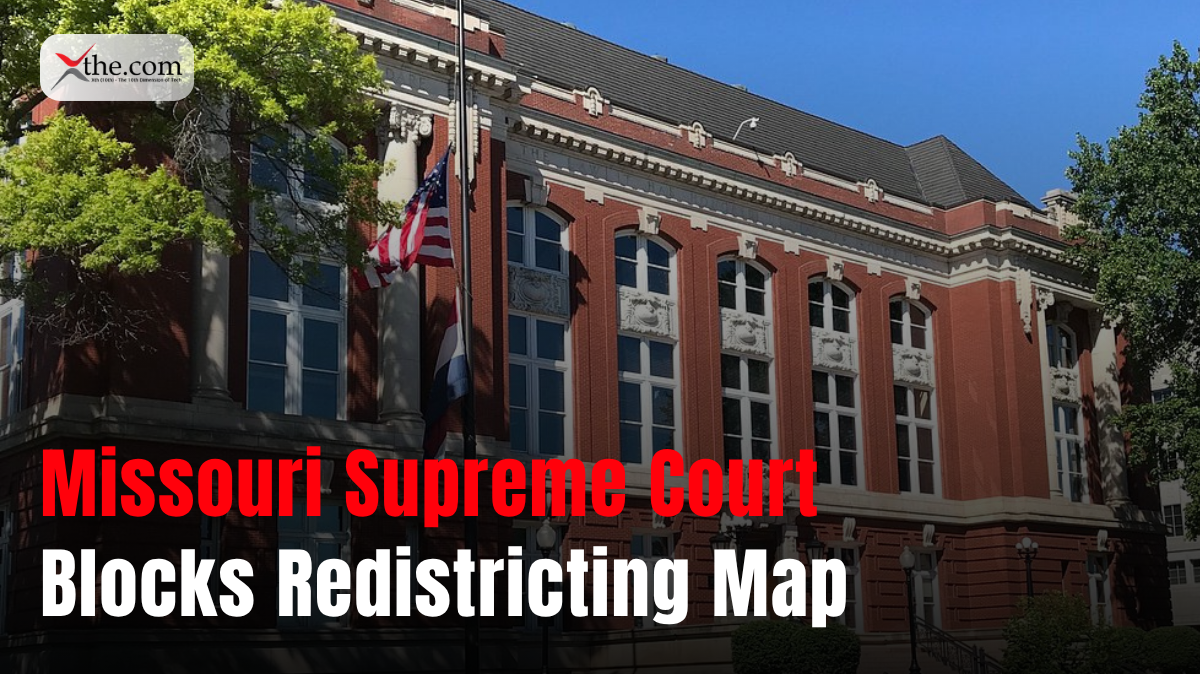
Missouri Supreme Court Blocks Redistricting Map in Landmark Ruling
The Missouri Supreme Court has issued a landmark ruling striking down the state newly drawn congressional redistricting map, finding that the boundaries were drawn in violation of the state constitution anti-gerrymandering provisions. The unanimous decision, released on September 3, 2026, has thrown the states congressional elections into chaos and set a precedent that could reshape redistricting battles across the country.
The Ruling: What the Court Found
In a detailed forty-two page opinion, the Missouri Supreme Court ruled that the congressional map adopted by the Republican-controlled state legislature in early 2026 violated the Missouri Constitution requirement that districts be compact, contiguous, and not drawn to favor any political party. The court found that the map packed Democratic voters into two congressional districts while splitting Democratic-leaning communities across multiple Republican-leaning districts, a practice known as cracking and packing.
Chief Justice Mary Russell, writing for the unanimous court, stated that the evidence before the court overwhelmingly demonstrated that partisan considerations were the primary motivation behind the map boundaries. The opinion cited internal communications from legislative leaders discussing strategies to maximize Republican congressional seats, as well as expert testimony from political scientists who analyzed the maps partisan effects.
The court ordered the state legislature to draw a new congressional map within thirty days, warning that if the legislature fails to produce a constitutionally compliant map, the court would appoint a special master to oversee the redistricting process. The ruling specifically targeted the boundaries of the states first, fourth, and fifth congressional districts, which the court found were the most egregiously drawn.
Political Impact
The ruling has immediate and significant political implications. Missouri currently sends six Republicans and two Democrats to Congress, a ratio that advocates for fair maps argue does not reflect the state actual partisan composition. Missouri voters have consistently split about fifty-five percent Republican to forty-five percent Democratic in statewide elections, suggesting that a fair map might produce a five-three or even a four-four congressional delegation.
Republican legislative leaders expressed disappointment with the ruling but stated that they would comply with the court order and draw a new map within the thirty-day deadline. House Dean John Patterson stated that the legislature would work quickly to produce a constitutionally compliant map, though he declined to commit to specific changes in the district boundaries.
Democratic leaders celebrated the ruling as a victory for fair representation. Missouri Democratic Party Chair Russell Bowlus stated that the court has affirmed what voters have known for months: that the Republican map was drawn to silence the voices of hundreds of thousands of Missourians.
Legal Background
The case, known as Missouri v. Fair Maps Coalition, was brought by a coalition of civic organizations, voting rights groups, and individual voters who challenged the redistricting map shortly after it was adopted. The plaintiffs argued that the map violated several provisions of the Missouri Constitution, including the 2020 anti-gerrymandering amendment that was approved by voters with sixty-two percent support.
That amendment, which was placed on the ballot after a successful citizen petition campaign, established specific criteria for congressional redistricting, including requirements that districts be compact, contiguous, and drawn without regard to partisan political affiliation. The amendment also created a Citizens Redistricting Commission to advise the legislature on map-drawing, though the commission recommendations are non-binding.
The Missouri Supreme Court decision relied heavily on the anti-gerrymandering amendment language, finding that the legislature had failed to comply with its requirements. The court noted that the amendment was passed by a clear majority of Missouri voters specifically to prevent the kind of partisan map-drawing that occurred in this case.
National Redistricting Implications
The Missouri ruling is part of a broader wave of redistricting challenges that have reshaped the political landscape in states across the country. Similar cases are pending in Ohio, Wisconsin, North Carolina, and Georgia, where courts have been asked to evaluate the constitutionality of newly drawn congressional maps. Legal experts say the Missouri decision could serve as a template for these cases.
The ruling is particularly significant because it demonstrates that state courts can serve as effective checks on partisan gerrymandering even when federal courts have declined to intervene. The US Supreme Court ruling in Rucho v. Common Cause held that partisan gerrymandering claims present political questions beyond the reach of federal courts. However, the Missouri decision shows that state courts remain open venues for redistricting litigation.
Impact on 2026 Elections
The ruling has created uncertainty about the 2026 congressional elections in Missouri. With the court ordering a new map within thirty days, election officials have expressed concern about the tight timeline for updating voter registration systems, reprinting ballots, and preparing for the November general election. Missouri Secretary of State Jay Ashcroft stated that while the timeline is challenging, the states election infrastructure is capable of adapting.
The delay could also affect campaign strategies, as candidates who had been campaigning in the old district boundaries may now find themselves running in substantially different territory. Political analysts note that the new map could make several currently safe Republican seats more competitive.
The Broader Gerrymandering Debate
The Missouri ruling has reignited the national debate about redistricting reform. Advocacy groups are using the decision to push for independent redistricting commissions in other states, arguing that the Missouri experience demonstrates both the harms of partisan gerrymandering and the effectiveness of judicial oversight.
At the federal level, congressional Democrats have reintroduced the Freedom to Vote Act, which would establish national standards for congressional redistricting and create independent commissions in all fifty states. Republicans, meanwhile, have criticized the Missouri ruling as judicial overreach that undermines the authority of elected legislatures to make redistricting decisions.
What Happens Next
The Missouri legislature has thirty days from the date of the ruling to adopt a new congressional map. Legislative leaders have announced that they will convene a special redistricting session beginning September 10, 2026, with the goal of completing the new map before the October 3 deadline. If the legislature fails to produce a constitutionally compliant map, the court will appoint a special master to draw the boundaries.
The new map is expected to significantly alter the political landscape in Missouri, potentially making several congressional seats more competitive and shifting the states congressional delegation toward a more proportional representation of its partisan composition. The full impact of the ruling will become clear only after the new map is drawn and the 2026 election results are tallied.
**External Sources:**
· [St. Louis Post-Dispatch – Missouri Redistricting Ruling](https://www.stltoday.com)
· [Kansas City Star – Court Blocks Map](https://www.kansascity.com)
· [AP News – Missouri Redistricting](https://apnews.com)
· [Reuters – US Redistricting Battles](https://www.reuters.com)
· [National Conference of State Legislatures](https://www.ncsl.org)