






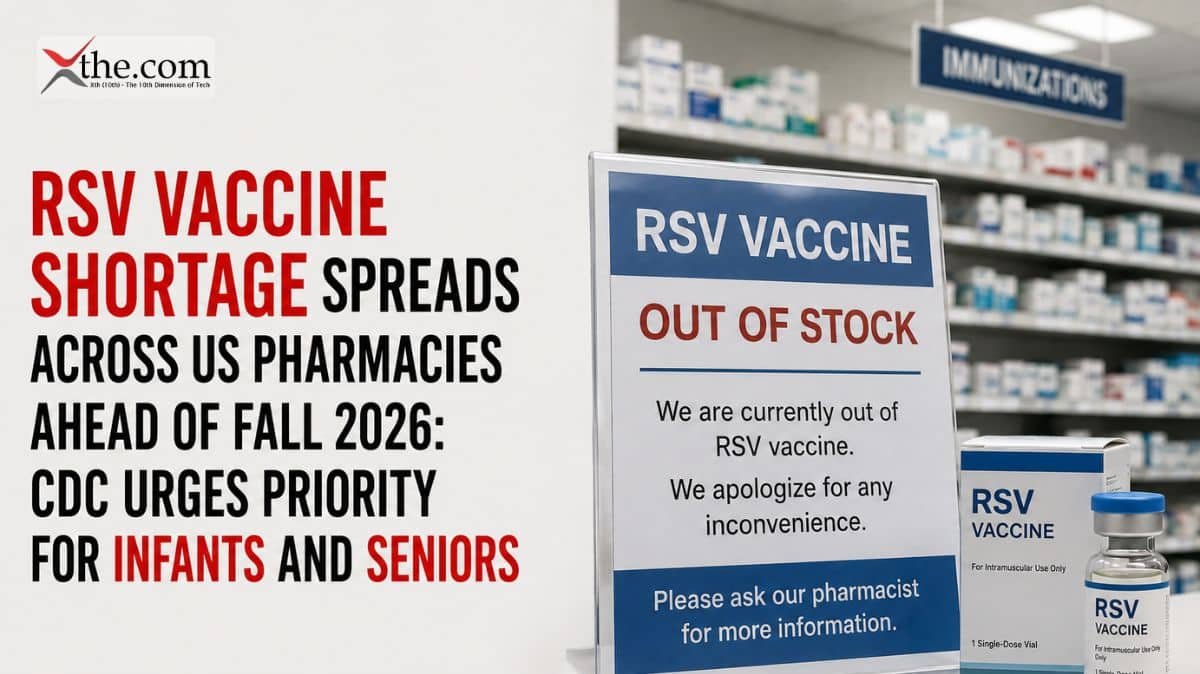
The Centers for Disease Control and Prevention issued a national health alert on Wednesday warning that supplies of respiratory syncytial virus (RSV) vaccines are critically low at pharmacies and pediatric clinics nationwide. The shortage, which affects both the infant monoclonal antibody Beyfortus (nirsevimab) and the adult vaccines Abrysvo and Arexvy, comes just weeks before the September onset of RSV season — a period that hospitalizes 58,000 American children under 5 and 177,000 adults over 65 annually.
Why the Shortage Is Happening
The shortage stems from a perfect storm of manufacturing delays, unexpectedly high demand, and distribution bottlenecks.
Manufacturing Delays: Sanofi, which manufactures Beyfortus in partnership with AstraZeneca, reported a contamination issue at its Lyon, France production facility in June that forced a 6-week shutdown. The facility produces 80% of the global supply. While production has resumed, the backlog cannot be cleared before peak season.
Demand Surge: Pediatricians and parents, alarmed by severe RSV seasons in 2022 and 2023 that overwhelmed children’s hospitals, have rushed to vaccinate infants earlier than usual. CDC data shows 340,000 doses of Beyfortus administered in July 2026 — triple the July 2025 figure. The surge exhausted the limited supply that manufacturers had allocated for early vaccination campaigns.
Distribution Inequity: Rural pharmacies and community health centers report receiving less than 20% of their ordered doses, while large hospital systems in major cities have maintained adequate stock. This geographic disparity leaves low-income and rural families most vulnerable.
What RSV Does
Respiratory syncytial virus is often dismissed as “just a cold,” but it is the leading cause of infant hospitalization in the United States. For babies under 6 months, RSV can cause bronchiolitis — inflammation of the small airways — leading to breathing difficulty, oxygen deprivation, and mechanical ventilation. In adults over 65, RSV triggers pneumonia and exacerbates chronic heart and lung conditions, with a mortality rate of 4-8% among hospitalized patients.
The 2022-2023 RSV season was historically severe, killing an estimated 6,000-10,000 Americans and sending pediatric ICUs into crisis mode with triage protocols and cancelled elective surgeries.
CDC Priority Recommendations
With insufficient supply for universal vaccination, the CDC has issued tiered prioritization guidance:
Highest Priority (Reserve First Doses):
- Infants under 6 months born during RSV season (October through March)
- Premature infants (born before 32 weeks gestation) regardless of age
- Infants with chronic lung disease, congenital heart defects, or severe immunodeficiency
- Adults over 75 with chronic heart, lung, or kidney disease
Secondary Priority (Administer If Supply Allows):
- Infants 6-12 months without risk factors
- Adults 60-74 with chronic medical conditions
- Healthcare workers in neonatal and pediatric units
Defer If Possible:
- Healthy adults 60-74 without chronic conditions
- Infants over 12 months in low-incidence geographic areas
Pharmacy and Clinic Responses
CVS Health and Walgreens, which together operate 18,000 pharmacy locations, have implemented appointment-only RSV vaccination and are limiting doses to CDC priority groups. CVS spokesperson Amy Thibault stated: “We are working with manufacturers hourly to secure additional inventory, but we must allocate fairly based on medical need.”
Walmart pharmacies in rural areas have been particularly hard hit, with some locations in Montana, Wyoming, and North Dakota reporting zero available doses since early August. The Federal Retail Pharmacy Program is attempting to redirect surplus urban inventory to these underserved areas, but logistical challenges — cold chain requirements, short shelf life, and state-level licensing variations — complicate redistribution.
Manufacturer Statements
Sanofi issued a statement acknowledging the shortage and promising “maximum production acceleration.” The company expects to deliver 1.2 million additional doses by October 15 — enough to cover priority infants but insufficient for the broader eligible population. AstraZeneca is exploring emergency use authorization for a half-dose regimen that could stretch supply, though pediatricians express concern about reduced efficacy.
GSK, manufacturer of Arexvy for adults, reported no manufacturing disruptions but confirmed that wholesale distributors underestimated demand by 40%. The company is airlifting inventory from European warehouses to American distribution centers.
What Parents Should Do
If you have an infant or are expecting a baby before March 2027:
- Call Your Pediatrician Now: Do not wait for September. Ask to be placed on a priority waiting list and inquire about alternative locations that may have supply.
- Consider Maternal Vaccination: Pregnant women between 32 and 36 weeks gestation can receive the Abrysvo vaccine, which passes antibodies to the fetus. This provides infant protection even if Beyfortus is unavailable after birth.
- Practice Rigorous Hygiene: Wash hands frequently, limit infant exposure to crowded indoor spaces during peak season, and ensure all family members are current on flu and COVID-19 vaccinations to reduce overall respiratory illness burden.
- Know Warning Signs: Rapid breathing, chest retractions (skin pulling between ribs), blue lips, and refusal to feed are emergency symptoms requiring immediate hospitalization.
What Seniors Should Do
Adults over 60 should contact their primary care physician or pharmacy immediately. If adult RSV vaccine is unavailable, ensure you are current on pneumococcal and influenza vaccines, which reduce the severity of secondary infections if RSV is contracted.
Political and Policy Implications
The shortage has reignited debate about domestic pharmaceutical manufacturing. Senator Elizabeth Warren called for the Defense Production Act to be invoked for pediatric vaccine production, arguing that “relying on French factories for American babies’ health security is unacceptable.” The Biden administration has not yet taken that step but has authorized emergency importation of European-labeled Beyfortus doses, which will require relabeling and FDA verification before distribution.
The shortage also highlights ongoing challenges with the Vaccines for Children (VFC) program, which provides free vaccines to uninsured and underinsured children. VFC funding has been flat since 2022 despite inflation and expanded eligibility, leaving program administrators scrambling to cover the cost of scarce doses.
Long-Term Outlook
RSV vaccine technology is advancing rapidly. Moderna and Pfizer are developing combination COVID-flu-RSV mRNA vaccines that could simplify immunization schedules by 2028. Sanofi is building a $750 million US manufacturing facility in Massachusetts, expected online in 2027, that will eliminate foreign dependence for Beyfortus production.
For this season, however, American families face difficult choices and anxious waits. The shortage is a stark reminder that even in 2026, global supply chains remain fragile — and children’s health hangs in the balance.








