






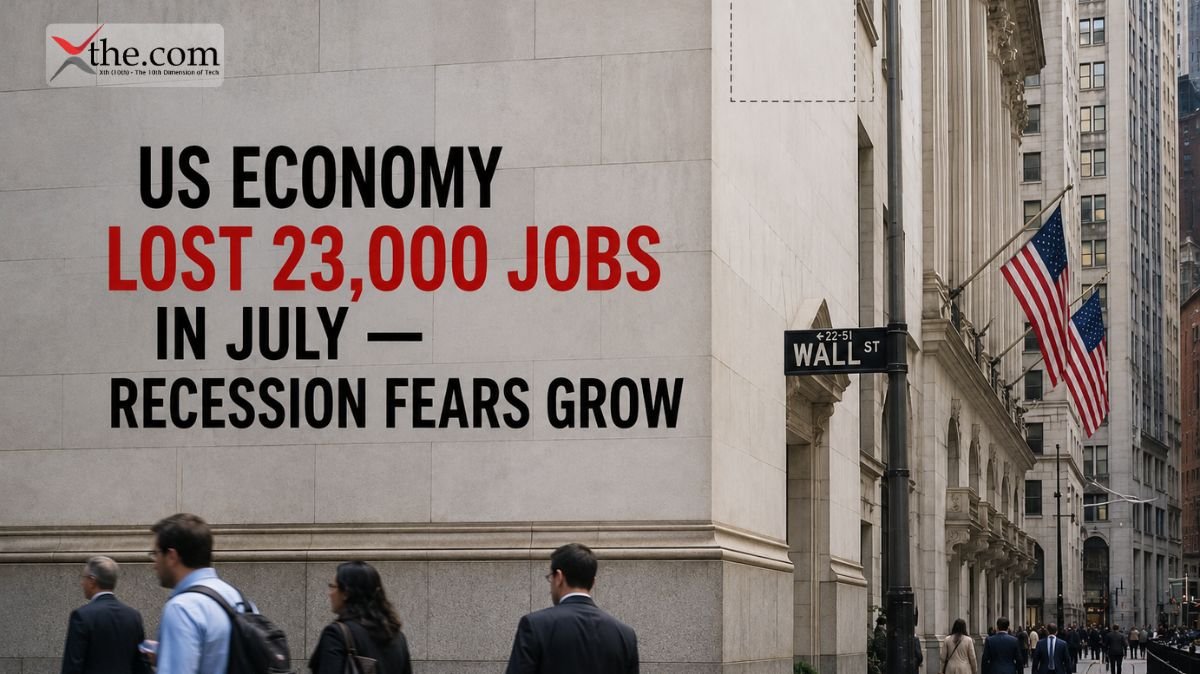
The July Jobs Report: A Shock to Markets
The U.S. economy delivered a stunning blow to expectations on August 7, 2026, when the Bureau of Labor Statistics (BLS) reported that the nation had lost 23,000 jobs in July — the first monthly contraction in the labor market since the pandemic recovery. The report, detailed by PBS NewsHour, caught economists, investors, and policymakers off guard, intensifying fears that the world’s largest economy may be sliding into recession.
The contraction is particularly alarming given that most economists had predicted modest job growth of 100,000-150,000 positions. Instead, employers across multiple sectors pulled back on hiring, froze open positions, and in some cases initiated layoffs — signaling a sudden loss of business confidence.
Key July 2026 Jobs Data:
Table
| Metric | July 2026 | June 2026 | Change |
| Nonfarm Payrolls | -23,000 | +89,000 | -112,000 |
| Unemployment Rate | 4.1% | 4.3% | -0.2% |
| Labor Force Participation | 62.6% | 62.8% | -0.2% |
| Average Hourly Earnings | +0.2% | +0.3% | Slower growth |
| Manufacturing Jobs | -15,000 | -8,000 | Accelerating losses |
Why the Unemployment Rate Fell Despite Job Losses
In a paradox that confuses many observers, the unemployment rate actually fell from 4.3% to 4.1% even as the economy shed jobs. The explanation lies in the mechanics of how unemployment is calculated.
The unemployment rate measures only people actively looking for work. When job prospects deteriorate, many discouraged workers simply stop searching — dropping out of the labor force entirely. In July, approximately 400,000 Americans left the labor force, meaning they were no longer counted as unemployed even though they did not have jobs.
This “discouraged worker” effect is a classic recession indicator. It suggests that Americans are sensing weakness in the job market and giving up on finding employment — a phenomenon that typically accelerates as economic downturns deepen.
Sector-by-Sector Breakdown
The job losses were not evenly distributed. Some sectors held steady while others experienced sharp contractions:
Hard-Hit Sectors:
- Manufacturing: -15,000 jobs (tariffs and supply chain disruptions biting)
- Retail Trade: -12,000 jobs (consumer spending weakness)
- Information Technology: -8,000 jobs (AI-driven automation + hiring freezes)
- Construction: -6,000 jobs (high interest rates suppressing housing)
Growing Sectors:
- Healthcare: +18,000 jobs (demographic-driven demand)
- Government: +14,000 jobs (federal hiring for Iran war logistics)
- Leisure & Hospitality: +8,000 jobs (summer travel season)
The manufacturing losses are particularly concerning. After years of “reshoring” enthusiasm, American factories are now facing the dual headwinds of President Trump’s tariffs on 60 countries and weakening global demand. The sector has lost jobs for three consecutive months — a trend not seen since 2019.
The Iran War’s Economic Toll
The ongoing conflict with Iran is increasingly weighing on the American economy. Oil prices have remained elevated between $85-95 per barrel since February, adding an estimated $40-60 per month to average household energy costs. Defense spending, while boosting government employment, is crowding out private investment as uncertainty deters capital expenditure.
Economic Impact of Iran War:
Table
| Category | Estimated Cost |
| Higher Gasoline Prices (per household/month) | $45-65 |
| Defense Spending Surge (annualized) | $180 billion |
| Supply Chain Disruptions | $25-40 billion |
| Consumer Confidence Drag | -15 to -20 points |
The war has also created labor market distortions. With the Pentagon scrambling to replenish depleted missile stockpiles, defense contractors are hiring aggressively — but these jobs require specialized skills that displaced retail and manufacturing workers cannot easily fill. The result is a bifurcated labor market: shortages in defense aerospace alongside surpluses in consumer-facing industries.
Tariff Impact on Manufacturing
President Trump’s sweeping tariff regime, which imposed duties on goods from 60 countries, is now showing up in employment data. Twenty-five Democratic-led states filed a lawsuit against the administration on August 4, arguing the president exceeded his legal authority — but the economic damage is already being felt.
Manufacturers report that tariffs on steel, aluminum, and electronic components have increased input costs by 15-25%. Many have responded by delaying expansion plans, automating positions rather than hiring, and in some cases moving production to countries not covered by the tariffs — undermining the reshoring goals the tariffs were intended to achieve.
Tariff Impact by Industry:
Table
| Industry | Cost Increase | Employment Effect |
| Automotive | +18% | -4,000 jobs |
| Electronics | +22% | -3,500 jobs |
| Textiles | +15% | -2,800 jobs |
| Agriculture Equipment | +12% | -1,700 jobs |
Federal Reserve Dilemma
The July jobs report places the Federal Reserve in an extraordinarily difficult position. With inflation still above its 2% target — driven by energy costs and tariff-related price increases — the central bank has been reluctant to cut interest rates. But with the labor market now contracting, the case for monetary easing is strengthening.
Fed’s Options:
- Cut Rates in September: Would support employment but risk reigniting inflation
- Hold Steady: Would maintain inflation credibility but deepen job losses
- Emergency Cut: Would signal panic to markets and potentially undermine confidence
Fed Chair Jerome Powell has hinted at a “data-dependent” approach, but the data is increasingly contradictory. Inflation measures remain sticky while growth indicators weaken — a combination economists call “stagflation,” the most challenging environment for monetary policymakers.
Wall Street Reaction
Financial markets reacted violently to the jobs report. The Dow Jones Industrial Average dropped over 800 points in the first hour of trading, while the Nasdaq fell 2.5%. Treasury yields plunged as investors priced in increased odds of Fed rate cuts.
Market Moves (August 7, 2026):
Table
| Index | Change |
| Dow Jones | -820 points (-2.1%) |
| S&P 500 | -95 points (-1.8%) |
| Nasdaq | -410 points (-2.5%) |
| 10-Year Treasury Yield | -18 basis points (3.85%) |
| Gold | +$35/oz (+1.4%) |
Gold’s rally reflects classic recession hedging, as investors flee to safe-haven assets. Cryptocurrency markets also saw significant volatility, with Bitcoin dropping below $60,000 before recovering.
What This Means for American Workers
For the average American, the July jobs report signals that the economic headwinds are intensifying. Here is what workers should prepare for:
Job Seekers: Expect fewer openings and longer search times. The ratio of job openings to unemployed workers has fallen from 1.8 to 1.2 over the past six months.
Current Employees: Job security may deteriorate. Companies facing margin pressure often implement hiring freezes before layoffs — and the freeze has already begun.
Wage Growth: With labor demand softening, the bargaining power of workers is diminishing. Expect smaller raises and fewer signing bonuses.
Housing: High mortgage rates (still near 7%) combined with job uncertainty will likely suppress home sales further. First-time buyers face the worst affordability conditions in 40 years.
Small Businesses: Credit conditions are tightening. Banks are becoming more selective about business loans, making expansion difficult for entrepreneurs.
Frequently Asked Questions
Q: Did the US really lose jobs in July 2026? A: Yes. The Bureau of Labor Statistics reported that the U.S. economy lost 23,000 nonfarm payroll jobs in July 2026, the first monthly contraction since the pandemic recovery.
Q: Why did the unemployment rate go down if jobs were lost? A: The unemployment rate fell because approximately 400,000 discouraged workers stopped looking for jobs and left the labor force. They are no longer counted as unemployed.
Q: Is the US in a recession? A: Not officially. A recession requires two consecutive quarters of negative GDP growth. However, the jobs contraction, combined with other weakening indicators, has significantly increased recession probability.
Q: What sectors lost the most jobs? A: Manufacturing (-15,000), Retail (-12,000), Information Technology (-8,000), and Construction (-6,000) saw the largest declines.
Q: Will the Federal Reserve cut interest rates? A: Markets are now pricing in a high probability of rate cuts beginning in September 2026, though the Fed faces a difficult balancing act between supporting employment and controlling inflation.
External Sources:
- PBS NewsHour: https://www.pbs.org/newshour/
- Bureau of Labor Statistics: https://www.bls.gov/
- NBC News: https://www.nbcnews.com/
- Federal Reserve: https://www.federalreserve.gov/








