






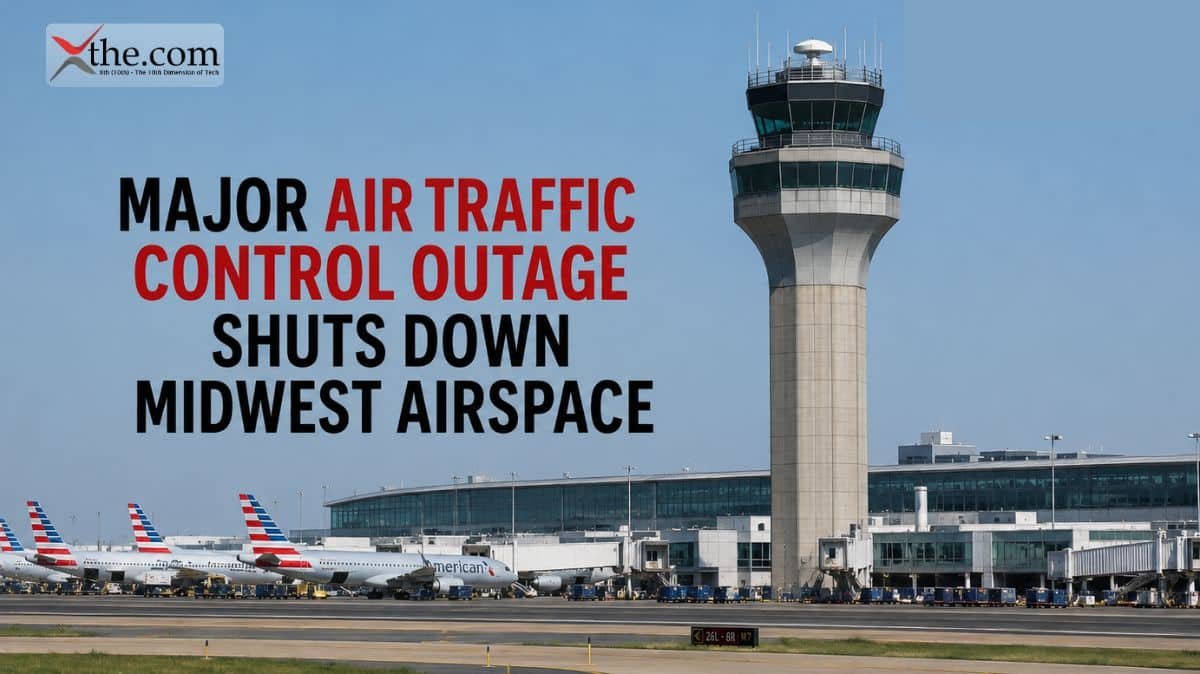
The Outage: What Happened
On August 6, 2026, a catastrophic failure at a Federal Aviation Administration (FAA) air traffic control facility triggered one of the most significant aviation disruptions in recent U.S. history. The facility, responsible for managing high-altitude air traffic across a massive swath of the American Midwest, experienced a complete loss of both radar and radio communications — effectively blinding controllers and rendering the airspace unsafe for travel.
The failure occurred without warning during peak afternoon hours, forcing the FAA to immediately halt all departures and arrivals within the affected region. Controllers reportedly lost primary radar returns, secondary surveillance radar (transponder data), and VHF radio contact with aircraft simultaneously — a triple-redundancy failure that suggests either a catastrophic power event or a coordinated systems malfunction.
Scope of the Shutdown
The affected facility manages airspace spanning approximately 330,000 square miles across nine Midwestern states. While the FAA has not publicly identified the specific facility, air traffic patterns suggest the outage centered on either the Chicago Air Route Traffic Control Center (ZAU) or the Kansas City Center (ZKC) — two of the busiest en-route facilities in the National Airspace System.
Affected States Likely Include:
- Illinois
- Indiana
- Iowa
- Kansas
- Michigan
- Minnesota
- Missouri
- Nebraska
- Wisconsin
The geographic scope meant that not only were flights within these states affected, but cross-country flights traversing Midwest airspace were forced to divert around the closed region — adding hundreds of miles and significant fuel costs to journeys between the East and West coasts.
Hundreds of Flights Grounded
The immediate impact on air travel was severe. Within hours of the outage, hundreds of flights were grounded nationwide as the FAA implemented a ground stop for all aircraft scheduled to enter the affected airspace.
Major hubs including Chicago O’Hare (ORD), Chicago Midway (MDW), Minneapolis-St. Paul (MSP), Kansas City (MCI), and St. Louis (STL) saw cascading delays and cancellations. Airlines including United, American, Delta, and Southwest scrambled to rebook passengers and reposition aircraft stranded outside the closed airspace.
Flight Impact Estimates:
Table
| Impact Category | Estimated Numbers |
| Flights Grounded | 400-600 |
| Passengers Affected | 50,000-80,000 |
| Average Delay | 3-6 hours |
| Cancellations | 150-250 |
The timing could not have been worse. August represents peak summer travel season, with load factors on many routes exceeding 90%. Rebooking options were limited, and many travelers faced multi-day delays as airlines struggled to absorb the displaced passengers.
FAA Response and Investigation
The FAA activated its contingency protocols within minutes of the failure. Aircraft already airborne within the affected airspace were guided to safe altitudes and handed off to adjacent facilities with functional radar coverage. Emergency services and military coordination channels remained operational throughout the incident.
Within hours, FAA Technical Operations teams were on-site attempting to restore primary systems. Backup radar feeds from adjacent facilities were brought online to provide limited coverage, and the agency began routing traffic through alternative corridors where capacity allowed.
The National Transportation Safety Board (NTSB) has opened a formal investigation into the root cause. Early speculation centers on three possibilities:
- Power Infrastructure Failure: A complete loss of utility power combined with generator malfunction
- Cybersecurity Incident: Though no evidence has emerged, the timing amid heightened cyber tensions has prompted scrutiny
- Aging Hardware: Many FAA facilities run on technology decades old, with known obsolescence risks
Passenger Impact and Delays
For travelers, the outage created chaos at airports across the Midwest and beyond. Social media flooded with reports of passengers stuck on tarmacs, missed connections, and customer service lines stretching for hours.
What Passengers Experienced:
- Onboard Delays: Aircraft already taxiing were returned to gates; some sat on tarmacs for 2-3 hours awaiting clearance
- Connection Misses: Passengers with tight connections at Chicago, Minneapolis, and Detroit missed onward flights to Europe and Asia
- Rebooking Nightmares: With flights already overbooked for peak season, rebooking options were scarce
- Hotel Shortages: Airlines issued hotel vouchers, but airport-area accommodations filled within hours
The financial impact on airlines is estimated in the tens of millions of dollars, including passenger compensation, crew overtime, and aircraft repositioning costs.
Previous ATC Outages and Systemic Concerns
This is not the first major ATC failure in recent years. In January 2023, a NOTAM (Notice to Air Missions) system outage grounded all flights nationwide for several hours. In 2024, multiple regional facilities experienced radar failures attributed to aging equipment.
The FAA’s NextGen modernization program, intended to replace 1950s-era radar with GPS-based surveillance, has been plagued by delays and cost overruns. Many facilities still rely on hardware that entered service during the Reagan administration. The Government Accountability Office (GAO) has repeatedly warned Congress that the ATC infrastructure faces “significant risk of catastrophic failure” without accelerated investment.
Systemic Issues:
- Average ATC Facility Age: 40+ years
- Hardware Obsolescence: 60% of systems no longer manufactured
- Cyber Vulnerabilities: Legacy systems not designed for modern threat landscape
- Staffing Shortages: 3,000+ controller vacancies nationwide
Political Reaction and Accountability
The outage has triggered immediate political fallout. Transportation Secretary Sean Duffy faced calls for resignation from some Democratic lawmakers, who accused the administration of prioritizing culture-war issues over critical infrastructure maintenance.
Senator Maria Cantwell (D-WA), chair of the Senate Commerce Committee, announced emergency hearings to examine FAA infrastructure funding and modernization timelines. “This outage didn’t happen in a vacuum,” Cantwell said. “It happened because Congress and multiple administrations failed to invest in the backbone of American aviation.”
The White House issued a statement pledging “full accountability” and directing the Department of Transportation to expedite a report on the incident within 30 days. President Trump, already facing criticism over the Iran war and economic headwinds, faces additional pressure to demonstrate competence on domestic infrastructure.
What Travelers Need to Know
If you are flying in the coming days, here is what you should know:
Check Your Flight Status: Airlines are still recovering. Verify your flight 24 hours before departure and again before leaving for the airport.
Arrive Early: Security lines may be longer than usual as airports process backed-up passengers.
Consider Alternatives: If your route passes through Midwest hubs, consider driving or taking the train for trips under 500 miles.
Know Your Rights: Under DOT regulations, airlines must refund your ticket if they cancel your flight, regardless of the reason. For significant delays, you may be entitled to compensation depending on the airline’s policy.
Travel Insurance: If you don’t have it, consider purchasing coverage for future trips. Standard policies typically cover ATC outages as “extraordinary circumstances.”
Frequently Asked Questions
Q: What caused the air traffic control outage? A: The FAA has not yet determined the root cause. Investigations are focusing on power infrastructure failure, potential cyber incidents, and aging hardware. A preliminary report is expected within 30 days.
Q: Which states were affected? A: The outage affected airspace across approximately 330,000 square miles spanning nine Midwestern states, including Illinois, Indiana, Iowa, Kansas, Michigan, Minnesota, Missouri, Nebraska, and Wisconsin.
Q: How many flights were canceled? A: Between 150-250 flights were canceled, with an additional 400-600 flights grounded or significantly delayed. An estimated 50,000-80,000 passengers were affected.
Q: Is it safe to fly now? A: Yes. The FAA has restored primary systems and adjacent facilities are providing backup coverage. However, residual delays are expected to continue for 24-48 hours.
Q: Will this happen again? A: Without significant infrastructure investment, aviation experts warn that similar outages are likely. The GAO has identified critical vulnerabilities in aging ATC systems nationwide.
External Sources:
- ABC News: https://abcnews.go.com/
- FAA: https://www.faa.gov/
- NTSB: https://www.ntsb.gov/
- PBS NewsHour: https://www.pbs.org/newshour/








