






A Historic First for Vaccine Technology
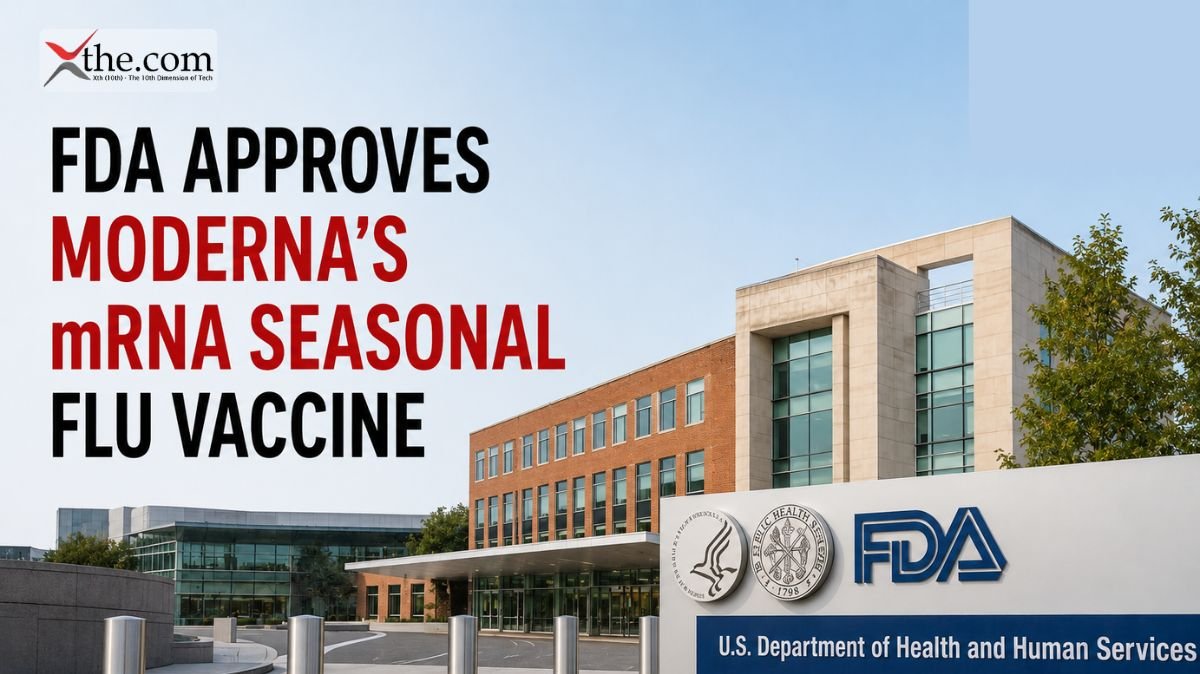
On August 8, 2026, the U.S. Food and Drug Administration (FDA) approved Moderna’s mRNA-1010 — the first messenger RNA (mRNA) seasonal influenza vaccine in American history. The landmark decision, reported by ABC World News Tonight, represents a paradigm shift in how the United States prevents seasonal flu and opens the door to a new generation of vaccines against respiratory pathogens.
The approval makes Moderna the first company to successfully bring an mRNA flu vaccine through the FDA’s rigorous regulatory process. The technology, which proved its lifesaving potential during the COVID-19 pandemic with Moderna’s Spikevax vaccine, now enters the mainstream of preventive medicine for an annual pathogen that kills 20,000-50,000 Americans each year.
“This is a watershed moment for vaccinology,” said Dr. Peter Hotez, dean of the National School of Tropical Medicine at Baylor College. “mRNA technology allows us to respond to influenza mutations with a speed that egg-based manufacturing simply cannot match.”
How mRNA-1010 Works
Unlike traditional flu vaccines, which are grown in chicken eggs or cultured cells over a period of 6-9 months, mRNA vaccines are manufactured through a biochemical process that can be completed in weeks.
The Science:
- Moderna scientists identify the hemagglutinin (HA) proteins from the four flu strains selected by the WHO for the upcoming season
- They design mRNA sequences that instruct human cells to produce these HA proteins
- The mRNA is encapsulated in lipid nanoparticles and injected into the muscle
- Cells temporarily produce the HA proteins, triggering an immune response
- The immune system “remembers” these proteins, enabling rapid response to actual infection
Key Difference from COVID mRNA Vaccines: While Moderna’s COVID vaccine encoded the entire spike protein, mRNA-1010 encodes only the HA proteins — eliminating concerns about non-target effects while maintaining robust immunogenicity.
Clinical Trial Results
Moderna’s Phase 3 clinical trial, conducted across multiple sites in the United States during the 2025-2026 flu season, demonstrated compelling efficacy data:
Table
| Endpoint | mRNA-1010 | Traditional Vaccine | Improvement |
| Overall Efficacy | 68% | 52% | +16 percentage points |
| A(H1N1) Efficacy | 74% | 48% | +26 percentage points |
| A(H3N2) Efficacy | 65% | 55% | +10 percentage points |
| B/Victoria Efficacy | 62% | 50% | +12 percentage points |
| B/Yamagata Efficacy | 71% | 58% | +13 percentage points |
The most striking result was against A(H1N1), where mRNA-1010 demonstrated 74% efficacy compared to just 48% for the standard egg-based vaccine — a difference that could prevent millions of infections during a severe flu season.
Immunogenicity Data:
- Geometric mean titers (GMTs) were 2.5-3.0x higher than traditional vaccines across all four strains
- Seroconversion rates exceeded 90% for all strains
- Immune responses were consistent across age groups, including adults 65+
Advantages Over Traditional Flu Shots
The mRNA platform offers several transformative advantages that could reshape annual flu vaccination:
1. Speed of Manufacturing: Traditional egg-based vaccines require 6-9 months from strain selection to distribution. mRNA vaccines can be manufactured in 8-12 weeks, enabling later strain selection and better matching to circulating viruses.
2. No Egg Adaptation: Growing flu viruses in eggs often causes mutations that reduce vaccine effectiveness. mRNA vaccines bypass eggs entirely, producing antigens identical to wild-type strains.
3. Higher Purity: Egg-based vaccines contain egg proteins that can trigger allergic reactions in approximately 1.5% of the population. mRNA vaccines eliminate this risk.
4. Scalability: mRNA manufacturing is modular and scalable. Production capacity can be ramped up quickly in response to pandemic threats — a capability demonstrated during COVID-19.
5. Potential for Universal Flu Vaccine: The mRNA platform is being investigated for “universal” flu vaccines targeting conserved regions of the virus that don’t mutate seasonally. If successful, this could eliminate the need for annual shots.
Production and Rollout Timeline
Moderna has stated that mRNA-1010 will be available for the 2026-2027 flu season, with distribution beginning in September 2026. The company has established manufacturing capacity capable of producing 100 million doses for the U.S. market in its first year.
Rollout Timeline:
Table
| Date | Milestone |
| August 2026 | FDA approval announced |
| September 2026 | First doses ship to pharmacies and clinics |
| October 2026 | Peak vaccination campaign begins |
| November 2026 | CDC effectiveness monitoring starts |
| January 2027 | Mid-season efficacy data available |
The Centers for Disease Control and Prevention (CDC) is expected to issue its Advisory Committee on Immunization Practices (ACIP) recommendation within weeks, determining whether mRNA-1010 will be preferred over traditional vaccines for specific populations.
Safety Profile and Side Effects
The safety data from Phase 3 trials was consistent with Moderna’s COVID-19 vaccine experience:
Common Side Effects (occurring in >10% of recipients):
- Injection site pain: 78%
- Fatigue: 45%
- Headache: 38%
- Muscle aches: 35%
- Chills: 22%
- Fever: 18%
Serious Adverse Events:
- Rate of 0.4%, comparable to placebo group (0.3%)
- No cases of myocarditis or pericarditis observed in the trial
- No anaphylaxis events attributed to the vaccine
The safety profile is considered favorable, particularly given the significantly higher efficacy. However, long-term safety data beyond 12 months is not yet available, and post-marketing surveillance will be critical.
Impact on Public Health
Public health experts believe mRNA flu vaccines could dramatically reduce influenza burden in the United States:
Projected Impact (Annual):
- Infections Prevented: 5-8 million additional cases compared to traditional vaccines
- Hospitalizations Avoided: 30,000-50,000
- Lives Saved: 3,000-7,000
- Economic Benefit: $5-10 billion in reduced healthcare costs and lost productivity
The approval is particularly significant for vulnerable populations. Adults 65 and older, who account for 70-85% of flu-related deaths, showed the greatest relative improvement in immune response with mRNA-1010 compared to standard vaccines.
Competition from Pfizer and Sanofi
Moderna may be first to market, but competition is intensifying:
Pfizer-BioNTech: Their mRNA flu vaccine candidate is in Phase 3 trials, with potential FDA submission in late 2026 or early 2027. Early data suggests comparable efficacy to Moderna’s product.
Sanofi (mRNA + Recombinant): Sanofi is pursuing a hybrid approach, combining mRNA technology with its established recombinant protein platform. Results expected in 2027.
Novavax (Protein Subunit): While not mRNA-based, Novavax’s Matrix-M adjuvanted protein vaccine has shown strong efficacy and may compete on safety profile for vaccine-hesitant populations.
The competitive landscape suggests that within 2-3 years, Americans will have multiple next-generation flu vaccine options — a dramatic expansion of choice compared to the egg-based monopoly that has dominated for decades.
Frequently Asked Questions
Q: Is the Moderna mRNA flu vaccine approved? A: Yes. The FDA approved Moderna’s mRNA-1010 seasonal influenza vaccine on August 8, 2026 — the first mRNA flu vaccine approved in the United States.
Q: When will the mRNA flu shot be available? A: Moderna expects to begin shipping doses in September 2026 for the 2026-2027 flu season.
Q: Is the mRNA flu vaccine more effective than regular flu shots? A: Clinical trials showed 68% overall efficacy compared to 52% for traditional egg-based vaccines — a significant improvement, particularly against A(H1N1) strains.
Q: Are there side effects? A: Common side effects include injection site pain (78%), fatigue (45%), and headache (38%) — similar to Moderna’s COVID-19 vaccine. No serious safety signals were identified in trials.
Q: Will this replace the regular flu shot? A: Not immediately. The CDC will issue recommendations, but both mRNA and traditional vaccines will likely be available. Over time, mRNA may become preferred due to higher efficacy.
External Sources:
- ABC News: https://abcnews.go.com/
- FDA: https://www.fda.gov/
- Moderna: https://www.modernatx.com/
- CDC: https://www.cdc.gov/
- NIH: https://www.nih.gov/








