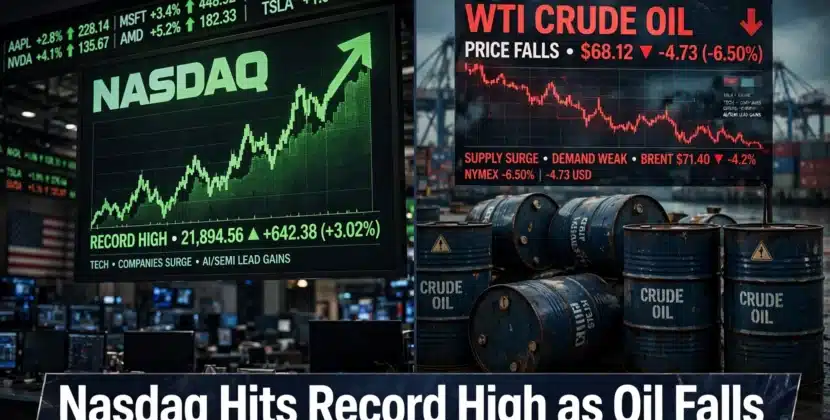






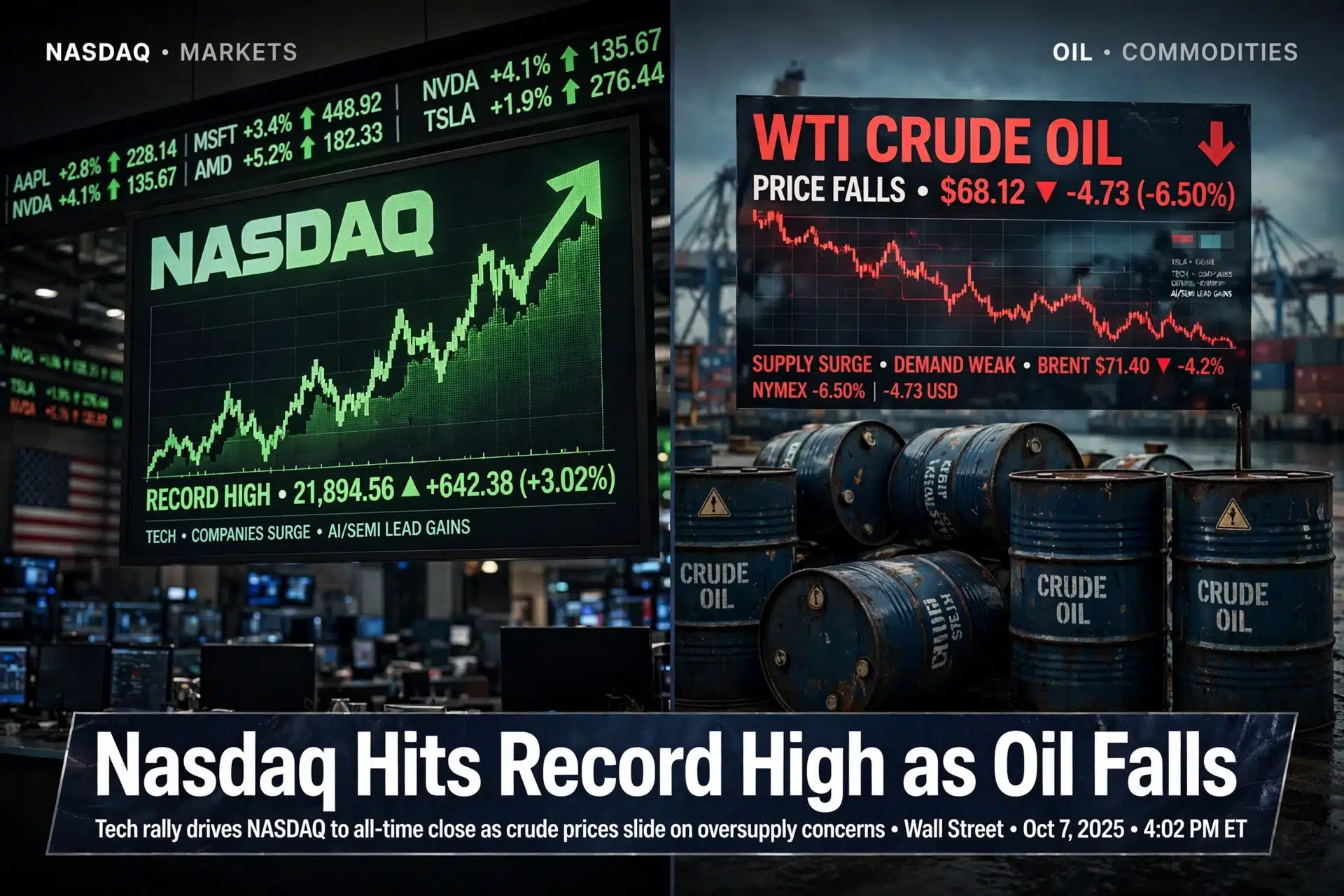
Nasdaq Closes at Record High as Falling Oil Prices Unlock a Wall Street Rally
Wall Street started the week with a bang. On Monday, September 21, 2026, the Nasdaq Composite surged roughly 2% to close at an all-time record, its first record close since June. The S&P 500 rallied sharply as well and finished not far behind its own record, while the Dow Jones Industrial Average climbed on the back of falling oil prices and renewed optimism around artificial intelligence stocks.
The rally was a striking reversal from the volatility that had defined recent weeks. For months, investors had been juggling three worries: rising bond yields, geopolitical risk in the Middle East, and jitters about whether AI spending could justify sky-high valuations. On Monday, all three pressures eased at once, and the result was the strongest single-day session in months. Here is a detailed breakdown of what happened, why it happened, and what it means for your portfolio.
What Drove the Stock Market Rally?
The single biggest catalyst was oil. Brent crude futures dipped below $100 a barrel to their lowest level since September 9 before settling around $100.34, a fall of more than 3% on the day. Crude had spiked above $100 in early September amid fighting in the Middle East and fears about Strait of Hormuz shipping, pushing gasoline prices higher and stoking inflation fears. A sharp drop in energy costs relieves pressure on consumers, airlines, trucking firms and manufacturers all at once, which investors read as a positive for corporate earnings.
The second driver was artificial intelligence. After weeks of hand-wringing about an AI bubble, mega-cap technology shares marched higher. AI-linked chipmakers and cloud providers led the advance, and Bitcoin climbed above $86,000, gaining 2.3% to notch a new all-time milestone of its own as risk appetite returned across markets.
Third, Treasury yields eased. Falling bond yields lift the present value of future corporate cash flows, which disproportionately benefits the growth and technology companies that dominate the Nasdaq. When oil, yields and AI sentiment all move in the market-friendly direction on the same day, powerful rallies like Monday’s become possible.
The Oil Price Connection Explained
Oil remains one of the most powerful short-term drivers of the stock market because energy costs ripple through almost every sector. When crude is expensive, consumers have less money to spend on everything else, input costs rise for airlines and manufacturers, and inflation expectations climb, which can force the Federal Reserve to keep interest rates higher for longer.
Conversely, when oil falls, those pressures reverse. On Monday, traders interpreted the drop below $100 as a signal that the worst-case scenarios for a prolonged Strait of Hormuz disruption were being priced out. Shipping statements from the region suggested shipments were moving more smoothly than feared, and that shift in expectations alone was enough to unlock billions of dollars in pent-up buying.
Which Sectors Led the Rally?
Technology and communication services were the clear leaders, consistent with the Nasdaq’s outsized gain. Semiconductor firms, data center operators and software platforms posted the biggest advances as AI optimism reignited. Energy stocks were the notable laggards, falling with the price of crude, while consumer discretionary and transportation names benefited from the prospect of cheaper fuel.
Bond-sensitive sectors such as utilities and real estate also performed well as yields declined. Overall market breadth was healthy, with advancing stocks outnumbering decliners by a wide margin, a sign that the rally was broad rather than concentrated in a handful of names.
What It Means for Everyday Investors
For retirement savers and retail investors, Monday’s record is a useful reminder that markets often climb a wall of worry. Despite war in the Middle East, elevated bond yields and constant AI skepticism, the Nasdaq still managed a new high. Historically, investors who stayed invested through periods of uncertainty captured the gains that nervous sellers missed.
That said, record highs can also invite caution. Strategists note that a market surging 2% in a single session on falling oil can reverse quickly if geopolitical headlines worsen or if a hot inflation report forces the Federal Reserve to adjust its outlook. Diversification, regular contributions and a time horizon that matches your goals remain the most reliable playbook regardless of what any single day brings.
What to Watch Next
Three factors will determine whether the record proves durable. First, the price of oil: a resumption of fighting or new shipping disruptions in the Middle East could send crude back above $100 quickly. Second, upcoming inflation data, which will show whether energy declines are filtering into consumer prices. Third, commentary from Federal Reserve officials, who have repeatedly said their decisions depend on the data.
Corporate earnings season also looms. If AI-related companies can demonstrate real revenue growth behind their capital spending, the rally has room to run. If not, the AI jitters that paused markets in recent weeks could return with force.
Frequently Asked Questions
Why did the Nasdaq hit a record high today?
The Nasdaq rose about 2% on September 21, 2026, driven by falling oil prices, declining Treasury yields and renewed optimism about artificial intelligence stocks.
How does falling oil help the stock market?
Cheaper oil reduces costs for consumers and businesses, eases inflation pressure and can allow interest rates to stay lower, all of which support corporate profits and stock valuations.
Is the stock market at an all-time high?
Yes. The Nasdaq Composite closed at an all-time record on September 21, 2026, and the S&P 500 finished close to its own record level.
Should I worry about buying at market highs?
Historically, long-term investors who continued regular contributions through record highs were rewarded over time. Your time horizon and diversification matter more than any single day’s level.