



Trump Announces Medicaid Drug Price Plan for All 50 States
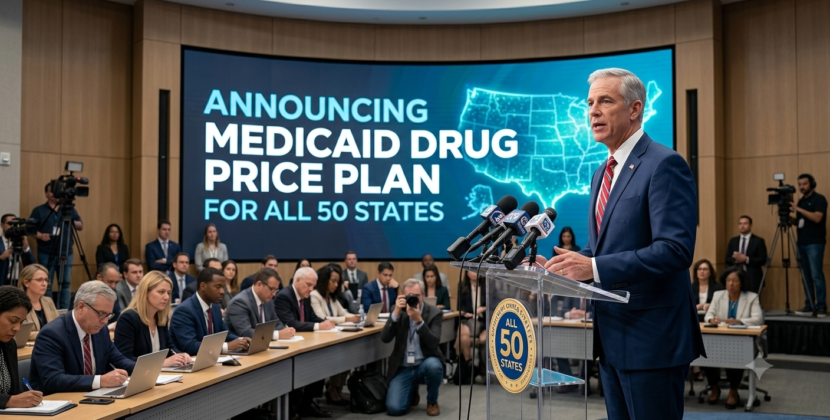
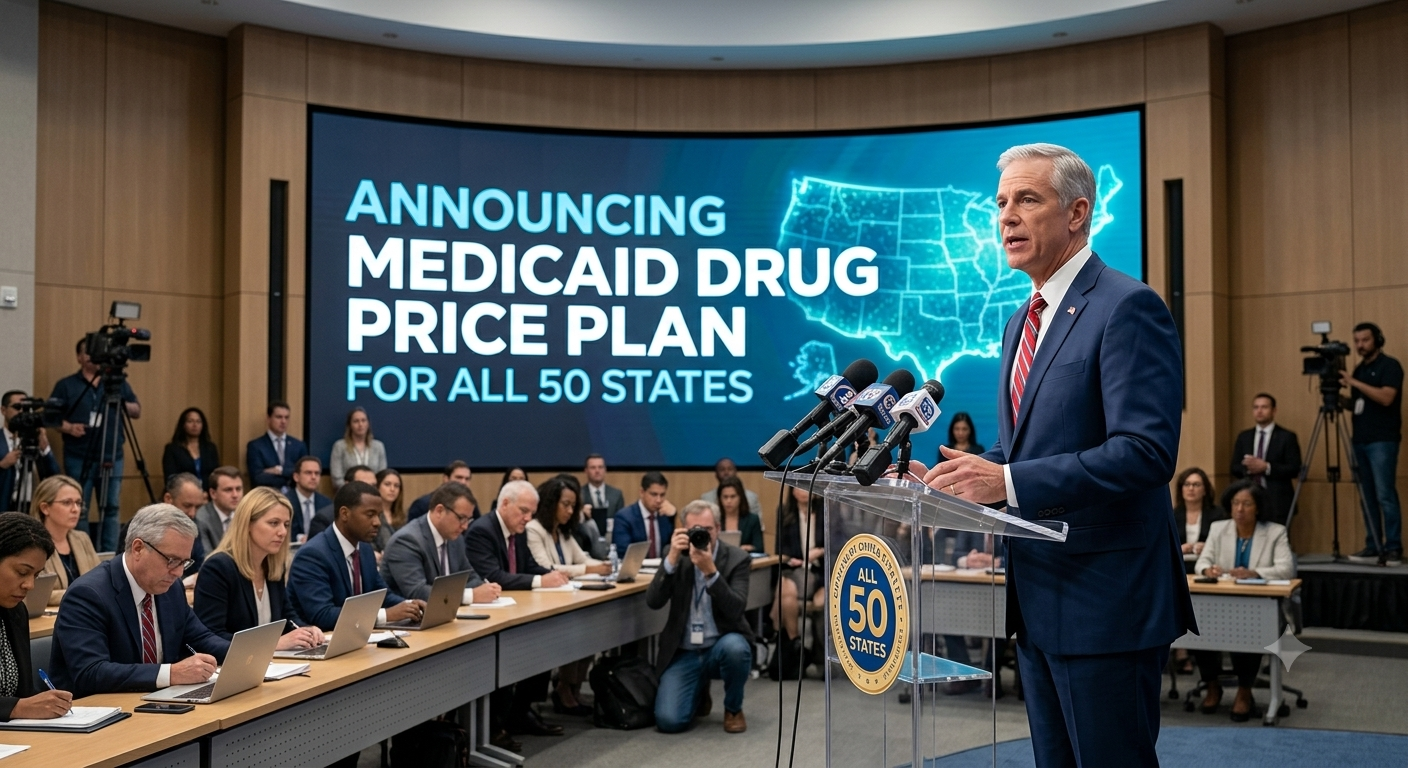
President Donald Trump announced on Friday that all 50 states, the District of Columbia, and Puerto Rico will participate in a new Medicaid drug pricing model that ties prescription drug costs to the lowest prices paid by other wealthy nations. The announcement, made from the White House, represents the most significant expansion of Trump’s Most Favored Nation pricing initiative since it was first introduced in May 2025.
What the Plan Contains
The new Medicaid pricing model, known internally as the Generous model, requires drug manufacturers to offer Medicaid programs the same prices they charge in countries like Canada, the United Kingdom, Germany, and Japan. The administration estimates that the program will save Medicaid an estimated $24 billion annually by reducing the cost of high-priced brand-name and generic drugs.
All 50 states have now signed on to the program, which is a remarkable achievement, Trump said during the announcement. For the first time, Americans on Medicaid will pay the same prices as people in other countries. No more getting ripped off.
The program applies to a specific list of high-cost drugs, including treatments for cancer, diabetes, heart disease, and autoimmune conditions. The Trump administration has said that the list will be expanded over time to include additional medications. The pricing model is part of a broader executive order that Trump signed in May 2025, titled Delivering Most-Favored-Nation Prescription Drug Pricing to American Patients.
How It Works
Under the Most Favored Nation model, drug manufacturers are required to offer their products to Medicaid at the lowest price available in a basket of comparable developed nations. If a company refuses to comply, it faces financial penalties and potential exclusion from the Medicaid program.
The Centers for Medicare and Medicaid Services (CMS) will administer the program and negotiate directly with manufacturers on behalf of state Medicaid programs. The agency has already begun reaching out to the 10 largest pharmaceutical companies to discuss implementation timelines and pricing agreements.
The Generous model represents a significant shift in how the U.S. government negotiates drug prices, said Dr. Peter Bach, director of the Center for Health Policy and Outcomes at Memorial Sloan Kettering Cancer Center. By tying U.S. prices to what other countries pay, the government is leveraging the purchasing power of the entire Medicaid system to drive down costs.
Reactions From the Pharmaceutical Industry
The pharmaceutical industry has responded to the announcement with a mixture of alarm and resignation. The Pharmaceutical Research and Manufacturers of America (PhRMA) released a statement expressing concern that the pricing model will reduce investment in research and development, potentially slowing the development of new treatments.
This policy will have devastating consequences for patients, said Stephen Ubl, president and CEO of PhRMA. When the government sets prices based on what other countries pay, it undermines the innovation ecosystem that has made the United States the world leader in medical research.
However, some analysts have argued that the impact on R&D may be overstated. A study published in the journal Health Affairs found that pharmaceutical companies typically spend more on marketing and stock buybacks than on research and development, suggesting that they could absorb lower prices without significantly cutting R&D budgets.
The bigger concern for the industry is the precedent. If the Most Favored Nation model proves successful in Medicaid, it could be expanded to Medicare and the commercial insurance market, which would have a far more dramatic impact on industry revenues.
What It Means for Patients
For the millions of Americans who rely on Medicaid for their healthcare, the announcement has been met with cautious optimism. High prescription drug costs are one of the biggest financial burdens for low-income Americans, and the new pricing model has the potential to make a significant difference.
I take three medications for my diabetes, and the cost has been going up every year, said Robert Chen, a 62-year-old Medicaid recipient in Cleveland, Ohio. If this actually lowers the price of my medications, it would be life-changing.
However, some patients and advocates have expressed skepticism about whether the savings will actually reach consumers. The history of drug pricing reform in the United States is littered with promises that were never fulfilled, and there are legitimate concerns about whether pharmaceutical companies will find ways to circumvent the new rules.
The Political Context
The announcement comes at a politically opportune time for Trump, who is seeking to burnish his healthcare credentials ahead of the 2026 midterm elections. Prescription drug pricing is consistently ranked as one of the top concerns for American voters, and the Medicaid pricing plan gives Trump a concrete policy achievement to point to on the campaign trail.
Democrats, who have long advocated for government negotiation of drug prices, have been put in a difficult position. While many support the concept of Most Favored Nation pricing, they are wary of giving Trump credit for a policy that they have been pushing for years. Some Democratic lawmakers have also raised concerns about the implementation timeline, arguing that the program will take too long to deliver benefits to patients.
What Comes Next
Implementation of the new pricing model will begin in phases over the next 12 months. The first phase will focus on the 50 highest-cost drugs in the Medicaid program, with additional medications being added in subsequent phases. The CMS has said it will provide regular updates on the progress of negotiations and savings achieved.
The success of the program will depend largely on the willingness of pharmaceutical companies to negotiate in good faith. If manufacturers refuse to comply, the government will need to decide whether to impose the financial penalties outlined in the executive order or seek alternative solutions.
For now, the announcement has injected a sense of optimism into the long and frustrating fight over drug pricing in the United States. Whether that optimism is justified will become clearer in the months ahead, as the details of the program are worked out and its impact on patients and the pharmaceutical industry becomes apparent.