





Supreme Court Clears Trump to Resume Rapid Third-Country Deportations Without Prior Notice
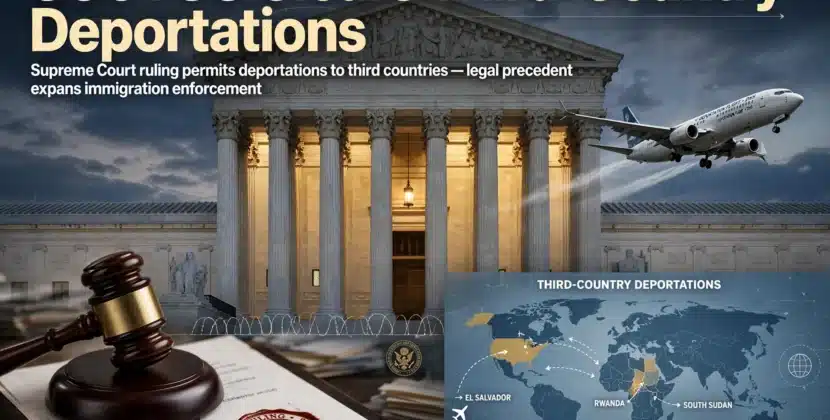
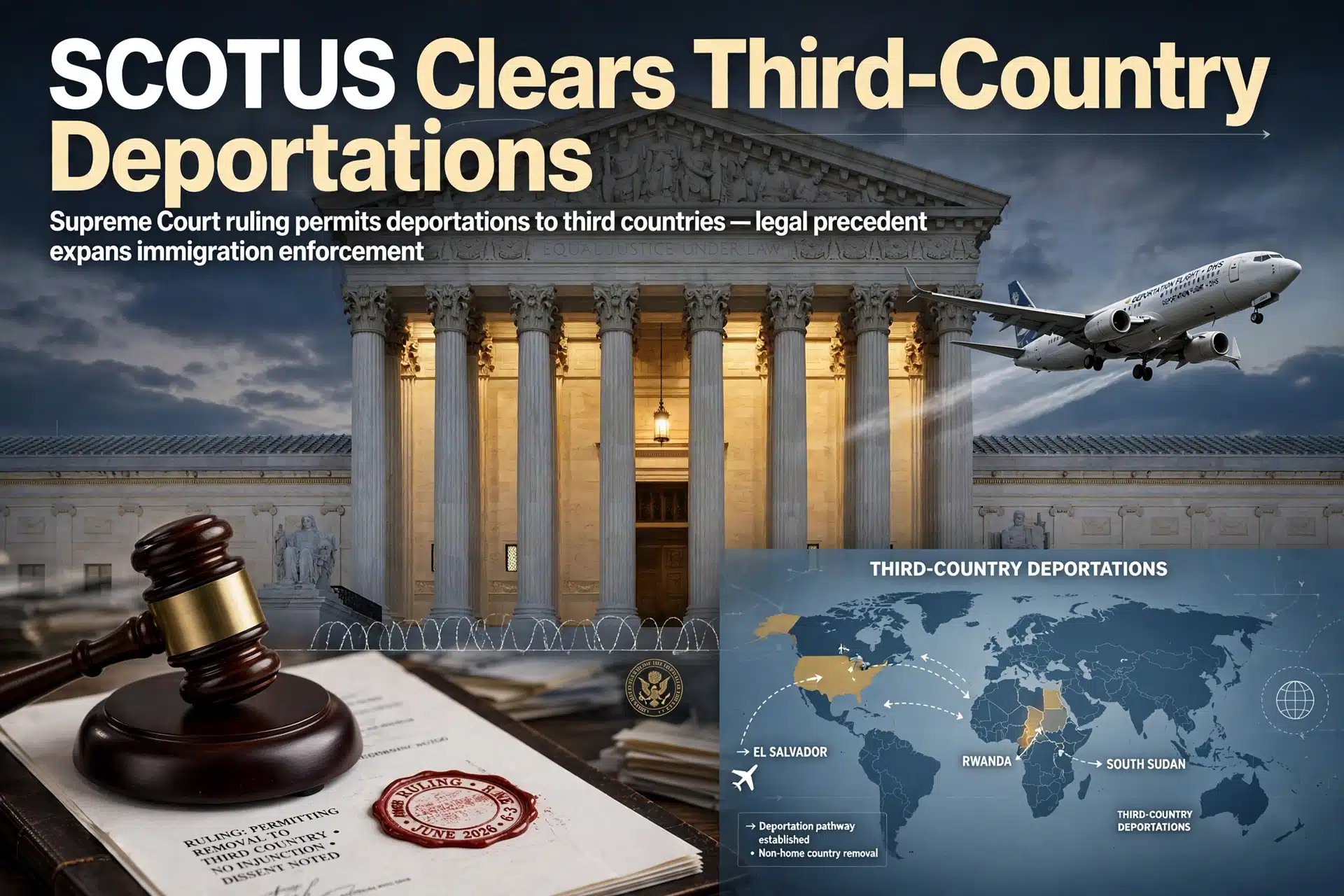
The Supreme Court on Tuesday removed the remaining legal obstacles to the Trump administration’s policy of deporting immigrants to third countries, ruling that the government may resume rapid removals of migrants to nations where they have no established ties, and may do so without giving advance notice. The decision, issued on a divided court, hands the White House a major victory in its escalating battle over the pace and reach of American immigration enforcement.
The ruling pauses a lower court order that had blocked the practice, allowing the program to operate while litigation continues. Immigrants and their advocates had asked the justices to leave that protection in place, arguing that people were being shipped to countries they had never heard of with no chance to object. Here is what the court decided, what it means for people facing removal and why the fight is far from over.
What the Supreme Court Decided
In its order, the court removed restrictions on the government’s contested policy of deporting immigrants to countries they are not from, clearing the administration to restart swift removals. The action came after the government asked the justices to freeze a lower court ruling that had required prior notice and a chance to be heard before someone is put on a flight to a third country.
The justices agreed, at least for now, and the practical effect was immediate: a program that had been paused by the courts could resume while the underlying case plays out. Because the decision was not a final ruling on the merits, immigration lawyers stressed that the legal fight continues, and the court itself is expected to hear fuller argument on the administration’s authority to conduct third-country removals.
What Third-Country Deportations Are and How They Work
Third-country removals, sometimes called third-country deportations, send people to a nation other than their home country, typically one that has agreed to accept them in exchange for diplomatic or financial considerations. The policy has been used most aggressively against immigrants whose home countries will not take them back or whose removal has been complicated by broken diplomatic ties.
Under the accelerated version at issue in court, removals can happen quickly, in some cases without the advance notice that immigration law normally provides. That speed is the core of the legal dispute: the administration argues that rapid removal is essential to enforcement, while opponents argue that skipping notice strips people of the ability to seek review of obviously erroneous decisions, including cases involving people who fear persecution.
Why the Lower Court Had Blocked the Policy
The trial-level order that the Supreme Court froze had found that deporting people without prior notice risked irreparable harm, particularly for asylum seekers who might be sent to a country where they know no one and have no protection. Advocates documented cases of migrants describing being transported to destinations they had never heard of, learning where they were going only after landing.
The appeals court had partially limited the program before the Supreme Court intervened, setting up the emergency pipeline of filings that produced Tuesday’s order. Immigrants then asked the justices to keep the protective ruling in place while the case proceeded; instead, the court sided with the government’s request to lift the restrictions.
Rights organizations argued that the order converts an administrative shortcut into a systemic risk. Without notice, they said, there is no moment in which a lawyer can catch a case of mistaken identity, a protected class of visa holder or a person with a pending asylum claim before the flight leaves. Government lawyers countered that the same courts that reviewed individual cases have repeatedly found the underlying program lawful, and that operational speed is precisely the point of the policy.
What the Ruling Means for Immigrants and Enforcement
For the administration, the decision restores a signature enforcement tool at a moment when removals are a central political issue heading into the midterm campaign. Officials argue that third-country arrangements are a lawful way to keep pressure on countries that refuse repatriation and that speed prevents people from disappearing into the interior before removal.
For immigrants, the ruling raises the stakes at every stage of the process. Practitioners are advising people in removal proceedings to appear at every hearing, keep addresses updated with the immigration court and consult a lawyer before signing any stipulated removal, because the window to challenge an error may be measured in hours rather than weeks. Legal aid organizations said demand for consultations spiked as news of the order spread.
The Fight Continues at the Supreme Court
Tuesday’s order is a procedural pause in an unfinished case rather than the last word. The justices signaled that they will hear fuller arguments on whether the executive branch can conduct third-country removals at this speed and scale, and the outcome will shape not only this policy but the boundaries of executive power over immigration generally.
Lower courts will continue collecting evidence on how the policy is carried out, including where deportees are sent and whether notice is ever given. Meanwhile, advocacy groups are preparing challenges on behalf of specific individuals, the route that has produced the most consequential limits on deportation policy in recent years. For now, the government holds the upper hand, but the underlying question of how fast and how far the US can deport is headed back before the justices.
Frequently Asked Questions
What did the Supreme Court rule about deportations?
The court removed obstacles to the Trump administration’s policy of rapidly deporting immigrants to third countries without prior notice, allowing the program to resume while litigation continues.
What is a third-country deportation?
It is the removal of an immigrant to a country other than their home nation, typically one that has agreed to accept them, rather than returning the person to their country of origin.
Does this ruling end the legal challenge?
No. The order is provisional, allowing the policy to operate during the case. The court is expected to hear fuller argument on the administration’s authority to conduct third-country removals.
What should immigrants do if they are in proceedings?
Attend every hearing, keep contact and address information current with the immigration court and speak with a qualified attorney before signing anything, because the window to contest an error can now be very short.