





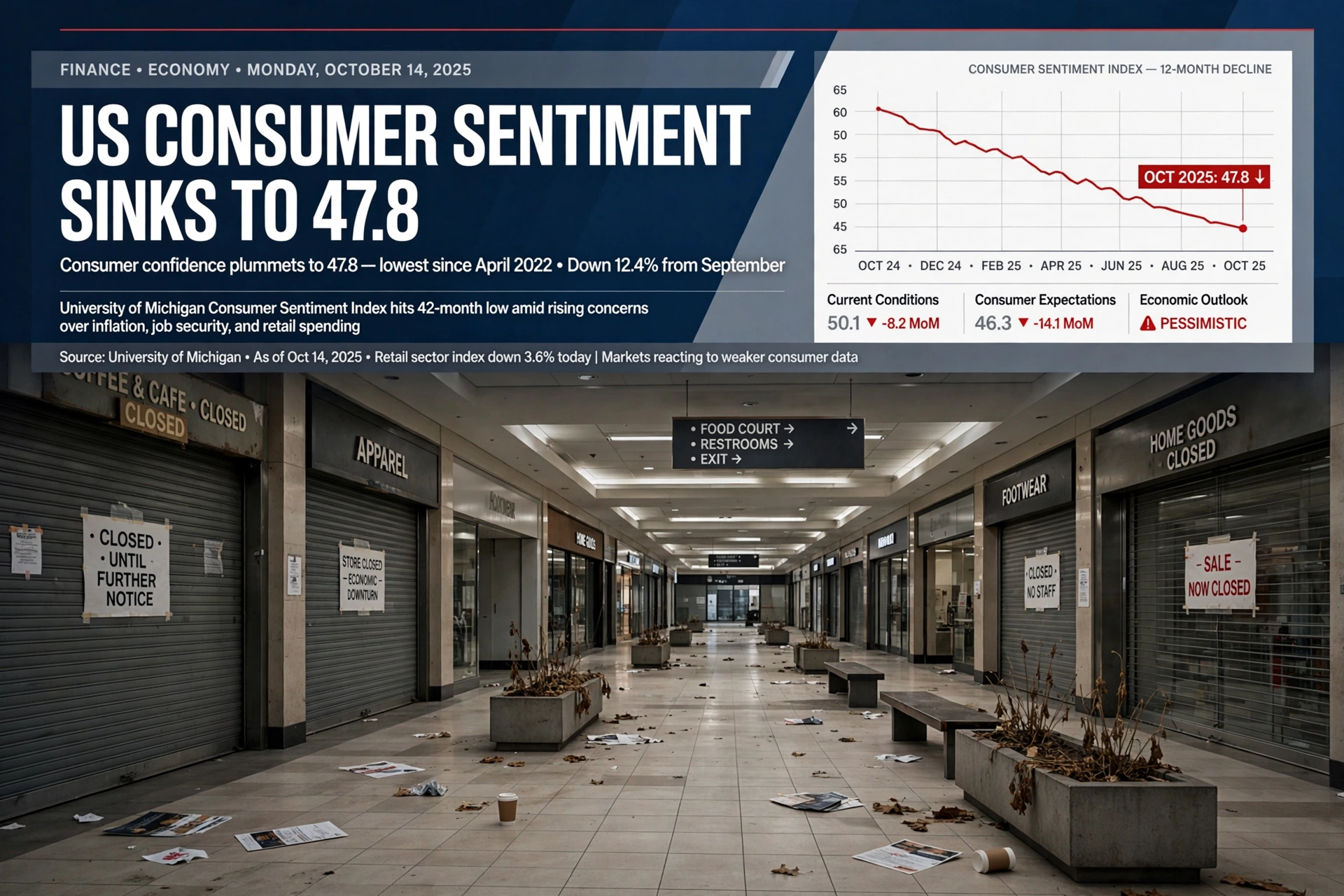
US Consumer Sentiment Sinks to 47.8, Second-Lowest Reading on Record, as Inflation Expectations Jump to 4.6%
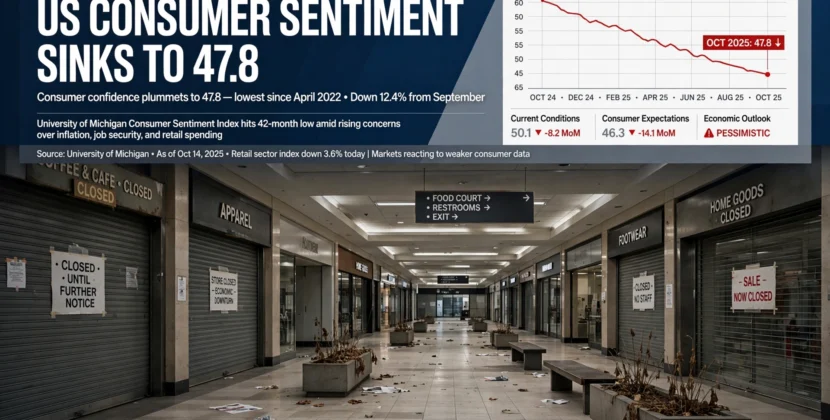
American consumers are losing confidence fast. The University of Michigan’s Survey of Consumers showed a headline sentiment reading of 47.8 in September, down 7.5 percent from August and off 13.2 percent from a year ago, the second-lowest level in a data series that stretches back to 1952. Only May’s collapse, when rising prices first jolted the outlook, has been worse.
Underneath the headline, the details were just as grim. One-year inflation expectations surged to 4.6 percent, up 0.6 percentage points and the highest since June, while the expectations component of the index tumbled 11.1 percent. The drop matters because sentiment is one of the sharpest leading indicators of household spending, and the reading landed days before the Federal Reserve raised interest rates for the first time in three years. Here is what drove the decline, why economists treat 4.6 percent inflation expectations as the real alarm and what it means for your wallet.
The Numbers Behind the 47.8 Reading
Joanne Hsu, director of the survey, said year-ahead expectations for both personal finances and business conditions plunged. “With a resurgence in fuel prices and trade tensions, consumers anticipate greater pressures on their pocketbooks to come,” she said. The current conditions index fell 1.9 percent from the prior month, but the forward-looking expectations measure dropped 11.1 percent, evidence that households are worried less about today than about the next twelve months.
Sentiment has now fallen two months in a row and sits roughly 15 percent below January’s level. Historically, readings this low have coincided with recessions or energy shocks, and economists watch the survey because it captures the mood behind the numbers: whether people feel secure enough to buy a car, book a trip or change jobs.
Why Inflation Expectations Jumped to 4.6%
Energy is the villain in this month’s report. Bureau of Labor Statistics data released the same day showed gasoline prices rose 3.9 percent in August and were up 27.4 percent from a year earlier, while fuel oil prices soared 10.1 percent and sat 52 percent higher annually. When fuel costs climb, they feed directly into transport and shipping prices, which show up in everything from groceries to delivery fees.
The broader inflation picture kept consumers on edge too. The consumer price index showed inflation running at 3.4 percent annually, far above the Federal Reserve’s 2 percent target, and trade tensions have kept supply chain costs unpredictable. Inflation expectations matter to economists because they can become self-fulfilling: if workers expect higher prices, they demand higher wages, which can keep prices rising.
The Fed’s First Rate Hike in Three Years
When the Michigan numbers landed, traders saw a Federal Reserve rate hike as a near certainty, with odds climbing past 85 percent. On September 16 the Fed delivered, raising its benchmark rate 25 basis points to a target range of 3.75 to 4.00 percent, the first increase since 2023, citing the need for a timelier drop in inflation. Projections showed officials expect one more hike before the end of the year.
The combination is a squeeze play on households. Sentiment is falling because prices feel out of control, and the cure, higher borrowing costs, is designed to cool demand. Mortgages, auto loans, credit card balances and new business borrowing all get more expensive when the policy rate climbs, so the same consumers reporting gloomier outlooks will see their monthly payments rise if they finance anything this fall.
What Consumers Are Likely to Do Next
Confidence this weak usually shows up in behavior. Expect households to trade down to cheaper brands, delay big-ticket purchases and lean harder on credit, which is already expensive. Retailers planning holiday inventory are watching the expectations index closely, because a 11.1 percent drop in forward confidence rarely leaves discretionary spending untouched.
The timing sharpens the squeeze. The drop arrives ahead of the midterm elections and the holiday shopping season, when households typically commit to travel, gifts and entertaining. Retailers spent the summer discounting to clear inventory, and a 4.6 percent expectation for prices a year out gives shoppers a reason to start lists earlier and hunt harder for deals. Economists also note that sentiment can recover quickly if fuel prices reverse, which is why energy markets, rather than Washington, remain the swing factor for how consumers feel by Thanksgiving.
Businesses hear the same signal. Companies exposed to consumer wallets, from restaurants to furniture and travel, tend to soften hiring plans when sentiment stalls near record lows. For investors, the read-through is that earnings estimates tied to strong consumer spending deserve scrutiny, while rate-sensitive sectors remain at the mercy of the Fed’s next move.
How to Protect Your Household Budget
Financial planners offer familiar advice that fits this moment. Lock or refinance variable-rate debt while evaluating whether the new Fed path justifies moving fixed, build a cash buffer covering several months of essentials, and revisit discretionary subscriptions before card balances compound at higher rates. Savvers actually benefit: yields on savings accounts, CDs and Treasury bills tend to track the policy rate higher.
It also pays to treat gas and grocery prices as a portfolio issue. Households that fixed major expenses, housing, insurance, utilities, when rates were lower are insulated from the worst of the shock, while those renewing leases or loans this fall should budget for the Fed’s projected 4.00 to 4.25 percent range by year end rather than hoping for cuts.
Frequently Asked Questions
What does a 47.8 consumer sentiment reading mean?
It is the University of Michigan’s headline index of how households feel about the economy and their finances. At 47.8, September’s reading is the second-lowest since the survey began in 1952, behind only May’s record low.
Why did consumer sentiment fall in September 2026?
Gasoline prices are up 27.4 percent from a year ago, overall inflation is running at 3.4 percent and trade tensions remain unresolved, pushing one-year inflation expectations up to 4.6 percent and household expectations down sharply.
How does the Fed rate hike affect me?
The September 16 hike lifted the benchmark rate to 3.75 to 4.00 percent, making mortgages, car loans and credit card debt more expensive, while raising the returns on savings accounts and certificates of deposit.
Will sentiment recover if inflation cools?
Historically, yes. Sentiment tends to rebound quickly once energy prices stabilize, but economists caution that expectations near 4.6 percent can persist and keep pressure on the Fed to hold rates higher for longer.