




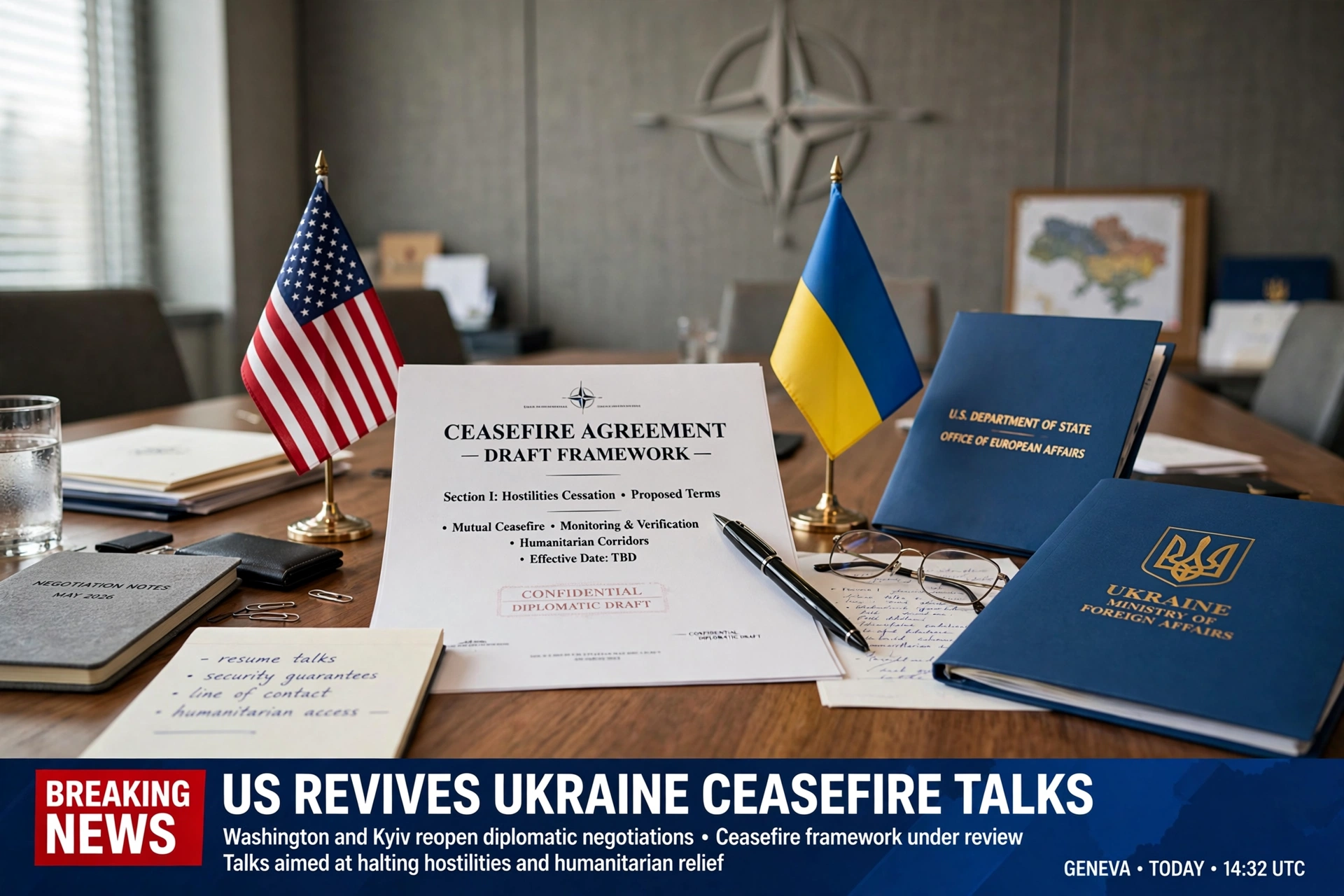
US Pushes to Revive Russia-Ukraine Ceasefire Talks as Russian Strikes Kill Seven in Kyiv
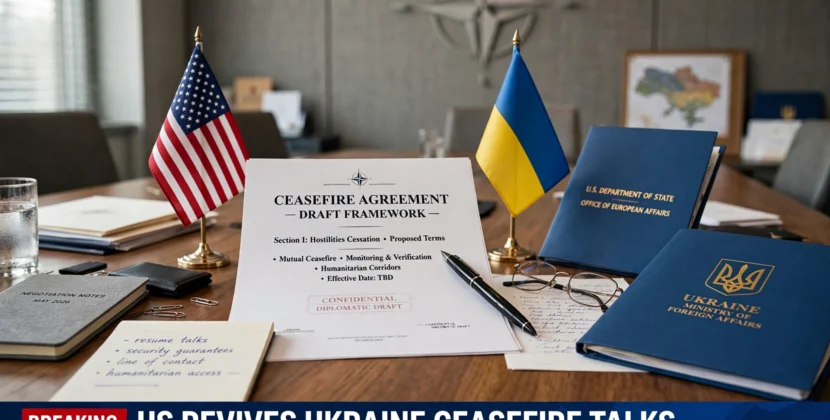
The United States is working to arrange a new round of talks to end the four-and-a-half-year Russia-Ukraine war, and on Friday both Kyiv and Moscow confirmed plans to relaunch a trilateral format, even as deadly attacks continued on the ground. The proposed meeting would be hosted by the United Arab Emirates and comes after earlier US-led efforts stalled amid Washington’s war with Iran.
The diplomacy and the bloodshed arrived the same day. Ukrainian officials said Russian strikes on Kyiv killed at least seven people, including a 14-year-old boy, and wounded 46 others, a reminder that neither side has paused attacks while officials discuss a ceasefire. Here is where the US Ukraine ceasefire talks stand, what each side wants and what a deal would actually require.
US Proposes Three-Way Talks, With the UAE as Host
“The American side has proposed meeting at a technical level in a three-way format,” Ukrainian President Volodymyr Zelenskyy told reporters Friday. “We are awaiting a proposal from the United States regarding the date, and the US has suggested the Emirates as a possible location.” The Kremlin confirmed later that a trilateral meeting could take place soon, though spokesman Dmitry Peskov said he had no details to add.
The push follows a month of shuttle diplomacy. Trump’s envoys, Steve Witkoff and Jared Kushner, visited Russia and Ukraine earlier in September to jump-start a ceasefire, and Russia’s presidential envoy Kirill Dmitriev met with Witkoff and Kushner in the United States on September 24, talks Peskov described as focused on potential economic cooperation. Zelenskyy said he also urged Trump to press China’s Xi Jinping to use his influence in Moscow.
Where Putin Stands on a Deal
Russian President Vladimir Putin said Friday that all proposals for a deal to end the fighting remained on the table, but that Moscow still needed to assess what was in its best interest. He said Russia was ready to resume negotiations with Kyiv after last week’s Russian parliamentary elections, but accused Ukraine of launching attacks on Moscow and striking polling stations during the vote.
Putin’s rhetoric left little room for compromise in the short term. “They should therefore be made to feel Russia’s retaliatory strikes,” he said, arguing that provocative actions would not secure a result. Moscow continues to demand that Ukraine cede occupied territory, demilitarize and abandon its ambitions to join NATO, conditions Ukraine has rejected as a surrender.
The War Rages On: Drones, Strikes and a Shuttered Steel Plant
While diplomats exchanged statements, the air war intensified. Ukraine’s air force said it shot down 267 of 295 drones launched by Russia overnight, one of the largest barrages of the month. Kyiv Mayor Vitali Klitschko said seven people were killed and 46 wounded in strikes on the capital, while Odesa Governor Oleh Kiper reported one death in massive attacks on residential areas and postal logistics facilities.
Economic damage mounted alongside the human cost. Steelmaker ArcelorMittal said it was shutting down production at Ukraine’s largest steel plant after four strikes in five weeks caused extensive damage and killed five workers. Russia, in turn, reported drone attacks damaging the Novoshakhtinsk oil refinery and strikes across Rostov, Perm and Voronezh, while Ukraine claimed fresh hits on refineries in Moscow, Yaroslavl, Bashkortostan and Samara regions.
Behind the diplomacy, both armies are still trying to improve their bargaining positions. Ukraine’s deep strikes on Russian energy infrastructure are aimed squarely at Moscow’s wartime economy, while Russia’s mass drone attacks are designed to drain Ukrainian air defenses and wear down civilian morale before any ceasefire freezes the line of contact. Military analysts caution that this pattern, escalate to negotiate, has repeated itself all year, with each pause in talks followed by a larger barrage. That is why officials on both sides are discussing dates and venues while simultaneously promising more strikes, and why previous ceasefires never held past the first serious test.
Why Earlier Peace Efforts Stalled
Negotiations that began earlier this year petered out as Washington’s war with Iran consumed diplomatic bandwidth and military resources. Analysts at the Institute for the Study of War assessed that Russian officials effectively rejected a proposed limited energy ceasefire, reiterating an unwillingness to engage in meaningful negotiations, a pattern that has defined the conflict’s many pauses.
The United States has also faced criticism for a stance critics say has favored Russia’s narrative by centering territorial concessions. Any revived trilateral format will therefore be judged on a basic test: whether it produces a sequence of talks that survives contact with the battlefield, something no round since the war began has managed.
What a Ceasefire Would Mean for the US and Europe
For Americans, the stakes are practical as well as moral. A durable ceasefire would ease energy and grain market pressure that has kept food and fuel prices volatile, reduce the military spending burden on NATO allies and shrink the risk of a direct clash between Russia and the alliance. It would also signal that US diplomacy can deliver outcomes at a moment when Washington is managing conflicts on several fronts at once.
Skeptics note that a technical-level meeting is a long way from a ceasefire, and that both armies are still maneuvering for leverage. The realistic near-term outcome is incremental: a date, a location, a framework, and then weeks of argument over monitors, borders and security guarantees while the drones keep flying.
Frequently Asked Questions
Where will the new Ukraine ceasefire talks be held?
The United Arab Emirates has been proposed by the United States as the host location for the trilateral talks, though the date and final venue are still awaiting confirmation from Washington.
What is a trilateral format in the Ukraine war?
It means three parties at the table: the United States mediating between Ukraine and Russia, a shift from earlier two-sided negotiations and part of the Trump administration’s effort to restart diplomacy.
Why did previous Ukraine peace efforts fail?
Earlier rounds stalled as the US war with Iran diverted attention, while Russia kept demanding territorial concessions, demilitarization and a ban on NATO membership that Ukraine refuses to accept.
Has the fighting stopped during the talks?
No. The same day the talks were confirmed, Russian strikes on Kyiv killed seven people including a teenager, and both sides launched hundreds of drones and missiles over the weekend.