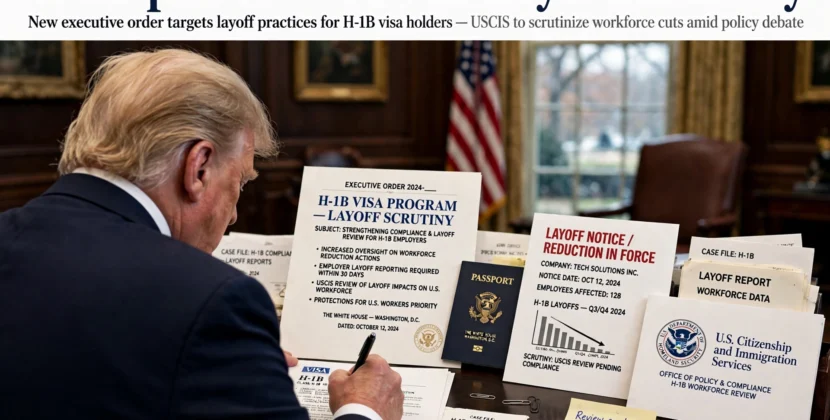




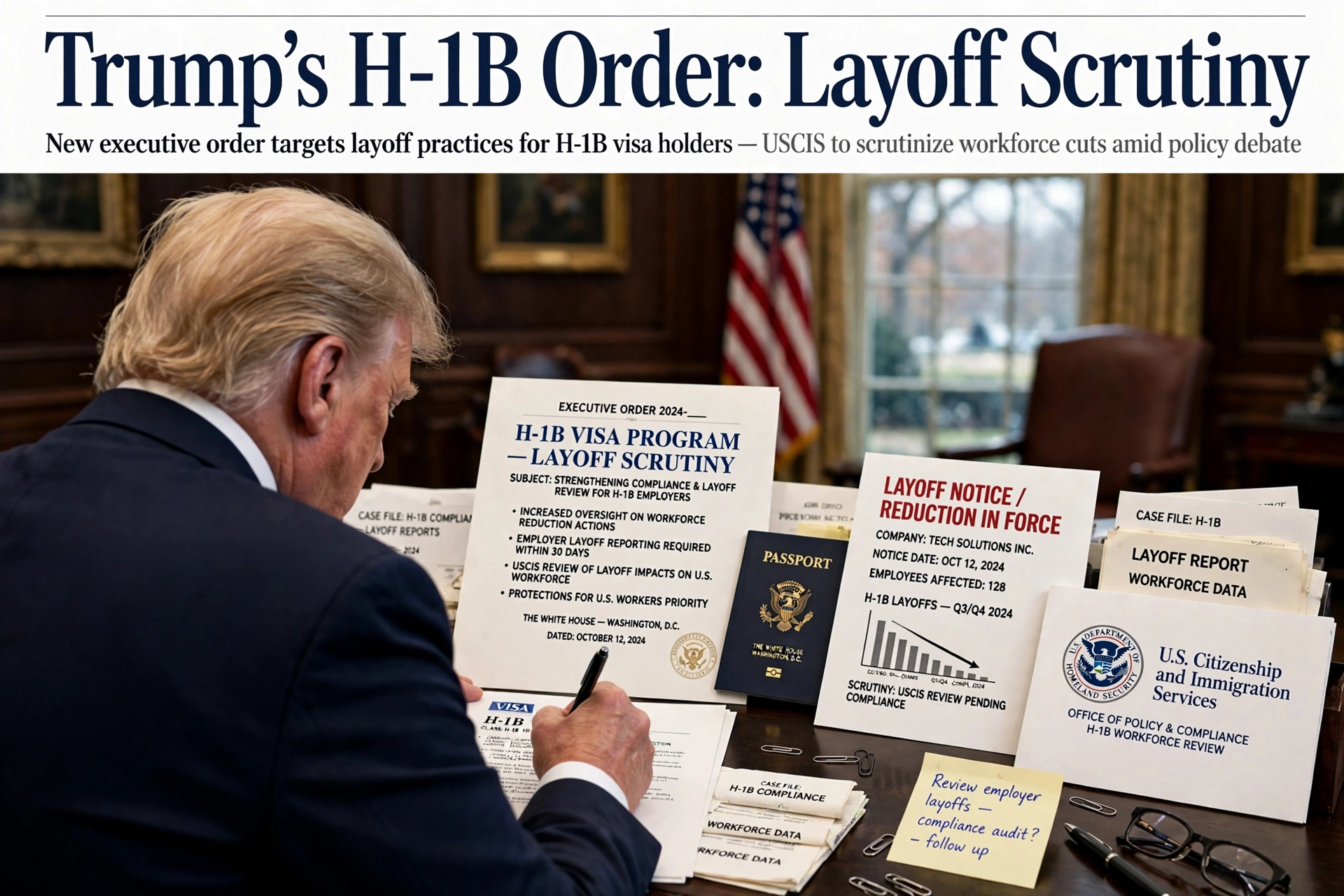
Trump Signs H-1B Executive Order Forcing Agencies to Weigh Employer Layoffs in Every Visa Decision
President Donald Trump signed an executive order on September 18 that directs the Departments of Homeland Security, Labor and State to consider whether an employer has laid off workers, or plans to, when they adjudicate H-1B petitions, labor condition applications, visa applications and even requests to enter the United States. The order, titled Enhancing Program Integrity and Interagency Coordination in the Administration of the H-1B Nonimmigrant Visa Program, marks the sharpest tightening of the H-1B process since the program’s fee reforms began last year.
For the tech workers and employers who depend on the visa, the message is blunt: your company’s layoff history is now part of your immigration file. Immigration lawyers say the practical effect will be higher scrutiny of offers, wages and job duties, plus a wave of audits reaching back at filings already submitted. Here is what the Trump H-1B executive order layoffs policy actually requires and how to prepare.
What the Executive Order Requires
The order tells the three agencies to consider whether a sponsoring employer laid off employees, directly or indirectly, within the previous year, or plans future layoffs that negatively affect the employment of similarly situated US workers, when adjudicating H-1B-related applications. It also directs officials to consult a broad range of federal economic data when making those decisions.
That sweep is the novelty. Previously, only employers classified as H-1B dependent, or those found to have willfully violated program rules, had to attest that they had not replaced a laid-off US worker with an H-1B worker in an equivalent job within 90 days before or after filing. The order pushes layoff considerations into every petition, for every employer, including ordinary tech firms hiring a single specialized engineer.
Higher Scrutiny for Wages, Duties and Job Requirements
Because implementation guidance has not been published, the immediate question is how the agencies will operationalize the order. Fragomen, one of the largest immigration firms in the world, told clients it expects higher scrutiny of H-1B filings and increased enforcement activity. Lawyers point to one already-visible lever: USCIS recently expanded job requirement disclosures on the H-1B petition, giving adjudicators more detail to challenge whether a role is genuinely specialized.
Economic data could tighten things further. If agencies weigh local labor market conditions, employers may need to document recruitment efforts and justify salaries against regional benchmarks before a petition is approved. Companies that simultaneously announce layoffs while filing new H-1B petitions should expect the two facts to be read together.
The Department of Labor Is Auditing Past Filings
The order specifically instructs the Labor Department to review already-submitted labor condition applications for compliance, a step that could trigger investigations under Project Firewall, the agency’s initiative announced last year. Project Firewall lets investigators open cases based on credible information about possible violations even when no outside complaint has been filed, reviving enforcement tools that had gone largely unused.
For employers, that means exposure is retrospective. LCAs filed months or years ago, which certify prevailing wages and working conditions, fall inside the review window. Penalties for violations include back wages, civil fines and debarment from the program, so immigration counsel is advising companies to audit their own LCA records now rather than wait for a notice.
Already, some employers are adjusting their sequencing. Companies weighing reductions are being told to time severance announcements and petition filings carefully, because a layoff disclosed one week and a new H-1B sponsorship the next is exactly the pattern the order asks agencies to find. Workers outside the United States face additional risk, since the order reaches visa applications and requests for admission at the border, meaning a previously approved petition no longer guarantees smooth consular processing. Lawyers say clients with interviews scheduled in the coming weeks should be ready for questions about their employer’s workforce trends.
The $100,000 H-1B Fee Question Still Hangs Overhead
The layoffs order lands alongside the administration’s separate policy requiring a $100,000 payment for certain H-1B petitions covering workers outside the United States. Trump extended that policy for another year, through September 21, 2027, but the fee remains blocked by the courts and is not currently being collected. A federal judge struck the policy down in June, and an appeals court declined to reinstate it while the government’s appeal continues.
The net effect is a two-front squeeze: courts have slowed the fee, while the executive order has turned up scrutiny of the people and companies behind each filing. Employers should plan for both outcomes, because either could be in force by the next cap season, when registration for the 2027 lottery opens in March.
What H-1B Workers and Employers Should Do Now
Immigration attorneys are recommending a short checklist. Employers should map any workforce reductions from the past year against pending petitions, refresh LCA and public access file documentation, and prepare written justifications for role specialty and wage levels. Workers should avoid job changes that reset filing clocks without counsel, keep pay stubs and role descriptions organized, and ask employers whether any reduction in force touches their petition.
Finally, watch for agency guidance, which is expected within weeks. Until the agencies spell out how layoffs are weighed, outcomes will be inconsistent, which makes early preparation the cheapest insurance available.
Frequently Asked Questions
What does the new H-1B executive order change?
Signed September 18, 2026, it orders the Departments of Homeland Security, Labor and State to consider an employer’s layoffs in the past year, or planned future layoffs, when deciding H-1B petitions, labor condition applications, visa applications and entry requests.
Will my H-1B be denied because my company laid off workers?
No automatic denial is defined. The order requires layoffs to be weighed alongside federal economic data, so petitions from employers with recent cuts may face tougher review of wages and job duties, but final guidance is still pending.
Is the $100,000 H-1B fee in effect right now?
No. The policy was extended through September 21, 2027, but courts blocked it, an appeals court declined to reinstate it during the government’s appeal, and the payment is not currently being collected.
What is Project Firewall and how does it affect H-1B employers?
Project Firewall lets the Department of Labor investigate suspected labor condition application violations based on credible information without needing an outside complaint. The new order directs the agency to review filings already submitted, expanding that audit reach.