





Cupertino, California
On Monday, June 23, a base Mac Studio M3 Ultra costs $3,999. By Thursday, June 26, the same model was $5,299. There was no new chip, no new screen, and no faster SSD. The exact same machine was $1,300 more expensive in just 72 hours. This is the Apple MacBook price increase 2026 at its most dramatic, and it is not a minor adjustment. It is the most significant price hike Apple has made in decades, and the reason lies in every AI server farm from Virginia to Singapore.
The industry calls the Apple Mac price hike memory chip crisis “RAM-ageddon.” Despite the dramatic name, the situation is simple. High-bandwidth memory, or HBM, which is the dense and fast DRAM used in AI accelerators, is now extremely scarce in consumer electronics. In 2026, AI data centers are using about 70 percent of the world’s high-end DRAM supply. That means there is less available for laptops, tablets, and desktops that people and businesses rely on.
What Tim Cook Said—and What It Means
Apple CEO Tim Cook addressed the issue directly. He described it as a “hundred-year flood” for memory and storage costs, telling The Wall Street Journal, “I’ve never seen anything like it in any area in over 40 years.” This is significant, coming from someone who has managed Apple’s supply chain through events such as the tsunami in Japan, COVID lockdowns in Zhengzhou, and US-China trade skirmishes. The Tim Cook memory-cost warning carries weight precisely because Apple has historically absorbed component shocks rather than passing them on to customers.
Apple explained, “We’ve never seen component prices rise this much or this quickly. Until now, we have protected our customers from these increases, but we have now reached a point where we need to begin raising prices.” The words “need to begin” matter. They do not mean prices have already peaked. Instead, they suggest that more price increases could be coming.
The numbers explain why this is happening. TrendForce reports that DRAM contract prices jumped about 90 percent in the first quarter of 2026 and another 60 percent in the second quarter. Memory and storage now cost about four times as much as they did less than a year ago. The Apple DRAM shortage 2026 is not a supply chain blip. Micron CEO Sanjay Mehrotra expects these tight conditions to last beyond 2027, saying the company does not currently have “line of sight as to when memory supply will be able to catch up with increasing demand.”
The Specific Models Hit Hardest
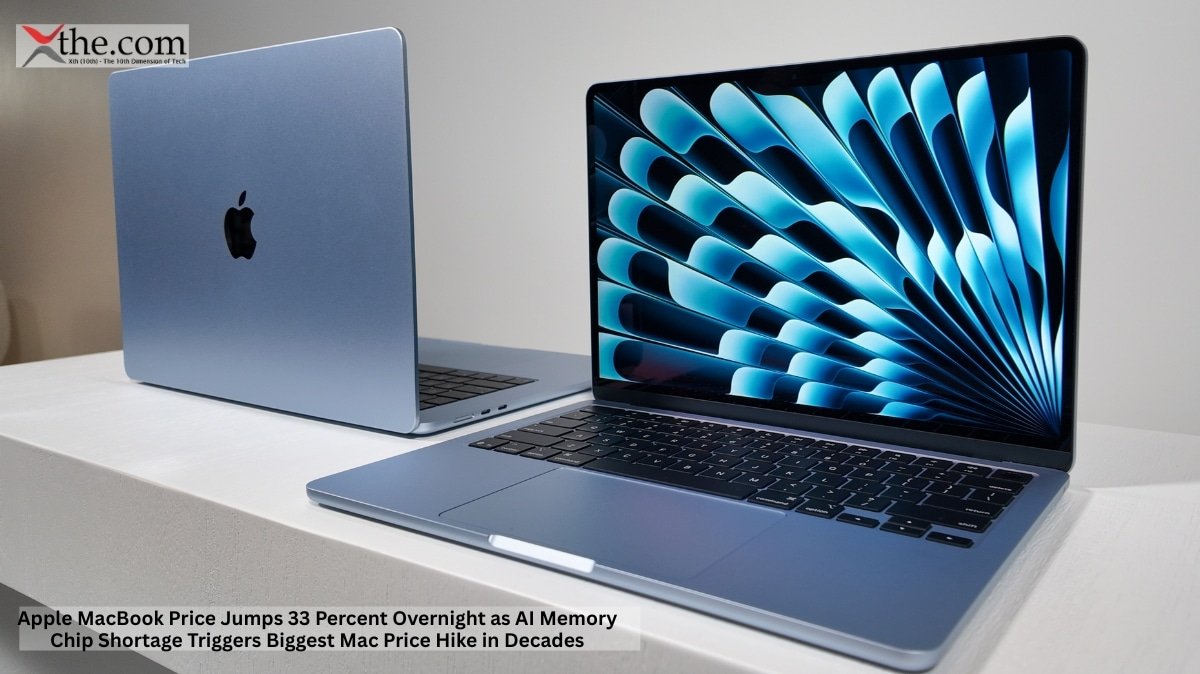
The Apple Mac Studio new price jump from $3,999 to $5,299 is the biggest single increase, at 33 percent overnight, but it is not the only one. The base MacBook Air with 512 gigabytes now costs $1,299, up from $1,099. The entry-level MacBook Pro with 1 TB of storage went from $1,699 to $1,999. The MacBook Neo, Apple’s budget laptop released in March, rose from $599 to $699. If you customize your device with more memory, the price can go up by several hundred dollars at checkout.
The trend is clear: devices that need more memory have seen bigger price increases. For now, the iPhone, Apple Watch, and AirPods are not affected. These products use less DRAM per unit, and Apple seems to be protecting its most popular and profitable category ahead of the iPhone 18 launch in September. Analysts think the memory shortage could add about $200 in component costs for each new iPhone, especially for models with more storage.
Microsoft’s Xbox Confirms the Pattern
Apple is not the only company raising prices. On the same day, Microsoft said it would increase the price of its Xbox game console by $100 to $150, depending on the version, and would stop selling Xbox consoles with two terabytes of memory, its top configuration. Valve’s Steam Machine launched at $1,919 for its two-terabyte model, which was higher than planned due to RAM costs. When companies like Apple, Microsoft, and Valve all make similar pricing moves in the same week for the same reason, it shows the problem is structural, not just a temporary cycle.
Deutsche Bank analysts framed it plainly: “The production of memory chips is becoming a zero-sum game. For every wafer devoted to HBM stacks for AI servers, others are unavailable for smartphones, PCs, or vehicles.”
Apple Stock Drops 6 Percent—What the Market Is Saying
Apple’s stock dropped 6.12 percent to close at $275.15 on June 25, 2026—its worst single day since April 2025. The Apple stock drops 6 percent, a reaction that shows a specific investor worry: Apple almost never raises prices mid-cycle. Doing so signals that cost absorption has hit a ceiling. Evercore ISI analyst Amit Daryanani said, “price hikes between product cycles are extremely unusual for Apple and raise the risk of some pressure on demand for Macs and iPads.”
On the other hand, some investors point to Apple’s latest quarterly results as an indication of strength. In Q2 2026, Apple’s revenue grew 17 percent year-over-year to $111.2 billion, with a gross margin of 49.3 percent. Customers who paid 22 percent more for iPhones last quarter are unlikely to leave the Mac ecosystem over a $200 price increase. Wall Street analysts have a consensus price target of $314.42, with 30 Buy ratings. The 6 percent drop could be a buying opportunity, or it might be the start of a longer decline in demand. The July 30 earnings call will be the first real test.
Buy Now or Wait? A Practical Analysis for MacBook Buy Now or Wait 2026
This is the main question for executives, small business owners, and power users who need to decide whether to buy now. The answer depends on your needs, but for most people, it now makes sense to buy sooner rather than later.
The case for buying now: Micron does not expect the shortage to ease until 2027, and while prices could drop if the memory market stabilizes, Micron does not see that happening soon. Apple’s statement that they “need to begin raising prices” implies that current prices are the lowest we will see for a while. Waiting six months will probably not bring lower prices; it is more likely to mean another round of increases, especially if the iPhone 18 passes on the next wave of higher costs.
The three-year total cost-of-ownership argument: Consider a knowledge worker or small-business team using a Mac Studio M3 Ultra at the new $5,299 price point instead of paying for cloud AI subscriptions. A team of five paying $40 per user each month for a premium AI assistant would spend $2,400 a year, or $7,200 over three years. The Mac Studio, even at the higher price, can run AI tasks locally at no extra cost per use, keeps sensitive data off the cloud, and still has value after three years. Over that time, owning the device can save money and protect privacy for data-heavy work, even with the price increase.
The case for waiting: If your current machine is functional and you can defer purchase until late 2027, new fab capacity from Micron’s Idaho and New York expansions may begin to relieve supply pressure. The risk is that you are waiting on a timeline defined by semiconductor construction schedules, which are inherently unpredictable.
For most people who need a machine now, the “Apple MacBook Mac price increase 33 percent memory chip shortage AI data center demand June 2026 is a reset, not a temporary change. The days of lower prices are over.
The More Profound Structural Question
The why Apple MacBook iPad prices went up overnight June 2026, and whether to buy now or wait, has a simple answer on the surface: memory costs. But there is more to it. Back in 2023, no one expected AI data centers would use 70 percent of the world’s high-end DRAM by 2026. The chip shortage was not caused by any one company; it resulted from years of AI research and a huge surge in investment during 2024 and 2025.
What has changed for good is Apple’s place in the memory market. For years, Apple’s size gave it power over suppliers. Now, Apple is in talks with Intel about making custom chips and may shift some production away from TSMC as it looks for new supply options. This process will take years. In the meantime, Apple’s prices reflect a new balance set by the world’s biggest AI companies, not by Apple itself.
People who buy this month pay today’s prices. Those who wait are betting on a memory market that Micron, Deutsche Bank, and Apple’s CEO all say will be tight until at least 2028. That is a long time to wait for a price drop that might never come.
Source: Apple’s Mac Price Hike: $5,299 Local AI vs the Cloud