





Austin, Texas
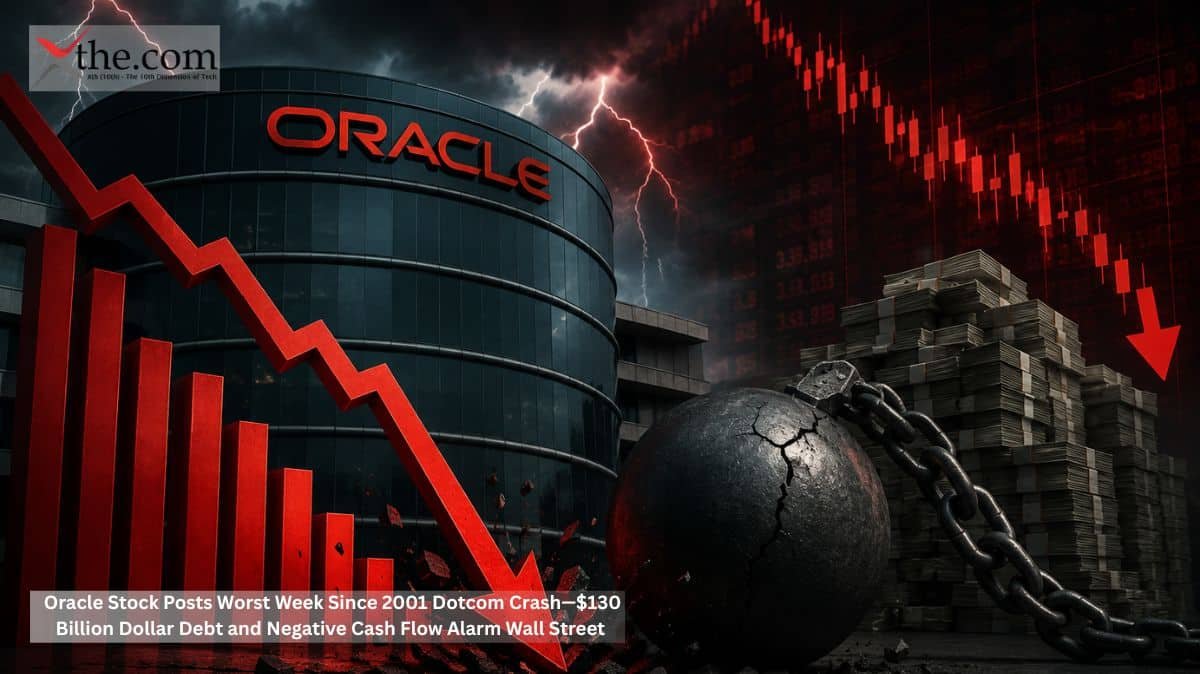
On one Friday afternoon in June 2026, Oracle shareholders saw about $80 billion in market capitalization to evaporate. The Oracle ORCL worst week since the 2001 dotcom crash, forcing institutional investors to rethink their positions and leaving retail investors facing a 19% weekly loss with no clear bottom in sight. The 2026 Oracle stock crash was not caused by a sudden panic or new regulations. Instead, it came down to simple math. The company spent so much that it created a serious cash-flow problem, leaving even its most loyal analysts struggling to reconcile the company’s growth story with its financial reality.
The Numbers That Triggered the Sell-Off
Oracle spent $55.7 billion on capital expenditures in fiscal 2026—a 162% increase over the prior year. To put that figure in human terms: Oracle built more data center infrastructure in one year than most sovereign wealth funds invest over ten years. The company described this as a bold bet on AI cloud infrastructure. For now, Wall Street responded by selling the stock.
This heavy spending led to a cash flow position that has no flattering interpretation. Oracle’s free cash flow was negative $24 billion for the year, meaning the company used $24 billion more than it generated from operations after investments. For a mature software company that used to deliver steady, predictable returns, this is a major shift.
Compounding the concern, Oracle’s $130 billion total debt load now sits on the balance sheet as a structural weight. The company has announced plans to raise an additional $40 billion through a combination of new debt issuance and equity offerings. That decision—raising capital from shareholders and creditors simultaneously while generating negative free cash flow—is the financial equivalent of building luxury hotels on borrowed money, with occupancy rates remaining deeply uncertain. The hotel looks impressive. The debt service is real today. The guests have not fully arrived.
The Oracle AI Debt Crisis Behind the Headlines
The strategic thesis at Oracle is clear: hyperscale AI model training and inference require massive, purpose-built data center capacity, and whoever owns that capacity at scale will command pricing power and long-term recurring revenue. Larry Ellison has made this bet loudly and repeatedly, positioning Oracle Cloud Infrastructure as the alternative to Oracle vs Amazon Microsoft cloud dominance. The argument has merit in theory.
The problem is execution risk and timing. Amazon Web Services and Microsoft Azure each entered the cloud era with decade-long head starts, deeply embedded enterprise relationships, and the luxury of building infrastructure gradually as demand materialized. Oracle is attempting to compress that timeline dramatically—spending $55.7 billion in a single year to catch infrastructure that rivals built over ten years. The Oracle $56 billion capex 2026 number is not an error. It is a deliberate gamble that AI-driven demand will materialize fast enough to generate the cash flows necessary to service $130 billion in total obligations while simultaneously funding further expansion.
This week’s sell-off felt even more disturbing because the company’s chairman was absent. Larry Ellison, who usually uses earnings calls to share his vision for Oracle’s technology, did not join the call. The company did not explain why. For investors already worried about overreliance on a single leader, this silence made matters worse.
Oracle Larry Ellison Net Worth Drop and the Billionaire Ranking Shift
The market’s verdict has had personal consequences at the very top. Oracle Larry Ellison’s net worth drop accelerated this week, with the Oracle chairman falling behind Larry Page, Sergey Brin, and Jeff Bezos on the Bloomberg Billionaires Index. These are not permanent rankings billionaire wealth shuffles with stock prices daily—but the optics matter. When a founder’s personal fortune declines as the market questions his company’s most important strategic decision, it sharpens the narrative between leadership conviction and financial discipline.
Analyst Divide: Is This a Buying Opportunity or a Structural Break?
Wall Street is now divided. Evercore ISI is optimistic, saying Oracle’s infrastructure spending will lead to long-term revenue from contracts that current cash flow numbers don’t yet reflect. Their argument is based on Oracle’s growing backlog of AI cloud contracts, which reportedly total over $130 billion in future obligations. This suggests revenue is on the way, just not recognized yet.
The opposing view is less charitable. Several analysts claim that the Oracle ORCL stock crashes, 19 percent worst week since 2001 dot-com bust AI debt explained, investors’ narrative conveys something real: a company that has permanently altered its corporate risk profile in pursuit of a market role it might not be able to keep against better-capitalized rivals. The Oracle’s $130 billion debt, negative $24 billion free cash flow, and AI data center spending crisis, June 2026, are not a quarterly blip. It shows a multi-year capital commitment that will squeeze profits, limit stock buybacks, and reduce financial flexibility, regardless of how AI demand changes.
Looking back, the last time Oracle had a weekly drop this big was during the 2001 dotcom crash. After that, the stock lost another 47% to 53% over the next 18 months before stabilizing. This is not a prediction for today. Oracle’s 2026 business is very different from the speculative bets of the dotcom era. The company now has real revenue, solid contracts, and strong pricing power in its core database business. Still, history shows that big market shocks usually take time to settle.
What Comes Next
The central question for Oracle shareholders is not whether AI infrastructure spending was the right strategic call in the abstract—it almost certainly was. The question is whether Oracle’s balance sheet can sustain the pace of that spending long enough to realize the return. At Oracle’s $56 billion capex 2026 run rates, with Oracle’s negative free cash flow at negative $24 billion, and with $40 billion in additional financing planned, the margin of error is thin.
Investors will pay close attention to Oracle’s next earnings call—not just for revenue forecasts, but also to see if Ellison appears and what he says about spending. If Oracle turns its backlog into revenue faster than expected, the pessimists will be proven wrong, and the stock could rebound quickly. But if revenue takes longer to show up or AI demand is weaker than projected, Oracle’s AI debt crisis will get worse, and $130 billion in debt will seem more like a burden than a smart bet.
There are no guaranteed winners in the AI infrastructure race. But the financial impact is clear, and Oracle’s investors are now feeling the effects.
Source: Oracle News