






Denver, Colorado.
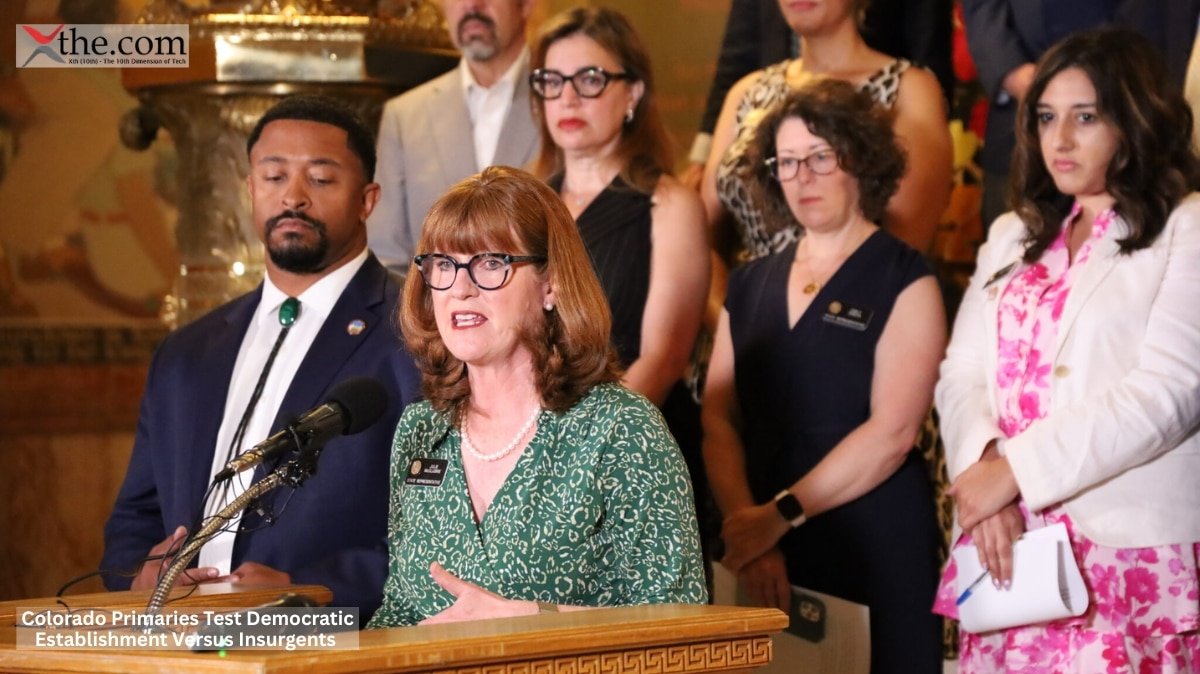
Diana DeGette has held her Denver congressional seat for nearly thirty years and had never trailed on election night until now. On Tuesday, early results in the Colorado Democratic primary 2026 showed a 29-year-old democratic socialist leading the fifteen-term incumbent, quickly catching the attention of Washington’s political class. The challenge to DeGette is not simply a protest vote. It has become a real contest for the 1st Congressional District and is now the clearest test of whether Colorado primary establishment power can survive a season of open revolt inside its own party.
This result has significance far beyond Denver. Just a week earlier, Democratic incumbents in New York City were surprised when candidates supported by Mayor Zohran Mamdani did better than expected in several races. Now, Colorado’s primaries are the next chapter in that story. Strategists from both parties are asking whether New York was a one-time event or the start of a bigger fight between the party’s longtime leaders and its growing progressive wing.
Why Colorado Became Ground Zero for Democratic Party Insurgent Candidates
This election cycle saw three major statewide races, each featuring a well-known figure facing a challenger with a new message. Sen. Michael Bennet, once seen as the favorite to replace term-limited Gov. Jared Polis, lost his race for governor to Attorney General Phil Weiser after a campaign focused on who could oppose President Trump more strongly. Sen. John Hickenlooper narrowly beat state Sen. Julie Gonzales, a former Democratic Socialists of America member who portrayed the 74-year-old as a symbol of politics as usual. Meanwhile, in the 1st District, Melat Kiros nearly unseated DeGette.
These races are part of a larger trend that researchers and campaign staff now call the rise of Democratic Party insurgent candidates. These challengers are usually younger, more progressive on economic issues, and openly question longtime incumbents in Washington. Melat Kiros is a clear example. She is a doctoral student and former lawyer who came to the U.S. from Ethiopia as a child. Her campaign argued that DeGette was no longer fighting hard enough for a district that is solidly Democratic, and that constituents could expect more from their representative.
The Numbers Behind the Upset
Signs of DeGette’s vulnerability appeared months before voting began. At the district assembly in April, she needed at least 30 percent of delegates’ support just to get on the primary ballot. She barely made it, with about 33 percent, finishing behind Kiros among the 235 delegates who voted. This was a sharp contrast to the nearly 465,000 voters eligible in the district’s Democratic primary. Once these warning signs became clear, outside money started pouring in. Justice Democrats spent over $500,000 to support Kiros, while several super PACs spent more than $2 million to back DeGette. This financial battle showed how seriously both sides took the challenge after what happened in New York.
Zohran Mamdani Backed Candidates and the Shifting Playbook
It is not a coincidence that DeGette’s allies invoked New York so often during the closing weeks of the campaign. Zohran Mamdani-backed candidates delivered a set of upset victories that convinced progressive organizers that a similar approach could work elsewhere, and Kiros deliberately embraced that comparison. She earned an endorsement from Sen. Bernie Sanders, built support from the Democratic Socialists of America, and drew energy from volunteers who described Mamdani’s mayoral win as proof that a disciplined, digitally savvy campaign could topple an entrenched incumbent even with a fraction of the establishment’s resources.
Former state Rep. Alex Walia, who lost to DeGette in the 2022 primary, told local reporters that Kiros and her team are now part of a movement bigger than just one race. This idea sums up the thinking behind this year’s anti-establishment Democratic primary campaigns. Instead of running against Republicans, these candidates are challenging the belief that long-term incumbents automatically deserve to stay in office. Shanna Finch, a 38-year-old Sanders supporter who had become frustrated with politics, said she joined Denver’s Democratic Socialists of America after Mamdani’s win convinced her that local organizing could still have a national impact.
How DeGette Tried to Respond
Once DeGette realized the challenge was serious, she ran an active campaign. She pointed to her work as an impeachment manager during President Trump’s Senate trial after the January 6, 2021, Capitol riot. She also stressed her support for Medicare for All and for abolishing Immigration and Customs Enforcement, hoping to counter claims that she had moved to the political center. Her campaign got a big boost from outside spending after polls showed the race was close. The big question now is whether that money can overcome a strong grassroots movement. Other longtime House Democrats are watching closely, since a Kiros win would be only the second time in fifty years that a House incumbent lost a Colorado primary.
What the Colorado Primary Establishment Battle Signals for November
The stakes here go beyond bragging rights. Colorado’s 1st District is solidly Democratic, so the general election result was never really in question. What remains uncertain is whether primary voters across the country are ready to see seniority as a weakness rather than a strength. If Kiros wins, we could see more primary contests against sitting Democrats in safe districts over the next few years, especially where local organizers can point to Mamdani’s win and DeGette’s possible loss as examples.
For readers trying to make sense of how this fits together, the short version is this: Colorado Democratic primaries 2026 establishment versus insurgent candidates explained in a concise phrase would read something like a party’s base testing whether it still wants the same leaders it elected a generation ago. The longer version, playing out precinct by precinct in Denver, involves generational turnover, frustration with congressional gridlock, and an authentic appetite among younger Democrats for candidates willing to say the party’s institutions have grown too comfortable.
The Diana DeGette primary challenge Colorado progressive wing 2026 storyline will not end when the last ballots are counted. National Democratic strategists are already preparing memos about what a Kiros win or even a close call for DeGette means for incumbents in next year’s midterms. No matter the outcome, the message to Washington is clear: simply having seniority is no longer enough to guarantee a seat, and the party’s insurgent wing now has a playbook it plans to use again.
Source: 2026 Election Colorado’s primaries present the next test for the Democratic establishment