






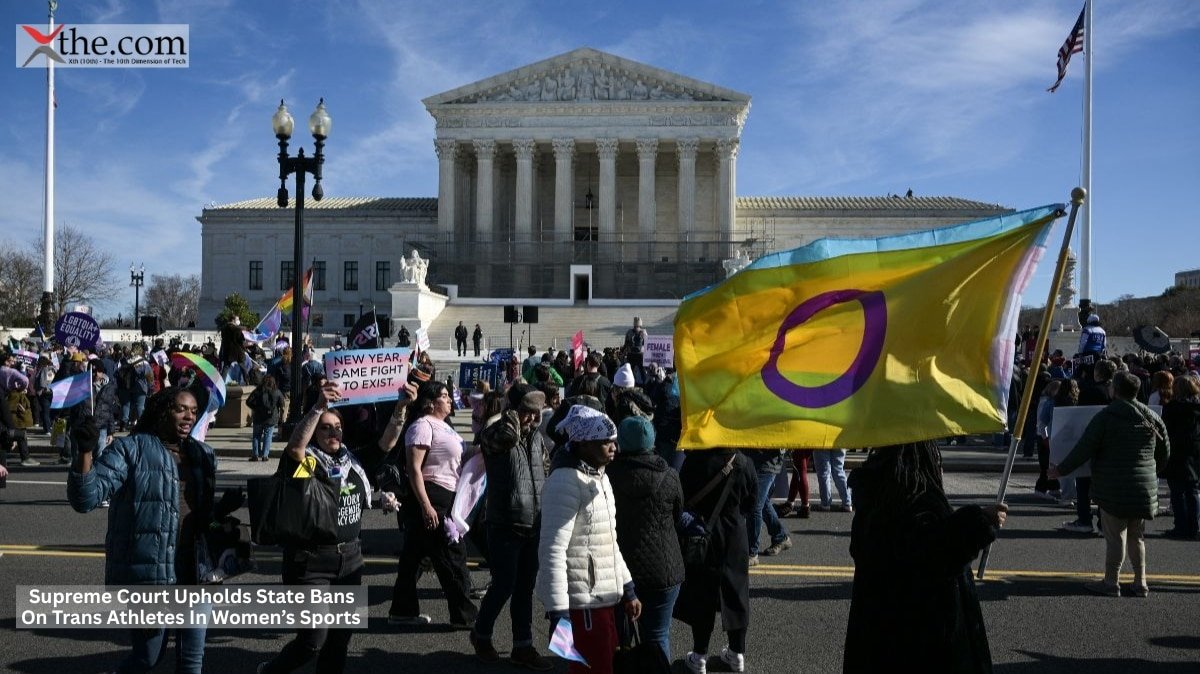
Washington, D.C.
Fifteen-year-old Becky Pepper-Jackson wanted to run track with her middle school teammates in West Virginia. Six years, two federal circuit courts, and one Supreme Court docket later, the answer from the nation’s highest court is final: she cannot. On June 30, the Supreme Court’s trans athletes ruling closed a legal fight that has simmered since 2020, delivering a women’s sports ban upheld verdict that will reshape locker rooms, roster sheets, and state legislatures for years to come.
The SCOTUS trans athlete case consolidated two disputes West Virginia v. B.P.J. and Little v. Hecox into a single opinion, and the numbers alone tell a story of a court sharply, if predictably, divided.
The Decision, By the Numbers
Justice Brett Kavanaugh wrote the majority opinion in the Supreme Court 6-3 ruling that found that neither Title IX nor the Equal Protection Clause of the Fourteenth Amendment stops states from limiting girls’ and women’s sports teams to students who are female at birth. The vote followed usual ideological lines, with the three liberal justices dissenting.
At the center of the case sits the West Virginia Idaho trans athlete law framework: West Virginia’s House Bill 3293, passed in 2021, and Idaho’s Fairness in Women’s Sports Act, passed in 2020, were at the center. Both laws say that eligibility for girls’ teams is based on reproductive biology and genetics at birth, not gender identity. Idaho’s law kept Lindsay Hecox, a transgender student at Boise State University, from joining the women’s track and cross-country teams. West Virginia’s law stopped Pepper-Jackson, the state’s only openly transgender student-athlete, from running with her middle school team.
Lower courts had ruled in favor of the athletes. Both the 4th Circuit and the Ninth Circuit found that the laws were unconstitutional discrimination. The Supreme Court reversed those decisions and sent the cases back for further action based on its opinion. In short, the states win on the main question of whether these bans are allowed.
Why Sports, Specifically
Kavanaugh’s opinion focused on the idea that sports are different from other public settings. The majority said that sports are usually separated by sex and are often a “zero-sum” situation, unlike jobs or classrooms in which equal treatment is the rule. This distinction limits how far the ruling goes. The court did not say transgender students can be excluded from bathrooms, dorms, or general school programs. The decision only applies to athletic competitions organized by biological sex.
Justice Neil Gorsuch agreed with the majority and said that Title IX, written in 1972, used a strict biological definition of sex. Solicitor General Alan Hurst also argued in January that “sex is what matters in sports” because of physical differences like bone density and lung capacity. Justice Clarence Thomas, in a separate opinion, said that being transgender does not make someone part of a group that needs special legal protection.
What the Ruling Does Not Settle
Surprisingly, the court’s opinion is narrower than what either side wanted. The justices did not decide if transgender girls who have had puberty blockers or hormone therapy still have an advantage over cisgender girls. They called this an “ongoing medical and scientific debate” that should be handled by lawmakers and school officials, not judges.
Importantly, the ruling allows state bans but does not require them. States and school districts with broad policies do not have to change as a result of this decision. This means that states with protections for transgender athletes can keep them in place, while about 27 states with existing restrictions can continue to enforce them, and more may follow.
The Reaction From Advocates
The ACLU trans sports case response arrived within hours of the opinion. Joshua Block, senior counsel for the ACLU’s LGBTQ & HIV Rights Project, said the outcome was heartbreaking for the two athletes involved. He also said the ACLU will keep arguing that giving transgender students equal opportunities does not harm other female athletes. Lawyers for Hecox and Pepper-Jackson kept their message simple throughout the case: let kids play.
State officials in West Virginia and Idaho saw the ruling as support for the laws their legislatures passed before the courts got involved. For them, the case settles a question that has affected youth and college sports since Idaho’s 2020 law: whether states can set eligibility for women’s teams based on biological sex without breaking federal civil rights law. The answer, as of June 30, is yes.
Legal analysts searching for “Supreme Court upholds Idaho West Virginia trans athlete ban women’s sports 2026” coverage in the hours after the decision found a flood of statements from both camps, reflecting how closely watched the case had become across state capitols, athletic conferences, and advocacy organizations nationwide.
What Comes Next
The ruling directly affects two states, but its impact is much wider. Over two dozen states already have similar laws, and many had court cases on hold while the Supreme Court decided these cases. In the coming weeks, expect quick moves to lift court blocks in some states and new legislative proposals in others that have not yet acted.
For athletic associations, from state high school groups to the NCAA, the ruling gives the legal backing many needed before setting eligibility rules based on biological sex rather than case-by-case medical review. Anyone tracking “SCOTUS trans athlete ruling 6-3 explained West Virginia v BPJ” searches in coming days will likely find coverage focused on how quickly other states respond and how school districts handle the gap between state law and local inclusion policies.
The court’s decision does not end the larger legal and cultural debate about transgender participation in public life. It exclusively addresses sports, leaving most questions about equal protection for transgender Americans available for future court cases. New legal battles over healthcare, workplace rights, and education outside of sports are already moving through lower courts, and both sides are still fighting.
Source: Supreme Court makes ruling on trans athletes in women’s sports