






Philadelphia, Pennsylvania
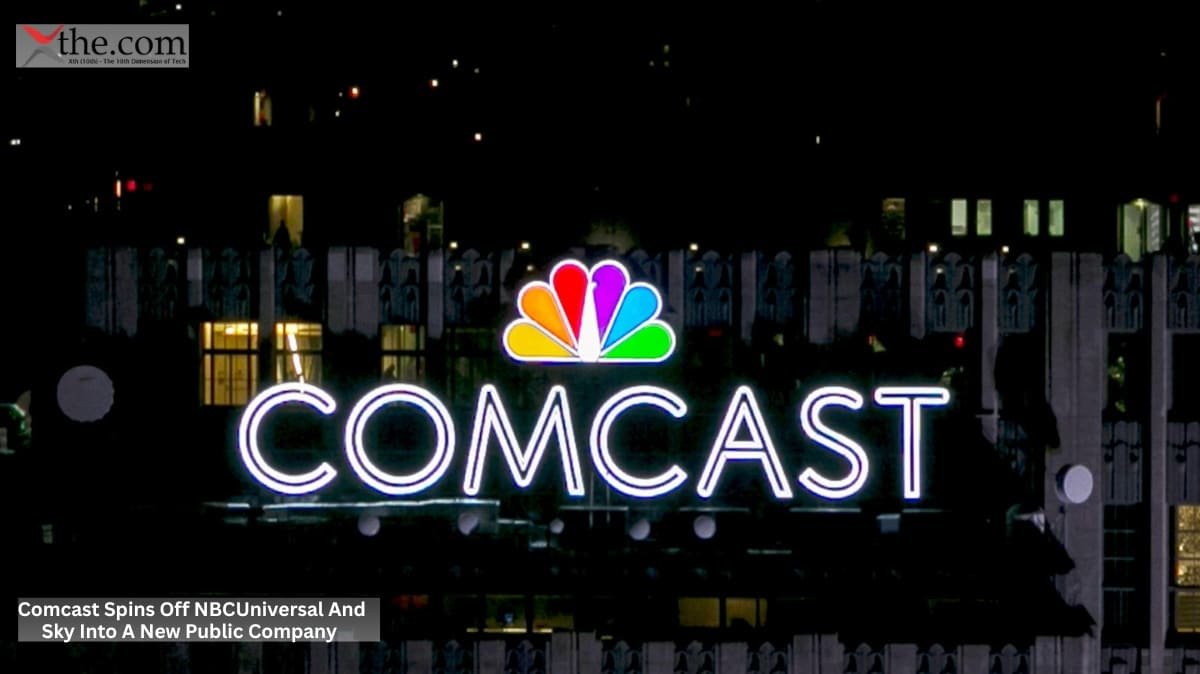
Comcast shares had dropped by almost a third over the past year, but Monday’s announcement quickly turned things around. The stock surged up to 25% before markets opened, marking its best day in over ten years, after the company confirmed the Comcast NBCUniversal spinoff. This move completes the Comcast CMCSA split, separating its cable and wireless business from its film, TV, and theme park empire, and creates the new NBCUniversal Sky company, which will now compete directly with Netflix, Disney, and Warner Bros. Discovery in the global media market.
This is a real, tax-free spinoff with specific executives, a clear list of assets, and a set timeline. Comcast’s board decided that keeping broadband and streaming together no longer worked for either side. The company’s financials revealed the problem: about $19.2 billion in free cash flow expected in 2025, yet the stock traded at a price-to-earnings ratio of close to 4.5. That low valuation showed investors were unsure about what they actually owned.
What Comcast Actually Announced
The plan splits Comcast into two separate, publicly traded companies through a tax-free deal. After the split, Comcast shareholders will own shares in both Comcast and NBCUniversal. This is important for regular investors: if you own CMCSA shares now, you don’t need to do anything. Your shares will automatically convert into ownership in both companies when the separation is complete.
The media side will include Universal theme parks, Universal film and TV studios, NBC and Telemundo networks, the Peacock streaming service, Bravo, and the European media company Sky. The remaining Comcast entity keeps the connectivity business: Comcast Xfinity cable broadband, wireless services, and business technology platforms. Comcast plans to focus on delivering great customer experiences through its large network, which serves over 65 million homes and businesses, and its growing wireless division.
Leadership Split Reflects Two Distinct Businesses
The executive assignments reveal how deliberately Comcast structured this. Mike Cavanagh, NBCUniversal CEO, is now the headline appointment: Cavanagh, who has been Comcast’s co-CEO, will lead the new media company once the separation closes. Comcast co-CEO Mike Cavanagh will become the CEO of NBCUniversal. He presented the logic plainly in a statement, saying “Comcast will continue to build on its leadership in connectivity, while NBCUniversal, together with Sky, will have the scale, brands, content and financial resources to compete as a top global media and entertainment company.”
The other half of the business will be led by a familiar leader. Former Comcast CFO Michael Angelakis is returning to run the new Comcast after the media assets are separated. Angelakis left years ago to lead the investment fund Atairos. His return shows the board wants someone with a strong finance background to lead the more focused, cash-generating connectivity business.
Brian Roberts, Comcast’s chairman, will stay involved with both companies. The Roberts family will retain control, and Brian Roberts will work closely with Mike and Michael, focusing on new growth and opportunities arising from the split. During the investor call, Roberts directly addressed rumors, saying the split was “absolutely not” a move toward selling either company, trying to stop speculation that NBCUniversal might be for sale.
Why Now: The Strategic Logic Behind the Split
Comcast’s stock performance over the last year shows why this split was urgent. Shares fell about 30% over 12 months, mainly due to ongoing industry changes, not just one bad quarter. More people cut the cord, streaming competition grew, and Comcast’s broadband business met new rivals from wireless and fiber networks. Combining expensive theme parks and streaming with a steady broadband business made it hard for investors to value either part. The streaming service, which still loses money, lowered the overall value of the broadband business, which would be worth more on its own, like Charter Communications.
This is Comcast’s second big split in about a year. The company had already separated cable networks like CNBC and USA Network into a new company called Versant. Monday’s announcement is a much bigger step, fully separating all media and entertainment assets instead of just a few channels. Evercore ISI analyst Kutgun Maral said this move reverses Comcast’s old “Harmony” strategy of keeping content and distribution together, calling it a long-awaited win for shareholders who were unhappy with the company’s lower valuation.
What Shareholders Actually Get
For regular investors trying to understand Comcast spins off NBCUniversal Sky into separate public company 2026 what shareholders get, the mechanics are simpler than most corporate breakups. If you own Comcast stock when the spinoff happens, you’ll automatically get shares in the new NBCUniversal company and keep your Comcast shares. You don’t need to buy anything new, and the deal is tax-free for shareholders at the federal level. The new NBCUniversal will have the same dual-class share structure as Comcast, so Roberts will keep strong voting power in both companies after the split.
Comcast also said it plans to keep up to a 19.9% stake in NBCUniversal for up to a year after the split. The company will sell this stake gradually instead of all at once. This gives Comcast more financial leeway during the transition and shows it is not in a hurry to leave the media business right away.
The Charter Communications Ripple Effect
The markets saw this as more than just a Comcast story. Charter Communications shares jumped about 14% to 20% that morning, and Liberty Broadband also rose as investors reconsidered what a more focused Comcast connectivity business could mean for the cable industry. The Comcast CMCSA stock surge in 2026 didn’t just help Comcast; it boosted the entire sector, which had been undervalued for years.
The logic is simple. If Comcast’s broadband and wireless business, now separate from media, can get a higher valuation like Charter’s, then Charter may also look more interesting to investors. People also saw this move as a sign that cable industry mergers, often talked about but rarely done, might finally happen. A standalone Comcast connectivity company is a clearer partner or acquisition target than a large company managing theme parks, streaming, and broadband.
What This Means for Peacock and Universal
For those following the NBCUniversal, Peacock, Universal spinoff, operations should stay the same in the short term, but changes may accelerate over time. Peacock will stay with the new NBCUniversal company, not as a separate asset. This means the streaming service will have a parent company focused solely on media, rather than competing for resources with broadband. The same goes for Universal’s theme parks and film studios, which will now report directly to a media-focused company led by Cavanagh.
For investors specifically modeling the Comcast CMCSA NBCUniversal spinoff one-year timeline impact on Peacock streaming and Universal parks, the separation is expected to close in approximately 12 months. During that interim period, both businesses continue to operate under the existing Comcast umbrella, meaning subscribers, theme park visitors, and advertisers shouldn’t notice any immediate changes. What changes is investor scrutiny: each business now reports performance that can be measured against pure-play peers rather than being blended into a single conglomerate result, putting pressure on Peacock specifically to demonstrate a path toward sustainable profitability now that it can no longer hide behind broadband’s cash flow.
Gazing Forward
The next year will show whether this split delivers the value investors expect or just creates two smaller sets of problems. NBCUniversal, led by Cavanagh, enters a media landscape that is still evolving amid Paramount Skydance’s planned acquisition of Warner Bros. Discovery. The new company may soon have to decide whether to buy others or risk becoming a target itself. Comcast, under Angelakis, faces tough competition in cable and broadband from wireless and fiber companies. Both companies now have the opportunity to move faster, but they also need to prove that this speed delivers real value for shareholders, not just a short-term stock jump.
Source: Media Comcast announces it will spin off NBCUniversal and Sky from cable business