






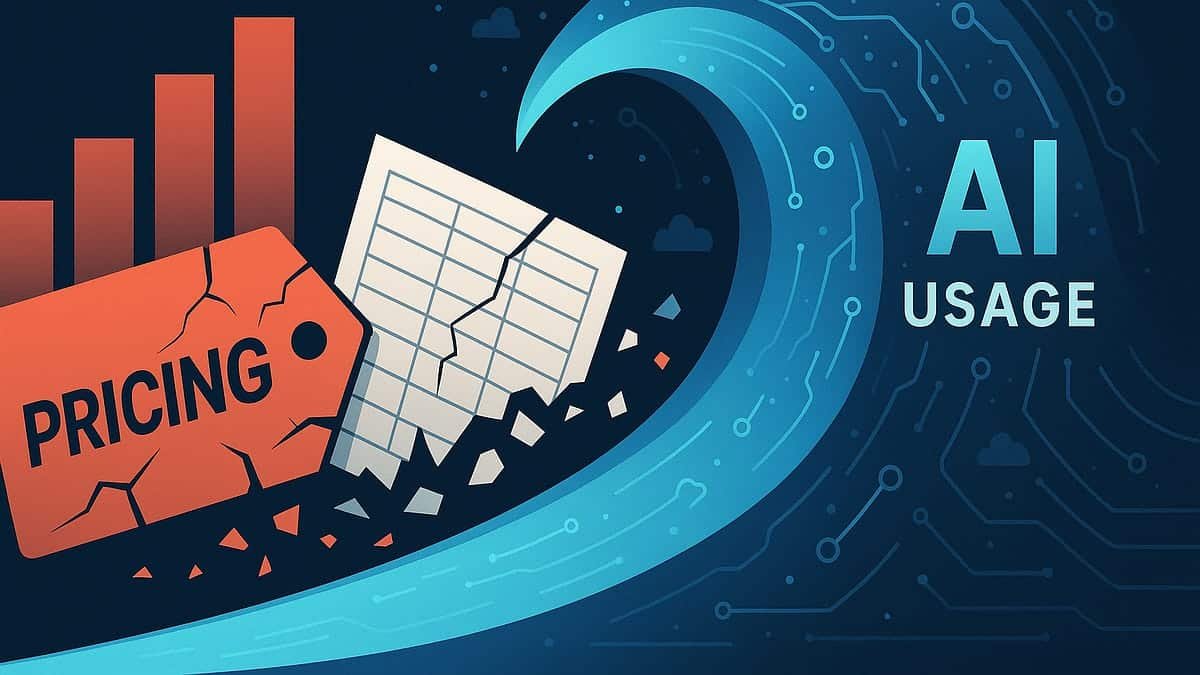
Fixed SaaS pricing is struggling to keep up with new AI usage models, and finance teams are already noticing the impact. With Microsoft’s recent updates to enterprise pricing, the move from predictable subscriptions to variable billing is now inevitable. AI pricing models and SaaS disruption AI are at the heart of this shift, changing how hardware companies make money. Instead of flat monthly fees, revenue now depends on compute tokens and how much customers use the service. This is pushing companies to rethink both their pricing and their overall business strategies.
The End Of Flat Rate Simplicity
For more than a decade, SaaS depended on predictable subscription pricing. Consumers paid a flat fixed fee for access regardless of usage intensity. That model is now under pressure from usage-based billing AI, which scales costs with actual consumption. This approach aligns pricing with value but introduces budgeting fluctuations.
This change is also affecting enterprise SaaS trends, with buyers now requesting clear information on usage. For example, a marketing team using AI content tools might see their costs vary significantly depending on how many campaigns they run. This unpredictability makes it harder to make purchasing decisions and pushes vendors to explain their pricing more clearly.
Why Usage Is Replacing Access
AI workloads consume resources in ways conventional software never did. Each query, model inference, or automation cycle incurs compute costs. This situation makes fixed pricing unsustainable for vendors pursuing AI monetization approaches. Charging based on usage ensures revenue scales with infrastructure demand.
Cloud pricing changes are also driving this shift. Providers are now passing the costs of GPUs and special hardware to software vendors, who then have to include these costs in their own pricing. This creates a ripple effect throughout the software industry.
Revenue Models Under Pressure
AI pricing models and the new economics
The rise of AI pricing models is forcing companies to reexamine traditional software revenue models. Subscription predictability is being replaced by consumption variability. This creates both chances and risks for vendors and customers alike. Higher usage can drive revenue growth, but it can also lead to customer churn if costs spike unexpectedly.
The impact of SaaS disruption AI is especially clear in enterprise contracts. Instead of long-term deals, companies are moving to flexible pricing tiers based on usage. This lets customers adjust costs as their needs change, but it makes it harder for vendors to predict revenue. Finance teams now have to forecast based on usage patterns rather than fixed contracts.
The Customer Per-Perspective On Cost Volatility
Enterprises like usage-based pricing because it seems fair. They only pay for what they use. But this model also brings uncertainty, especially for big projects. For example, a data analytics company running nonstop AI queries might see its monthly costs fluctuate significantly.
These concerns are shaping enterprise SaaS trends, where buyers emphasize cost controls and usage caps. Vendors are responding by offering dashboards and alerts to monitor consumption. This transparency is necessary to maintain trust in a variable-pricing environment.
Operational Consequences For Vendors.
Billings building systems for usage-based billing AI
To use AI for usage-based billing, vendors need to make major changes to their backend systems. They have to track usage in detail, often in real time. This means keeping an eye on things like API calls, compute cycles, and data processing. Building this kind of system is complex and can be expensive.
AI monetizing strategies also rely on accurate measurement. If vendors don’t track usage precisely, they might charge customers too little or too much. Either mistake can hurt both relationships and revenue. That’s why billing systems are now a key part of product design.
Aligning Pricing With Value Delivery
Moving to consumption-based pricing prompts vendors to reconsider how they deliver value. Features that lead to high usage need to be worth the cost. This is also affecting cloud pricing, where efficiency is now a major advantage.
Companies that make their models more efficient and lower compute costs can offer better prices. This creates a cycle where engineering and pricing bodies influence each other. Now, efficiency isn’t merely about technology. It directly affects revenue.
Planned Changes in the SaaS Landscape
The Role of SaaS Disruption AI in Market Evolution
SaaS disruption AI is changing more than just pricing. It’s also modifying how products are designed, how sales teams work, and how companies interact with customers. Vendors are focusing less on features and more on the value their products deliver. This corresponds to the changes happening in software revenue models.
Sales teams now have to explain both what a product does and how using it affects costs. This means they need to really understand how customers work. It also means that sales, finance, and engineering teams need to work more closely together.
Controlling Growth and Predictability
For SaaS companies, the challenge consists of balancing growth with financial soundness. Usage-based pricing can accelerate revenue during periods of high demand. However, it also introduces volatility that complicates forecasting. This tension is central to current SaaS trends in the enterprise.
To address this, some vendors are using combined models that mix a base subscription fee with usage-based charges. This approach aims to offer some predictability while remaining adaptable. In a It’s a phrase used to describe the ongoing shift in pricing approaches in an AI-driven market.
Pricing models are still evolving, but it’s clear that consumption-based pricing is becoming the norm as AI use grows. This change is changing how vendors and customers work together, with more focus on honesty and alignment.
Cloud pricing changes will continue to affect the industry. As infrastructure costs change, software pricing will need to adjust, too. This means pricing approaches will continue to evolve in a fast-moving environment.
A New Financial Logic For Software
AI pricing models are changing how software is assessed and sold. Along with such AI disruption, this means the end of uniform pricing. Both vendors and enterprises now have to adjust to a context where costs depend directly on usage.
This new pricing model rewards companies that are efficient, transparent, and customer-focused. Businesses that can handle these changes will have an advantage. Those that stick to old pricing models may fall behind as the market changes quickly.
Source: Official Microsoft Blog








