



The Buzz
- Amazon and Nvidia are joining forces to transform in-car AI, developing assistants that go far beyond current technology.
- Their technology will allow assistants to understand group conversations about what is happening around the car.
- The partnership combines Amazon’s experience with conversational AI and NVIDIA’s automotive computing platform to help car makers offer more advanced in-car experiences.
- This move shows that competition in automotive AI is heating up as tech giants compete to lead the connected car market.
Amazon and Nvidia have announced a major partnership to build next-generation AI assistants for cars, setting a new benchmark for the industry. Their goal is to create technology capable of understanding group conversations and interpreting the environment, moving well beyond today’s simple voice commands. This could transform driver-passenger interaction by bringing home-assistant-level conversational intelligence to cars.
Amazon and Nvidia announced today that they are teaming up to bring advanced conversational AI to cars. Their partnership aims to create AI assistants that can follow conversations among multiple people and understand what is happening outside the car, not just respond to simple voice commands something most automakers have not yet achieved.
This cooperation combines Amazon’s experience with conversational AI, developed through Alexa’s presence in millions of homes, with NVIDIA’s strength in automotive computing. For years, automakers have struggled to create voice assistants that feel natural, often relying on systems that only respond to exact commands. This partnership could help solve that problem.
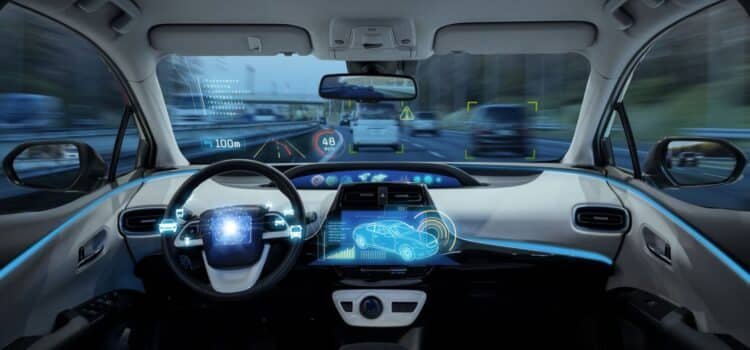
According to Amazon’s announcement, the technology will enable vehicles to understand information from multiple speakers simultaneously. This means a family discussing dinner plans would have the AI assistant naturally join the conversation, suggest restaurants based on the discussion, and direct them to the chosen location without anyone issuing a direct command. The system would also examine visual and sensor data from around the vehicle, potentially warning of approaching cyclists or recommending lane changes based on traffic patterns.
The automotive AI market is now a major area of competition for big tech companies. Apple worked for years on its car project before shelving it, while Google is still expanding Android Automotive into cars from General Motors and Volvo. Tesla has created its own AI system focusing more on self-driving features than on voice assistants.
NVIDIA’s drive platform powers many premium vehicles. Adding Amazon’s AI gives automakers a ready solution, likely speeding adoption of advanced features.
Major technical challenges remain, such as speaker differentiation and real-time processing of sensor data. NVIDIA’s chips handle this directly in the car, releasing delays and privacy concerns.
For Amazon, this expands its AI reach into the automotive market, while Alexa is already in some vehicles. This new product aims to add more advanced features beyond current offerings.
This partnership reflects the shift toward software-defined vehicles, making feature updates easier to implement. It offers traditional automakers a faster path to catch up with innovators like Tesla.
No financial terms or customers were disclosed, but technology may appear first in premium vehicles by 2027 or 2028, following auto industry adoption patterns.
The Amazon-NVIDIA partnership denotes a big step in the race for leadership in Automotive AI. By joining Amazon’s conversational skills with NVIDIA’s computing power, they are giving automakers something they have struggled to create: truly smart in-car assistance. If the technology works as promised, it could change how we interact with cars, making them feel more like helpful co-pilots than machines. The real test will be when automakers put these systems into cars and drivers see if the AI can manage real-world conversations and driving. For now, this partnership shows that Connected Car Innovation is accelerating as tech giants try to control the software even if they never make the cars themselves.