






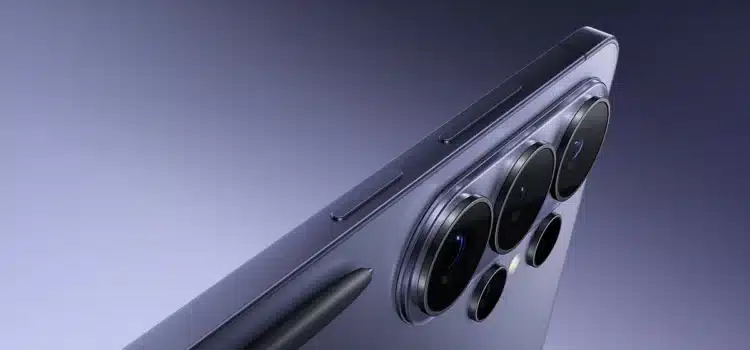
The most important stage of smartphone development happens not in Seoul’s design studios but in North Camera’s specialized testing labs. As of March 2026, sector reports show that Samsung is testing the Galaxy S26 Ultra camera in US labs. This step highlights the company’s focus on capturing Western lighting and a range of skin tones. These labs at strategic Hub technology centers provide regulated settings needed to fine-tune the ProVisual engine before production.
For both mobile photography fans and hardware engineers, this testing phase is important because for the 200MP sensor design, the US labs use sophisticated instruments such as lux meters, spectral analyzers, and motion simulation rigs to recreate scenes ranging from a dark jazz club in New York to the bright sunlight of the Arizona desert.
The Evaluation Of The 200 MP Isocell Architecture
The main feature of the Galaxy S26 Ultra is still its 200-megapixel primary sensor, but the version being tested in US labs is a big step forward. It now uses a hexagonal-squared pixel-binning method, allowing the sensor to combine data from 36 nearby pixels in low light. This creates a super-pixel that captures more light than any previous mobile sensor.
In US imaging labs, engineers use color checkers and resolution charts to ensure the high pixel count does not introduce unwanted noise or shimmering. The lab setting helps Samsung adjust sub-pixel crosstalk, ensuring that the electrical change from one pixel does not leak into the next. This constitutes a common challenge when fitting 200 million photodiodes into a small sensor.
Turning the Periscope Zone for Atmospheric Reality
The main sensor handles most wide-angle photos. The dual telephoto system sets the Ultra apart. The S26 Ultra is now being tested with a 50MP 10x periscope lens and a 50MP 3x portrait lens. Testing in the US is especially important for the 10x zoom. Haze and heat shimmer can affect long-distance shots, making tests essential.
Engineers in the US use long-distance optical ranges to fine-tune the dual optical anti-shake system. They simulate hand tremors to improve how physical OIS and digital EIS work together. The aim is to ensure a 100x space-zoom photo taken at a national park is as steady and clear as one taken in a lab. The process takes thousands of hours of real-world data analysis.
Pro Visual Engine and AI Power Dynamic Range
Modern photography is equally about code as it is about glass. The ProVisual modern photography relies on software as much as hardware. The Pro Visual Engine, powered by the Snapdragon 8 Elite Gen 5 NPU, controls every photo taken during current lab tests. Samsung is focusing on object-aware HDR. This feature lets the camera recognize objects like faces, pets, and neon signs and adjust the exposure for each. These boots can create scenes with extreme contrast, such as a person standing in a dark room next to a window overlooking a bright city street. The S26 Ultra must be able to preserve detail in the room’s dark shadows without blowing out the highlights on the street outside. The labs use automated bots to take thousands of photos under different light temperatures, allowing the AI to learn how to balance white point and saturation across a massive dataset of Western visual tastes.
Video Excellence 8K 60fps and Beyond
The S26 Ultra is set to raise the bar for mobile video with 8K recording at 60 frames per second and full HDR10+ support. US labs let a key test zone assess how the device handles heat during long video sessions. High-resolution video generates a lot of heat, so Samsung starts testing in US environmental chambers to help ensure the phone keeps performing well during events like graduations or sports games. The labs also help improve audio. With the Audio Zoom feature and six high-quality microphones, the S26 Ultra can focus its audio on the subject. Engineers use acoustic chambers to remove wind noise and background sounds. This lets the software pick out a human voice even in a busy stadium.
Information Privacy and Security in the Cloud AI
As Samsung adds more generative AI features to its camera app, such as moving objects or changing lighting after a photo is taken, data security becomes even more important. US labs test how well on-device processing compares to cloud processing. Samsung wants to keep sensitive image data secure and clear on devices. The labs test the hardware encryption for any weaknesses.
The secure image metadata feature is also being tested. It adds a cryptographic watermark to every AI-edited photo, so viewers can tell whether a photo has been altered by generative tools. This disclosure is important for concerns about regulations in the US and the EU.
Closing Thoughts: The Road to the Global Launch
The news that Samsung is testing the Galaxy S26 Ultra camera in US labs indicates the device is in its final polishing stage, leveraging North America’s cutting-edge imaging centers. Samsung is ensuring its flagship phone meets the needs of global users. From the 200MP sensor’s technical accuracy to the ProVisual Engine’s creative features, every part is being checked to keep the Samsung S26 Ultra at the top of mobile photography. Further testing in these labs will serve as the foundation for the final firmware updates for those who demand the absolute best in image technology. The results of these tests will be visible in every pixel of every photo taken when the device finally hits the shelves.