






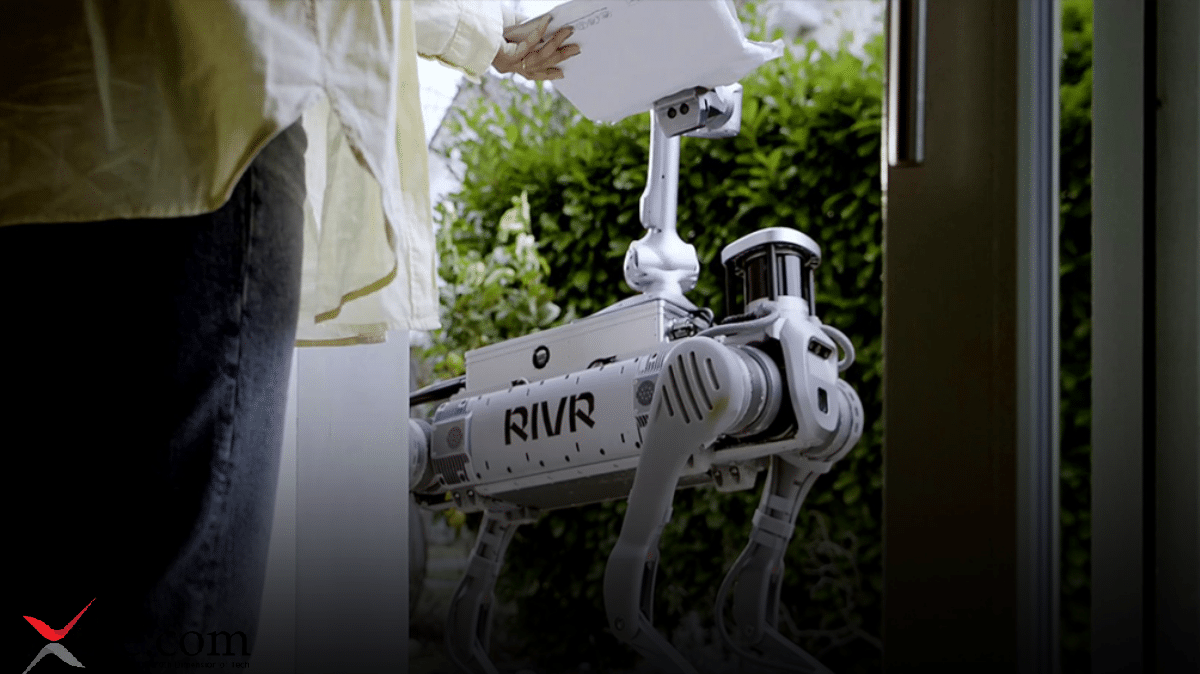
For a long time, the biggest obstacle to autonomous last-mile delivery has been something as ordinary as the front porch step. Sidewalk robots and self-driving vans have improved at navigating neighborhoods. But getting from the curb to the front door has been a real challenge. Now, new developments in Seattle and other testing centers show real progress. Amazon is testing stair-climbing robots for home deliveries, moving from simple wheels to robots with legs or fabric designs that can finally handle the stairs and levels found in today’s homes.
The hardest part of the last 50 feet isn’t just about having enough power. It’s about how the robot sees and balances itself as it climbs stairs with a 15-pound package. A robot has to manage its center of gravity and map the surfaces it is working on in real time. Stairs are much trickier than flat sidewalks because they are uneven and require the robot to move more flexibly. Amazon’s newest prototypes, developed through its work with cutting-edge robotics companies and its own Proteus and Sparrow projects, are built to go beyond what the old six-wheeled robots could do.
The Mechanical Evolution of the Delivery Fleet
To climb stairs, robots need new designs. Most delivery bots today use high-traction wheels suited for flat ground but can’t handle a 7-inch step. The latest bots being tested use different approaches: some have a triple- or star-wheel setup for rolling over obstacles, while others use two or four legs to walk up stairs.
With four-legged designs like those used in industrial inspection, these robots can maintain three points of contact with the ground at all times. This extra stability is important for handling uneven stone steps at each joint. Let the robot crouch and shift its weight, so the package stays level as it climbs. This helps prevent the contents from shifting, a problem with earlier delivery robots.
Sensor Fusion And The Geometry Of The Porch
The second key to stair-climbing robots is how they sense their surroundings. To move safely up stairs, a robot needs to know the depth, height, and stability of each step. Amazon’s test robots use sensors like solid-state LiDAR, stereo depth cameras, and ultrasonic proximity sensors to build accurate maps.
The robot’s onboard AI uses a process called semantic segmentation, which means the software separates and identifies different objects in its camera images, distinguishing between a solid step and something temporary like a toy or a pet. By combining data from all its sensors, the robot builds a 3D map of the area it needs to climb. Even if it encounters a loose board or a slippery surface, its path-planning software will look for another route or adjust the hardness of its steps to avoid slipping. This kind of awareness is necessary for working in homes in which every entryway is different.
Addressing the Social and Regulatory Setting
As Amazon tests stair-climbing robots for home deliveries, there are issues beyond the technology. Having a moving legged machine on private property raises questions about privacy and people’s comfort with them. To help with this, the robots are made to look friendly with rounded edges, gentle lighting, and quiet sounds to avoid making people uneasy.
From a legal perspective, being able to climb stairs could help these robots follow local rules. Many cities worry about sidewalk robots blocking people walking by or allowing people to get onto homeowners’ private paths more quickly. Amazon can reduce the time the robot spends in public spaces. Also, placing packages right at the door instead of at the bottom of the steps helps prevent package theft since deliveries are less visible from the street.
The Role Of Edge Computation And The AWS Backbone
Stair climbing takes a lot of computing power. Every step requires the robot to make thousands of calculations per second to maintain its balance. To avoid draining a battery too quickly, Amazon uses a hybrid computing approach. Basic motor control and obstacle avoidance are handled right on the robot’s own processors, so there is no delay in response.
More complicated navigation and long-term planning are handled by Amazon’s AWS Cloud. When a robot discovers a new building layout, it sends a compressed version of the data to the cloud. This information helps improve the navigation system for all the robots. Over time, the whole fleet gets smarter as they share what they’ve learned about different ports and stair designs. This shared knowledge will help autonomous delivery grow from small tests to a worldwide service.
Efficiency And The Carbon Footprint Of The Last Mile
Air-climbing robots aren’t just making things easier. They’re also about saving money on the last part of the delivery. The last mile is the most costly and most important part of getting packages to people, and it uses smaller electric robots that can complete deliveries independently. Amazon can reduce the number of delivery vans waiting on neighborhood streets.
These robots are meant to be sent out from hub vans or small local centers. One man can serve as a base for about a dozen robots, which handle the final leg of the delivery while the driver manages the main route. This teamwork combines human decision-making and robots’ steady work, making deliveries more efficient and sustainable.
Concluding With a Stride Into the Unknown
As these metallic couriers master the verticality of our world, we might soon see the old days of ground-only robots as a thing of the past. Picture a time when the doorbell rings, not after footsteps but after the steady work of a machine that climbs your stairs as easily as it moves across a warehouse floor. Over time, these robots could become a normal part of our neighborhoods, quietly waiting for the path to clear and moving up our steps with steady patience. Maybe one day a robot will not only deliver your package to the top of the stairs but will pause for a moment, its sensors taking in the view of a city where every doorway is within reach. Is Amazon using the same industry-standard power-to-weight ratios to ensure gas-type stair-climbing units can handle 10-hour shifts without charging?
Source- Amazon News








