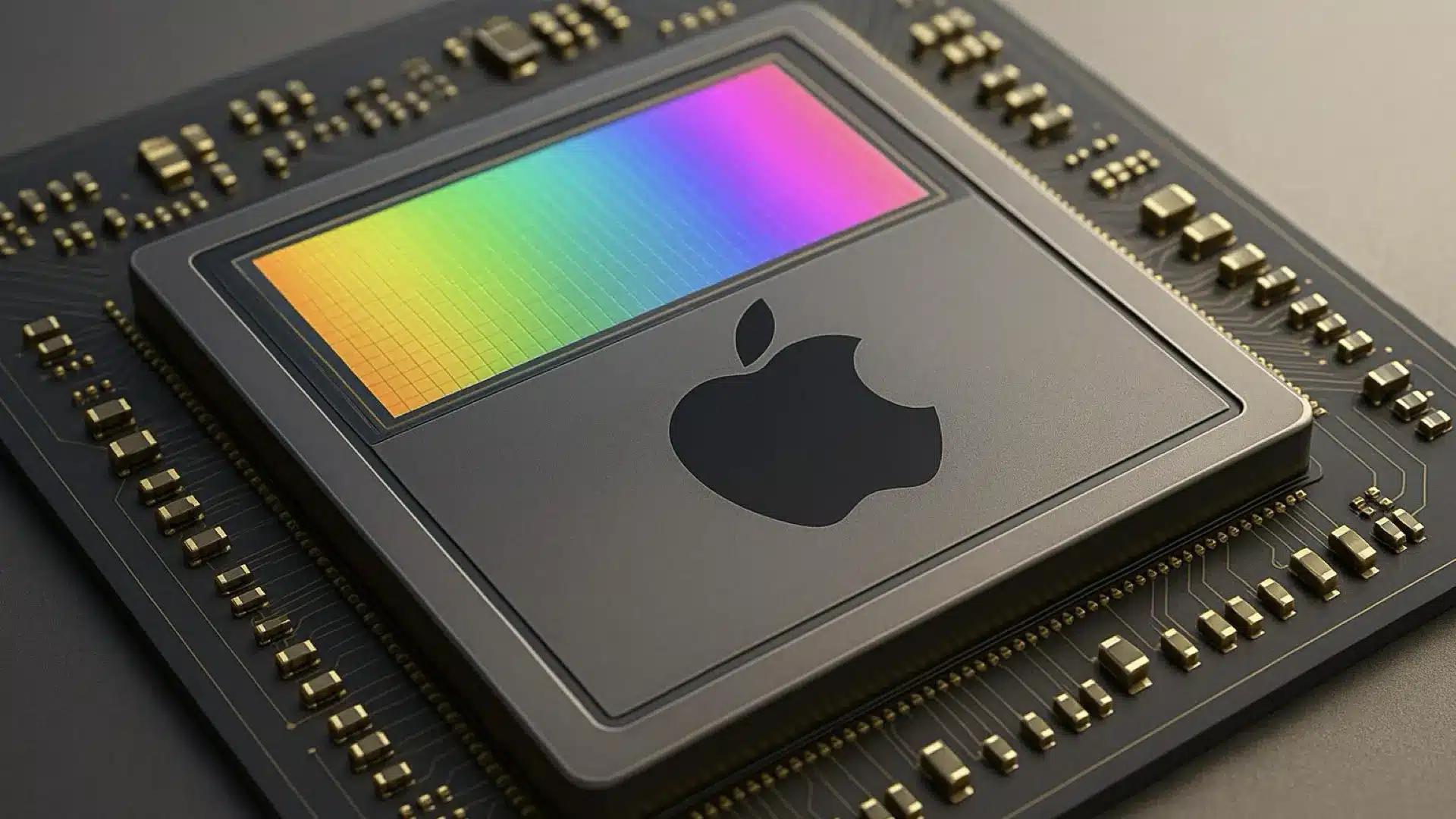
The new patent application shows that Apple is increasing its research into advanced AI chip development, which will transform how future American devices manage AI processing tasks. The United States Patent and Trademark Office received the patent application, which describes architectural advancements that will enhance on-device AI capabilities, energy usage, and system integration.
Patents function as effective indicators of a company’s future plans, even though they rarely lead to actual commercial products. The filing demonstrates that Apple wants to establish local AI processing as a vital feature that distinguishes its hardware ecosystem from competitors.
A New Direction for AI Chip Architecture
The patent focuses on specialized AI processing units that exceed the machine-learning capabilities of traditional CPUs and GPUs. The designs build on Apple’s existing neural engine architecture by introducing new processing methods that will improve performance and reduce energy consumption.
Apple’s approach reflects a broader industry trend toward dedicated AI hardware, which uses specialized components to perform tasks such as image recognition, natural language processing, and predictive analytics.
The shift becomes essential because AI workloads require higher processing power, operating at faster speeds with better energy efficiency.
On-Device AI as a Strategic Priority
The patent’s main focus shows the importance of AI systems that operate on the user’s device. The system achieves faster response times and stronger user privacy protection by processing data directly on the device rather than using cloud systems.
Apple has used on-device processing as its main strategic element since its inception because this patent strengthens that approach. The system allows users to run advanced AI models directly on their devices, resulting in faster performance and reduced ongoing internet access requirements.
The system provides users with an experience that becomes more responsive and secure when they use applications that manage confidential information.
Performance Gains and Efficiency Improvements
The proposed chip designs aim to optimize performance across a range of AI tasks. Apple’s use of specialized processing units enables better workload distribution, which helps all components achieve their maximum operational capacity.
The system delivers performance improvements and energy efficiency gains, enabling devices to run demanding AI computations while maintaining battery life.
Power consumption and thermal management are critical factors Apple must consider when developing its portable devices, which require efficient operation.
Impact on Device Design and Capabilities
The development of AI chip technology directly affects the design of electronic devices, as more efficient chips enable thinner, lighter devices that extend battery life and enable advanced features.
The patent suggests that future devices could incorporate enhanced AI capabilities without increasing size or weight. The system enables users to perform real-time environmental assessment together with customized experiences and enhanced automated processes.
Apple leverages its hardware and software integration to capitalize on these technological advancements.
Pricing and Market Positioning
The development of AI chips will affect how companies set their pricing. The introduction of more advanced and efficient chips will increase their value, enabling manufacturers to charge premium prices for their high-end products.
Improving product efficiency will reduce production costs over time, helping various industries adopt new technologies.
Apple uses its control over chip design to achieve a performance-to-cost balance, enabling it to establish its market presence during the AI era.
Ecosystem Lock-In and Competitive Advantage
The main consequence of Apple developing its AI chip technology is a lock-in effect that keeps users in its ecosystem. Apple develops its own hardware that works best with its software, resulting in a system that keeps users in its ecosystem. The method improves user experience but restricts users who want to use different platforms.
Apple has built its successful business model on an ecosystem strategy, which will be further strengthened by its AI chip development.
Broader Industry Implications
Apple has received a patent that demonstrates the current trend among technology companies to create their own artificial intelligence hardware. The technology market experiences greater innovation because companies create custom chips that enable them to execute artificial intelligence tasks.
The development of on-device AI technology will create new design methods and usage patterns for devices, affecting all electronic devices, including smartphones, laptops, and wearables.
Apple’s current technology improvements will set new benchmarks for performance and efficiency, shaping future industry developments.
Challenges and Uncertainties
The development of advanced AI chips presents benefits that require industries to overcome their existing challenges. The process involves multiple challenges, including production methods, software development, and application compatibility testing. The success of these technologies relies on their acceptance by both developers and users.
Apple must overcome these obstacles to achieve complete success with its AI chip developments.
From Patent to Product
The statement proves that not every patent leads to the successful development of commercial products. However, they provide valuable insight into a company’s research and development priorities.
The patent demonstrates that Apple is currently working on methods to improve its AI technology, which will result in upcoming products and features.
New technological advancements will eventually become standard equipment in Apple devices once their technology reaches full development.
Conclusion: A Shift Toward AI-Centric Devices
Apple’s AI chip patent demonstrates an important transformation that will affect all upcoming product designs and operations. Apple has established itself as a leader in artificial intelligence computing by developing products that handle all processing activities within devices while maintaining energy efficiency and seamless system operation.
The effects of the situation extend beyond performance; they establish new pricing structures, alter ecosystem relationships, and change how users interact with the product. The future of technology development will depend on new AI chip design innovations, which will drive changes throughout the industry.
Sources: Apple Newsroom
Trademark classification goes agentic with USPTO’s announcement of “Class ACT” assistant