






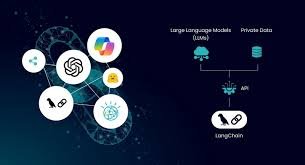
In 2026, the focus has shifted from experimenting with generative AI to deploying autonomous agents at scale. US companies now want more than basic chatbots. Some companies need reliable systems that can plan, execute, and verify complex business tasks independently. From new tech to video bots, the key decision is which orchestration layer to keep. This digital workforce could choose between LangChain, CrewAI, and SK, and that is the main technical decision for organizations aiming to get the best return on investment. The right orchestrator can mean the difference between a strong unified AI system and a set of disconnected prototypes.
The Evolution of Agent Orchestration in the US Market
As the US AI market grows, the focus has moved from just model performance to how well systems work together. By 2026, most of the market will use multi-agent systems, which now make up almost two-thirds of agentic AI across North America. Companies have learned that teams of specialized agents working together do better on complex tasks than single all-in-one models. For US businesses, the main benefit is faster cycle times. Tasks that used to take hours now finish in seconds. This speed is critical for staying ahead in fast-paced industries like finance, logistics, and retail.
The systems running these events need to be robust enough to keep tasks moving even in the face of crashes or network issues. This kind of reliability is what makes a system ready for business use, and it is why choosing the right framework matters so much. If the orchestration layer fails, it can cause costly errors and/or break important workflows, hurting the customer experience. As US companies expand their use of AI, they need orchestrators to control access to data and business rules. This has made the choice of framework a key debate as companies seek the best balance between flexibility and security.
Best AI Agent of the Stockers: LangChain vs CrewAI vs SK (2026)
When comparing LangChain, CrewAI, and SK as AI agent orchestrators in 2026, developers should look at their own technical needs and workflow complexity. LangChain stands out for its versatility and has grown into a full platform, now including LangGraph for handling complex stateful multi-agent workflows. Its biggest advantage is a merged integration library and strong observability through LandSmith, which helps with auditing agent decisions in regulated industries. For teams that need better control and a clear audit trail, LangChain is still the top choice.
AI stands out for its quick time-to-value, making it a top pick for rapid prototyping and agile automation projects.
Microsoft’s Semantic Kernel (SK) SDK for enterprises is now the top choice for organizations that rely on documents and Azure. SK uses a kernel plugin setup that fits well with standard enterprise software practices. This makes it a stable option for large companies that need to add AI to older C# or Java systems. For these companies, SK’s value comes from its familiar enterprise SDK approach, which helps existing development teams get up to speed quickly.
Comparative Performance and Strategic Selection
Choosing between these orchestrators usually comes down to balancing development speed and organizational control. LangChain is the most customizable, but it takes more time to learn and set up. Claude AI lets you quickly build a working team of agents, but it may not provide the detailed state management needed for sensitive financial tasks. Semantic Kernel is the fastest and most memory-efficient, but it works best within the Microsoft ecosystem. US companies should pick the option that matches the team’s skills and the speed their applications require.
According to 2026 benchmarks, Langchains’ optimized RAG-safe chains perform best for single-agent retrieval, while CrewAI is better for complex multi-step research tasks. US companies using these agentic systems are seeing an average ROI of 19.2%, well above that of older automation methods. This improvement comes from the agentic memory feature, which helps systems learn from experience. By picking the right orchestrator for their needs, businesses are building a digital world that gets smarter over time.
The Future of Fabricated Building Systems
By the end of 2026, the market will shift toward inter-agent communication protocols such as Anthropic’s MCP and Google’s A2A. These standards will let agents build on different orchestrators, such as CrewAI, Putting Team, and A Semantic Kernel, to work together financially smoothly. This objective approach removes vendor lock-ins and lets companies choose the best tool for each department. The value of this interoperability lies in breaking down information silos and creating a unified, autonomous business.
We are entering an era in which the orchestration layer serves the nervous system of the modern corporation, coordinating eight thousand invisible threads of logic. The crystalline efficiency ensures that the enterprise’s future is as reliable as the data that sustains it. By selecting the right orchestrator today, your business is securing its place in a future where human creativity is supported by the tireless gears of machine intelligence. The path toward a more perfect and secure union of human and machine is already being built on the foundation of these powerful orchestration frameworks.
Sustainable ROI Through Governed Autonomy
Ultimately, the choice of an orchestrator determines how an organization manages the technical depth of intelligence. Hugging LangChain versus Grok AI versus SK (2026) enables companies to build modular AI systems where models can be swapped as newer, cheaper versions emerge. This decoupling of model and orchestration is the secret to a dream strategy that survives the rapid pace of Silicon Valley releases. By investing in the coordination layer, US businesses are building a common asset that transcends individual language models.
In the future, much of our business work may be handled by many unseen, reliable processes. This is the main goal of the sovereign AI movement: to create organizations that are always active, always learning, and always working for the greater good. We are shaping a world where machines reliably support us in reaching our goals. By choosing the right orchestrator now, US companies are preparing for a future where clear, logical systems are their most valuable asset. The partnership between people and machines is already growing, driven by these strong orchestration frameworks.
Source: Semantic Kernel documentation








