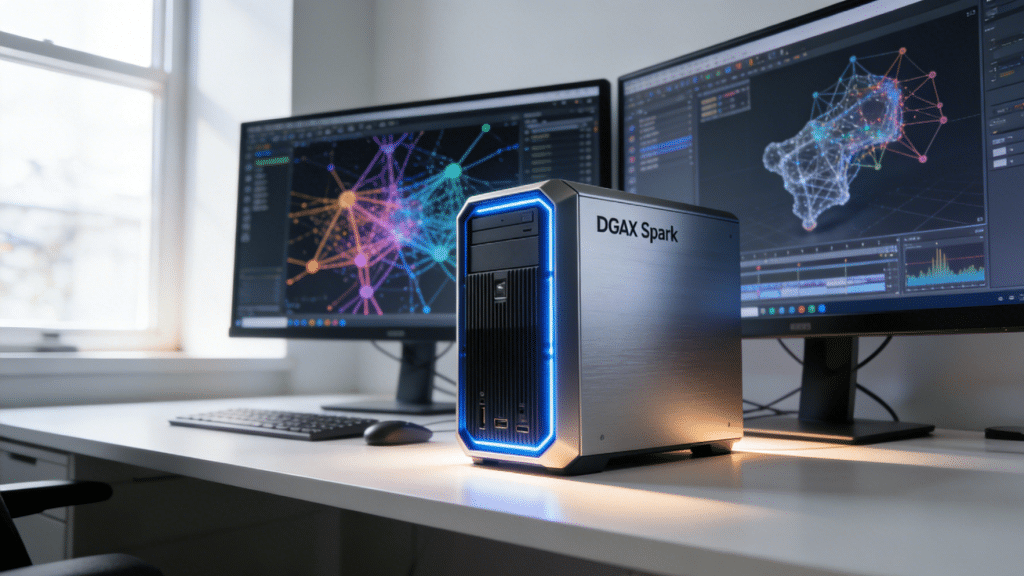
Developers, start-ups, and corporations are switching to local Artificial Intelligence workstations (computers) rather than using the Cloud for AI development. There are several reasons for this transition to an emphasis on developing artificial intelligence locally rather than using cloud-based solutions, including (i.e., increased costs associated with the Cloud, privacy and security concerns, and demand for consistent, fast performance).
The use of Cloud technology or Cloud service providers has provided many organisations with access to an artificial intelligence development environment; however, as a result of the nature of AWS pricing or the bulk purchase agreement (especially regarding usage in a “token or pay per use” type model), the ongoing cost associated with using the Cloud has made it impractical for teams performing on-going tests or for custom models to test their model with different parameters. Local artificial intelligence models require an initial capital investment, but over time, the return on investment increases for companies that use them.
What Defines a High-Performance AI Workstation
An AI workstation is only as powerful as its weakest component. In 2026, the most competitive systems are built around a few critical elements:
- High-end GPUs with large VRAM (the most important factor)
- Multi-core CPUs for preprocessing and orchestration
- RAM configurations ranging from 64GB to 256GB or higher
- High-speed NVMe SSDs for fast data access
- Efficient cooling systems to sustain long workloads
Top AI Workstations Ranked (2026)
1. NVIDIA B300 AI Workstation: Best Overall
Standing alone as the top contender in the world of AI workstations for training large models or running enterprise-scale workloads, NVIDIA’s B300 offers superior performance. It was built for running heavy-duty AI applications and features fast data transfers, the ability to process large amounts of data simultaneously (scalability), and the ability to complete tasks more efficiently than any other workstation available today.
2. AMD AI Workstations: Cost-Effective
AMD has developed an entirely new line of AI workstations that have significantly improved their price-to-performance, enabling them to compete more effectively with Nvidia. These workstations are perfect for developers who want powerful tools at an affordable price.
3. Apple Silicon Ultra System: Best for Developers, Optimized AI Workflows
Apple continues to amaze with its unified architecture, which delivers greater efficiency and optimization than competitors’ systems. While Apple’s systems may not be the obvious choice for heavy-duty model training, they excel at performing inferences and executing tasks that require optimized workflows.
4. Custom RTX 5090 Builds
The next generation of GPUs is custom-built machines that provide flexibility for users and allow for future upgrades without the need for a case with added or removed components, depending on your needs. This type of machine is very popular among researchers and developers because it allows them to experiment with custom builds and configurations.
Suitable for: Custom builds and experimentation
Strengths: Flexible build configurations and scalable builds
Weaknesses: Requires technical expertise and significant setup time
Comparison Table: Token Cost vs Performance
| Setup Type | Initial cost | Ongoing Token Cost | Performance level | Scalability | Best Use case |
| Cloud Platforms | Low | High | High | High | Short term |
| Mid- range Workstations | Medium | None | High | Moderate | Independent Developers |
| High – End workstations | High | None | High | High | Enterprise& research Labs |
Why Local AI Wins in the Long Run
One of the primary advantages of local AI workstations over cloud-based options is the predictability of costs. Cloud services base their pricing on the amount of resources you utilize, so your expenses will scale with how much experimentation you do. If you develop and test models regularly, your costs can increase dramatically, which creates budget constraints.
With local workstations, you have no recurring costs and can experiment as much as you like without worrying about your budget. This encourages you to innovate and iterate quickly as well as conduct more thorough experiments.
Another significant benefit of local workstations is data privacy. By never leaving the local environment, sensitive data is protected from potential risks associated with third-party storage and compliance issues.
Local workstations may have some long-term cost benefits; however, the initial investment can be a major barrier to entry for new developers. High-end workstations typically require a large capital outlay, making them difficult for new developers to afford.
However, when assessing the longer-term potential return on investment for organizations that use AI workloads daily, it becomes apparent that the workstation cost will be recouped quickly through savings on cloud costs associated with AI development.
Challenges of Local AI Infrastructure
Although Local AI offers significant value, consider these potential obstacles.
- Initial Setup Cost (High Cost)
- Power Consumption and Electric Bill (High Cost)
- Heat and Cooling (High Maintenance)
- Hardware Maintenance/Upgrades (High Cost/Time)
In these cases, it seems that Local AI will not be a complete solution for everyone, but many organizations will adopt hybrid models that leverage cloud scalability and the efficiencies it provides.
The Future of AI Workstations
Growth/Increase in Local AI Will Continue-Additional Vendors/Developers transitioning to their own compute resources as hardware becomes more powerful and available. Trends driving change are:
- Lower-priced (affordable), higher-performance GPUs are available.
- More organizations are adopting Hybrid AI workflows.
- More vendors are building consumer hardware ready to run AI applications.
All of this is fundamentally altering how we build, test, and deploy AI applications.
Conclusion
In 2026, we will no longer have a cloud-centric view of the AI landscape, and therefore will see a shift in power from the cloud to Local AI workstations for many organizations who wish to maximize control, lower costs, and increase performance using their own computing resources. For developers pursuing an AI-focused career, investing in the right workstation should be viewed as a strategic decision rather than just a technological one. The change towards Local Infrastructure will represent a greater paradigm shift in building the future of AI.
Source- The GPU benchmarks hierarchy 2026: Ten years of graphics card hardware tested and ranked