Cupertino, California
For many years, smartphone owners have molded themselves to adapt to the device’s ways by memorizing various hand gestures, browsing elaborate menus, and following set voice commands to accomplish routine tasks. Now, Apple is attempting to turn the tables completely.
New developments in accessibility and AI technology indicate that the next iPhones will finally be able to comprehend and respond to their users in an altogether different way.
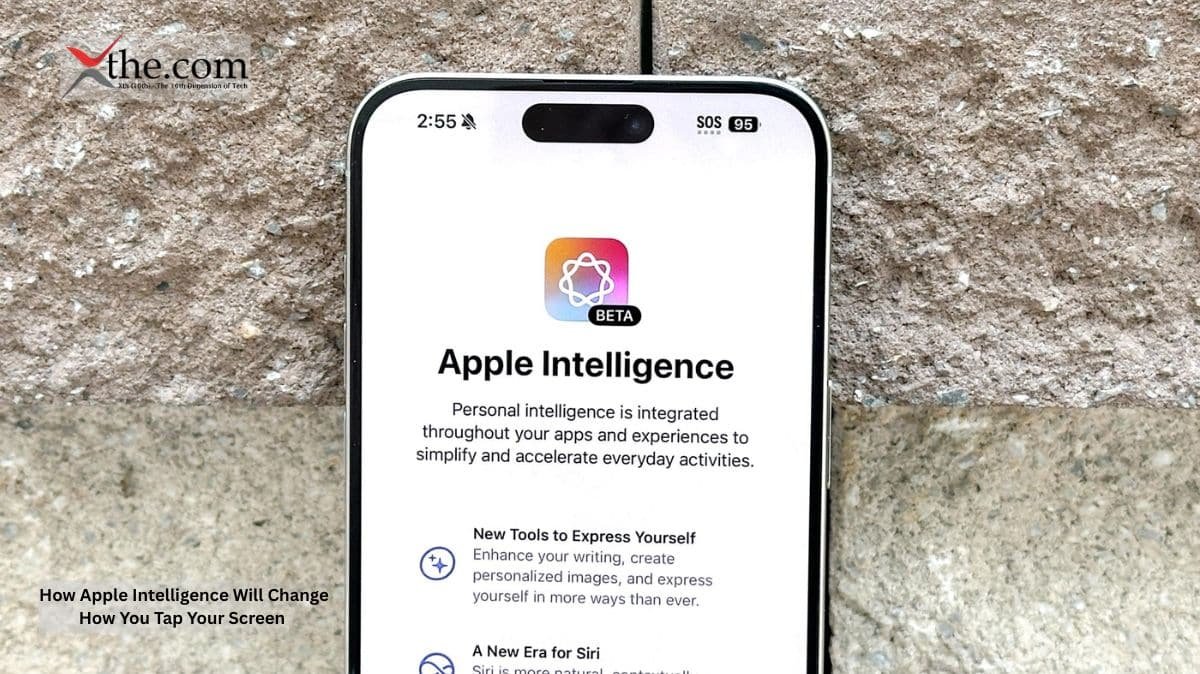
Central to this paradigm shift will be the concept of Apple Intelligence, which refers to Apple’s growing artificial intelligence system being built to create more contextually aware, customized, and intuitive experiences on devices.
It will not only recognize the exact command but also understand its meaning. People who have owned smartphones for several years have conditioned themselves to behave like the device by memorizing gestures, scrolling through complex menus, and issuing simple voice commands.
Apple, with new advancements in AI technology, is now trying to reverse all of this.
With recent breakthroughs in AI and accessibility technologies, it is clear that future iPhone devices will interact with users in an entirely new way. This new approach is based on Apple Intelligence, the growing artificial intelligence framework within Apple aimed at creating more context-aware and personalized experiences.
Not only will it recognize the command, but it will also understand the intended meaning behind it.
Voice Command Advancements on iPhone
Old voice assistants required very precise phrasing to function effectively. There was always the need to repeat commands several times or learn specific triggers that would enable the action.
With Apple’s latest Natural Language Voice technology, all of that friction is being eradicated.
Users can now describe their needs in plain language rather than issuing mechanical commands. For instance, a user will at one point ask his phone to “open the app that I use to edit photos or “open up the place where I can set my brightness level.”
Using context enables greater accuracy in predicting what users require.
What to expect from a voice navigation assistant
- Greater ability to interpret the meaning behind user instructions
- Contextual intelligence in navigating devices
- Speedy navigation to hidden functions
- Less reliance on screen manipulation by hands
- Easier usability for visually impaired users
This shows a clear shift from command-driven to AI-driven assistance.
Reasons Why Everyday Consumers Would Care About This
Consumers who buy new devices are less interested in simple hardware upgrades. Buyers want devices that really do seem smarter.
This makes Apple Intelligence increasingly relevant in preparing for the next iPhone product cycle.
Buyers upgrading from old models are looking for software that simplifies navigation and saves time. AI navigation might become one of the most attractive features of future Apple devices.
This could make it easier for some less experienced users to operate advanced smartphone functionality.
How the iOS Update Might Transform Everyday Phone Usage
The iOS Update is likely to bring many of these AI-enhanced accessibility tools directly into the operating system.
Whereas AI tools currently exist as standalone features, future updates might make them an intrinsic part of regular navigation.
This would transform the way consumers use their phones on a day-to-day basis.
Areas where AI navigation can be used to enhance user experience
- Messaging applications
- Camera and image editing tools
- Operating system options and settings menus
- Accessibility and voice-over capabilities
- Multitasking and search functions
It seems that Apple wants to make its smartphones less technical and more user-friendly.
Why Does It Matter that Apple Accessibility Tools Are Helpful?Why Does It Matter that Apple Accessibility Tools Are Helpful?
Previously, technology firms developed accessibility tools primarily to assist people with disabilities. However, Apple’s recent approach indicates that accessibility features are becoming innovations in usability.
Tools that enable voice interaction would make life easier for professionals who are busy, parents handling various activities at home, motorists using hands-free communication systems, and senior citizens who find it difficult to use small screens.
This increased utility makes the commercial application of accessibility tool development more appealing to AI.
Consequently, Apple Accessibility tools are becoming important product attributes rather than just additional functionality buried in the settings menu.
This helps the firm improve its corporate image of being a technology company catering to consumers.
Can This Shape Apple’s iPhone 17 Tech Strategy?
Industry experts see AI enhancements becoming key to Apple’s future hardware ecosystem, especially amid growing competition in the smartphone market.
Customers are keeping their phones for longer periods, making software innovation necessary to incentivize the switch to better models.
And here lies the significance of iPhone 17 Tech talks.
Should Apple succeed in creating a conversational interface that makes phone operations easier, this development could be considered among the most significant user interface advancements since touchscreen mobile devices entered the mainstream.
Reasons why Apple’s AI strategy can matter commercially
- Consumers are looking for intelligent devices.
- AI is shaping the decision to upgrade
- The appeal of accessibility tools widens reach.
- Software innovation replaces hardware.
- Premium smartphone competition continues unabated.
Apple is counting on intelligence and usability to shape the future of personal computers.
The Future of Interaction On SmartphonesThe Future of Interaction On Smartphones
The term “New Apple Intelligence voice navigation features” is becoming popular because the development involves much more than a simple software feature. The technology promises a future in which devices will act more like adaptive assistance than a strict software product.
In the future, as AI becomes increasingly advanced, smartphones can predict user actions, simplify workflows, and eliminate many of the issues that arise with today’s interfaces. The evolution of Natural Language Voice systems may also redefine how users interact with applications, settings, and digital assistants in everyday life.
Even though future technology is still in development, Apple wants to play a leading role here.
Conclusion
Apple’s latest AI and accessibility initiatives indicate that smartphone interaction is evolving significantly beyond simple touchscreen taps. By adopting conversational navigation, contextual awareness, and intelligent voice-based technologies, Apple aims to make its products accessible to everyone, not just experienced customers. As AI becomes an essential component of customer interactions, Apple Intelligence has the potential to revolutionize how consumers interact. The growing demand for smarter interfaces also shows how Tech Upgrades are shifting away from hardware alone and toward software-driven user experiences.
Source- Apple Newsroom