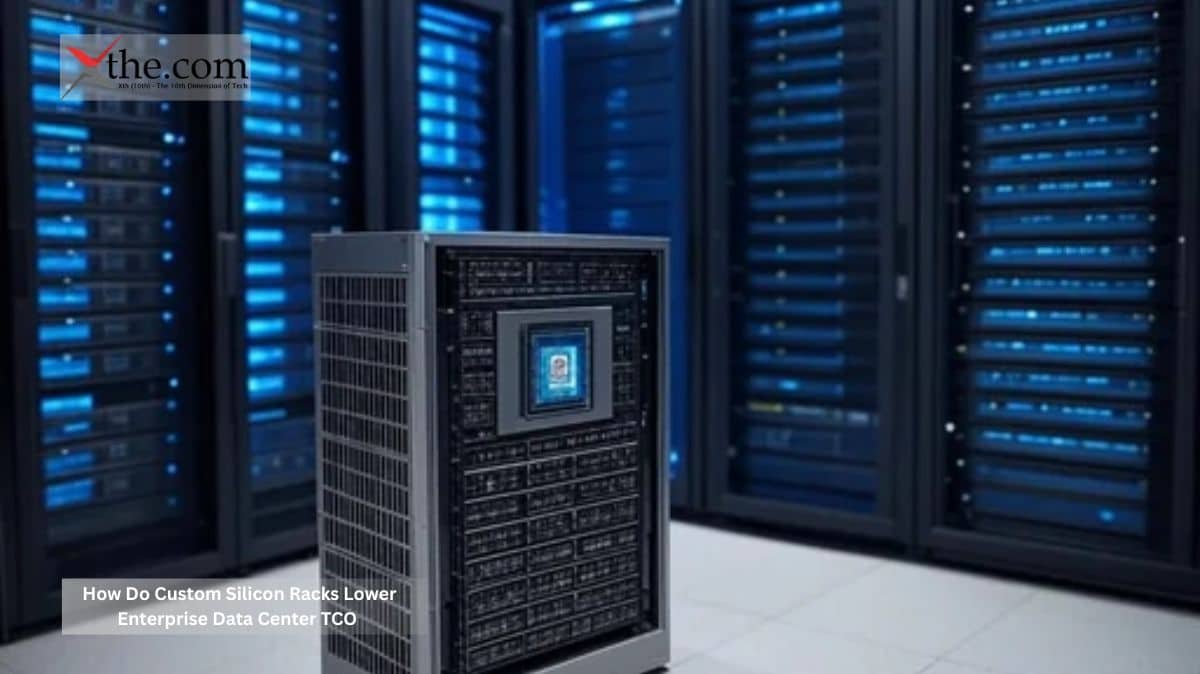
Today, enterprise data centers consume more energy and process more data. In view of the further development of artificial intelligence, computing tasks, cloud computing platforms, and big data analytical processes, companies face significant pressure to control costs and ensure efficient IT infrastructure.
Historically, most businesses have used standardized servers that were offered by large hardware providers. Today, however, many business leaders seek to use Custom Silicon Racks tailored to their specific computing tasks.
As industry analysts note, this trend completely changes enterprises’ approach to infrastructure, power consumption, and operational expenditures.
One reason for the growing interest in customized infrastructure is organizations’ efforts to minimize their Data Center TCO when processing sophisticated computational tasks.
Rather than relying on generalized hardware platforms designed for mass markets, enterprises focus on custom architectures better suited to their software stacks.
Why Legacy Server Infrastructure is Turning into a Costly Affair
Current enterprise workload management is highly resource-heavy compared to previous years.
The workload that current businesses operate consists of:
- AI model training
- Cloud computing setups
- Real-time analysis
- Video processing
- Autonomous software
- Enterprise automation
All of which require large amounts of electricity inside data centers.
Legacy generic servers end up performing unnecessary functions that may never be used by an enterprise organization.
This ends up wasting power, cooling, and other resources that could otherwise be utilized productively.
Need for specialized infrastructure systems.
Here, Custom Silicon Racks come into play.
Changes in Infrastructure Design Through Custom Silicon Technology
Using custom silicon infrastructure means one can tailor hardware to specific application layers rather than designing servers that perform all kinds of computations.
In essence, companies with high AI inference needs can design processors that perform best for such applications, rather than general-purpose processors.
Cloud infrastructure operators may opt for hardware designs that optimize virtualization or storage operations.
Workload efficiency will definitely be enhanced within the enterprise infrastructure environment due to customization.
Companies using customized racks enjoy the following advantages:
- Better workload efficiency
- Low energy consumption
- Cooling efficiencies
- Minimal hardware wastage
- Efficient computations
- Infrastructure scalability
With the increasing use of Scalable Hardware infrastructure, the future seems bright.
Why It is Essential to Prioritize Energy Efficiency
One of the key reasons customized infrastructure is more relevant than ever is the rising electricity prices.
Data centers operate at a large scale and consume large amounts of electricity continuously. The development of AI infrastructure increased energy consumption to cool and power high-performance processors and accelerators.
It is predicted that Energy Efficiency will become one of the most critical advantages for enterprise infrastructure over the next 10 years.
Customized silicon solutions reduce excess energy consumption by excluding unnecessary hardware for certain workloads.
- As a result, enterprises can:
- Reduce electricity usage
- Decrease cooling infrastructure
- Optimize thermal management processes.
- Avoid idling of the hardware.
- Prevent energy waste at the rack level.
How Does Custom Silicon Lower Infrastructure Cost?
Reducing Infrastructure Cost is one of the primary motivations for moving towards customized racks.
While developing such hardware requires higher upfront capital, operational cost savings can help companies cover their expenditures.
These customized solutions will result in:
- Higher power consumption
- Increased pressure on cooling
- Excess hardware capability
- Wastage in network utilization
- Rack density limits
Furthermore, customized designs enable companies to implement highly optimized data centers that can support heavy loads within a relatively smaller physical space.
As a result, they incur lower real estate and management costs in their infrastructure environment.
According to industry experts, the cost savings are even more apparent in organizations that run large-scale cloud or AI infrastructure solutions.
American Business Interests at Stake
In the United States, enterprises face mounting pressure to update their existing infrastructure and keep their operations budget-neutral.
Rising energy costs, the expansion of AI infrastructure, and growing demands for computation compel American businesses to rethink their approach to data center construction and maintenance.
With that said, the idea of custom silicon seems especially appealing given the better control over performance, efficiency, and scalability.
According to industry analysts, the Enterprise custom silicon rack data center migration guide could be a useful tool for future infrastructure development.
At the same time, this change is likely to prompt conventional server manufacturers to introduce more customization options in their future products.
The Road to Future Infrastructure Development
AI technology and cloud computing have been advancing rapidly worldwide.
In light of that, enterprises will focus on deploying customized computing systems for specific tasks rather than on generic hardware.
One key advantage that could separate competitors in the field of infrastructure management is the development of custom silicon.
The use of Scalable Hardware, optimized cooling solutions, and workload-based silicon could yield significant savings for enterprises.
Conclusion
The movement toward Custom Silicon Racks reflects a broader transformation happening across enterprise computing infrastructure.
Rather than depending entirely on traditional server architectures, companies are increasingly investing in customized hardware systems designed specifically around their operational workloads.
By improving Energy Efficiency, reducing Infrastructure Cost, and strengthening Procurement Strategy flexibility, enterprises hope to lower overall Data Center TCO while supporting rapidly expanding AI and cloud workloads.
As infrastructure demands continue growing globally, customized silicon systems may become one of the most important foundations of future enterprise data center design.
Source- Nvidia Newsroom