Santa Clara, California —
Portable gaming devices have become quite popular in recent years. Gaming devices that were once considered products with little use are now transforming into entertainment tools capable of playing advanced AAA games while fitting inside a backpack. Nevertheless, one issue continues to frustrate gamers: battery efficiency.
Most portable gaming devices struggle to balance graphics performance with battery lifespan. In many cases, handheld systems run advanced games for less than an hour before requiring charging, while some devices reduce visual quality to conserve energy. However, Intel appears to have different plans with the launch of its newest processor lineup.
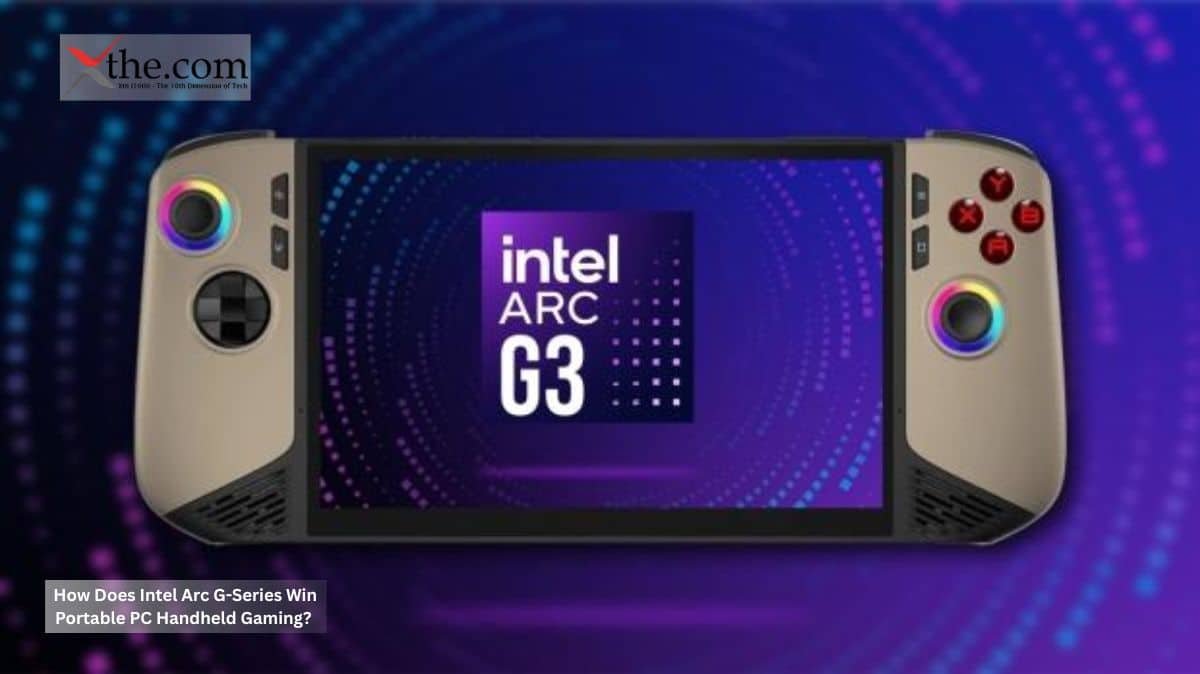
The company announced the development of new gaming processors through its client computing division and introduced a hardware range specifically targeting handheld Windows gaming systems. The processors are called Intel Arc G-Series, and the company confirmed there will be two variants: G3 and G3 Extreme.
The processors are designed to compete directly against AMD and Qualcomm chips dominating the growing handheld gaming sector.
Why Does Handheld Gaming Matter?
The worldwide growth of portable gaming devices has increased demand for hardware capable of delivering PC-level gaming experiences while remaining portable. Consumers increasingly want devices that combine laptop-grade flexibility with console-level convenience.
MSI, Acer, ASUS, Lenovo, and OneXPlayer are among the companies aggressively expanding into the handheld gaming market. However, gamers still regularly complain about:
- Short battery life
- Heat buildup during long sessions
- Slow frame rates in high-end games
- Loud cooling systems
- Weak graphics performance
- Online gaming lag
According to Intel, its latest Portable Handheld PC processors are specifically designed to solve these problems.
The company claims the chips were built exclusively for handheld gaming instead of adapting traditional laptop processors for portable systems.
The Importance of Xe3 Architecture
At the center of the new processors is Intel’s Xe3 Architecture graphics core. The newly introduced graphics platform focuses heavily on balancing performance while reducing power consumption.
Reports suggest the Xe3 Architecture includes specialized rendering pathways optimized for compact gaming systems. Intel reportedly modified shader pipelines and memory allocation systems to reduce unnecessary power usage during gameplay.
The architecture enables improved ray tracing performance while keeping thermal output under control. Intel also disclosed several upgrades specifically designed for portable gaming environments.
Enhancements Made to Xe3 Include
- More efficient shader operations
- Lower idle power consumption
- Faster texture loading
- Improved thermal balance
- Reduced background GPU workload
- Smoother frame pacing during movement
Integration of Intel’s New Panther Lake Core
Another major feature is Intel’s newly introduced Panther Lake Core design. These CPU cores were specifically engineered to improve mobility while still supporting demanding gaming workloads.
Intel states the chip dynamically distributes workloads between efficiency and performance cores depending on the game being played. This allows systems to conserve energy during lighter workloads while boosting performance during graphically intense scenes.
The architecture also improves coordination between CPU and GPU operations to reduce bottlenecks.
This results in:
- Lower background power consumption
- Faster game launch times
- Improved thermal management
- Smoother gameplay performance
- Better multitasking support
These optimizations are especially important for handheld systems with limited cooling capacity.
How XeSS 3 Upscaling Improves Battery Performance
Another major highlight from Intel’s announcement is the implementation of XeSS 3 Upscaling technology. The system uses artificial intelligence to generate high-definition visuals without heavily stressing the graphics hardware.
Instead of rendering every frame traditionally, AI reconstructs portions of images using predictive rendering techniques. This lowers GPU strain while maintaining high visual quality.
According to Intel, XeSS 3 Upscaling allows handheld gaming devices to run modern titles at high settings without draining battery life excessively.
Additional Benefits Include
- Higher frame rates
- Reduced energy consumption
- Improved image reconstruction
- Lower GPU heat generation
- Better action-scene performance
The technology also works together with Mobile Frame Generation systems that insert intermediate frames to improve motion smoothness during gameplay.
How Does It Impact AMD and Qualcomm?
AMD has dominated the handheld gaming market for years through its Ryzen gaming processors. Qualcomm has also expanded aggressively into portable Windows devices with battery-efficient ARM chips.
Now Intel appears ready to challenge both companies directly.
The launch of Intel Arc G-Series signals Intel’s transition toward dedicated handheld gaming hardware rather than adapting laptop processors for portable systems.
Industry analysts believe companies such as Acer, MSI, and OneXPlayer may rapidly adopt the chips if real-world performance matches Intel’s demonstrations.
Intel also confirmed it would implement a cloud-based shader delivery platform to reduce background shader compilation and improve startup efficiency without wasting energy.
The company additionally referenced early Intel Arc G3 Extreme handheld processor battery benchmarks, which reportedly show major efficiency improvements over previous-generation handheld hardware.
Why American Gamers Should Care
Demand for portable gaming devices in the United States continues rising as gamers seek greater flexibility without sacrificing performance.
Long flights, busy schedules, college campuses, and remote work environments are all increasing the need for high-performance portable gaming systems.
Intel suggests its upcoming hardware lineup could significantly improve gaming mobility for consumers seeking both performance and battery efficiency.
Conclusion
Intel’s latest handheld gaming strategy represents far more than another processor launch. With technologies such as Xe3 Architecture, Panther Lake Core, XeSS 3 Upscaling, and Mobile Frame Generation, the company aims to solve some of the biggest frustrations affecting portable gaming devices today.
As manufacturers begin integrating the hardware into next-generation handheld systems, the Intel Arc G-Series platform could emerge as one of the strongest competitors in the portable gaming market.
Source- Intel Arc G-Series Processors Set a New Standard for Handheld PC