





Olathe, Kansas
Most serious backcountry hikers know the feeling: two days into a five-day trek through Colorado’s Weminuche Wilderness, your GPS watch suddenly warns you that the battery is down to 20%. At that point, you have only one choice either limit your watch’s features or dig out the USB cable and the heavy power bank you hoped to avoid carrying. The Garmin Instinct Solar was designed to prevent this situation, and its technology is much more advanced than simply adding a solar panel to the watch face.
The Physics of Outdoor Battery Life on Your Wrist
For the past decade, wearable makers have tried to reduce power use without losing features. Most brands run into the same problem: brighter AMOLED screens, more powerful biometric processors, and always-on GPS quickly drain a 300-400 mAh battery in less than 2 days. Garmin Instinct Solar avoids this issue by rethinking energy use, starting with the lens.
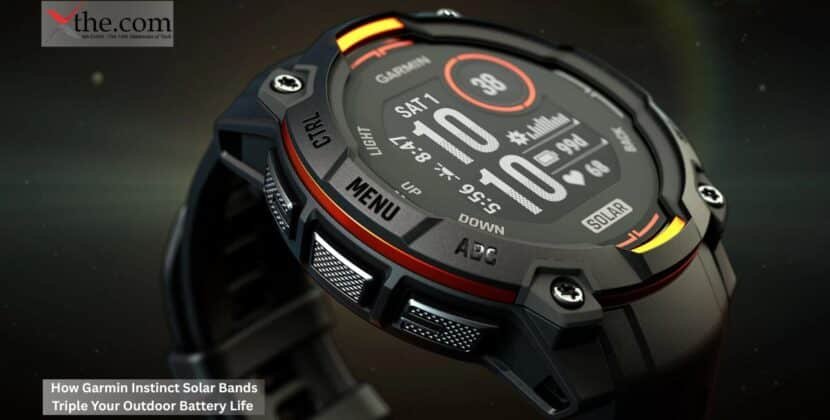
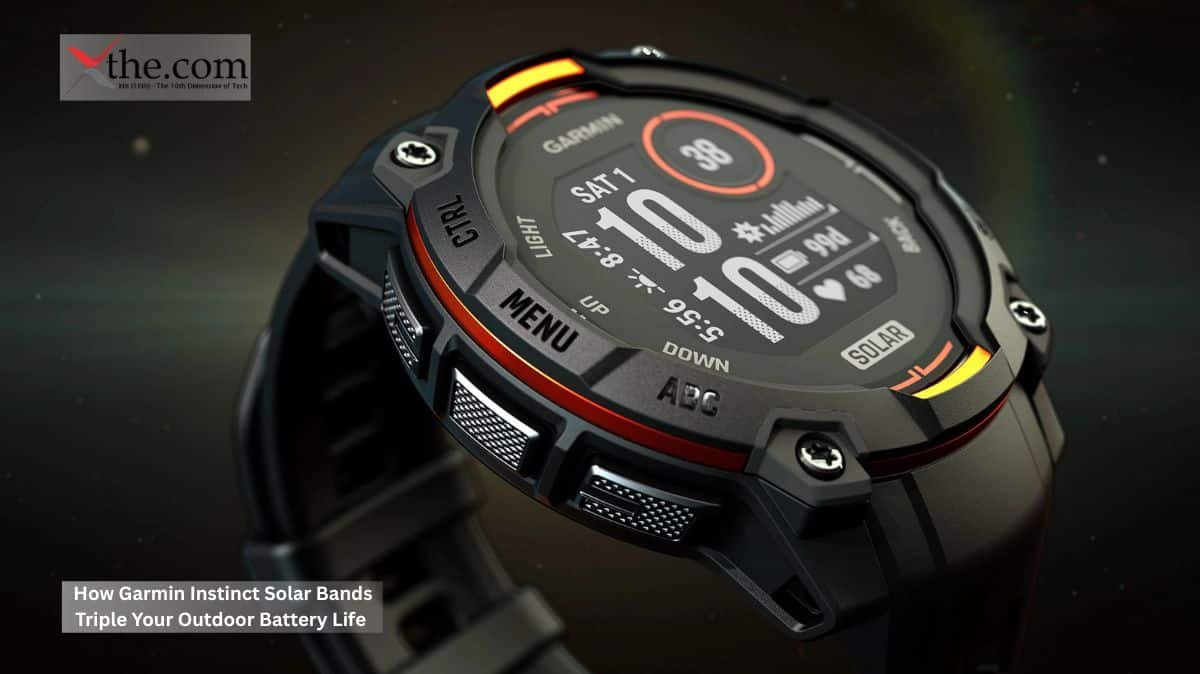
This technology stems from Garmin’s acquisition of SunPartner Technologies, and the design uses a layered approach: a cover lens, a solar layer, a display, and a motherboard. This stacking is not just for looks. The solar layer captures ambient light before it reaches the display, converting it into electricity and sending it directly to the power management unit. Importantly, Garmin continued using Memory-in-Pixel (MIP) display technology rather than switching to AMOLED screens. MIP uses much less power than AMOLED because it only draws energy when the image changes, which is a big advantage for a device that mostly shows steady data like pace, heart rate, and elevation.
Power Glass Technology: What the Spec Sheet Doesn’t Tell You
Power Glass Technology is Garmin’s own name for its photovoltaic lens design, and the engineering details are more important than the marketing. Early solar designs, including the first Instinct Solar, used a single clear layer between the display and the outer glass. This layer was divided into two zones: highly efficient solar panels along the edge of the display and much less efficient panels with about 10% photovoltaic efficiency under the main screen area.
The 2X Solar and later Instinct 3 Solar units addressed that efficiency gap head-on. They moved the solar hardware off the main display and into a dense ring around the bezel. This change removed the reddish tint seen in earlier versions and added more photovoltaic material where it works best. As a result, the Instinct 2X Solar’s Power Glass lens generates 50% more energy than the standard Instinct 2 Solar, providing unlimited battery life in smartwatch mode if it gets three hours of direct sunlight at 50,000 lux each day.
While 50,000 lux might sound like a lot, a clear summer day in the American West often goes over 100,000 lux. Walking along a ridge in Wyoming in August is basically like charging your watch the whole time.
Biometric Nodes and the Cost of Sensing Your Body
Battery life numbers don’t matter if the sensors use up power faster than the sun can recharge them. This is where the biometric nodes the group of optical LEDs, accelerometers, barometric altimeters, and compass modules inside the watch present a real engineering challenge.
The Instinct Solar’s Pulse Ox feature checks blood oxygen levels using red and infrared LEDs in the optical sensor. The Body Battery system combines heart rate variability, stress, sleep, and activity data to estimate your energy level. Using both features simultaneously consumes a noticeable amount of power. Turning off the Pulse Ox feature can make a big difference in battery life; reviewers who kept it on all the time had much shorter runtimes than those who only used it at high altitudes.
Garmin’s solution to this tradeoff is the Smart Energy Manager, a power-management tool that lets users choose which sensors turn on in different situations. For example, a thru-hiker in the Sierra Nevada at 11,000 feet might keep Pulse Ox monitoring above 9,000 feet but turn it off in the valleys. A trail runner in Vermont probably doesn’t need oxygen monitoring based on altitude. The Smart Energy Manager doesn’t just limit features; it uses smart logic to decide when each sensor is worth the energy.
Backcountry GPS: The Feature That Eats Batteries Fastest
Of all the features on the Instinct Solar, backcountry GPS uses the most power. Keeping a constant connection to multiple satellite systems can drain the battery so fast that even strong solar charging isn’t enough. Garmin’s Expedition Mode tackles this by recording GPS points once per hour by default, though you can change this setting. This extends battery life to 28 days without solar or up to 68 days with enough sunlight.
The Instinct 2 Solar could handle about 48 hours of GPS tracking on solar power, but the Instinct 3 Solar increased that to around 130 hours. Independent reviewers found that battery drain stayed below 1% per hour, also in demanding GPS modes. This improvement isn’t just from better solar charging. The whole system matters: Power Sapphire or Power Glass lenses, low-power MIP displays, Maximum Power Point Tracking for better energy harvesting, efficient processors, and well-tuned firmware all play a role. While a competitor might copy one part, duplicating the entire system would take years of engineering.
For an American hiker finishing a 10-day trip through Utah’s Escalante canyon country, the takeaway is simple: you can leave your power bank at the trailhead.
Garmin Instinct Solar Smart Band Battery Life Optimization Specs: By the Numbers
Understanding Garmin Instinct Solar smart band battery life optimization specs requires accepting that the numbers are conditional, not fixed. Published figures assume specific solar exposure levels and feature profiles. Real-world performance follows from how a user configures the watch, not the headline specification.
One reviewer in Phoenix, where summer temperatures are often above 110°F and outdoor time is limited, found that the Instinct 2 Solar lasted 17 days from a 75% charge with almost no solar help. That suggests about 22 days from a full charge without solar. In contrast, a trail runner in the Pacific Northwest who spends four hours a day on sunny ridges often gets more than 30 days of battery life thanks to solar input. The same watch can perform very differently depending on where and how it’s used.
The optimization levers available to users are:
GPS mode selection: Switching from continuous multi-GNSS to UltraTrac greatly reduces GPS power use while still keeping accurate routes for slower activities like hiking and backpacking.
Pulse Ox scheduling: Using spot-check mode instead of all-night monitoring saves hundreds of milliampere-hours each week, while still providing altitude acclimatization data when needed.
Display timeout and backlight intensity: Even MIP displays have a backlight circuit. Reducing how often the backlight turns on can noticeably extend battery life, especially in remote areas where you can’t recharge.
What This Means for the Wearable Industry
There’s an interesting paradox in Garmin’s design. As devices get more efficient, solar input actually becomes more important, not less. When a device used 50 milliwatts, a few milliwatts from solar didn’t make much difference. But as the Instinct platform lowers total power consumption to just a few milliwatts in optimized modes, even a small amount of solar charging can make the device energy-neutral.
This has big consequences for competitors who try to match features just by adding more processing power. A faster chip that keeps sensors running longer doesn’t solve the battery problem for outdoor use; it actually makes it worse. Garmin’s track record with the Instinct Solar line shows that the better approach is to cut power use, use environmental energy wisely, and let users control the balance between features and battery life. Athletes who understand this design aren’t just bringing a better watch into the backcountry they’re changing how they think about power altogether.
Source: Garmin Newsroom