SAN FRANCISCO, California,
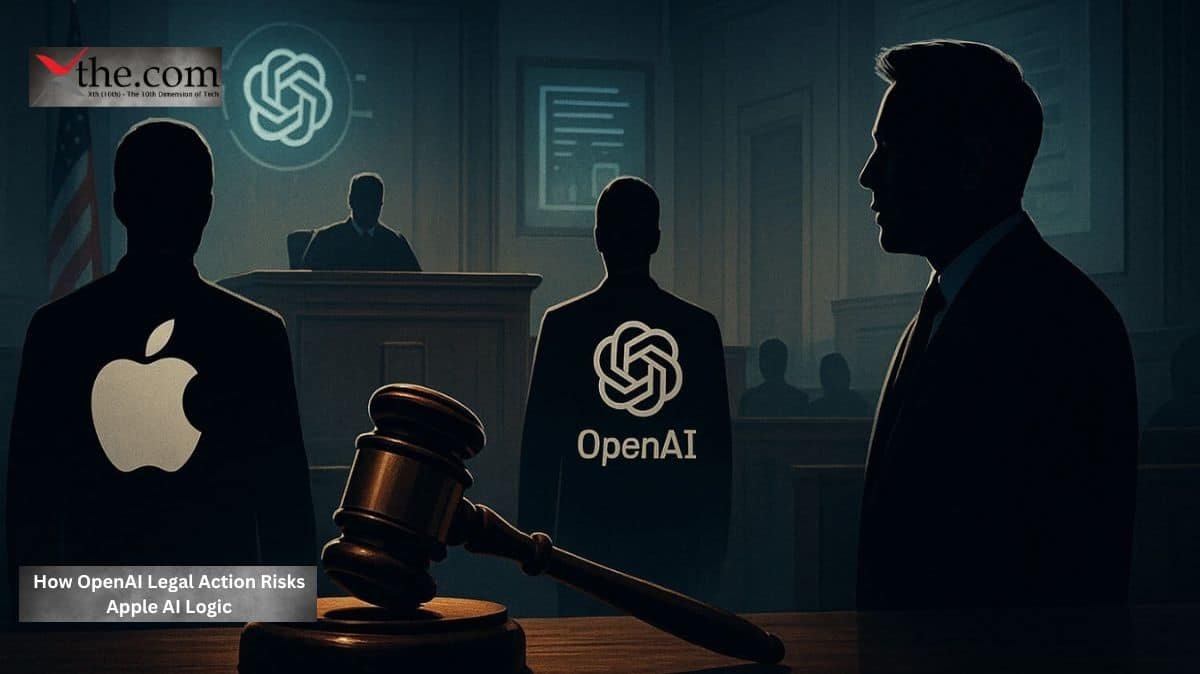
Atomic answer: OpenAI is seeking to take legal action against Apple ($AAPL) for a “breach of contract” regarding AI cooperation. This development could jeopardize ChatGPT’s integration into iOS and Siri applications, forcing Apple to turn to its internal “Ajax” models and those from Google and Anthropic.
OpenAI is reportedly considering legal action against Apple over an alleged breach of contract related to their growing artificial intelligence collaboration. The mounting dispute is fast becoming one of the biggest news stories in the consumer AI sector, as it could affect Siri integrations, enterprise AI processes, and future iOS AI Models.
The initial collaboration between Apple and OpenAI seemed to offer many strategic advantages for both parties. For Apple, this would help improve the company’s artificial intelligence system through advanced generative AI capabilities, while OpenAI would benefit from access to one of the largest mobile device ecosystems. However, growing tensions suggest there may be disputes over deployment rights, feature preferences, and even platform ownership.
Analysts suggest that the evolving Apple OpenAI Dispute may prompt Apple to accelerate its adoption of homegrown AI models and to work more closely with other organizations, such as Google and Anthropic. Depending on the outcome of their disagreement, enterprises may experience significant changes in how their AI operates on mobile devices.
Why the Apple OpenAI Dispute Is Important
This dispute does not exist in isolation between the two tech giants. Artificial intelligence technologies are becoming an integral part of corporate communication, automation, productivity tools, search, and customer interaction technologies.
Most organizations that have chosen Apple ecosystems expect their AI integrations to remain stable for at least a few years. Changes in provider relationships may impact corporate infrastructure planning and application compatibility.
Key enterprise considerations include:
- Possible elimination of ChatGPT-powered Siri integration
- Increased fragmentation among AI providers
- Compatibility challenges with enterprise workflows
- Device management challenges
- Security challenges with AI permissioning
The Apple OpenAI dispute is also an example of trends seen throughout the technology industry. AI companies are seeking greater control over user interaction technologies, while platform providers are seeking to reduce reliance on AI providers.
For enterprise IT leaders, this dispute underscores how quickly changes in AI partnerships can impact corporate infrastructure purchases and deployment planning.
The Future of iOS AI Models
The future of iOS AI Models might now hinge on whether Apple makes serious efforts at building robust in-house artificial intelligence. Sources state that the company is ramping up efforts to develop unique systems that reduce reliance on third-party cloud AI technologies.
Such a move is consistent with Apple’s longstanding privacy and security principles. The company might benefit from greater focus on developing in-house AI capabilities, enabling better performance while reducing reliance on third-party inference models.
Infrastructure upgrades might include:
- Multimodel AI interfaces
- Local device processing improvements
- Enhanced enterprise governance controls
- Better integration with Apple silicon
- Less dependence on cloud services for AI
The move towards implementing on-device AI technologies can be highly relevant for regulated sectors, especially when they have strict policies governing data handling. Companies in the banking, medical, and government sectors prefer to use localized AI systems that minimize their data exposure.
Enterprises might, however, incur additional costs in managing AI technologies if consumers are allowed access to different AI systems through device interfaces.
Procurement and Infrastructure Risks
The conflict is already impacting procurement conversations within enterprises. Enterprises that use numerous Apple devices for AI-powered workflows are starting to worry about the sustainability of the ecosystem.
Some industry experts speculate that tensions between Apple and OpenAI will further enhance cooperation between OpenAI and $MSFT. Given the current strategic partnership between Microsoft and OpenAI, new AI features will become more focused on Windows-based enterprise ecosystems rather than competing mobile operating systems.
Issues related to procurement within enterprises now include:
- Unforeseen transition of AI services
- Licensing and compatibility concerns
- Additional governance considerations
- More AI testing responsibilities
- Growing infrastructure fragmentation
The rising significance of multimodal AI also poses additional challenges. Enterprises now depend on technologies that can perform voice interaction, context search, image analysis, and workflow automation simultaneously.
In case of growing infrastructure fragmentation, enterprises may require approaches that remain agnostic to the specific models used by the AI ecosystem.
Operational Challenges Facing Enterprise IT Teams
The controversy may pose significant operational challenges to enterprise IT professionals tasked with managing mobile devices and enforcing cybersecurity policies. Currently, several companies adhere to rigorous policies governing application authorization, cloud integration, and enterprise data access.
A fractured AI landscape may necessitate fresh governance methodologies. If staff members are allowed to choose their preferred AI service providers from within their mobile device interfaces, then AI governance standardization may be complicated.
Here are some of the critical operational challenges that are likely to arise:
- Third-party AI permission control
- Unauthorized data leak prevention
- AI-generated enterprise content management
- AI governance policy standardization
- Application-level AI monitoring
The OpenAI legal options against Apple impact on iPhone AI features controversy may ultimately impact highly regulated industries the most. Industries including healthcare, finance, and government infrastructure need predictable technological ecosystems with stringent enforcement of compliance.
Consequently, many enterprises have already started exploring alternat.
Broader Trends in the AI Industry
The current Apple/OpenAI dispute reflects a broader shift underway within the technology sector. AI firms have stopped wanting to play only in the role of service providers working behind the scenes. Instead, they are beginning to push for a direct relationship with consumers and businesses.
At the same time, platform firms do not wish to remain dependent on any AI system, as this would ultimately create competition. The result is the rapid development of proprietary language models, AI chips, and an ecosystem strategy.
This particular dispute illustrates why local AI processing is likely to become strategically critical in enterprise computing in the years ahead.
Conclusion
The ongoing battle between OpenAI and Apple will likely have a profound impact on the evolution of enterprise mobile AI infrastructure. The increasing Apple OpenAI Dispute is a potential risk to all existing assumptions about Siri compatibility, workflow sustainability, and the future trajectory of iOS AI Models.
Enterprise technology executives should be ready to embrace new challenges related to increased diversity in AI governance practices, expanded AI testing methods, and a more intricate approach to managing mobile AI infrastructures moving forward, as the next iteration of enterprise AI systems is likely to feature significantly greater decentralization, driven by the fast development of multimodal AI and on-device AI deployment.
Enterprise Procurement Checklist
- Procurement Risk: Potential sudden loss of ChatGPT as the “default” Siri logic for corporate devices.
- Deployment Challenge: IT managers must prep for “multi-model” menus where users choose between LLMs.
- Financial Consequence: Strained relations may lead OpenAI to prioritize $MSFT Surface hardware for new features.
- Operational Step: Audit MDM policies to ensure “Third-Party AI” selection is governed by corporate security.
- Migration Effect: Enterprises should begin testing Google Gemini and internal Apple models for workflow continuity.
Source- Trump leaves Beijing with few wins but warm words for Xi