






US safety regulators have expanded their investigation into Tesla’s Full Self-Driving technology following the release of new crash data. This action puts a renewed regulatory focus on the company’s self-driving plans as it launches robotaxi services.
The National Highway Traffic Safety Administration began its initial review in 2024. On March 19, 2026, it upgraded this review to an engineering analysis. This could lead to a recall of about 3.2 million Tesla vehicles.
Key findings and data as of March 2026.
- The investigation now includes 3.2 million Tesla vehicles, models S, X, 3, Y, and Cybertruck, and focuses on whether the FSD system can safely operate in low-visibility conditions such as fog, heavy rain, or glare from the sun.
- NHTSA found 9 crashes tied to the FSD system in poor-visibility conditions, up from 4 at the start of the 2024 investigation. These crashes resulted in 1 death and 7 injuries.
- Investigators found that Tesla’s degradation detection system, a safety feature designed to warn drivers when the car’s cameras are unable to see clearly because of sun glare, fog, or dust, did not alert drivers until just before a crash.
- NHTSA said Tesla pointed to data and labeling limitations when seeking comparable incidents. This has led regulators to suspect that the company did not report oil crashes during some periods.
- Meanwhile, reports on Tesla’s pilot robot taxi service in Austin, Texas, show there have been 14 crashes since it launched in June 2025. The data suggests that these vehicles have a higher crash rate per mile than human drivers, with incidents ranging from minor crashes to collisions with buses.
Tesla’s Position and Future Focus
- Unlike other companies that use radar or LiDAR sensors that send out signals to detect objects around the car, Tesla uses only cameras. This makes the degradation detection feature responsible for issuing warnings when cameras are blocked, which is especially important for safety.
- Tesla released a software update in 2024 to address the visibility issue. NHTSA says it does not know whether the update was installed on the vehicles involved in the nine crashes.
- Even with more scrutiny, CEO Elon Musk is still moving the company’s focus. Tesla is shifting from regular car sales to robot taxis and AI-based self-driving software.
Finally, NHTSA is asking Tesla for more information about the instruments, including video footage from the cars and technical data from the full self-driving supervised software. A version of FSD where a human driver still supervises the system.
Tesla Inc. and Waymo reported more crashes in Austin over the past month, as both companies face growing pressure to improve their automated-driving technology.
Tesla, which runs a fleet of fewer than 40 cars that often still have human safety markers, reported another crash in its latest report to federal regulators. This brings its total to 15 since the service launched in June.
Waymo, which operates a fully driverless fleet of 200 cars, reported 4 new crashes. Its total has now reached 60 since June.
Tesla said its latest crash listed in National Highway Traffic Safety Administration data through Feb 17 involved other fixed objects. Details about what or who it was are not available. The company removes narratives from its public reports and did not respond to a request for comment.
The report shows the crash happened in an area with construction, maintenance, or quality work. The robot actually left its lane or the road and was moving at 9 mph before the crash. There was property damage but no injuries.
Most previous crashes have only caused property damage. However, one incident last summer resulted in the service’s worst injury to date, described as a minor, week-long hospitalization.
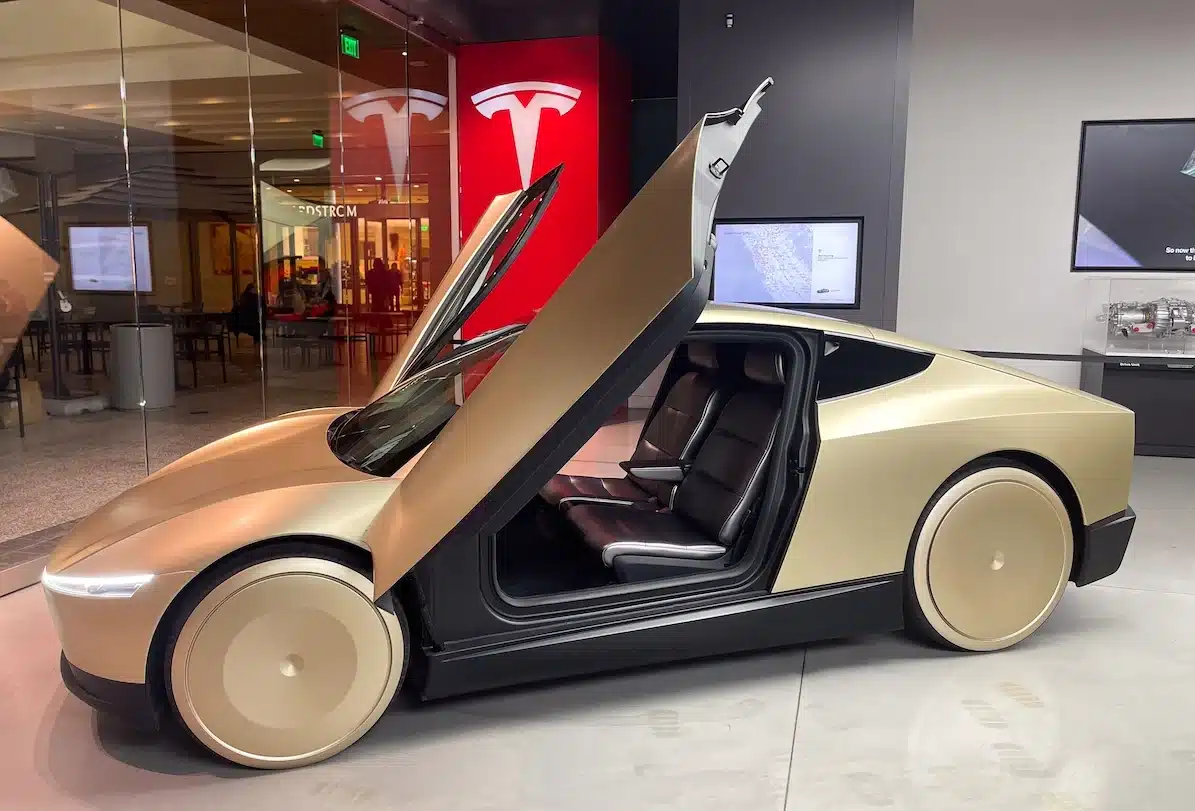
This crash data comes just before Tesla is expected to start producing its new CyberCab in April. The CyberCab is a purple-eyed robot taxi with word paint and two seats. Over the weekend, South by Southwest attendees saw a prototype on display in downtown Austin.
Tesla’s current robot taxi service uses Model Y vehicles. The company says it plans to remove human safety monitors and add more free self-driving vehicles over time.
Waymo, which leads the autonomous ride-hailing industry and is owned by Alphabet Inc., operates about 160 more vehicles in Austin than Tesla.
Of the four new cases reported by Waymo through mid-February, three involved pickup trucks. In one case, three passengers were on board, but no one was hurt. The Austin Police Department is investigating the incident.
Another recent Waymo crash in Maud, hitting a flat wooden object shortly after 2 a.m. Waymo did not say where this happened, but reported the vehicle was moving at 20 mph. In the pickup truck crashes, Waymo said its vehicles were either stopped or moving at 2 mph.
Operations in Austin. New on-Igene, I faced no scrutiny after one of his weapons blocked an Austin Travis County EMS ambulance responding to the mass shooting on the West 6th Street area this month. According to EMS Chief Robert Lackridge, the incident did not delay the response or affect the shooting victims.
Waymo is also under investigation for its driverless vehicles illegally passing stopped Austin school buses several times since the school year began. A National Transportation Safety Board investigation found that at least one human remote assistance agent told a Waymo taxi robotaxi to pass a stopped school bus in Austin while students were boarding.
Tesla is also under investigation for how its technology performs. In the latest case, the NHTSA is investigating claims that Tesla’s consumer vehicles have violated traffic laws while using what the company calls Full Self-Driving mode, the same system used in its robotaxis. The investigation began last year after dozens of reports of Tesla vehicles running red lights, driving on the wrong side of the road, and crashing into other vehicles, causing injuries.
In February, representatives from both companies answered questions in Congress about their business plans and safety records.
In addition to the crashes in Austin, Waymo also recently reported collisions in Dallas, Houston, and Del Valle. In the Austin-area crash, a Waymo vehicle was headed northwest on a highway in January when a raccoon ran into its lane. The vehicle swerved to let the raccoon pass, but the front left side still hit the animal, causing damage to the vehicle.
Source: Tesla, Waymo Report New Crashes as Robotaxis Face Scrutiny








