






Austin, Texas.
If just one robot arm stops working, it can halt a production line that’s worth millions every hour. This economic pressure is making manufacturers reconsider their industrial robotics infrastructure even before humanoid robots are widely used. While most discussions about Tesla’s Optimus project focus on mobility and AI, the bigger issue is the growing need for edge computing hardware capable of handling massive amounts of sensor data with near-zero latency.
Why Tesla Optimus Changes Factory Infrastructure Assumptions
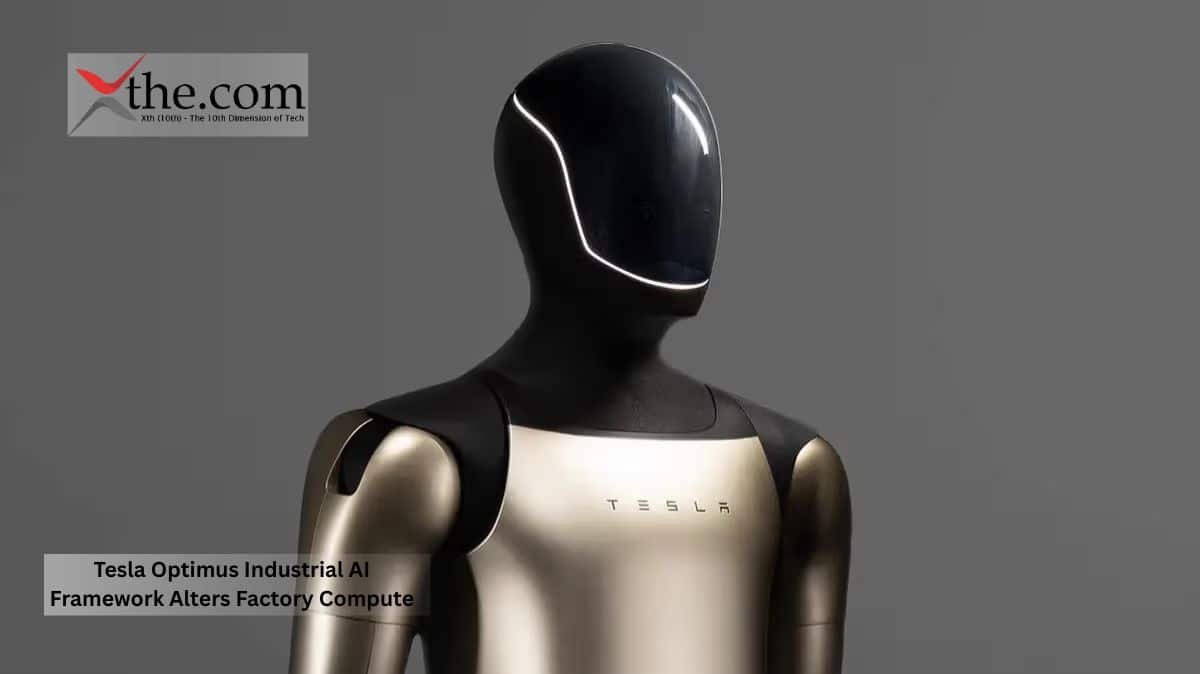
The latest Tesla Optimus factory deployment update signals a broader shift in manufacturing architecture. Traditional industrial automation relied on deterministic systems with narrowly defined tasks. Humanoid robots change the equation entirely. A robotic fleet operating inside a live production environment must continuously interpret spatial movement, human proximity, object orientation, torque resistance, and environmental variability.
All this puts constant pressure on local computing systems.
One advanced robot might handle several high-resolution camera feeds, lidar data, actuator readings, and force sensors simultaneously. Sending this data to faraway cloud servers results in unacceptable delays. Even a 100‑millisecond lag can lead to positioning errors, failed assembly, or safety risks to workers.
This is why industrial robotics increasingly depends on dense clusters of edge compute hardware positioned directly inside or adjacent to production facilities.
The costs and complexity grow quickly as you scale up. Inside a car factory, five hundred humanoid robots work in welding, moving materials, and checking quality, each continuously running AI tasks similar to those in self-driving cars, but in a factory setting. In this setup, the factory essentially becomes a distributed AI data center built around manufacturing.
The Compute Burden of Real-Time Vision Systems
Most business data centers focus on efficiently moving and storing data. In factories using AI, the top priority is fast response time.
Real-Time Inference Cannot Wait For The Cloud
The main challenge is the delay in real-time inference networking latency. Sending data to the cloud and back adds delays that robots can’t handle. While a few milliseconds of lag might not matter for regular apps, it’s a big problem when a robot is moving heavy parts near people.
Factories using advanced robots now depend more on local AI processing units placed close to the robots. These units manage movement planning, object recognition, setting safety limits, and making predictions without external help.
This setup requires unique infrastructure, including ruggedized GPU servers resistant to vibration and heat, redundant power systems for uninterrupted operations, low‑latency networking fabrics between robotic endpoints, distributed storage architectures for vision datasets, and thermal management systems capable of withstanding industrial contamination.
Unlike regular server rooms, factory floors expose computers to dust, oil, electromagnetic interference, and large temperature changes. Usual large‑scale data center designs don’t hold up well in these tough conditions.
The Growing Importance Of Vision Optimization
Modern robotic systems consume enormous compute cycles solely for visual interpretation. That has accelerated investment in computer vision models, leading to the optimization of edge strategies to reduce inference overhead while preserving accuracy.
Engineers now shrink models as much as possible to fit the limits of edge devices. Techniques such as quantization, pruning, and specialized AI chips help reduce power consumption and latency. If a vision model isn’t well optimized, it can overload the network for all the robots.
The problem is clear during busy times in the factory. If hundreds of robots simultaneously send raw video data to central servers, the network quickly becomes clogged. That’s why smart factories now process vision data locally and only send important summaries to the main servers.
Networking Becomes the Hidden Constraint
Manufacturers don’t realize how important their network is until they add more robots.
Why Private 5G Matters
Wi‑Fi systems designed for handheld devices struggle to meet the mobility demands of robots. Facilities deploying humanoid fleets increasingly evaluate private 5G infrastructure for smart factories because it offers predictable latency, deterministic communication, and improved mobility management.
Private 5G networks also help keep factory systems separate from regular business traffic. This separation is important because any robot downtime can cost a lot of money right away.
A modern robotics-enabled plant may support autonomous mobile robots, AI-powered inspection systems, real-time digital twins, machine-telemetry streaming, and human-safety monitoring systems, along with predictive maintenance analytics.
All these systems need bandwidth and expect fast, reliable connections.
The main slowdown isn’t just in the processors anymore. It now happens between computers, robots, and sensors working together across large factory spaces.
How to Build Edge Networks for Industrial AI
Understanding how to build edge networks for industrial AI requires abandoning traditional enterprise assumptions.
Factories should set up computing areas close to where the work happens, not in server rooms far from the production lines. Networks need backups that can handle interference and physical problems. Cooling systems also have to operate in dirty environments without shortening equipment life.
The most advanced setups now look like small telecom networks inside factories. Edge computing racks are placed near groups of robots. Special AI devices handle long local tasks. Fiber-optic cables connect different parts of the factory and keep everything in sync to the microsecond.
This change in design is why people now talk about industrial robots and edge computing hardware together.
Tesla’s Optimus project is more than just a robotics experiment. It shows that factories are becoming places packed with AI, where computing power, reliable networks, and tough equipment are key to success. Companies that see this early will be able to grow their AI‑powered factories safely and affordably. Those who overlook the infrastructure might find out that building the robot was actually the easy part.
Source: AI & Robotics Tesla








