






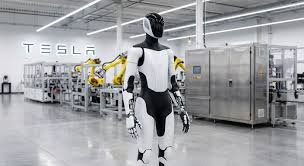
By 2026, the logistics industry will have shifted from traditional stationary automation to using flexible, bipedal humanoid robots. In the United States, fulfillment centers and warehouses are testing these robots to address ongoing issues such as high employee turnover and the handling of complex SKUs. Many startups are now competing in this field, but for most enterprise leaders, the main hardware question is whether to choose the Unitree G1 or the Atlas as the best humanoid robot for logistics. This decision comes down to picking a cost-effective, high-frequency fleet and a heavy-duty, industrial-grade robot built for tough environments.
How Physical Logistics Is Changing In 2026.
Logistics has changed dramatically, and now any new automation must be designed with people in mind. Rather than redesigning warehouses for robots, companies are choosing robots that can move through spaces built for humans. This approach, called brownfield automation, allows businesses to upgrade their existing facilities without incurring high costs for a complete overhaul. The main benefit is that these robots can handle physically demanding tasks, such as repetitive lifting and picking items from low levels, which are common causes of workplace injuries.
The use of large language models (LLMs) in robotic control systems has made these robots easier to use. Now, supervisors can give spoken instructions to entire fleets, reducing the time needed for retraining and deployment. This natural interface means that frontline workers can work with robots without needing technical skills. As the software improves, the main difference between top hardware options will be their physical features, which will guide companies in choosing a long-term logistics partner.
Unitary G1 Versus Atlas: Best Humanoid Robot For Logistics Tasks
The biggest difference between the Unitree G1 and Atlas is their intended use and workload. The Boston Dynamics Atlas, set for release in 2026, is a large industrial robot at 6.2 inches tall and nearly 200 pounds. It is built for heavy-duty jobs, able to lift up to 110 pounds and carry 66 pounds for long periods. For tasks like palletizing or moving car parts, Atlas offers the strength and flexibility needed to handle loads that would be too much for smaller robots.
On the other hand, the Unitree G1 is made for lighter, high-density logistics where agility and cost matter most. At 4.4 inches tall and about 77 pounds, the G1 can easily move through narrow aisles and mezzanines. Its payload is much lower, best for items under 10 pounds. But at around $16,000, it is the most affordable humanoid robot available. For the cost of one Atlas, a company could buy 20 or more G1 robots to handle sorting and small package delivery.
Industrial Durability and Environmental Resilience
Atlas works in tough environments that would damage regular electronics. It has an IP67 rating and operates from -20 degrees Celsius to 40 degrees Celsius. Its joints can rotate fully, so it can turn its torso all the way around to place a package behind itself without moving its feet. This unique movement makes it highly efficient in tight spaces, such as loading docks at large logistics centers. Atlas is built to handle constant use with little downtime.
The Unitree G1 is not as tough as Atlas, but its modular design is great for fast-moving micro-fulfillment centers. It has batteries that can be swapped out in less than 30 seconds, so it can keep working almost non-stop. Its software is based on ROS2 and includes an open SDK, enabling IT teams to create custom programs for their own warehouse setups. For companies that want robots they can program and adapt, the G1 is more flexible than the closed system of Atlas.
Strategic Fleet Deployment and Future ROI
The long-term success of using humanoid robots often relies on balancing tasks across different types of machines. Many US companies have found that the best approach is to use a mix of robots in a tiered system. Atlas robots are placed around the edges of warehouses to handle heavy freight and bulk sorting. At the same time, groups of Unity G1 robots handle the final steps, picking items from bins and moving them to packing stations.
This combined approach helps companies get the most value from their investment by using Atlas robots only for tasks that need special strength. The G1 acts as a link in the automation process, handling jobs that are too small for big machines but too repetitive for people. By using both the Unitary G1 and Atlas together, businesses can build a fully automated supply chain. The data collected from these robots enables companies to use predictive logistics, in which robots adjust their routes based on real-time traffic and order volume.
Conclusion
Humanoid robots have advanced to the point where choosing the right hardware depends on what the facility needs. Boston Dynamics’ Atlas is still the top choice for strength and durability, making it essential for heavy logistics and manufacturing. On the other hand, the Unitree G1 has changed the market by offering a flexible, affordable option for lighter tasks and research. In the future, US logistics will likely rely on both types of robots working together to create a stronger and more efficient supply chain.








