





Seattle, Washington
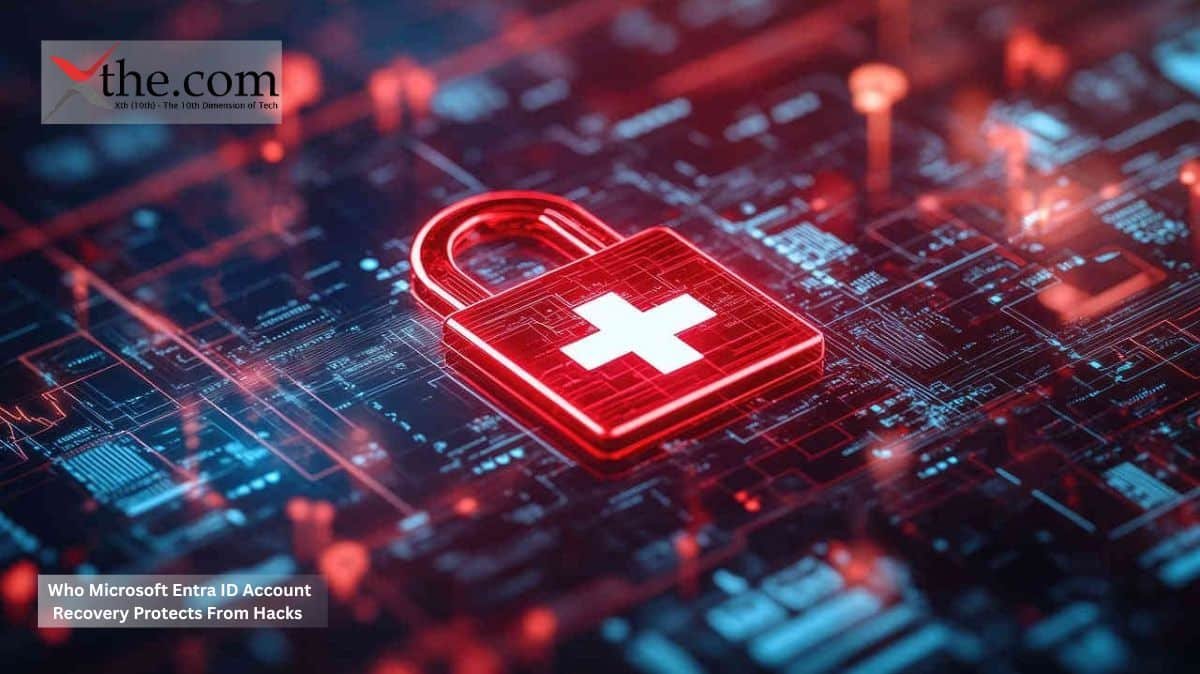
Most corporate breaches do not start with a dramatic hack. Instead, they often begin with something simple, such as a reused password, a failed recovery process, or an employee logging in again on a compromised device. That is why Microsoft Entra ID account recovery has become more than just a convenience. It is now a key security control for modern enterprise identity systems.
The risks are greater now because identity is more than just a means of accessing systems. It controls data, AI interactions, and workflows across platforms. If recovery processes fail or are misused, attackers do not have to break in. They can simply use the existing access.
The Identity Parameter Under Pressure
When organizations use Microsoft Entra ID account recovery, they are not only helping users who have forgotten their passwords; they are also protecting against complex threats such as session hijacking, token replay, and social engineering attacks that target account resets.
Today, identity defense includes identity threat detection and response (ITDR). Unusual recovery attempts are seen as early warning signs of a possible breach, not just user errors. For example, if a recovery request comes from a new location, from an unknown device, or shows odd retry patterns, it can trigger an immediate risk assessment.
This change matters because every recovery is now closely tied to rebuilding trust. Attackers often exploit weak reset processes to bypass strong login protections. This is where advanced authentication trust reestablishment becomes critical. Instead of treating recovery as a single checkpoint, enterprises now build trust incrementally, layering defined device assurance, behavioral signals, and cryptographic validation before restoring full account privileges.
Why Recovery Has Become an Attack Vector
Older identity systems treated authentication as the main challenge. This is no longer true.
Attackers now target recovery processes because they can sometimes bypass strong login protections. Multi-factor authentication bypass protection is crucial here. If recovery steps do not verify identity across multiple factors, attackers can reset accounts and gain access without having to steal passwords.
This also affects the governance. Companies using zero-trust identity governance and MSFT frameworks now see every recovery event as a policy decision, not merely a routine step. Access is only restored after the system rechecks trust, taking into account device security, network protection, and past session history.
This approach turns recovery into an ongoing verification process rather than a single reset.
Microsoft Entra ID Account Recovery As A Security Control Layer
In this setup, Microsoft Entra ID Recovery is more than just a support tool. It acts as a compliance-level control, enforcing step‑by‑step verification aligned with company risk levels. This is especially important in regulated industries where identity checks must be auditable.
For example, in a financial services company, if an employee tries to recover their account after a failed login from a foreign IP address, the system does not allow an immediate reset. It first checks device history for previous authentications and risk data from other Microsoft security tools. Recovery only continues after these checks, and it often requires additional proof of identity.
This layered approach lowers the chances of silent account takeovers that traditional MFA systems might miss when attackers use recovery methods.
Where Microsoft Purview Extends Identity Security Into AI Workflows
The rise of generative AI inside enterprises has created a parallel identity risk surface: data leakage through model interaction. This is where the Microsoft Purview compliance API introduces a critical expansion of control, particularly through its integration with Anthropic’s Cloud Enterprise environment within the Microsoft and Anthropic ecosystems.
In this setup, the API does more than just monitor activity. It creates a data pipeline that tracks sensitive actions such as file uploads, chat exchanges, and image sharing. If an employee pastes confidential code into Cloud Enterprise, the system can flag it, assign a sensitivity label, and send it to central security dashboards.
Here, governance and identity come together. Data from cloud interactions are matched with identity events from Microsoft Copilot and combined in data security posture management (DSPM) dashboards. This provides not only visibility but also links between identity actions and data exposure patterns across workloads.
For example, if a developer copies confidential code into a cloud session from an unmanaged device, it is no longer a single event. It becomes a connected identity and data risk incident, scored and reviewed together with the authentication history.
Closing the Loop Between Identity Recovery and Data Exposure
The convergence of identity recovery controls and AI telemetry pipelines signals a larger architectural shift. Recovery is no longer a back‑office function, and AI interaction is no longer a peripheral productivity layer. They intersect now in the same risk graph.
Companies using Microsoft Entra ID account recovery with AI‑powered compliance tools are creating a two‑part control system. One part rebuilds trust in user identity, and the other continues to monitor what that identity does after access is restored.
As more organizations use AI, the line between identity governance and data governance will become less clear. The strongest systems will treat recovery, authentication, and AI use as parts of a single ongoing trust process managed by signals, context, and flexible controls.