




Washington, District of Columbia
The top executive in the semiconductor industry has been called to Capitol Hill, and he can expect some tough questions.
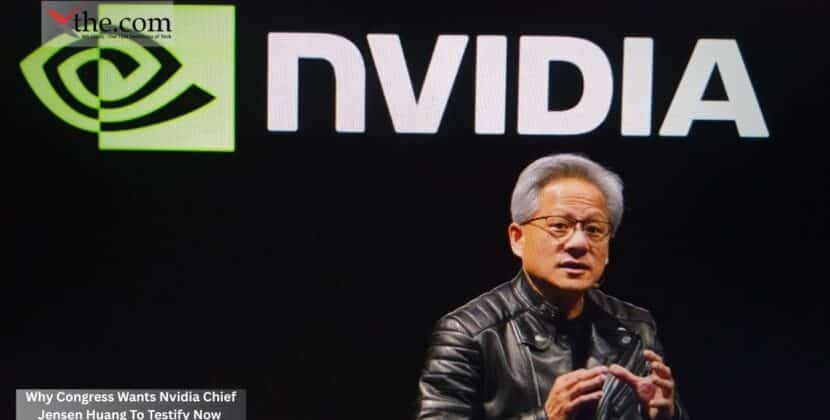
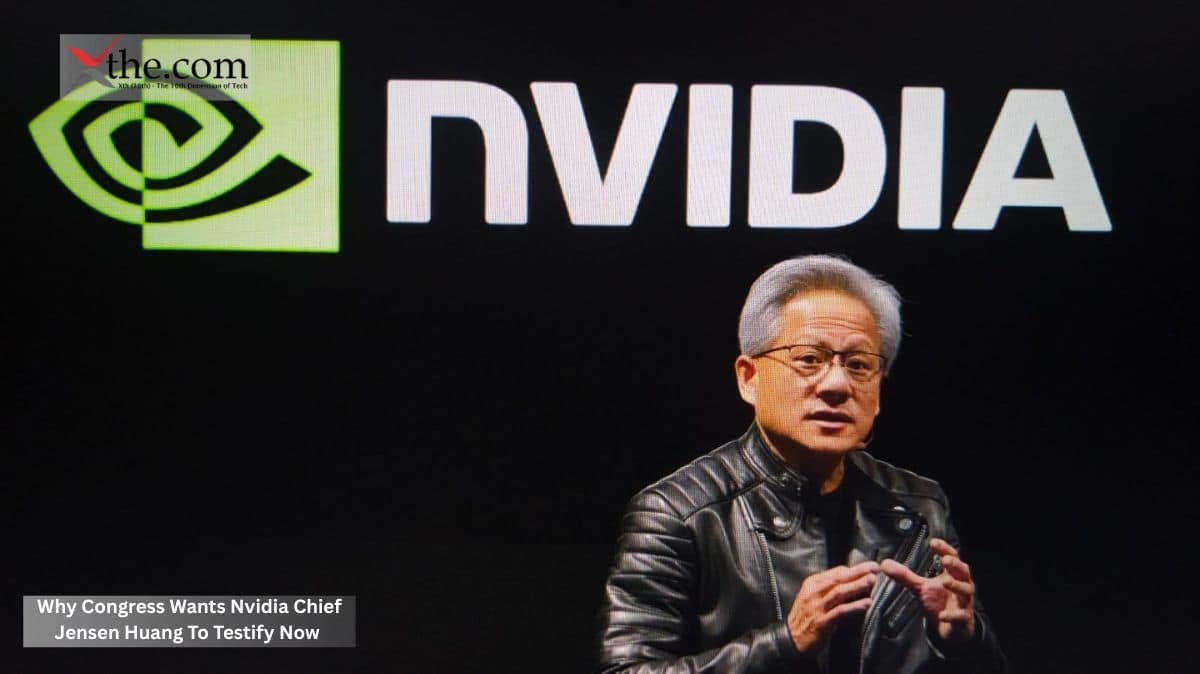
Senator Elizabeth Warren, the top Democrat on the Senate Banking Committee, formally invited Nvidia Chief Jensen Huang to appear before the committee on June 11 and set a Monday deadline for him to confirm his appearance. Her letter made the stakes clear: Huang would have a chance to explain “NVIDIA’s views on U.S. export control laws and regulations and NVIDIA’s business in China.” In other words, Washington wants to know if the world’s most valuable chip company has been following the rules.
Tech investors and policy watchers have seen this moment coming for months.
NVIDIA Chief Jensen Huang Must Now Face Washington’s Sharpest Questions
Huang’s schedule over the past six weeks has been dramatic. He traveled with President Donald Trump to Beijing in mid-May for a major summit with Chinese President Xi Jinping. He was photographed outside the Great Hall of the People. Then, a few weeks later, he received a Senate invitation. These public appearances are intentional and meant to send a message.
Warren’s concerns are based on a specific and troubling body of evidence. The Department of Justice has brought multiple criminal enforcement actions alleging the unlawful diversion of Nvidia’s most advanced processors to China. Those cases allege schemes involving millions of dollars in graphics processing units routed to China through Malaysia and Thailand; exports and attempted exports of $160 million in H100 and H200 chips; and $510 million in diverted servers, connected to a March 2026 indictment involving individuals linked to Super Micro Computer.
That last number half a billion dollars in allegedly diverted servers shows a major breakdown in the global supply chain. It also goes against what Huang has said publicly: that there is no evidence of significant AI chip diversion and that Nvidia’s market share in China has basically dropped to zero.
Warren’s letter says these criminal allegations do not match the CEO’s public statements, putting more pressure on Nvidia’s compliance practices. The senator wants to know who knew what, and when.
What the Senate Banking Committee Is Really After
The June 11 hearing is about more than just one company’s sales figures. The United States Senate Banking Committee’s Nvidia CEO official testimony hearing schedule constitutes a broader inflection point in how Washington views artificial intelligence infrastructure and its connection to national security.
NVIDIA’s advanced chips run data centers and AI systems in many industries, putting the company at the center of the global AI boom and making it a key focus in Washington’s debate over export controls. When senators say they are concerned about chips helping China’s military, they mean it literally. Warren put it simply on CNBC’s Squawk Box: “In China, these are chips that are actually used for military purposes.”
The committee’s questions go beyond national security. Warren also asked Nvidia’s audit committee whether it views the alleged illegal diversion of Nvidia products as a serious legal or regulatory risk and whether it has conducted any independent review of its export-control compliance programs. These questions can affect stock prices and lead to shareholder lawsuits, and Nvidia’s legal team is aware of that. NVDA shares fell about 1% in after-hours trading when the invitation became public.
Export Control Laws at a Breaking Point
Export controls on advanced semiconductors have faced major challenges since August 2022, when the U.S. government first put strict limits on shipping A100 and H100 chips to China. Since then, each new Nvidia product has led to more regulatory changes and enforcement issues.
If the DOJ allegations are true, the evidence that these controls are being bypassed indicates a broader problem that no single company can explain on its own. Chips do not move through global supply chains in places like Malaysia, Thailand, and Singapore without help from intermediaries, freight companies, and shell businesses. The Senate Banking Committee wants to know if Nvidia’s internal compliance was strong enough to catch and stop this diversion, and whether company leaders truly did not know or chose not to look too closely.
IDC data from April 2026 showed Nvidia’s share of China’s AI accelerator card market fell from about 95% to around 55% in 2025, while Huawei led domestic chips with about 20%. Huang has admitted that Nvidia has “essentially ceded the Chinese AI market to Huawei.” This pullback, no matter the reason, has not ended the compliance questions. In fact, losing revenue can create new risks.
Why Artificial Intelligence Infrastructure Is the New Geopolitical Battleground
It would be a mistake to read this hearing as a routine oversight exercise. The United States Senate Banking Committee Nvidia CEO official testimony hearing schedule sits at the intersection of three forces that rarely converge so visibly: national security, capital markets, and the global architecture of artificial intelligence infrastructure.
The Senate’s investigation is similar to a separate probe started by Republicans on the House Energy and Commerce Committee. This shows that AI chip export controls are one of the few issues both parties agree on, even if they disagree on the details. When both Senate Democrats and House Republicans want an investigation, regulation usually follows.
For American executives in the semiconductor and software industries, this hearing will set a new standard. The days when tech CEOs could treat Washington as a distant concern, handled with lobbying or occasional testimony, are over. NVIDIA Chief Jensen Huang created one of the most important hardware platforms within modern computing, and now it is at the center of a global political struggle with no easy answers.
The Bigger Picture Behind the Invitation
The bigger message from the June 11 hearing is that the federal government plans to play a bigger and ongoing role in how America’s top tech companies sell products overseas. Export control laws will get stricter, enforcement will increase, and compliance will become more expensive. Companies that see these laws as just a formality rather than a real business risk could end up like Nvidia defending their choices before a skeptical Senate committee while the markets watch.
Huang has not yet said whether he will testify now or send someone else. The deadline has passed, and Washington is waiting. No matter what he decides, the questions will remain.
The era of chip companies avoiding accountability now has a date: June 11, 2026.